
Review: Request Sa Radyo
The material could use a few more signposts to be relevant for today's world.
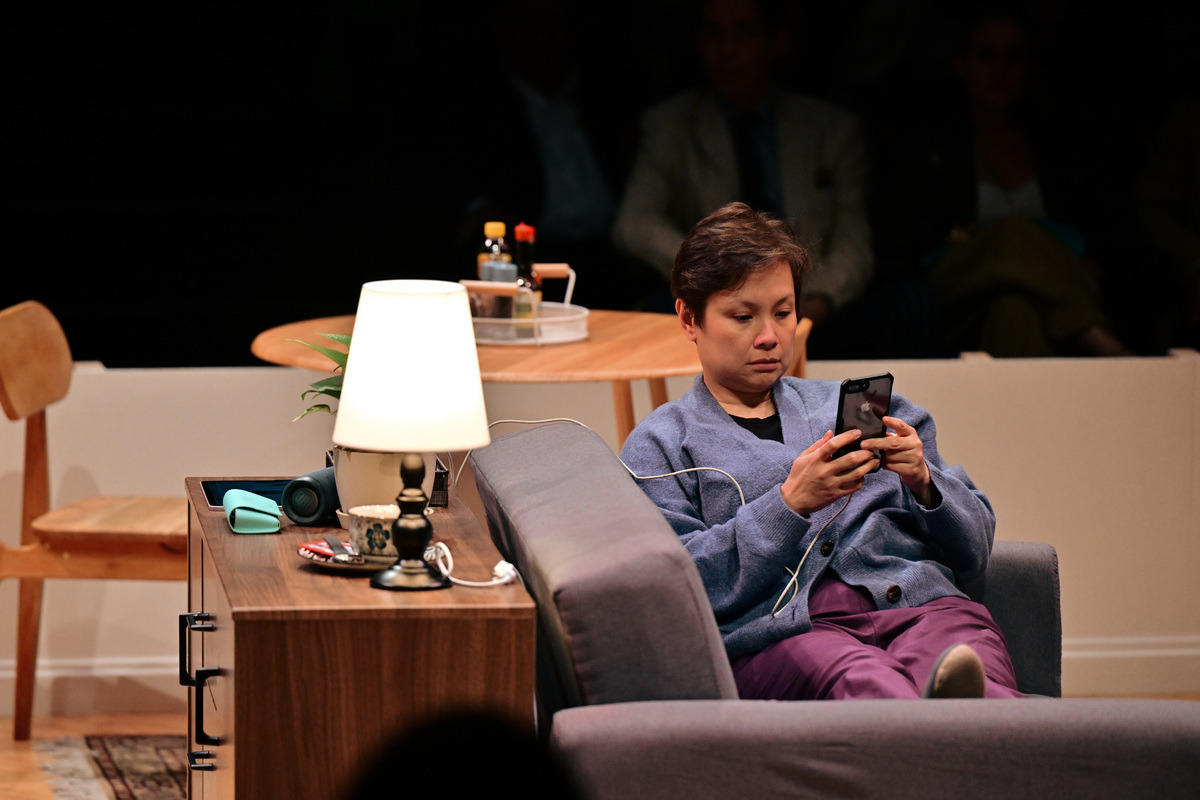
(SPOT.ph) Request sa Radyo is definitely a landmark in Philippine theater — the first wordless play to be staged in the mainstream circuit, if not everywhere. We now understand why its stars Lea Salonga and Dolly de Leon said they were terrified that it might bore audiences to death, and not only because it has no dialogue but also, perhaps more saliently, it’s as lifelike and therefore as un-stagey as theater can get.
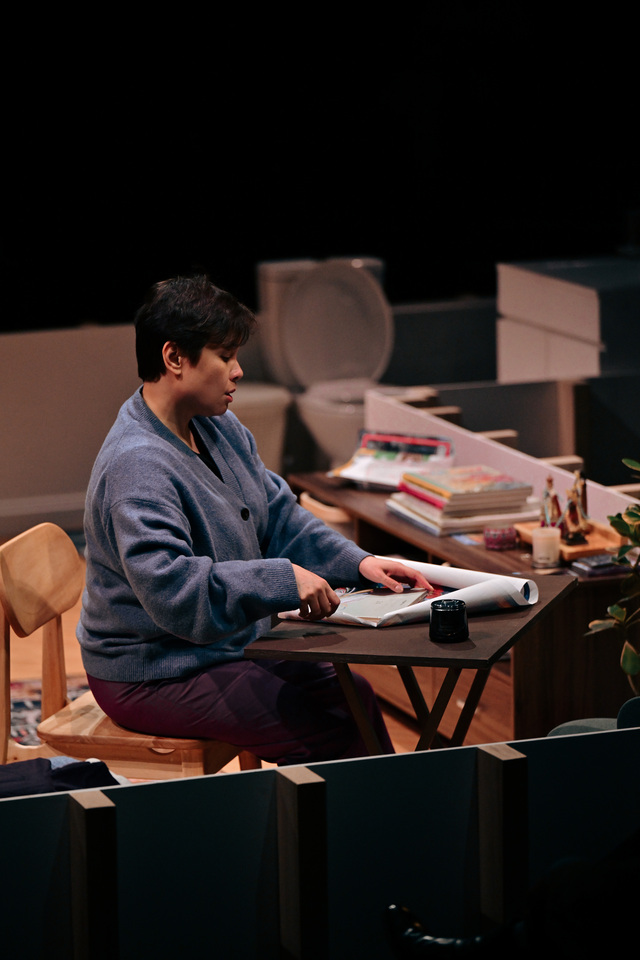
The show depicts, in all its ordinariness, a little over an hour in the life of a woman living by her lonesome; she comes home from work to her apartment, cooks and eats dinner by herself, washes her clothes, finishes a color-by-numbers artwork, washes her face — all while listening to a music request show on the radio — takes a sleeping pill and goes to bed, and then wakes up in the middle of the night to, well, you've got to be there to see what happens.
What Request sa Radyo needs
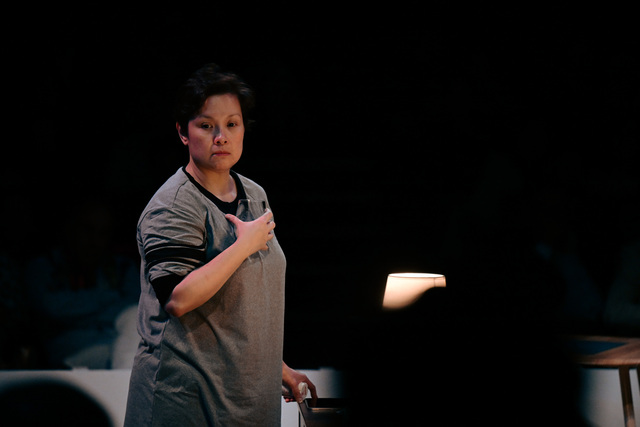
For this adaptation, Salonga and de Leon alternate in playing Request’s lone protagonist, a resident of New York City. There are no character marks except that she is obsessive-compulsive (at least from Salonga’s portrayal, the performance this writer saw) and that she loves rock music (or at least that one rock song played on the radio). There is no back story, not even for that one day.
Also read: How A Wordless Play Got Lea and Dolly to Say Yes
She’s garbed in scrubs but it’s unclear whether she’s a hospital nurse or a caregiver in a facility. She listens to a radio show of Filipino music and even lipsynchs to one track but it’s not pointedly clear whether she’s a Filipino or a foreigner who happens to have a liking for OPM. It’s unclear if she is single or has a family of her own living elsewhere. The play also glosses over the character’s silence; while it’s true that her situation does not call for her to speak, there is no clear indication whether she can or that she's just totally incapable of speaking.
Do these details matter? For a piece of adaptation, yes. The world in 2024 is vastly different from that in 1971 when the original piece was written (by a German playwright, actor, and filmmaker). The world is no longer homogenized and while it has grown more connected than ever to the powers of social media, that connection has become more fragile. Isolation and mental health have become so complex that a one-size-fits-all portraiture won’t say much, if anything at all.
Request needs more signposts than it currently gives to turn it into something even more than the original — a deeply, truly vivid, relevant, and resonant picture of and commentary on the Filipino diaspora. They are particularly crucial in getting a better understanding of and appreciation for the last act the character takes, which is clearly intended to bring in the feels and elicit surprise, maybe even shock, and discomfort from viewers.
Lea Salonga's performance
The play may look very simple but it actually demands nothing less than a masterclass in acting. Being dialogue-free, the performer is required to speak through body language. The unique challenge is they have to go as outwardly small, unadorned, raw as possible to capture the rhythm of everyday life while at the same time make sure their movements and their very body carry the weight of a life already considerably lived, a life that bears definite hints of an internal struggle. Whether you call it docudrama or reality theater, what audiences get from it largely depends on what each actor brings to the character.
Also read: A New Theater in Makati Paves the Way Forward for Performing Arts
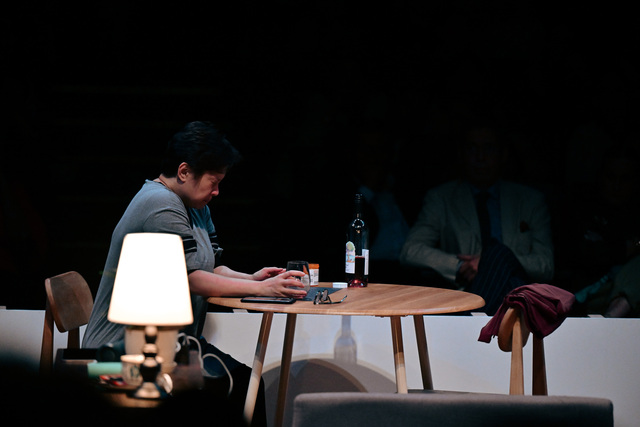
In Salonga’s case, it’s measured grace. She moves so fluidly onstage it sometimes feels like she’s gliding. (Which is not that suprising considering she's weaned on musical theater.) The performance may strike some as rather too “light” and “clean” for a character that’s secretly unraveling, but it does ultimately make for a potent portrait of someone valiantly, if not desperately hiding behind a mask of control and finding comfort in routine-as-ritual.
Salonga's performance looks effortless, which is to say it hews very closely to how I perceive the Broadway star to be away from the stage. It may not be as moving as I hoped it to be in the context of the material but it’s kind of thrilling to have such a close, voyeuristic look at how potentially Salonga moves about in her own private space.
Perhaps the best way to experience Request sa Radyo is to watch both Salonga’s and de Leon’s performances to see the full breath of the new life it pumps into the 53-year-old material.
——-
Request sa Radyo runs until October 20th at the Samsung Performing Arts Theater in Ayala Circuit Mall in Makati.