
The Second Life of Doña Sisang's Iconic Broadway Avenue Mansion
The Broadway Avenue address of the LVN Pictures matriarch continues to make its presence felt, says Mica Magsanoc.

(SPOT.ph) In the heart of New Manila, along the stretch called Broadway Avenue—once called Millionaires' Row due to the fabulous mansions that lined it—stands a house that has witnessed the glorious years as well as the many upheavals in Philippine cinema and culture. It's the house where one of the true pillars of local movies, Narcisa “Doña Sisang” Buencamino-de Leon, once held court, and where she would keep herself close to friends and family.
Doña Sisang’s journey into the world of cinema was anything but typical. At 61 years old, widowed and relatively inexperienced in film production, she became the executive producer of LVN Pictures in 1938. What began as a collaboration between the De Leon, Villongco, and Navoa families became a single-family empire when Doña Sisang acquired a majority share in the company. LVN Pictures was one of the biggest film studios in Philippine history, often compared to the Metro-Goldwyn-Mayer studio of Hollywood.

Known for her hands-on approach, Doña Sisang involved herself in every aspect of filmmaking—from the story and script to casting, directing, music, and editing. Her meticulous attention to detail gave birth to what was known as the "LVN style," which infused a strong moral compass in every movie she produced. She was not just a producer; she was a visionary and motherly figure, the true driving force behind LVN’s success.
Also read: House Tour: National Artist Pablo Antonio's Pasay Home
Life inside the house of Doña Sisang
In 2022, her grandson, acclaimed filmmaker Mike De Leon, published his memoir entitled Last Look Back. In it, he talked about growing up in a house where film production was a constant activity. He described it as a “split-level existence”--the ground floor was his grandmother’s domain filled with komiks, a household staff garbed in pambahay clothes, and anything related to LVN Pictures; while the upstairs part was his mother’s domain, “smaller, neater, more tastefully appointed,” he wrote, and “maintained by a battalion of maids in uniform.” As a young boy, De Leon spent his Sundays with his lola and cousins, and they would often get to watch the latest footage from ongoing LVN productions.
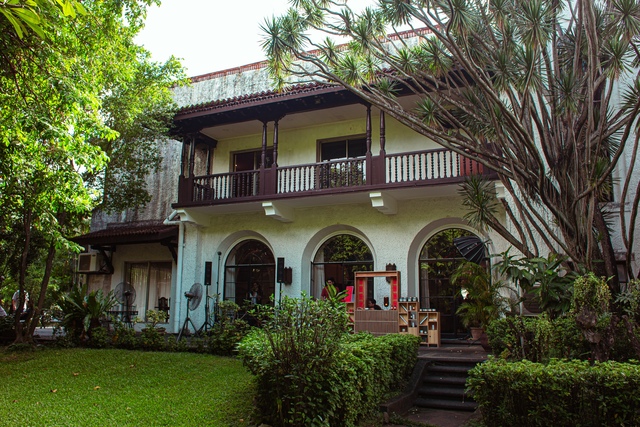
But the house was not just a backdrop for De Leon family memories—it’s an architectural landmark in its own right, having been designed by National Artist Pablo S. Antonio in 1931.
After finishing his studies in London, Antonio returned to Manila and immediately began working on his first two projects, one of them being the Doña Sisang house. His work is characterized by bold shapes, clean lines, and an emphasis on natural light, which is evident throughout the Doña Sisang mansion. There are large windows in almost every room, allowing for the seamless blending of indoor and outdoor spaces.
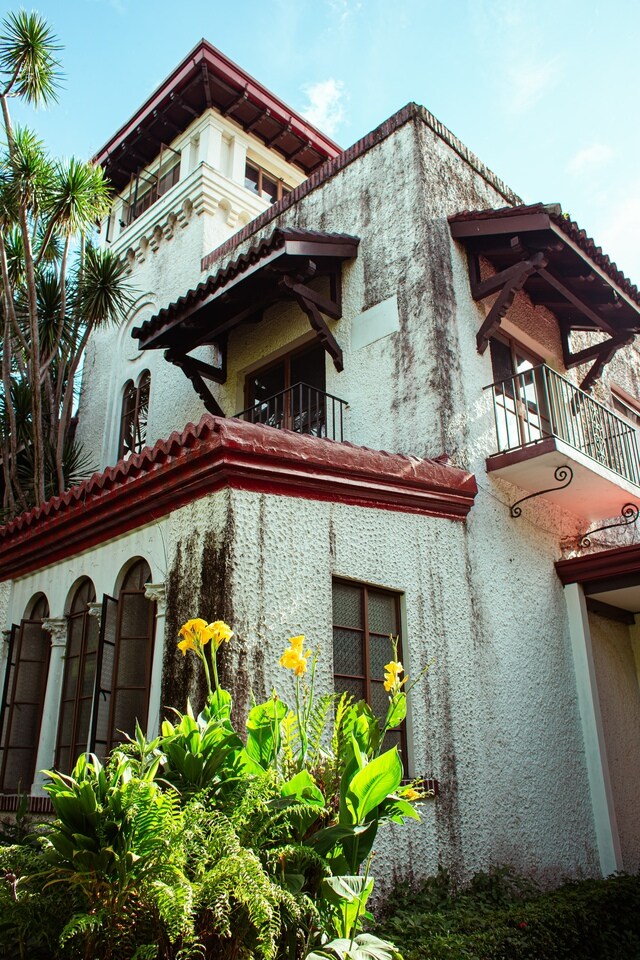
The exterior of the house is reflective of the “mission revival” style, which is characterized by highly textured concrete walls and clay roof tiles. What is most notable about the mansion’s exterior is the verticality of the house defined by the “mirador,” an overwatch tower offering 360 views of the city. A mirador seemed to be a status symbol in homes of the period, adding prestige to the property and its owners.
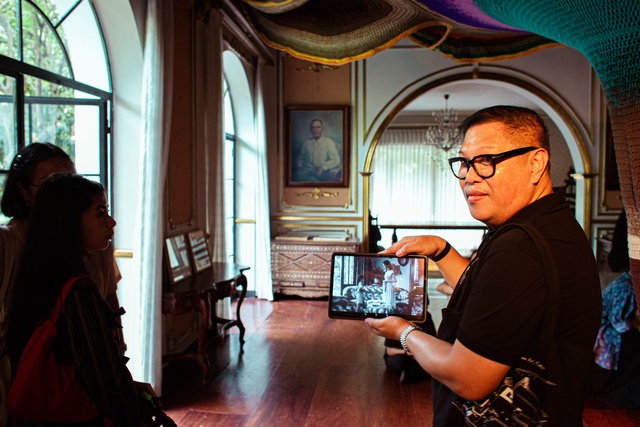
Entering the house reveals a grand living area with large paneled wooden tabla flooring–very rare nowadays–while the spacious sala boasts dark wood panels and burgundy tiles, creating a luxurious yet cozy space. A small bar in a corner hints at the many lavish parties once hosted in the house. Doña Sisang entertained guests like Presidents Manuel Quezon and Ramon Magsaysay, apart from her contract stars, of course—the biggest stars in the land: Nida Blanca, Nestor de Villa, Charito Solis, Rosa Rosal, Delia Razon and many more. The kitchen still retains its original tiling, as well as the cast iron spiral staircase leading directly to the second floor.
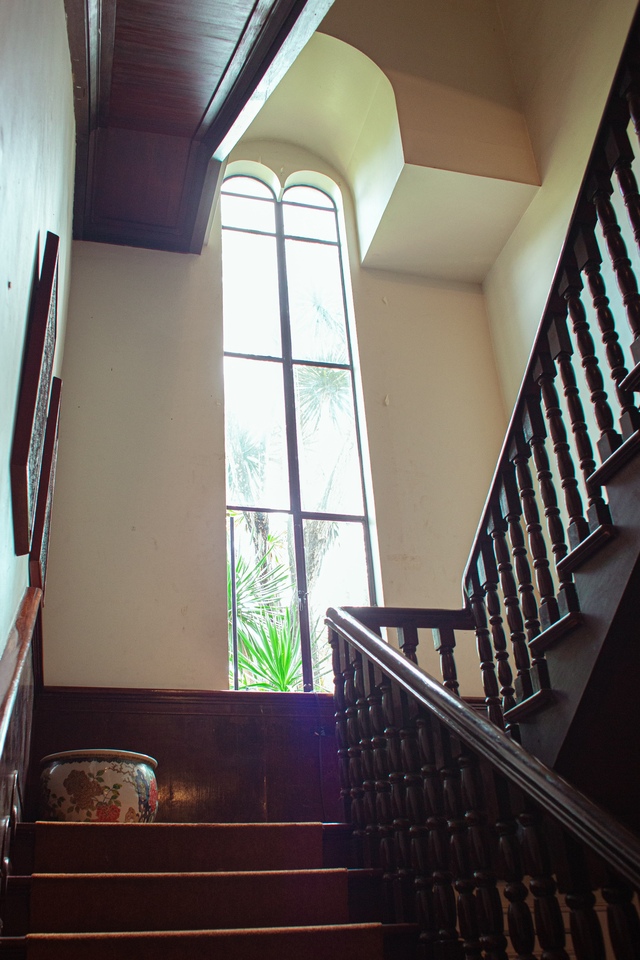
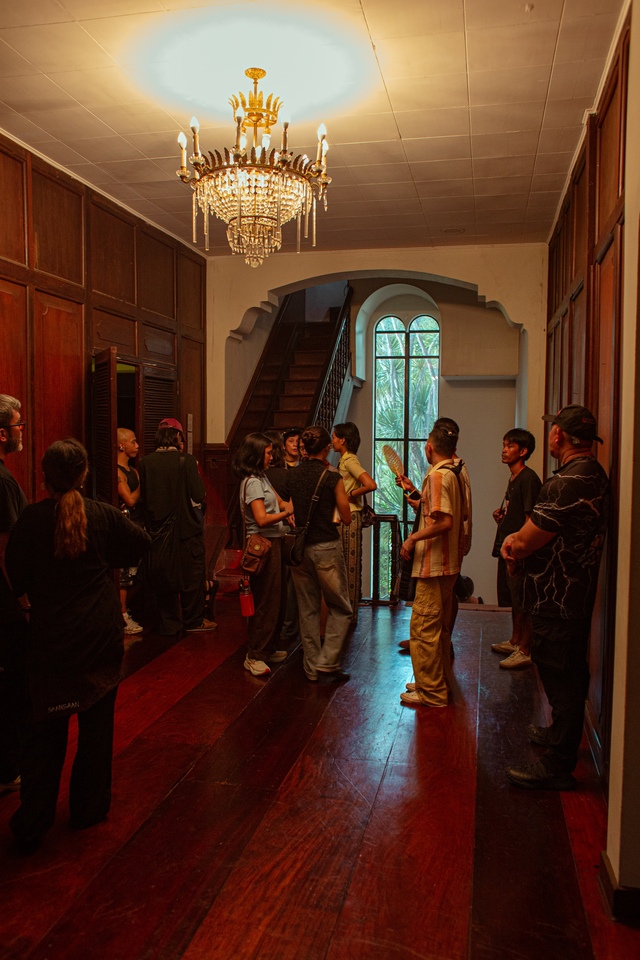
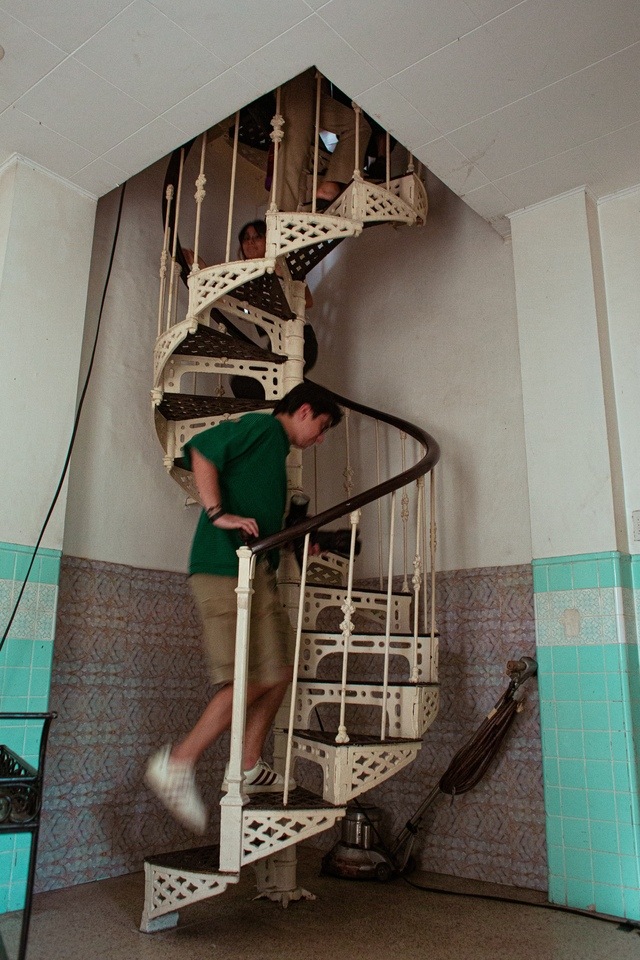
Antonio’s affinity for sunlight is further reflected in the master bedroom’s balcony, where the large wooden balustrades are believed to still be made of its original narra. The belief that sun exposure could cure tuberculosis—a widespread disease in the early 20th century—made balconies a popular feature in homes of this era. These modernist balconies are reminiscent of the bahay na bato from the Spanish colonial period, made with reinforced concrete, a modern innovation at the time.
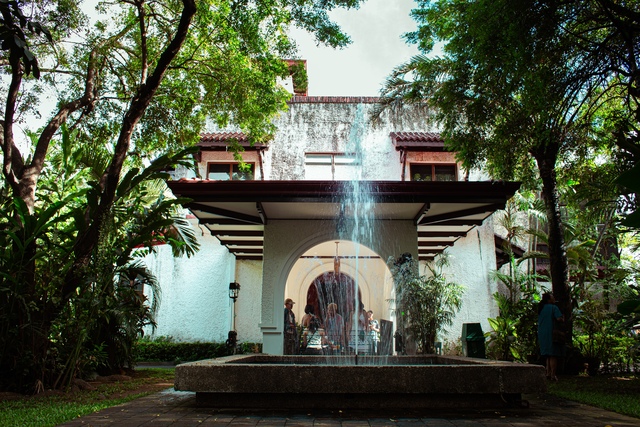
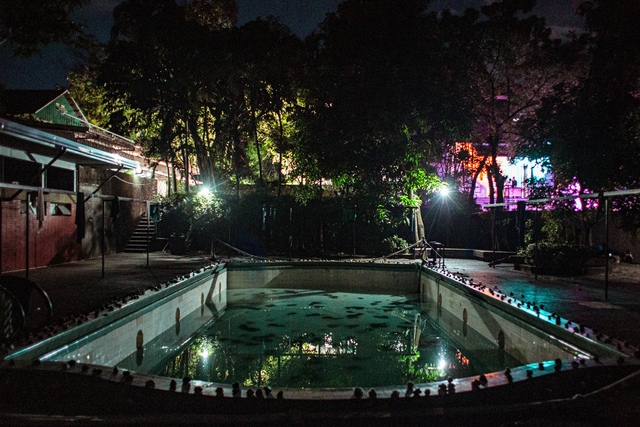
The backyard features a lotus-shaped fountain and a swimming pool, both considered big luxuries in the early 20th century. These opulent touches serve as a testament to the success and ambition of LVN Pictures with Doña Sisang at the helm.
Also read: 10 Brutalist Buildings in Makati You Can See in a Day
The second life
The Doña Sisang house was a familiar location for many of LVN’s productions, the grandeur of its interiors lending themselves perfectly to the studio’s famous musicals. It was more than just a backdrop; it became an integral part of the studio’s cinematic identity.
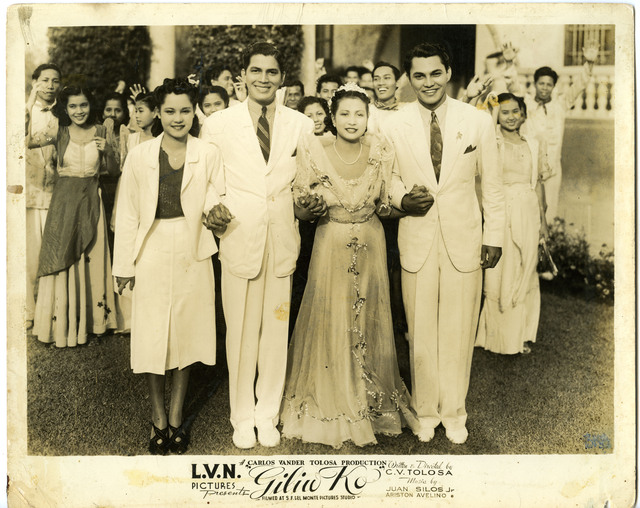
LVN’s first film, Giliw Ko (1939), recently restored by ABS-CBN’s Sagip Pelikula efforts, starring Fernando Poe, Sr., Ely Ramos, and Mila del Sol, prominently featured the house. The film's final scene, a grand orchestra performance, was shot in front of the mansion, with the chorus lining its balconies and a marching band parading along the often-photographed driveway.
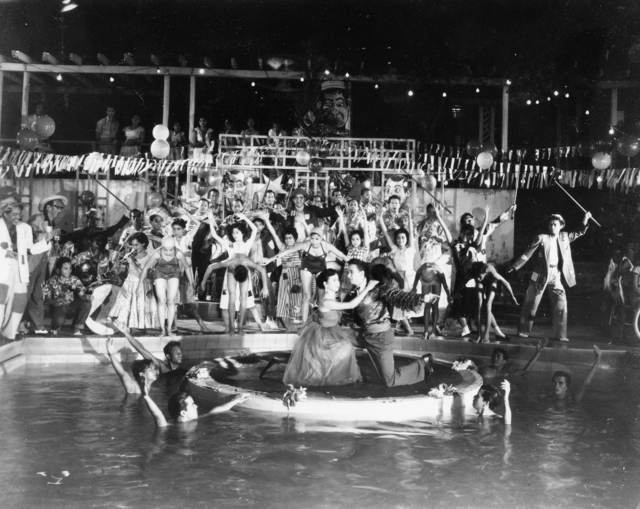
In Banda Uno (1955), the swimming pool took center stage for a large-scale dance sequence where performers not only surrounded the pool, but even danced on inflatables. Reflecting on this, Mike De Leon recalls in his book: "We grandchildren were not too thrilled when the pool was drained after a major shoot like this one..."
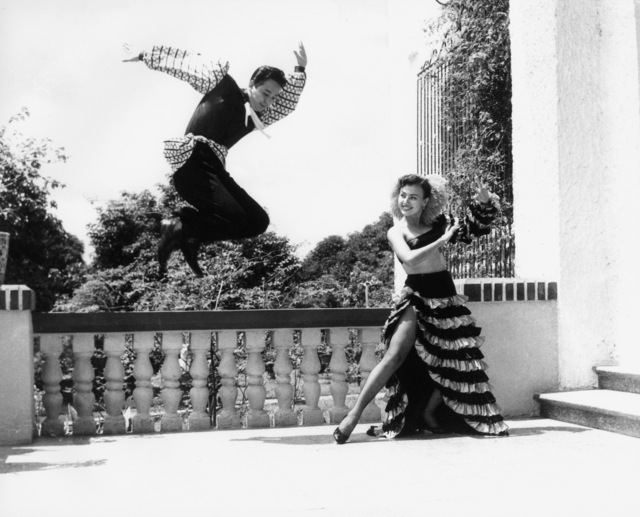
The house’s signature large arched windows, with their original cast iron detailing, are featured in Krus na Bituin (1948), while a dance sequence between Nestor de Villa and Delia Razon unfolds on one of the balconies in Dalagang Taring (1955). In Ligaw Tingin (1953), a scene with Tessie Quintana and Armando Goyena offers a glimpse of the windows to the room of Doña Sisang’s son, Manuel de Leon, and his wife Imelda Pamintuan.
Today, the house’s connection to Philippine popular culture endures. It is currently the location of a GMA 7 teleserye, and Aldub fans will remember it to be Lola Nidora’s mansion, the setting for Alden Richard and Yaya Dub’s (Maine Mendoza) courtship scene in Eat Bulaga’s once wildly popular kalyeserye. It was the setting for Eddie Romero's epic Agila and the 2017 MMFF film Deadma Walking among many others. The place also served as a fitting environment for Netflix in 2020 to launch its period series Bridgerton in the Philippines.
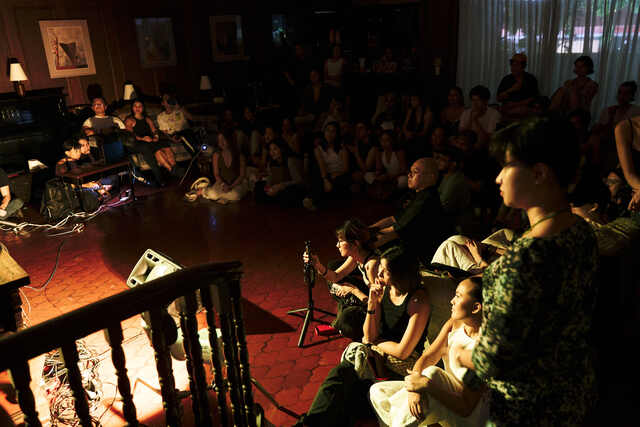
Last weekend, the local movement platform FIFTH WALL held its fifth annual festival at the mansion, transforming the vast property into a creative playground for performances, film screenings and art installations. The sala became the setting for dance workshops and performances by the Daloy Dance Company and Mari Dance, among others. The nights ended with numbers by crwn and the artist referred to as ((( O ))).
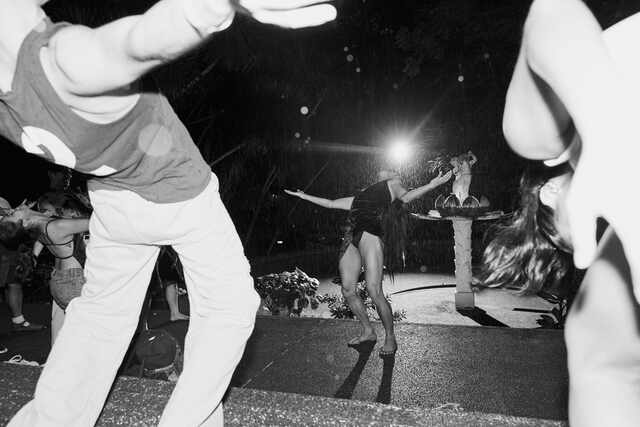
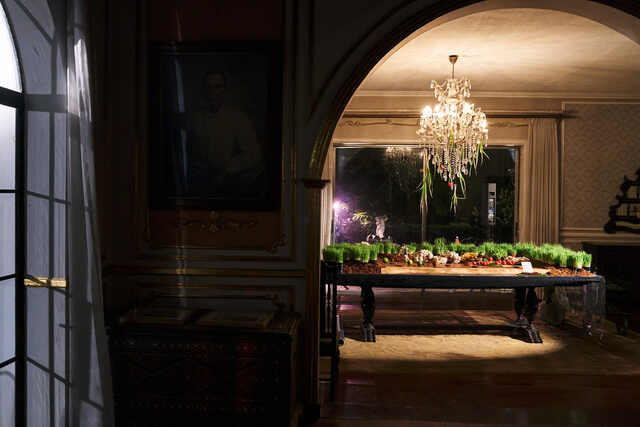
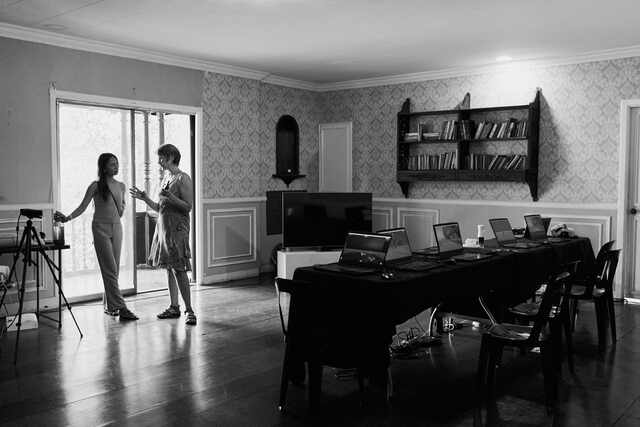
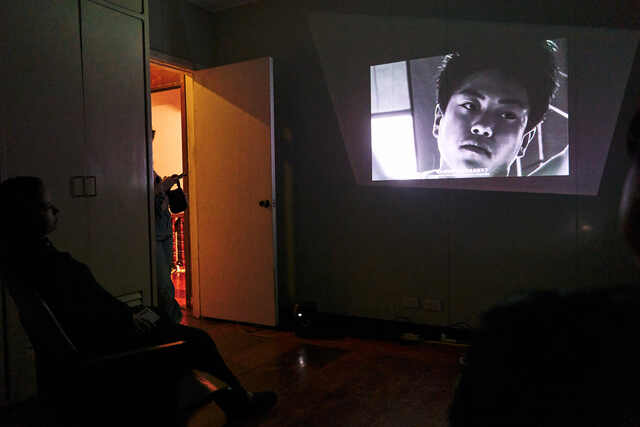
There was a "culinary performance" by Fiasfud in the dining area. There were sculptures by Micaela Benedicto in the garden, and a pop-up by archival magazine, book, and poster shop Archivo 1984 stationed in no less than Doña Sisang’s old library. The upstairs area hosted a VR workshop by the Alexander Whitley Dance Company, a sound installation by Corinne De San Jose, and a video projection by Tarzeer Pictures featuring a "ghost raver." Even the swimming pool became its own art installation, thanks to fashion designer Carl Jan Cruz.
Today, the house on Broadway Avenue remains a testament to two visionaries: Pablo Antonio, whose modernist design continues to inspire architects, and Doña Sisang, whose tenacity and dedication left an indelible mark in the Philippine film industry. For some, the house may seem just a mere relic of a bygone era, but it continues to be relevant today, not only as our connection to the past, its grandeur and its disciplines, but as a venue where contemporary creative pursuits can take place and find new layers of meaning. As long as the house stands, the spirit of LVN Pictures—and Doña Sisang— lives on.
Photos by Jason Tan, with additional photos by JL Javier for FIFTH WALL FEST and archival images from the collection of Archivo 1984.