Follow us!
© 2026 Spot.PH

NPC Seal of Registration

Spot.ph has been granted the NPC Seal of Registration in recognition of the successful registration of its DPO and DPS

BIR Registered - Bureau of Internal Revenue

Sneak Peek: This Perennially Flooded Post-War House Is Now a Museum


Published Dec 11, 2022

(SPOT.ph) To complement Valenzuela City’s rehabilitated parks and the recent restoration of Arkong Bato, the Museo ni Dr. Pio Valenzuela is slated to open in January 2023. The two-story bahay-na-bato-style structure will soon become one of the cultural and historical destinations in the city.

The museum project was taken on by Arc Lico under Dr. Gerard Lico, who also worked on Arkong Bato and the restoration of the Rizal Memorial Coliseum. Initially conceptualized by the heirs of Dr. Valenzuela, their wish was for the existing post-war house in Polo to be restored and converted into a museum, though there were not enough funds for this to push through. Eventually, the Valenzuela City LGU stepped in to provide the budget for this project to honor the revolutionary doctor and civic leader.  

Also read: Valenzuela City Is Doubling Up on Urban Green Spaces
pio valenzuela
PHOTO BY Arch. Gerard Lico

Who was Dr. Pio Valenzuela?

Valenzuela was a Katipunero of the Philippine Revolution, and along with Andres Bonifacio and Emilio Jacinto, was one of the three highest leaders of the Katipunan. Valenzuela ran as provincial governor of Bulacan and served two terms. After retiring from public office, he built a house in Polo, Bulacan (now Valenzuela) where he continued practicing medicine.

Article continues after this ad.
ADVERTISEMENT - CONTINUE READING BELOW

This 1920s house was built in the bahay-na-bato style, complete with an azotea and a clinic on the ground floor where he treated his patients. Unfortunately, this pre-war house was burned to the ground by the Japanese in 1945. A more modest house was rebuilt after the war and was inhabited by members of the family after Pio Valenzuela’s death in 1956.
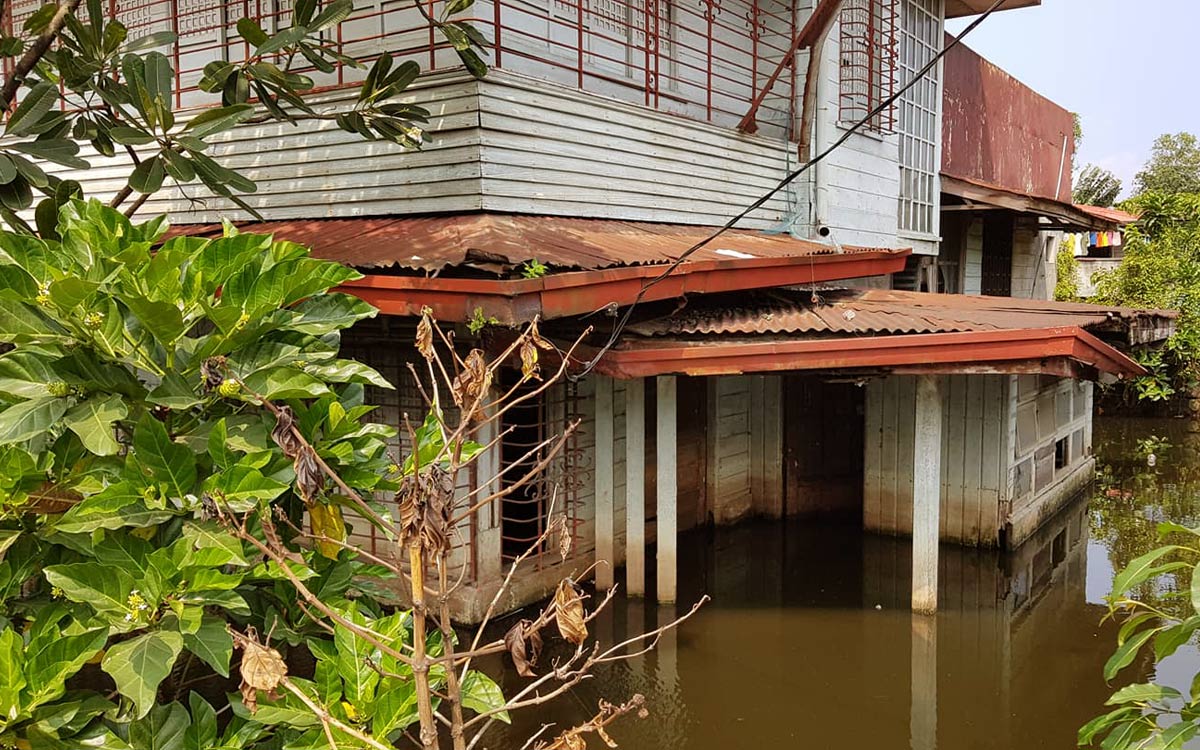
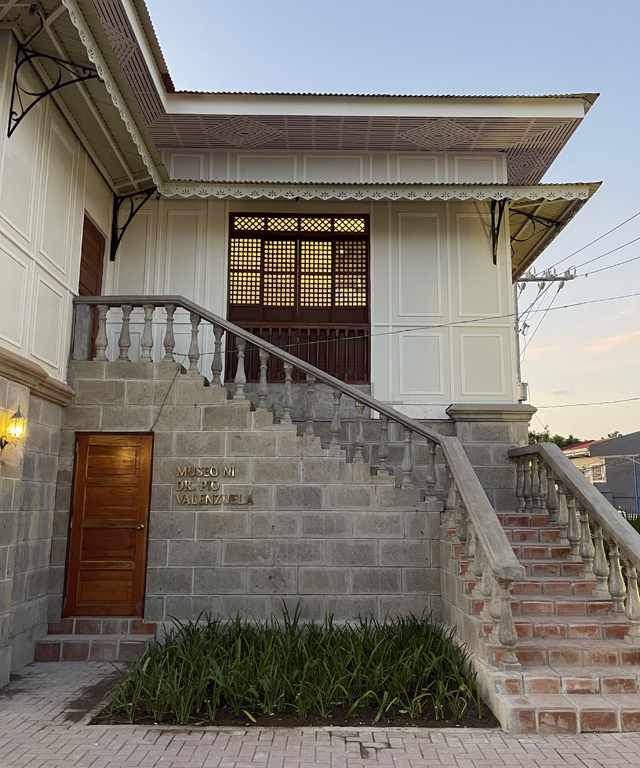
The original post-war house of Dr. Pio Valenzuela, seen here post-reconstruction, was perennially submerged in floodwaters. This had caused severe deterioration of the house, most especially the ground floor. PHOTO: Arch. Gerard Lico

A House Perennially Submerged in Floodwater

The post-war Pio Valenzuela House, though generally intact, presented a unique problem: it was perennially submerged in floodwaters. Because the street was raised several times and tidal floods had seeped in, the house—along with most of its yard—was under waist-deep water. This slowly deteriorated the structure and made the ground floor uninhabitable.

Although the initial plan was to restore the existing post-war structure, the decision was made to rebuild the house as it was in the 1920s. The pre-war bahay-na-bato house best represented the times when Pio Valenzuela was most active as governor and doctor, and gave a glimpse of turn-of-the-century life in old Polo. Clearance from the National Historical Commission was granted for this.

pio valenzuela house-museum
PHOTO BY Arch. Gerard Lico

Rebuilding the Pio Valenzuela House From Memory

According to Lico, a hybrid approach was used in building the house-museum. Pio Valenzuela’s pre-war bahay-na-bato was built with the post-war house’s materials integrated into it. The new structure was designed based on the pre-war plan of the house as recalled by Pio’s grandson, Architect Arturo Valenzuela.

Article continues after this video.
ADVERTISEMENT
watch now

This method is what Lico refers to as a framework of "reflective nostalgia."

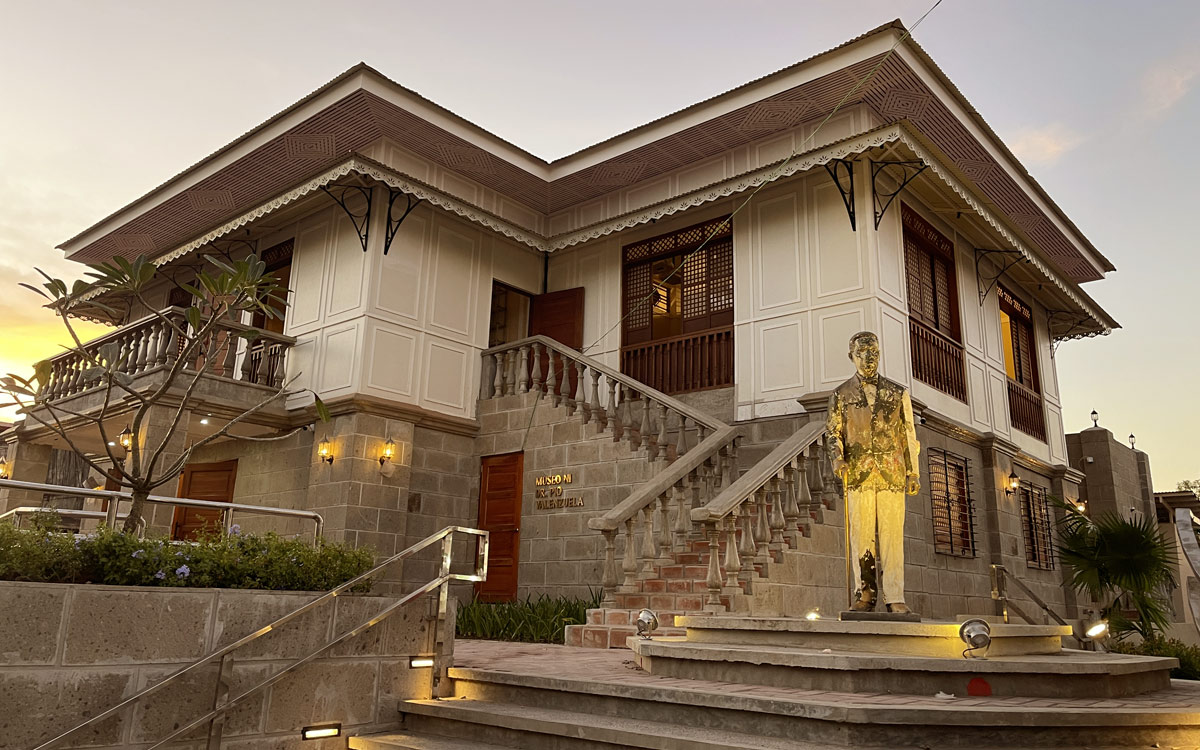
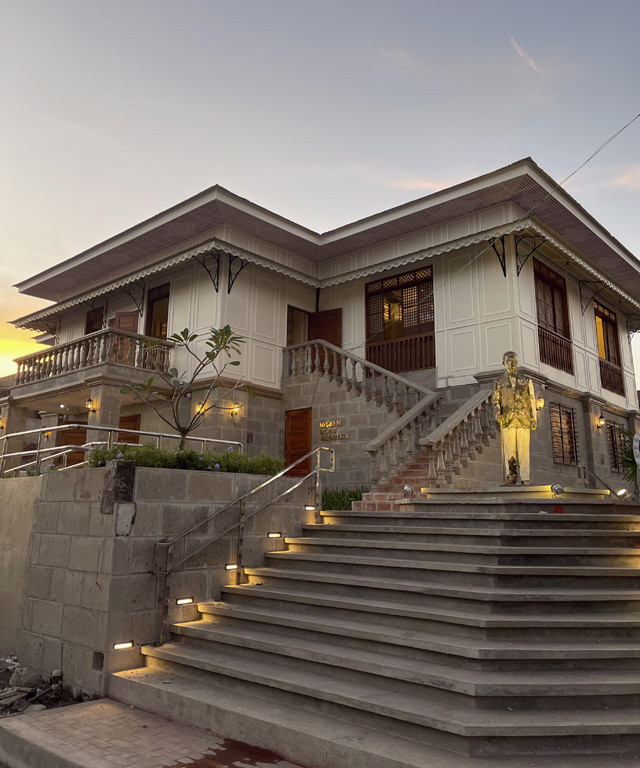
pio valenzuela museum exterior
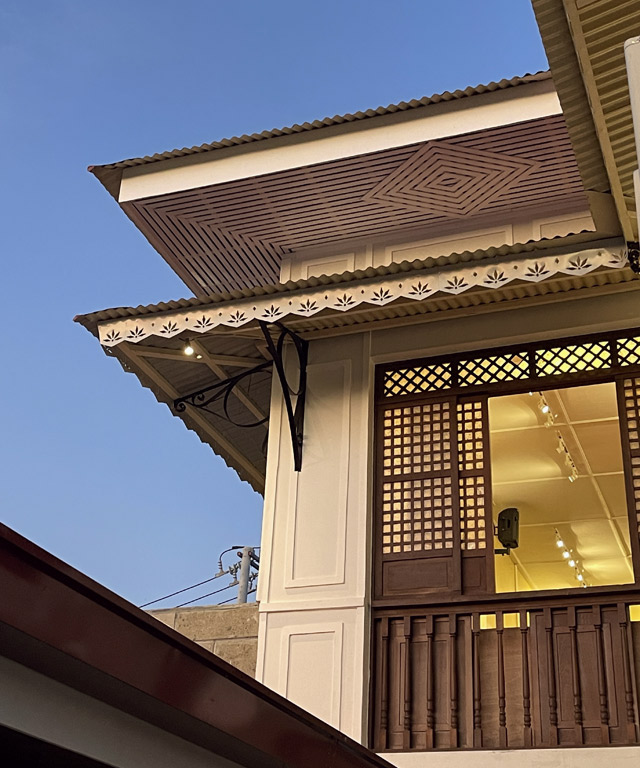
As much as possible, architectural elements and materials from the old house were used in the new structure. The reuse of the old house’s components preserves the memory of the post-war residence.
PHOTO BY Arch. Gerard Lico
pio valenzuela museum sala
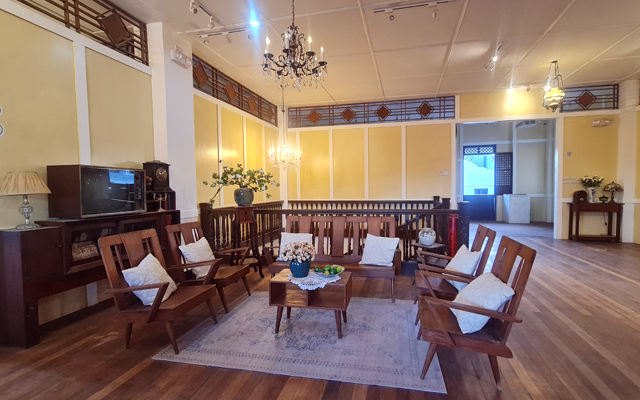
The structure of the house is based on the pre-war plans as remembered by Dr. Pio Valenzuela’s son, Architect Arturo Valenzuela. The post-war house’s architectural design elements, such as the wooden transoms, were integrated into these living areas.
PHOTO BY Arch. Gerard Lico
pio valenzuela museum gazebo
The gazebo in the garden was inspired by the turn-of-the-century American-colonial garden and bandstand-inspired pavilions.
PHOTO BY Arch. Gerard Lico
Article continues after this ad.
ADVERTISEMENT - CONTINUE READING BELOW

"It’s a different approach…the stakeholder’s wish to recreate the pre-war house governed over my insistence to retain the 1940s house," he tells SPOT.ph in an interview, explaining that this project is a pioneering approach using intangible memory. In this case, it was a more appropriate solution to the site and overall situation to rebuild the pre-war Valenzuela house, incorporating modern-day building requirements for a museum, including fire resistance, exits, accessibility, acoustics, data connectivity, and other factors.

Lico also cites that some remnants of the pre-war house were also found on the site, including the adobe azotea and an aljibe (old-fashioned well). These pre-war features were given the spotlight in the new museum. Materials from the post-war house, such as the mid-century callado transoms, were incorporated into the interiors while roof eaves were installed in the exterior structure.

The Museo ni Dr. Pio Valenzuela stands on the site of the original house, located in the heart of Valenzuela City. The site itself was elevated one meter from street level to avoid potential flooding. The statue of Dr. Pio Valenzuela will eventually be restored. PHOTO: Arch. Gerard Lico

A Nostalgic Museum for Modern Times

Now, the Museo ni Dr. Pio Valenzuela stands on the old house’s site, with the entire area elevated one meter above street level to avoid any potential flooding. The structure itself is also raised to metaphorically show the site’s importance in the community.

pio valenzuela museum diorama
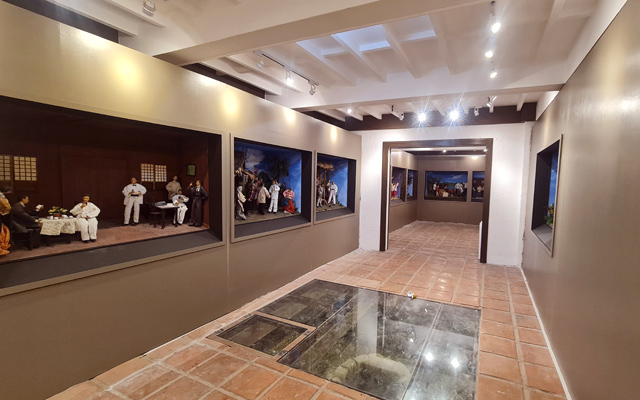
The ground floor of the museum is where the exhibition galleries are located, including the dioramas. On the middle of the floor is a viewing hole where one can see the Valenzuela house’s original aljibe (well).
PHOTO BY Arch. Gerard Lico
Article continues after this ad.
ADVERTISEMENT - CONTINUE READING BELOW
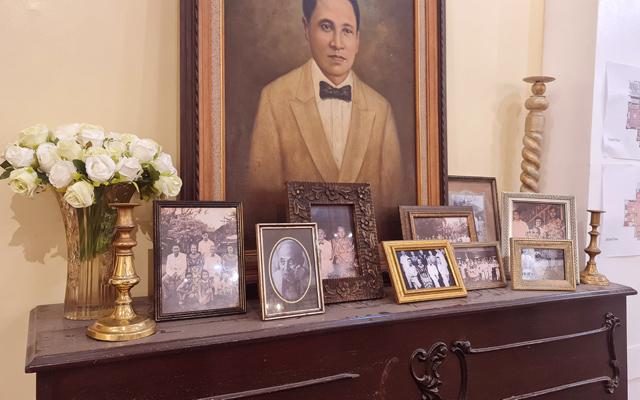
pio valenzuela museum piano
Old photos, portraits, and family memorabilia of Dr. Pio Valenzuela are in the museum. Valenzuela was a revolutionary hero, a Katipunero, a Governor of Bulacan, a country doctor, and civic leader.
PHOTO BY Arch. Gerard Lico

On the ground floor, you can find the museum reception area, the exhibition areas with dioramas of historical scenes and a see-through panel where visitors can get a glimpse of the old well, a multi-purpose hall, a recreation of Dr. Valenzuela’s clinic and library, and other visitors’ facilities.

pio valenzuela museum second floor
The second floor of the museum is where you can see a reproduction of the pre-war Valenzuela house; visitors can explore the various living areas as one would in an actual bahay-na-bato.
PHOTO BY Arch. Gerard Lico
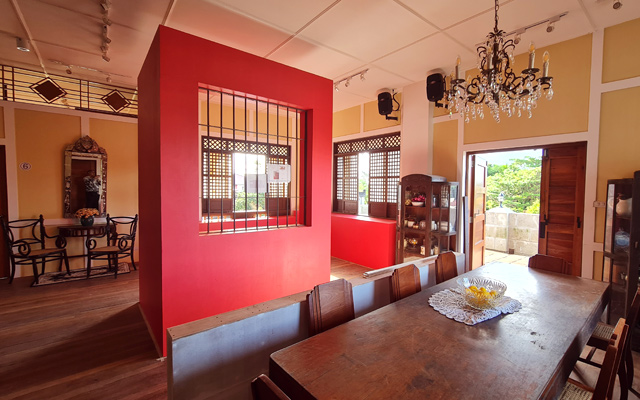
pio valenzuela museum living area
PHOTO BY Arch. Gerard Lico

On the second floor are all the living areas, much like how it is in a typical turn-of-the-century bahay-na-bato. These living areas are a reconstruction through the memory of the pre-war Valenzuela house. Visitors can also walk through the spaces as one would do in an actual house. Photos, memorabilia, and the doctor's actual medical equipment from the Valenzuela family are displayed in the interiors.

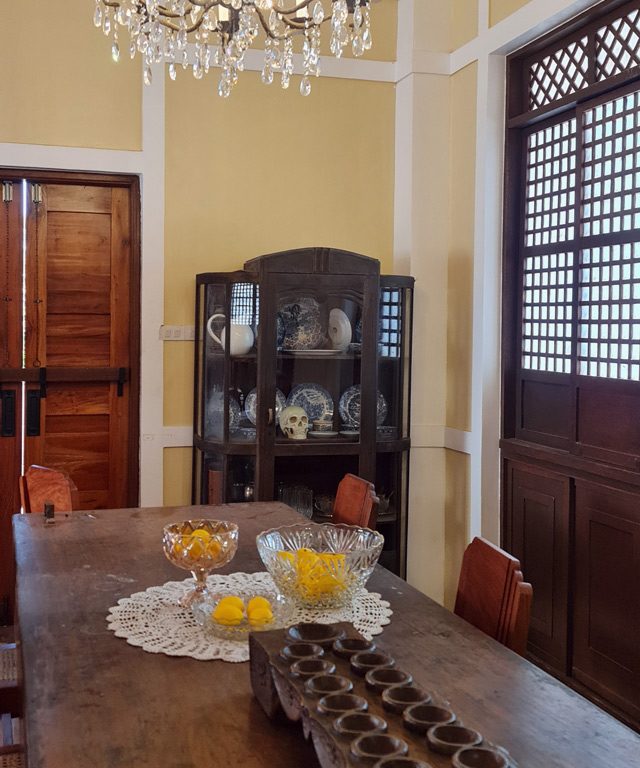
pio valenzuela museum dining area
Dining room with platera and sungka located on the second floor of the museum.
PHOTO BY Arch. Gerard Lico
pio valenzuela museum apothecary
Apothecary in the first-floor clinic and library of Dr. Valenzuela. Some of his original medical tools and equipment are on display here.
PHOTO BY Arch. Gerard Lico

Lico hopes that with this museum and its memories, Valenzuela residents and outside visitors alike will have a chance to learn and get a better appreciation of the life of a revolutionary man, public servant, and the country doctor after whom the city is named.

Museo ni Dr. Pio Valenzuela is at Velilla Street, Barangay Pariancillo Villa, Valenzuela City. It opens to the public in January 2023.

Comments

Latest Stories

Load More Stories
Close