

From Gore to Humor: Finalists of the Ateneo Art Awards 2023
The exhibit runs until December 2 at the Ateneo Art Gallery.
(SPOT.ph) Since 2004, the Ateneo Art Awards - Fernando Zobel Prizes for Visual Arts has been recognizing young artists who are making their mark in the Philippine art scene. It was initially held annually until 2019, then turned into a bi-annual event at the time of the pandemic until the present. In 2014, the award included the Purita Kalaw Ledesma Prizes for Art Criticism, in the hope of giving a platform for art writers to reach a wider audience and encouraging the process of critique in Philippine art.
Works of the Ateneo Art Awards - Fernando Zobel Prizes for Visual Arts finalists are currently on display at the Ateneo Art Gallery at Ateneo de Manila University in Quezon City until December 2.
Ateneo Art Awards: Beyond Recognition and Prizes
The Fernando Zobel Prizes for Visual Arts not only recognizes critical exhibitions of young artists, but also aims to enrich and develop the practice of awardees. Aside from the months-long re-exhibition of shortlisted and winning works, they also connect artists with local and global residencies, expanding the networks of young and upcoming prize winners.
For the Purita Kalaw Ledesma Prizes for Art Criticism, winners get the chance to publish art reviews on the daily broadsheet The Philippine Star, Hong Kong-based website ArtAsiaPacific, and Filipino-language journal Katipunan. They also partnered with Orange Project in Bacolod City to host writer’s residencies starting in 2021.
Ordinary Objects in Museums
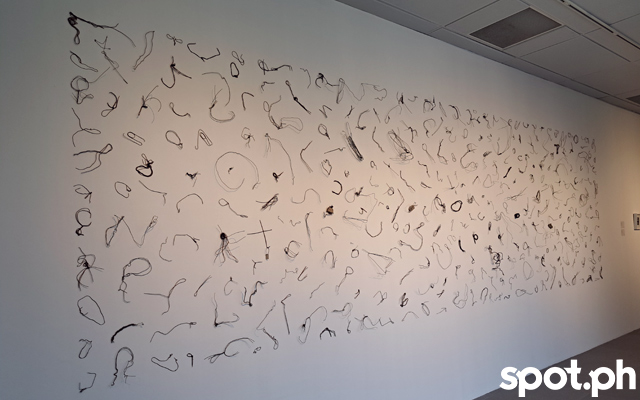
Mars Bugaoan’s Touch, Move grabs the attention at the entrance of the exhibition space with his discarded found objects installed on the wall. It makes for a contemplative piece, inviting the viewer to imagine the stories of objects—twisted, used, and discarded. The life of the object intertwined with the life of the city, the artist, and, in this iteration, the museum.
Gore and Violence
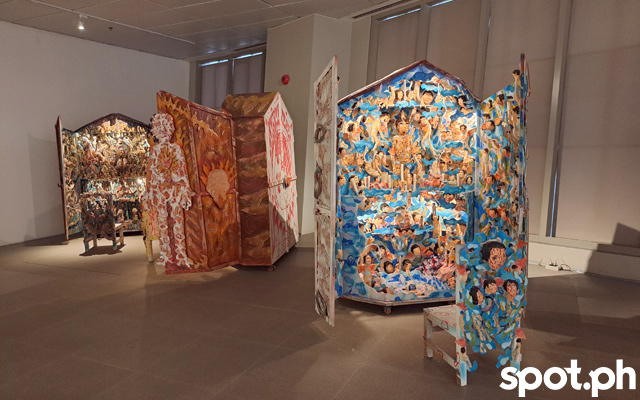
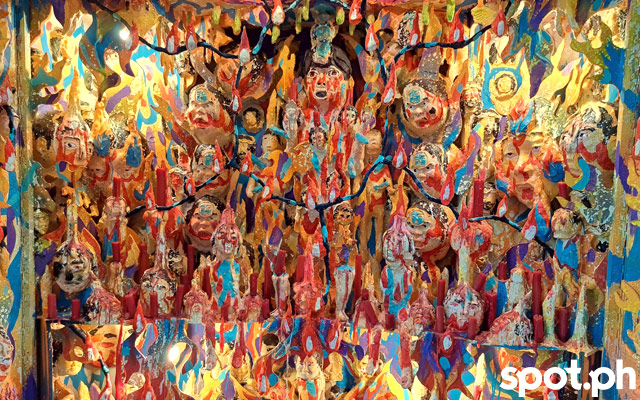
Doktor Karayom’s Sariling Sulok, initially created for Art Fair Philippines 2022, also demands notice, as the colorful and surreal pieces take the viewers on a visual journey. Though bright, the imagery is gory, violent, and distorted. In terms of form, it draws from retablo or altarpieces. Yet, instead of prayerful moments, sitting on chairs and engaging with the pieces meant a connection with the raw, uglier side of things.
Humor in Textile
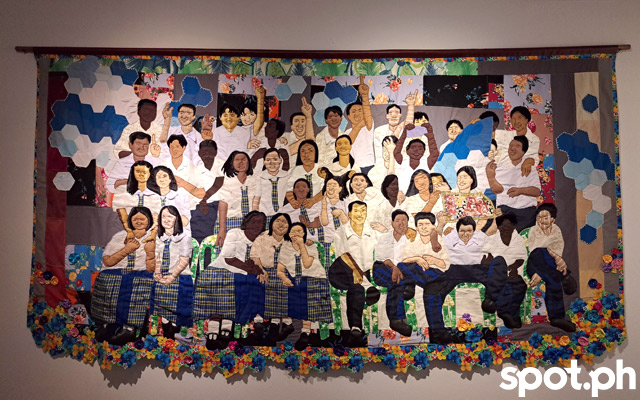
On the other hand, Tekla Tamoria’s Kiliti Ng Taong Nakaupo Sa May Tabi takes color to project humor, using textiles and embroidery to give social commentaries. She recreated a class picture with textiles, capturing the laughter of young students enjoying their youth and time spent together.
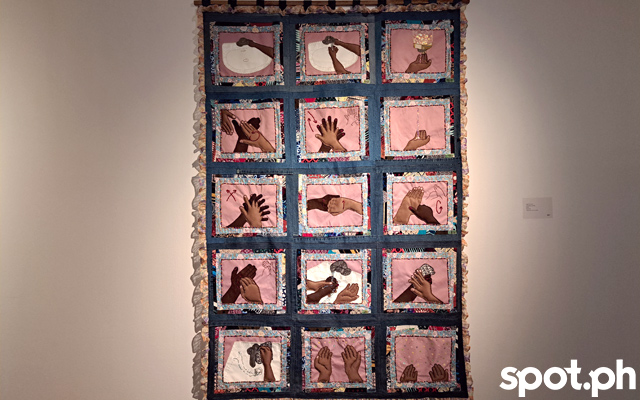
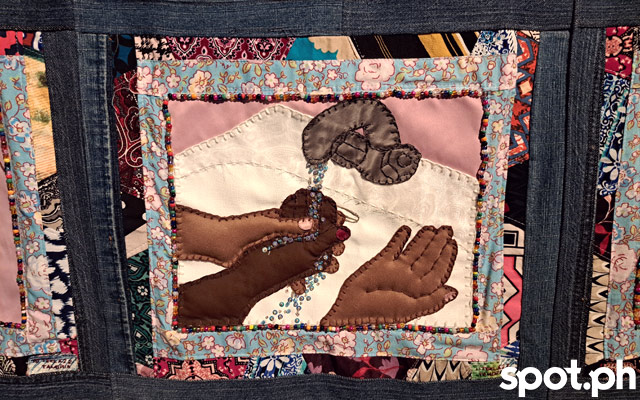
In another piece, she recreated handwashing instructions with textiles and beadwork. Textile work, quilting, and embroidery are often placed in the realm of craft rather than art. Tamoria traverses such divide, reintroducing the concept of textile as a space of artistic medium social critique.
Stories by the River
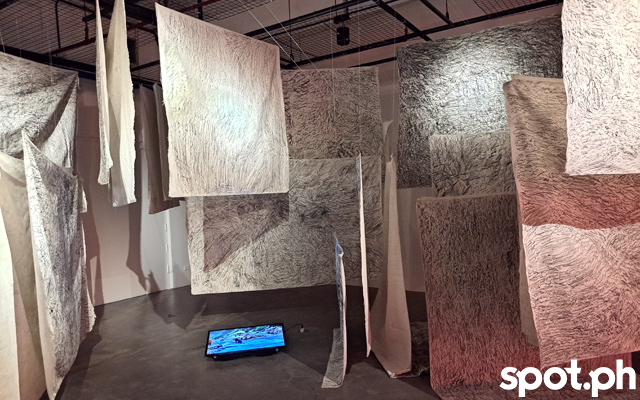
Social commentary is also the center of Vien Valencia’s your age, my age, and the age of the river. He involved the Dumagat-Remontado indigenous group in Tanay, Rizal, in the piece as he critiqued the risks of the Kaliwa Dam project. The dam puts not just the Tinipak River at risk, but also threatens the site, culture, and environment of the community living in it. Valencia, along with the Dumagat-Remontado, traced the landscape using “frottage,” capturing the moment and materiality of the textile. Included in the installation was a video documentation of the process, bringing the viewer back to the story of the textile on view.
Rethinking Map-making
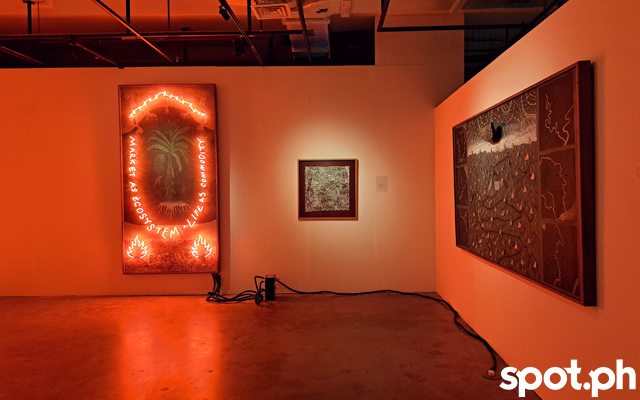
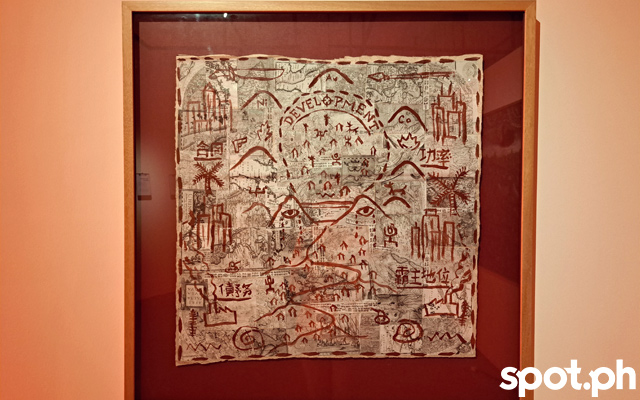
Looking into land and how it is framed are concerns raised by Cian Dayrit's The Austere Enclave. Mapping, as it was introduced and is currently used, has irreconcilable ties with colonialism and the power structures that dictated the demarcation lines of territories. Dayrit critiques such approaches and creates "counter-mapping," where he deconstructs cartographies and presents a map based on the stories and struggles of Filipino communities.
Human Interventions on Land
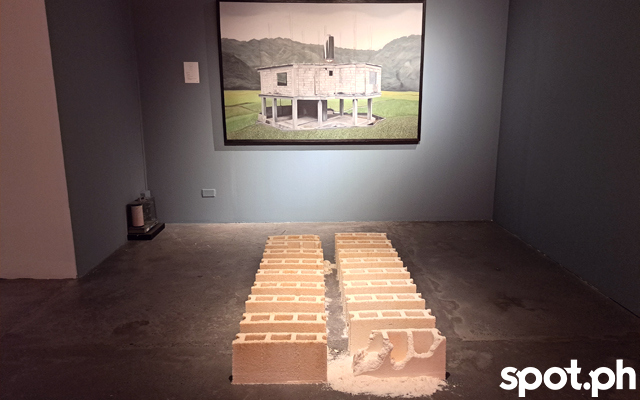
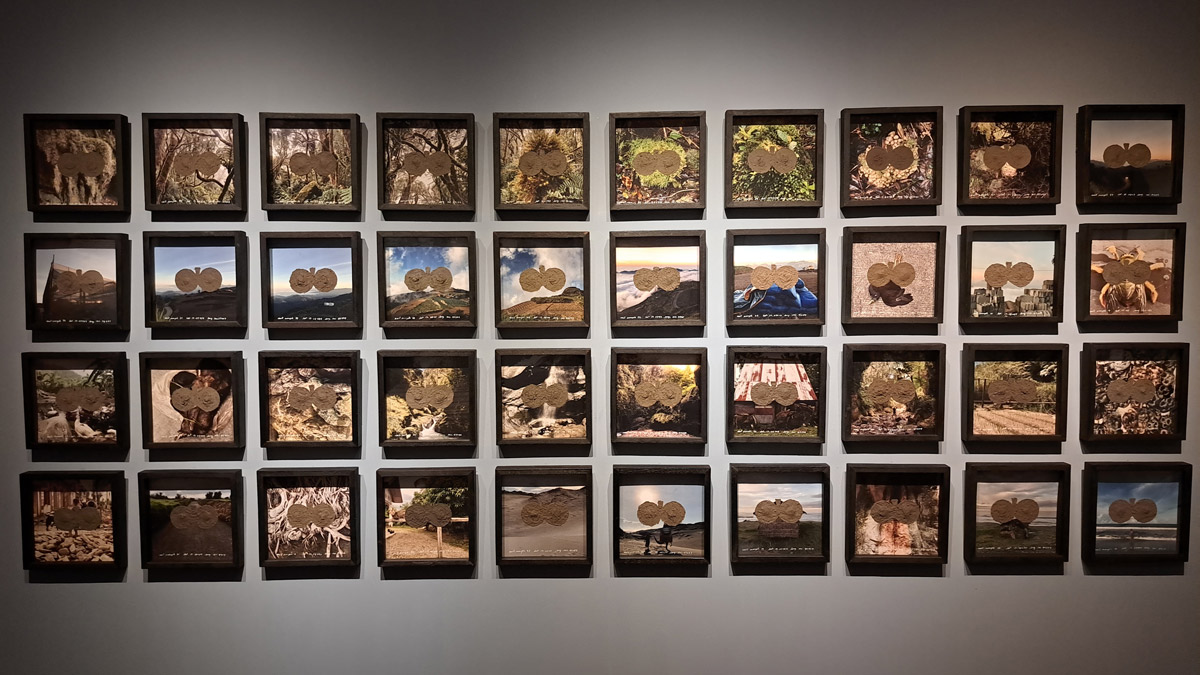
Rocky Cajigan continues the story of land with Place of Origin as he delves into the indigenous and present-day land use in Bontoc, Mountain Province. His interventions examine the ideas of land, home, and stories tied to the earth. He molded salt into hollow block shapes in his attempt to look into constructions and deconstructions of narratives.
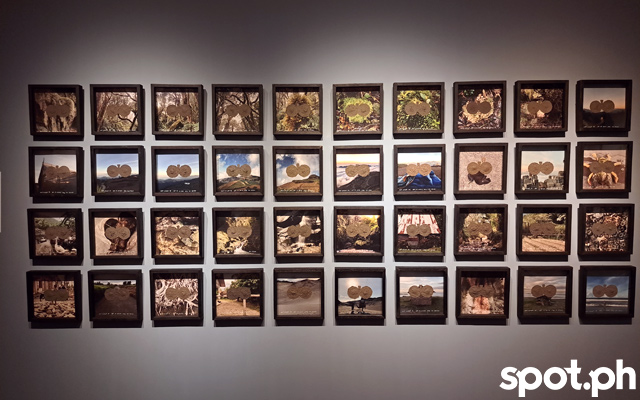
He mars photographs of beautiful vistas and, at the same time, projects the unnaturalness and jarring nature of modern structures, putting into question the ideas of nature, beauty, and culture.
Personal Stories
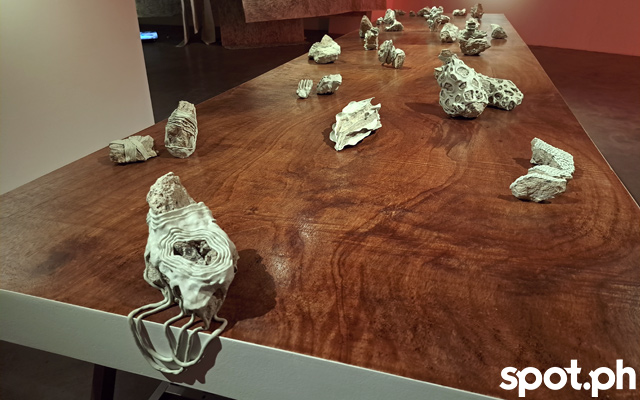
The landscape could also resonate with personal stories, as Veronica Peralejo presented in Collecting Fragments. In this case, Peralejo created her imagined landscape through rubble and clay. Her recent travels to Japan opened her up to the idea of wabi-sabi and its ideas of impermanence and imperfections. She sought to make her intangible memories and feelings into tangible objects, resulting in her pieces for Collecting Fragments.
Question of Age at the Ateneo Art Awards
There is no formula for the Ateneo Art Awards - Fernando Zobel Prizes for Visual Arts. The diversity of shortlisted and winning exhibitions reveals the consistent search for ideas, pieces, narratives, and perspectives in contemporary works by young artists.
One of their key qualifiers is that artists should be 36 years old and below, focusing on what is generally referred to as young artists. However, such a qualifier puts artists who start their artistic career out of consideration, the intent of giving opportunities for young artists to grow and explore stands.
The age restriction is not applied to the Purita Kalaw Ledesma Prizes for Art Criticism, making the opportunity more democratic for writers of any age. Compared to visual arts practice, art criticism has fewer platforms, though more publications accept art criticism today. Opening the doors for art writers, whether early or late in their careers, stands by enriching the practice needed to develop critical perspectives in the arts.
2023 Winners of Fernando Zobel Prizes for Visual Arts and Purita Kalaw Ledesma Prizes for Art Criticism
Twenty years after the Ateneo Art Awards - Fernando Zobel Prizes for Visual Arts and 10 years after Purita Kalaw Ledesma Prizes for Art Criticism were established, the prizes remain relevant for visual artists and writers.
For the 2023 iteration, four artists received the Fernando Zobel Prizes for Visual Arts—Doktor Karayom for Sariling Sulok (Art Fair Philippines 2022); Luis Antonio Santos for Threshold (Silverlens Gallery); Tekla Tamoria for Kiliti Ng Taong Nakaupo Sa May Tabi (Underground Gallery); and Vien Valencia for your age, my age, and the age of the river” (Sampaguita Projects).
For Purita Kalaw-Ledesma Prizes in Art Criticism, the recipients are Sean Carballo for his essay "Object Impermanence" (The Philippine Star); Sam Del Castillo for her essay "The Artist as Artificer: Santiago Bose’s Self-Made Worlds," (ArtAsiaPacific Magazine), and Noji Bajet for his essay "Ang Pagong sa Kalye Pergolese" (Katipunan Journal).