

Exploring the History and Art in Bulacan's Kamestisuhan District
Did you know this district is home to more ancestral homes than Vigan?
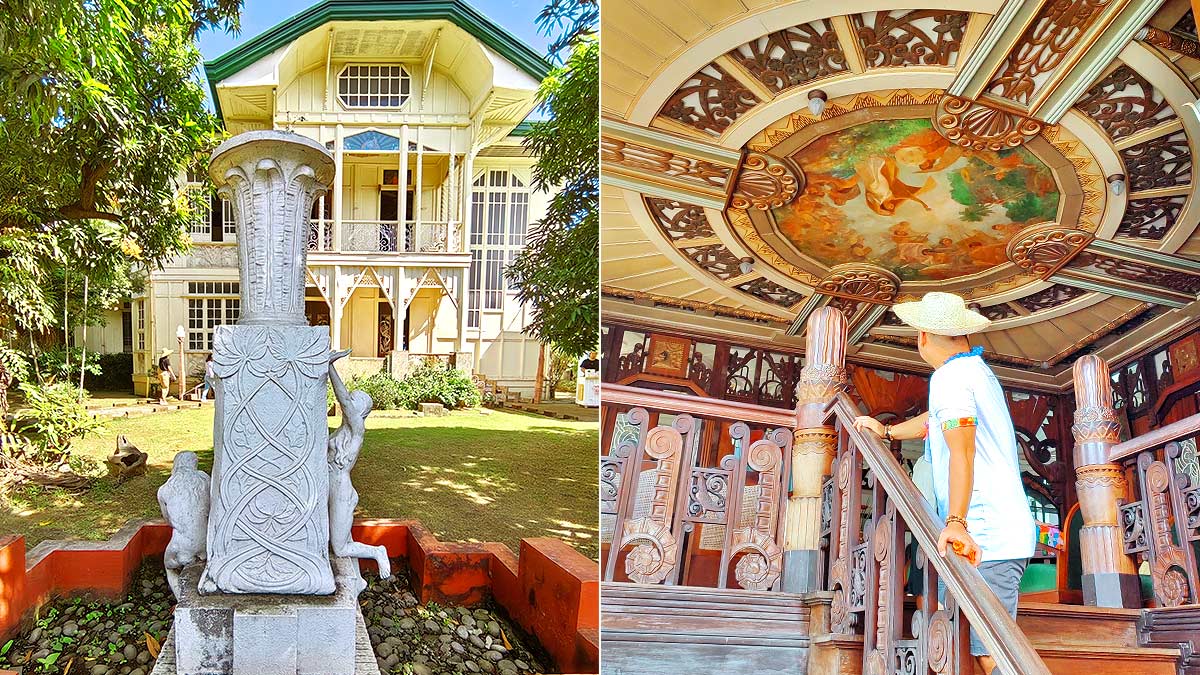
(SPOT.ph) Anyone who has entered an old house, especially a well-preserved ancestral home, can compare the experience to visiting a museum. As one observes a piece of furniture, a painting adorning the wall, an eye-catching design detail, and the very architecture itself, a rich narrative unfolds—one that spans decades and, in certain instances, even a century.
This argument alone strongly advocates the restoration or preservation of old houses. However, the shift to modernity has caused many of our historical houses to be casualties, either left to rot or demolished to make way for newer structures. Another contributing factor is the original owner's lack of interest in funding maintenance. Made mostly from wooden materials, stones, and corals, these houses are expensive to maintain.
Luckily, several districts scattered throughout the country still have a vast collection of well-preserved ancestral houses. Most prominent is the cobblestoned street of Calle Crisologo in Vigan, Ilocos Sur; its rows of Spanish-era houses make up a huge part of Vigan’s Historic City designation that was inscribed as a UNESCO World Heritage Site in 1999. But, unbeknownst to many, there are other heritage districts around the country that boast of well-preserved old houses, with at least a dozen in a single neighborhood. These include Taal, Batangas; Gapan, Nueva Ecija; Calle Real, Iloilo; Dapitan, Zamboanga del Norte; Pila, Laguna; the collection of Bahay na Bato in Juban, Sorsogon; and Silay and Talisay in Negros Occidental, among others, not to mention those in Metro Manila in Santa Ana, Escolta, Binondo, and even Malabon.
One of this writer's favorite ancestral houses is in Malolos City, specifically in what is known as the Kamestisuhan District, located in the downtown area of Bulacan’s capital city.
Also read: Introducing, Casa Simeon: A Heritage House-Turned-Bed & Breakfast
Malolos’ Kamestisuhan District
The Kamestisuhan District earned its name thanks to the influx of wealthy Spanish and Chinese mestizo families who began constructing exquisite residences there in the late 19th century.
During the First Philippine Republic, Emilio Aguinaldo used many of these residences as government offices. Apolinario Mabini even lived in the Maria Reyes House while serving as Aguinaldo's chief adviser. At the same time, the Erastro Cervantes House functioned as the Interior Department office, and the Jose Bautista House was temporarily transformed into the Department of Public Works office.
The National Historical Institute (NHI) declared the district a National Historical Landmark and a Heritage Town in 2001. The NHI identified more than 20 establishments, including at least 15 ancestral houses. These homes are heavily concentrated around Pariancillo Street, a stone's throw from the neoclassical Malolos City Hall Building. Notably, this district has more heritage homes than Vigan’s famous Calle Crisologo.
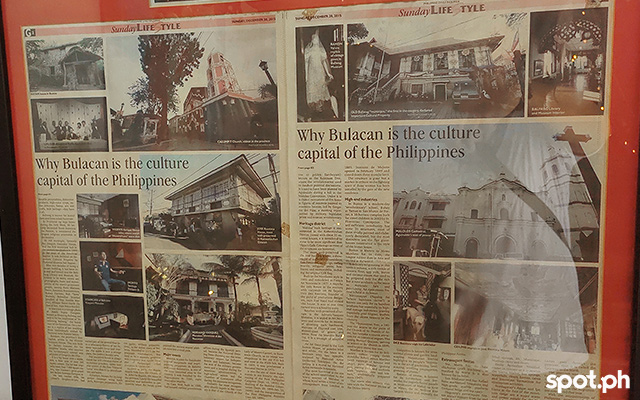
Strolling through this historic district of Malolos, tourists, residents, heritage advocates, and even historians are bound to find their personal favorites. Some favor the Alberta Uitangcoy-Santos House, now known as the Museum of the Women of Malolos, which honors the 20 Filipinas who bravely went against the will of the Spanish friars and demanded educational institutions for women. Others may prefer the Casa Tribunal de Malolos, the Jose Cojuangco House, the Don Ramon Gonzales House, the Don Fausto Chiong House, etc. This writer's personal favorite, however, is the former residence of the late Dr. Luis Santos.
Dr. Luis Santos' Art Deco-inspired home in Malolos' Kamestisuhan District
Dr. Luis Santos was a prominent optometrist in Malolos, Bulacan, but he was also known for his beautifully ornate home.
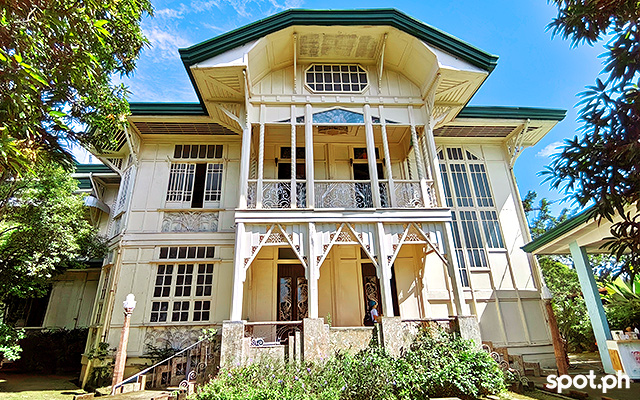
Dr. Luis Santos' house, built in 1932, showcases an Art Nouveau architectural style that harmoniously blends elements from the Art Deco movement. The house sits on F.T. Reyes Street, just a few blocks from his parents' home, the Alberta Uitangcoy-Santos House. It was originally constructed as his residence and clinic, but the house gained an additional layer of renown for the exquisite artwork found inside and outside of its walls—some created by none other than two National Artists of the Philippines. Today, the beautifully restored house frequently attracts the attention of passersby and has even become a popular stop for tourists and cyclists visiting Malolos.
On my previous two visits here, I had only seen the house’s exterior and the sculptured fountain by Guillermo Tolentino on the lawn.
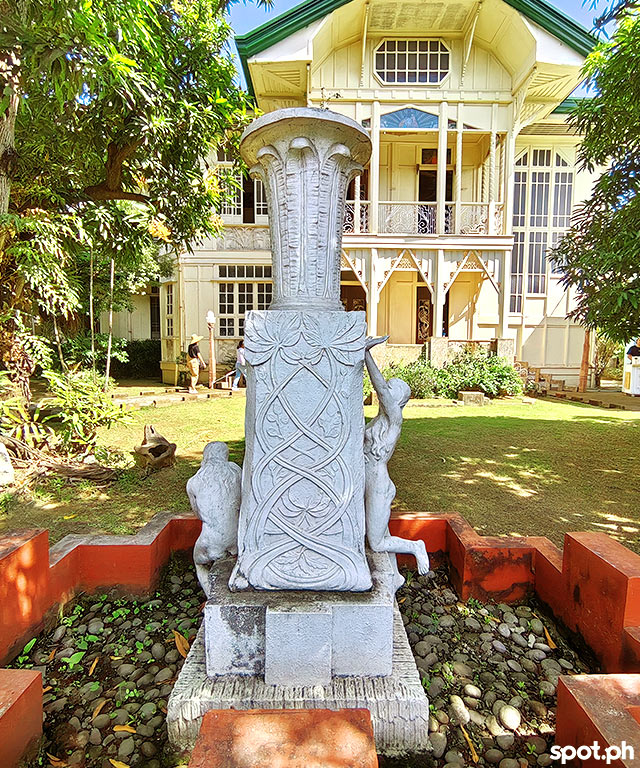
Even though he was a Malolos native, it was still startling to see the work of Guillermo Tolentino—a National Artist for Sculpture, and the man behind the University of the Philippines' Oblation and the Seal of the Republic of the Philippines, among other notable works—at a private residence. After all, most of Tolentino's work is exhibited in the National Museum or other public spaces. Seeing one of his creations on private grounds made me even more curious about the house.
That's just the tip of the iceberg. The house's interior holds another surprise for art aficionados: it's also the home of Fernando Amorsolo's Bounty Harvest.
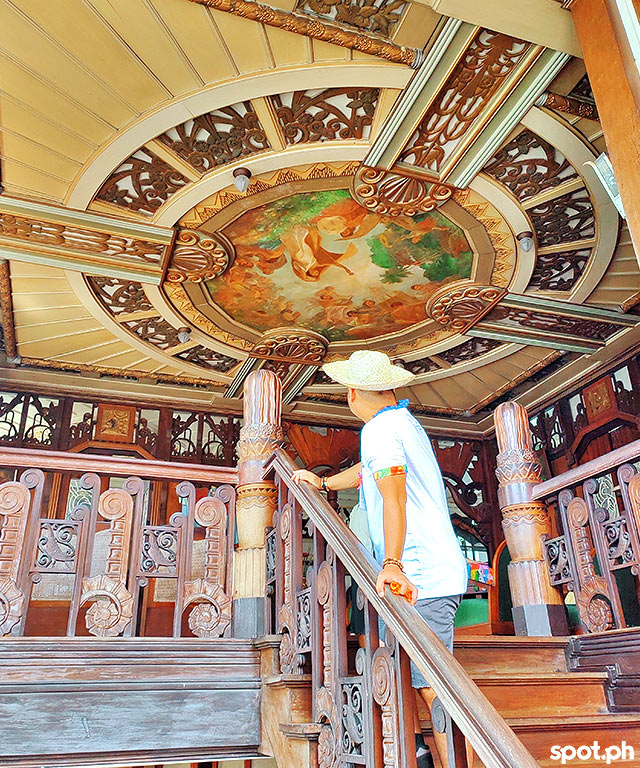
But not everyone can just waltz into the Dr. Luis Santos House and view the art inside. While the heirs occasionally open the house for public events, pre-arranged tours are generally required, meaning these artworks aren't readily viewable by everyone.
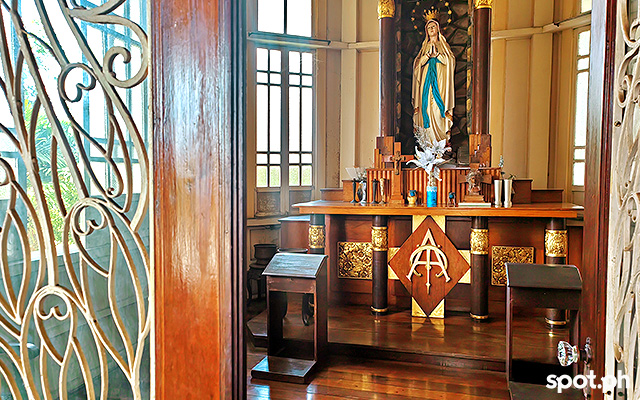
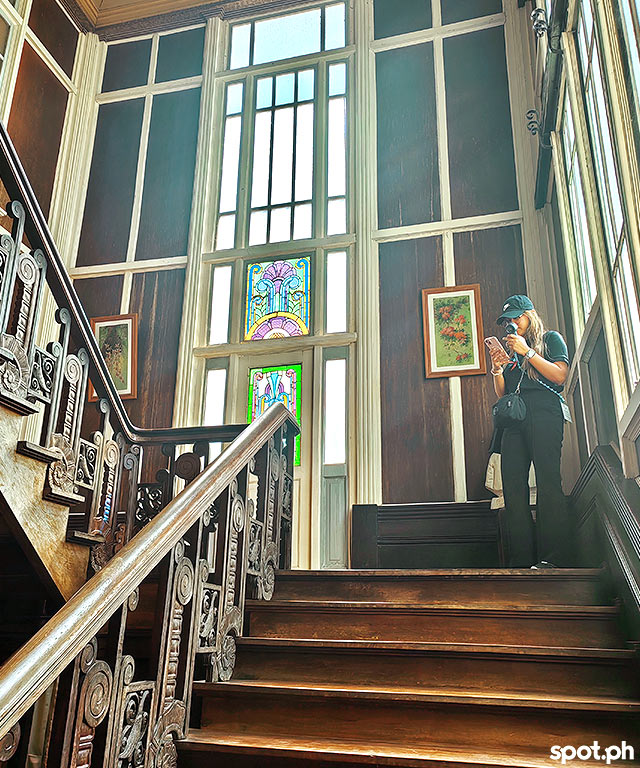
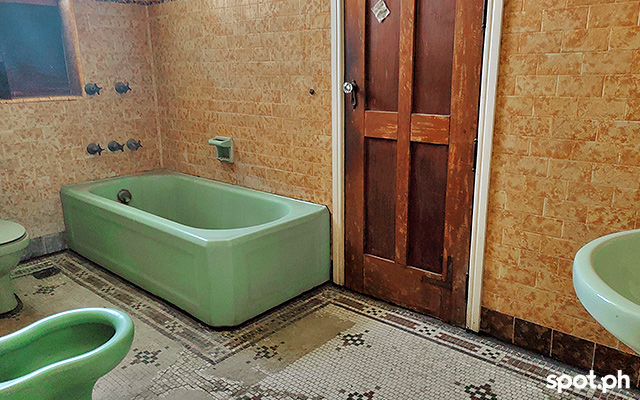
I was lucky enough to tour the house and its treasure trove of art during the Department of Tourism's Philippine Experience for Central Luzon. As one of the media members covering the event, I was granted access, and within moments of entering, I found myself on the staircase, gazing up at the Amorsolo ceiling painting—the one I’ve wanted to lay eyes on since I first learned about it.
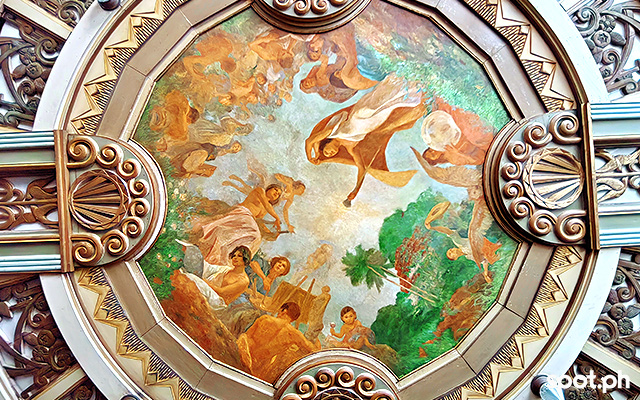
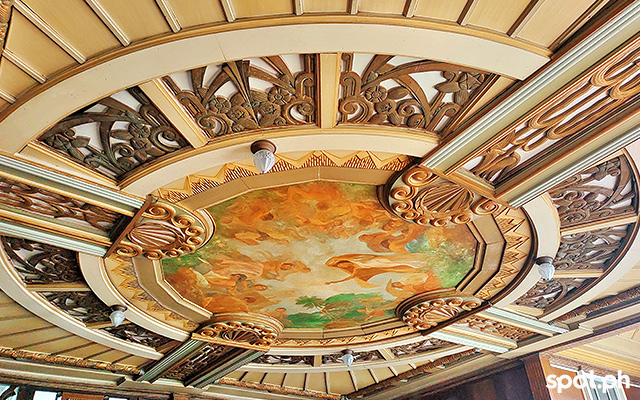
Beyond having works by Amorsolo and Tolentino, what amazes me more is the timing of their commissions. Dr. Santos commissioned both men to create artworks for his home, completed in 1933, long before these artists were recognized as National Artists—and even before the designation even existed (it was established in 1972. and Amorsolo was the first ever awardee). Thus, one could only appreciate the doctor's eye for talent and love for art. Another notable painting inside the house hangs over the piano: El Kundiman, a 1930 creation by Amosolo's uncle and mentor, Fabian de la Rosa.
The house is impressive, and anyone who loves a mix of art and history will enjoy exploring Malolos' Kamestisuhan District, especially the Dr. Luis Santos House. With two National Artists' works displayed in the house, and several ancestral homes and historical landmarks preserved in the area, this part of Malolos City is a must-visit for anyone seeking a glimpse into our history within the very walls where it unfolded.
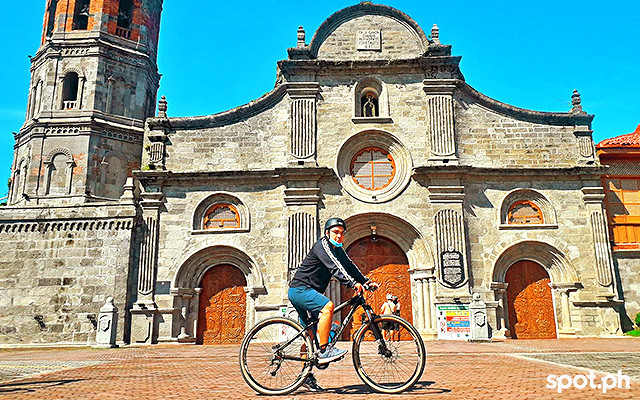
As I walked out of the gate to Sto Nino de Malolos Chapel, passing by Palacio Real de Sto Nino and turning to another well-preserved old home, the Bautista Ancestral House, I felt a surge of gratitude for the people behind the continuous collaborative effort to preserve this historic district and many like it. It is because of their dedication that people like me are able to experience and learn about the past and significant periods in our country’s history.
Also read: The Forgotten Houses of Quiapo
Hey, Spotters! Check us out on Viber to join our Community and subscribe to our Chatbot.