
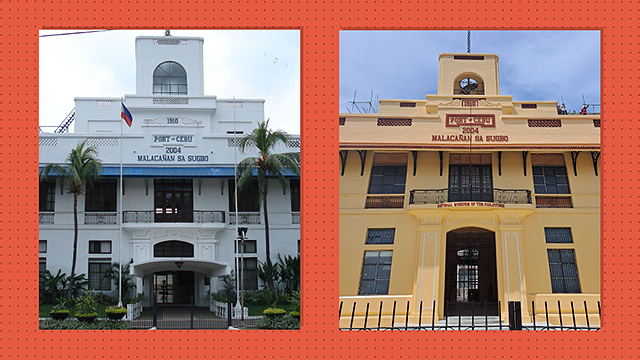
(SPOT.ph) Just a stone’s throw away from the instantly recognizable Spanish era-constructed Fort San Pedro stands another historic building from another colonial period in our country’s history. Although it may not be as imposing nor as well known as the famous fortification it neighbors, what was traditionally referred to as the Aduana Building for a number of years boasts a history that is perhaps a lot more familiar to many modern-day Cebuanos.
Also read: Here's Why the Historic La Loma Chapel Now Has a Yellow-and-White Façade
For nearly a century, this edifice was built for and served as the home of a single government agency integral mainly to the operations of Cebu’s port area. It was also overshadowed by the many other (older) historic structures in the vicinity (most notably the Sto. Niño Basilica), and therefore didn’t really attract much attention from the wider public. In the early 2000s, however, the island province became a favorite destination of a certain former president, who designated the Aduana Building as her official residence in the South. Since then, the Aduana has acquired a more prestigious name, Malacañan sa Sugbo, and together with this rebrand came more than a few incidents with their own respective mentions in the media.
Beginnings with the Bureau of Customs
In the early part of the 20th Century, the American colonial government in the Philippines, under Governor General (and future US president) William Howard Taft, tasked architect and urban planner William Edward Parsons to help realize development plans already in place for the cities of Manila and Baguio. He would subsequently be appointed as the government’s consulting architect—a post he would hold from 1905 to 1914. Throughout that time, Parsons oversaw and helped develop various construction projects all over the archipelago. One of his most famous contributions is, in fact, the bahay-na-bato-inspired Gabaldon school building, the signature design for the many public schools established during the American period.
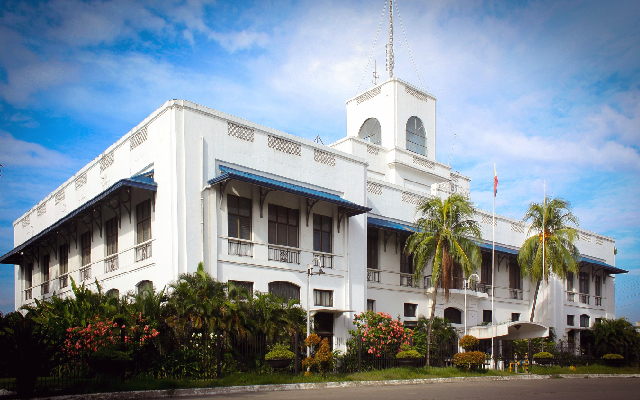
Parsons’s development plans for the city of Cebu eventually led him to design a building to house the district office of the Bureau of Customs, a government agency established in 1902. In 1910, the Customs or Aduana Building was officially inaugurated. Its facade bore clear hints of Parsons’s penchant for blending American colonial architecture with Philippine materials as exemplified by his use of capiz shell windows. Despite the chaos of World War II and amid the turbulence of the post-independence years, the Bureau would continue to call the building home, and things didn’t seem likely to change anytime soon.
Rebranding as a Presidential Residence: Malacañan sa Sugbo
The election of May 2004 saw presidential candidate Gloria Macapagal-Arroyo sweep victories in several provinces in the southern half of the country, particularly in Cebu, where she enjoyed unparalleled support. The province fell into her good graces, and a few months later, President Macapagal-Arroyo ordered the Bureau of Customs to vacate the Aduana Building so she could take up residence there. Employees of the Bureau, meanwhile, were relocated to another building in the pier area owned by the Cebu Port Authority.
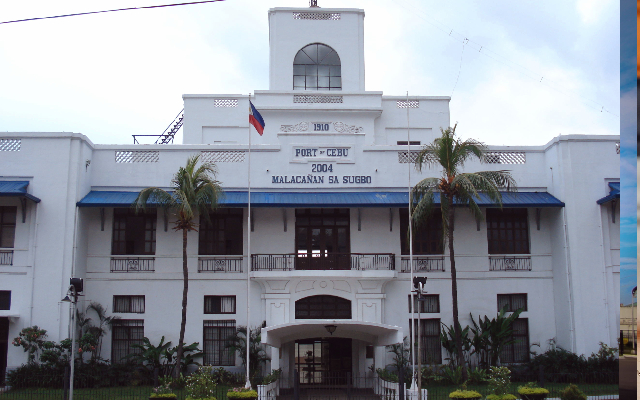
Expenses by the national government to renovate the Aduana Building amounted to P700,000, and Macapagal-Arroyo christened it the Malacañan sa Sugbo. This name eventually caught on and stuck with many younger Cebuanos, who tend to use that moniker more frequently than the old name.
The Post-Arroyo Years
Different presidential administrations have different priorities. When the Macapagal-Arroyo government packed up and left Malacañang, it took with it the care and fervor surrounding the presidential palace’s counterpart in Cebu. Malacañan sa Sugbo thus fell out of use and faded out of the limelight as the new administration of President Benigno Aquino III took over. Had it not been for a couple of earthquakes that struck the island in the 2010s, the building would have likely been ignored by the public even further.
The first tremor, which happened in February of 2012, significantly damaged the port building the Bureau of Customs had transferred to in 2004. This prompted then Commissioner Ruffy Biazon to request that the Aquino administration allow the Bureau to move back into their old home. Nothing seems to have come of this, however, which ultimately turned out to be a blessing in disguise. A more devastating earthquake struck the entire region in October 2013 and toppled or severely damaged several colonial-era structures. Malacañan sa Sugbo, while not completely demolished by the quake, was cordoned off and declared unsafe for occupancy by the Cebu City Department of Engineering and Public Works. Any hopes by the Bureau of Customs to return to their former venue were snuffed out.
In 2016, a new presidential administration rose to power, and with this came a renewed interest for a building that had effectively been reduced to a white elephant in the heart of downtown Cebu. Presidential Assistant for the Visayas Michael Dino announced he would set up office in the left wing of Malacañan sa Sugbo, after six years of the structure remaining unused. Another round of renovations soon followed, meant to address the structural problems of the building. Dino also teased the possibility of converting the rest of Malacañan sa Sugbo into a museum. The mayor at the time, Edgar Labella, agreed to the plan, as it aligned with Cebu City’s reputation as a place rich in history and heritage.
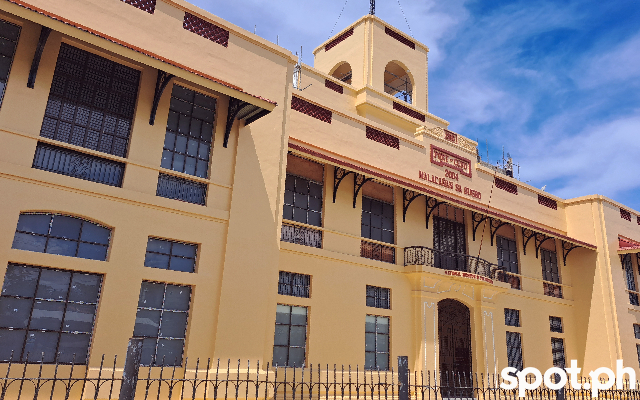
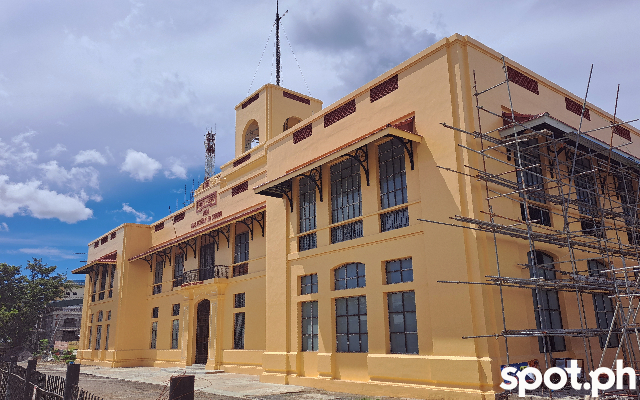
In August of 2019, a team of representatives from the National Museum of the Philippines conducted an ocular inspection of the venue. It seems they were impressed by what they saw, for later that year the National Museum of the Philippines and the Cebu Port Authority entered into an agreement whereby the former would fund the conversion of the building into a museum, while the latter would still maintain ownership. As of this writing, Malacañan sa Sugbo is undergoing another round of renovations (which includes a can't-be-missed paint job) expected to reach up to P160 million, according to NMP director Jeremy Barns.
Shedding Its White Elephant Reputation
There’s no question that the recent history of the Aduana Building/Malacañan sa Sugbo has proven to be rather tumultuous. If the agreement between the National Museum and the Cebu Port Authority is any indication, though, coupled with the ongoing renovations, then it’s highly likely that this historic edifice may well be on its way to finding a second life. One of the Bureau of Customs’s many tasks is to keep a careful eye on what products and goods make it into the region, and hold these if necessary, often without the wider public’s knowledge. Perhaps one can find some meaning in the fact that, once converted into a museum, the Bureau’s old home shall serve as a storehouse for artifacts and documents that ordinary citizens can view and appreciate.
In these unfortunate times when the legitimacy of history has been called into question—even besieged—the establishment of culture and heritage institutions like museums is most welcome news. One can only hope that, for the many years to come, many Cebuanos and other visitors to the province will patronize and learn from what this new museum’s exhibits have to offer.