
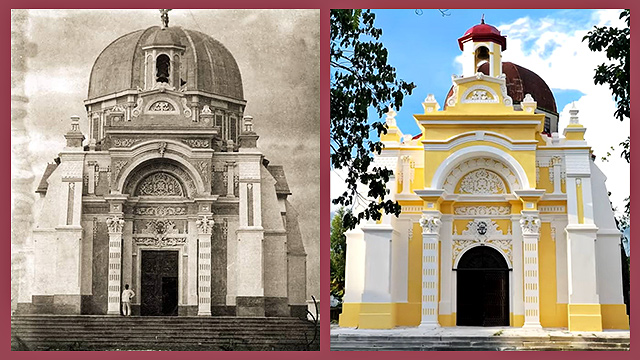
(SPOT.ph) For years, heritage and history enthusiasts have wondered about the fate of the La Loma Chapel located at Campo Santo de La Loma, the oldest cemetery in Manila City. The chapel or Lumang Simbahan, which is more than 130 years old, had been padlocked and unused for decades. It was only in June of 2021 when activity was finally seen at the important heritage structure as Escuela Taller de Filipinas started work on its conservation.
Also read: 10 Heritage Sites in Manila That Need Your Attention
Escuela Taller is a non-profit school that trains out-of-school youth in specialized skills related to heritage conservation, and the Archdiocese of Kalookan commissioned them to take on the La Loma Chapel project. From its initial inspection in 2017, the Escuela Taller team knew it wasn’t going to be an ordinary restoration job. The chapel had many issues, including adobe stones falling from the interior and exterior, surface deposits on its adobe, and ossuaries added to the interior. It was clear that the structure needed emergency maintenance.
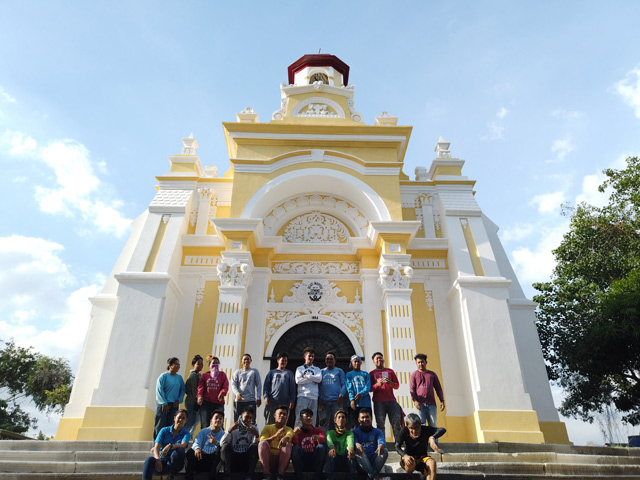
Conservation of the chapel’s façade was concluded in May of this year, with the exposed adobe brick now refinished and painted yellow and white, its architectural details restored and made more prominent. SPOT.ph touched base with Jeffrey Cobilla, lead architect of Escuela Taller, as he addresses many of the public’s questions about the chapel. "We’re quite used to these questions; we take it as an opportunity to impart what we know," he says. "And it’s just not restoration, but conservation—rehabilitation, repair, rebuilding, etc.—these are all aspects of the project."
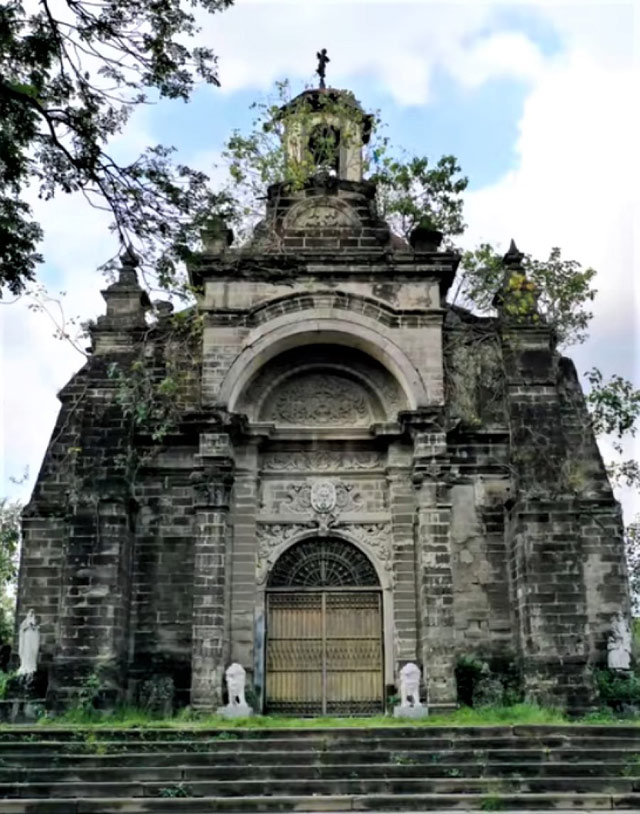
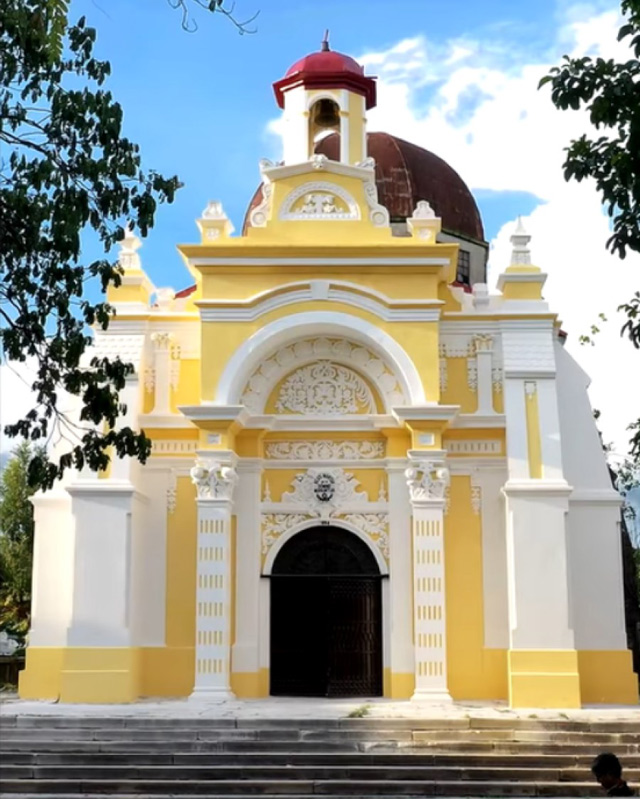
Here’s everything you need to know about the La Loma Chapel at the border of Caloocan and Manila:
The Lola Loma Chapel survived a number of wars.
The La Loma Chapel was built around the same time that the cemetery was established, in 1884. In spite of the chapel’s age, it did survive a couple of Philippine wars, unlike many other pre-war structures in the country.
"It survived World War II, even if it was made into a garrison," Cobilla reveals. "Actually, military activities went on in the chapel in both Second World and Philippine-American wars. In fact, one of the American-period reference images we dug up was of a battleground view showing the rear side of the chapel with a mortar hit on the roof."
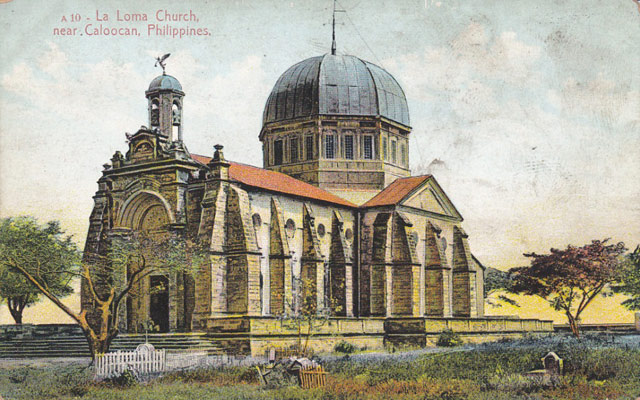
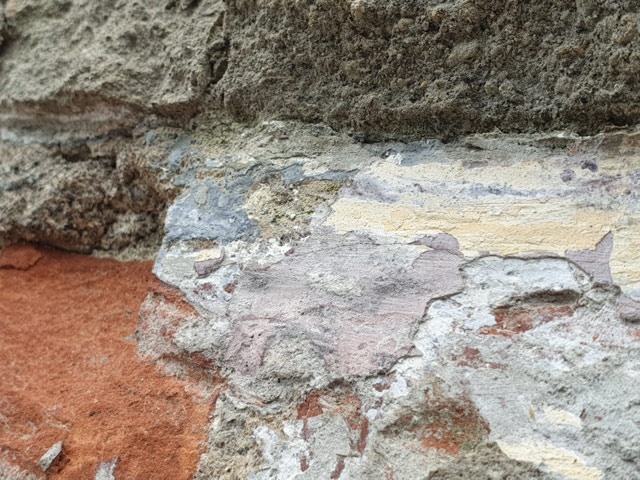
There is evidence that the La Loma Chapel was once painted yellow.
One of the most debated aspects in social media heritage groups was the final choice of façade color: yellow and white, which surprised those who were used to seeing the bare adobe façade. According to Cobilla, the conservation team did thorough research prior to choosing the final color palette. “We did forensics, and we also surveyed the conditions…and gathered information on the remnants of [the chapel’s] former colors,” the architect says, further explaining that they inspected the layers of limewash on the adobe exterior to find evidence of the original colors. Vintage colorized photos were also examined, and the American-period images showed either yellow or white paint on the exterior.
"There was yellow, white, gray, and we even found terracotta colors; most interestingly, we also found the color purple, but we believe it was a more recent color," Cobilla says of the chapel’s limewash remnants. "Looking at the usual colors of limewash, which was the method of painting back then, ‘yong usual colors talaga were salmon pink, terracotta, yellow or yellow ochre, and white. So, our final color schemes were based on those colors." These color schemes were presented to the Diocese of Kalookan, who chose the yellow-and-white palette.
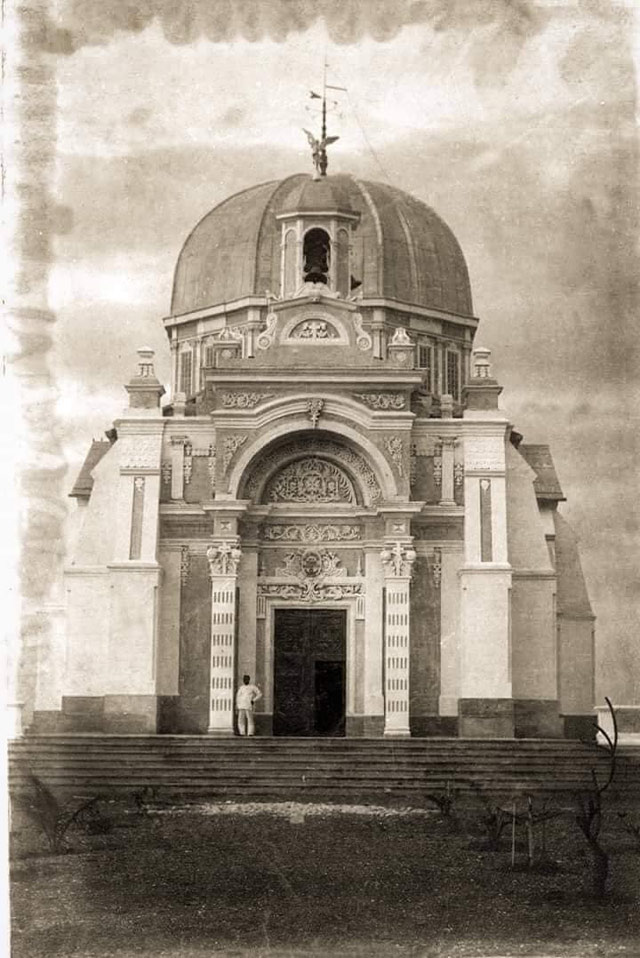
The chapel dome still exists.
Another detail that was brought up by folks online was the existence—or absence—of its dome. Cobilla confirms that the dome is still there, albeit modified over time, and much smaller. “In the old images, it was obvious that the dome was much bigger,” he says. “Iba na ang proportion ngayon. It’s smaller, and more simplified.” In photos taken of the newly restored chapel in different angles, you could still see the dome at the rear.
The plastered façade is better than bare adobe.
Other reactions focused on the conserved chapel façade’s newly smooth exterior. Some people even remarked that they missed the old, “ruinous” façade of adobe peppered with plant growth. Cobilla, however, explains that the chapel’s former naked adobe exterior wasn’t the ideal situation for the structure. “These types of structures were romanticized; nauso sometime in the past, na dapat bare ang mga ito. Little did they know that they are harming it by removing the skin, or the protection of the structure.” The architect also says that underneath the beautiful plant growth are large roots that could destroy the building’s structure.
Aside from the removal of invasive plant growth and the plastering of the façade, part of the corrective maintenance done by the team was the introduction of weep holes to minimize water damage. The plaster finish of the chapel was also based in part on an American-period photo which clearly shows the smooth façade, along with ornamental details that can be clearly seen; these details were also restored by the Escuela Taller team.
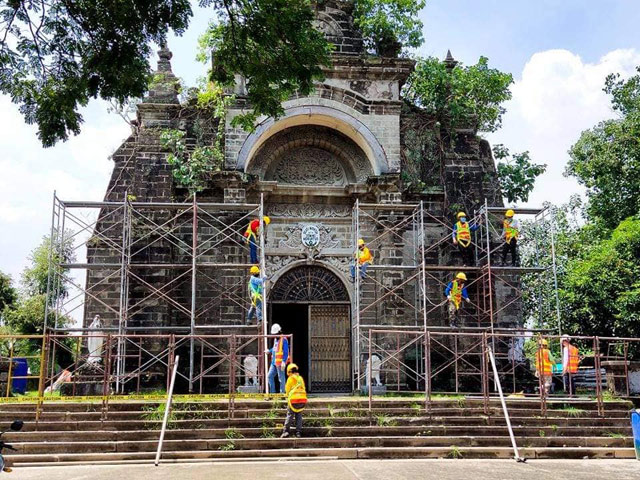
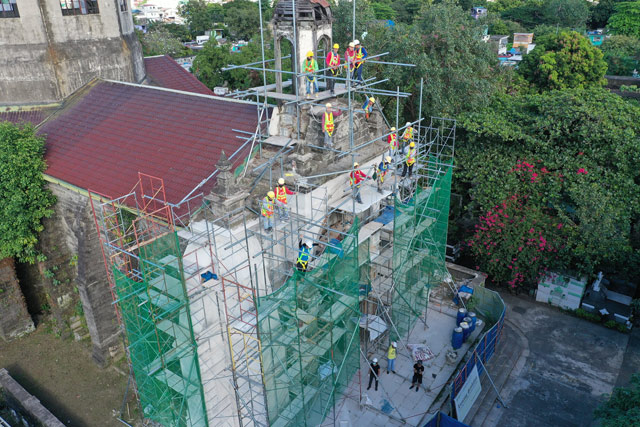
Works isn't over for the La Loma Chapel's conservation and restoration.
Conservation of the La Loma Chapel’s façade took 11 months, but the façade is just the first step in the total conservation of the church. Cobilla says that in the next phase, the team will be working on the exterior sides of the chapel, specifically the right side, which needs immediate attention. “Kung tuluy-tuloy siya, and depende sa funding, siguro aabutin lahat nito ng mga limang taon,” he says.
Aside from the La Loma Chapel, Escuela Taller is currently working on other ecclesiastical projects, such as the conservation of the retablo by famed sculptor Isabelo Tampinco’s atelier and the convent at the Minor Basilica of Our Lady of Manaoag in Pangasinan, the belltower of St. Polycarp Church in Cabuyao, Laguna, and heritage consultancy for the Holy Rosary Parish Church in Angeles City.