

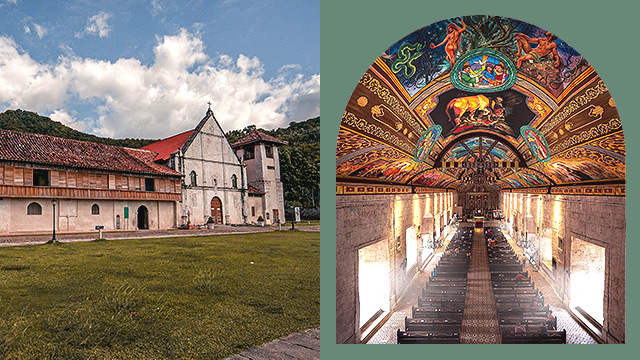
(SPOT.ph) Despite being comparatively smaller than the much larger island groups of Luzon and Mindanao, the Visayas occupies a significant place in the history books as the region through which Christianity entered the Philippines. It was on these islands that the first Roman Catholic mass was celebrated, the first mass baptism of pre-colonial Filipinos was performed, and where one of the oldest relics of Christendom in Asia, Magellan’s Cross, was erected. This five-hundred-year legacy has, in turn, left many churches spread out all across the multitude of islands that make up this mini archipelago, with their locations and architecture greatly affected and influenced by natural calamities, the change of hands between religious orders, and even the frequency of pirate raids.
Also read:
10 Churches to Visit for Visita Iglesia
PHOTOS: 14 Historic Manila Churches to Visit for Visita Iglesia
These heritage churches in Visayas are worth a visit:
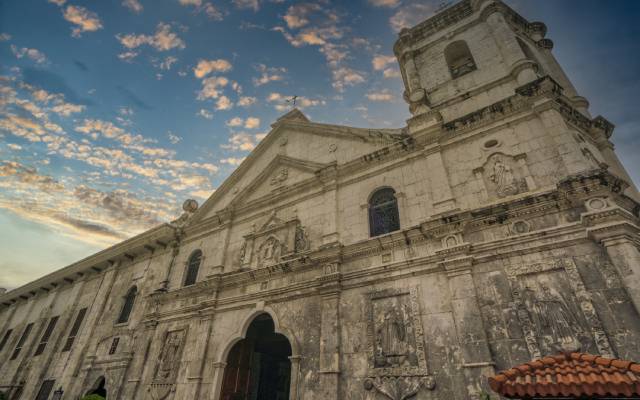
Basilica Menor del Santo Niño de Cebu
Pilgrim’s Center, Osmeña Boulevard, Cebu City, Cebu
No list of colonial-era Visayan churches would be complete without including what many consider to be the OG Catholic church in the Philippines. Founded in 1565 by Augustinian friars, this now instantly recognizable basilica has surprisingly humble origins steeped in lore. Legend has it that the church stands on the site where Miguel Lopez de Legazpi and his crew discovered the image of the Santo Niño in a burned hut. The icon had been gifted some 40 years prior by the Magellan expedition to the rajah of Cebu at the time, Humabon. A church of wood and nipa was first constructed over the fabled location a few decades after Legazpi’s arrival, while the present stone building was completed in 1740. Despite falling victim to two fires and a lethal 2013 earthquake that took down its belfry, not to mention several typhoons over the centuries, the Sto. Niño Basilica continues to stand tall and proud, remaining a source of pride and inspiration for many Cebuano Catholics.
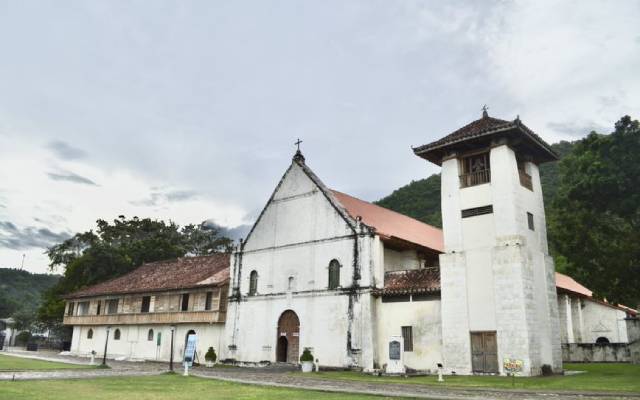
Our Lady of Patronage of Mary Parish Church
Natalio Bacalso Avenue, Boljoon, Cebu
Travel a little further south from the metropolitan heart of Cebu, and you’ll feel transported back in time. Our Lady of Patronage of Mary in the municipality of Boljoon is a small church that stands in the middle of expansive parochial grounds. It also hides a fascinating history. Besides being a place of worship, Boljoon’s church also doubled as a fortress, where parishioners could seek refuge behind its thick mortar and lime walls in the event of a pirate raid. In fact, the entire church complex still bears traces of this intriguing, if not tense, history—from the bell tower’s ground floor, which also may have doubled as a prison cell for captured pirates, to the quadrangular blockhouse where artillery was stored.
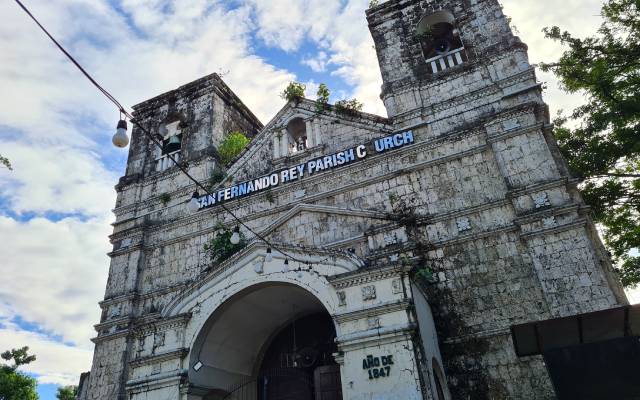
San Fernando Rey Parish Church
Cebu North Road, Liloan, Cebu
The northern Cebu municipality of Liloan is home to one of the most distinct heritage churches on the island. Although its coral stone facade and Baroque style may make it look like any typical Spanish-era church, the San Fernando Rey Parish Church is notable in that it is turned away from the sea. No one really knows the reason for this. What historians do know, though, is that this church, which takes its name from one of the most successful kings in Spain’s history, first broke from the larger St. Joseph Parish in Mandaue in 1845. At first, the new parish church was made of wood. It would take another 40 years, coupled with the skill of several craftsmen and the importation of building materials from nearby provinces, before the wooden structure would transition into the modern marvel all residents of Liloan are familiar with today.
Saints Peter and Paul Parish
Pres. M. L. Quezon Street, Bantayan, Cebu
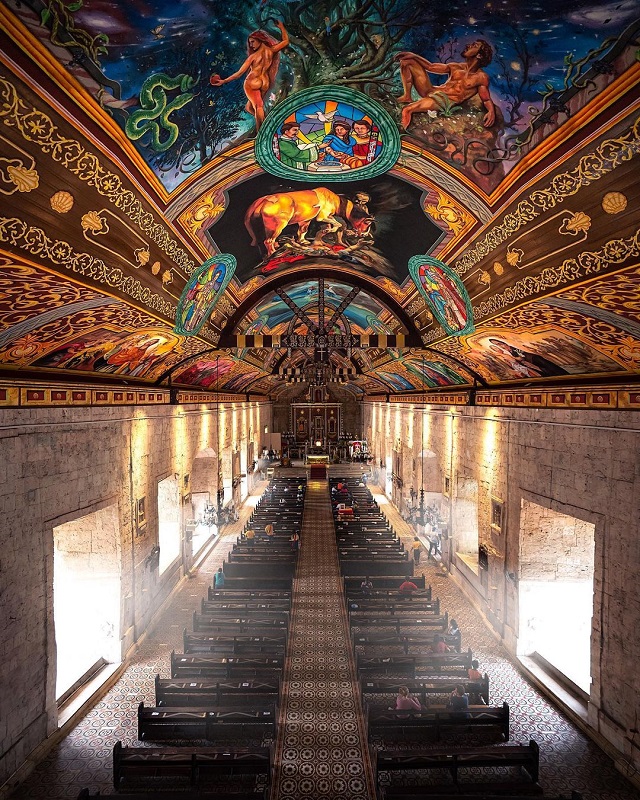
Bantayan may be more famous nowadays as a resort island and holiday destination (especially during Holy Week), but it’s also home to the oldest parish in Cebu—one that was especially vital in the missionary efforts in the north of the province. The Bantayan Church traces its history to a convent established by the Augustinians in 1580. Construction of the present stone structure began in 1839 and was completed in 1863. Like many churches of the time, it was built to simultaneously be a house of praise and protection. (Pirate raids were quite common in Bantayan.) The parish eventually fell under the patronage of St. Peter, a favorite saint of fishing communities. In the 1980s, the name of St. Paul was added; due to much controversy, the parish has since announced it would revert back to its original St. Peter patronage. The church also generated much buzz on social media when intricately drawn religious murals, painted on the ceiling by the Dibuho Kisame Crew, made the rounds online. These artworks were the subject of the 2020 award-winning documentary Masterpiece.
San Agustin de Hippo Church
Bacong Road, Bacong, Negros Oriental
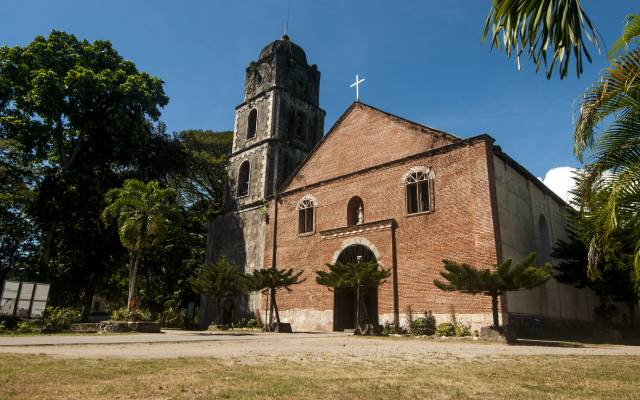
The municipality of Bacong is perhaps most renowned for being the hometown of Visayan revolutionary Leon Kilat. But it’s also home to one of the most notable churches in the region, San Agustin de Hippo, which began construction in 1864. The church boasts the oldest main altar and tallest belfry, especially useful for watching for pirates that traversed the Tañon Strait, in the province of Negros Oriental. As if these weren’t impressive enough, the choir loft of the church is also home to an old pipe organ shipped all the way from Zaragoza, Spain. The famed musical instrument was installed in the 1890s, right on the eve of the Philippine Revolution, and thus one can only marvel at the fact that this organ was already around at the same time as Bacong’s most famous son.
San Pedro Apostol Parish Church
Loay Interior Road, Loboc, Bohol
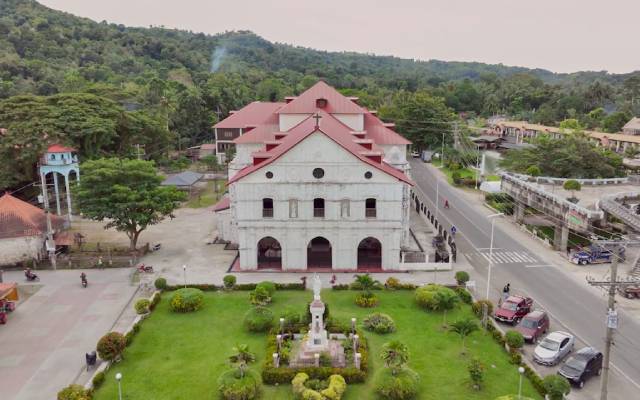
Located right along the banks of Bohol’s most popular river is a parish that, over its 400-year history, was especially crucial to the Christianizing mission on the island. Like many other churches in Bohol, the San Pedro Apostol Parish Church was founded by the Jesuits, who established the first Christian community in Baclayon. Several pirate raids over the years, however, forced the religious order to move their mission further inland, beginning with the building of a wooden church next to the Loboc River, followed by a seminary in the early 1600s. The church was rebuilt following a fire that destroyed the original wooden structure in 1638. This was followed by the construction of a larger church, this time made of coral stone, from 1670 to 1734. Unfortunately, the Jesuits did not get to enjoy this new edifice for long. Following their expulsion from the country in 1768, administration over the parish was turned over to the Augustinians, who implemented major renovations throughout the nineteenth and twentieth centuries. Many of these, such as the elevation of the floor to address flooding concerns, can still be seen today.
Santa Cruz Parish Church
Maribojoc, Bohol
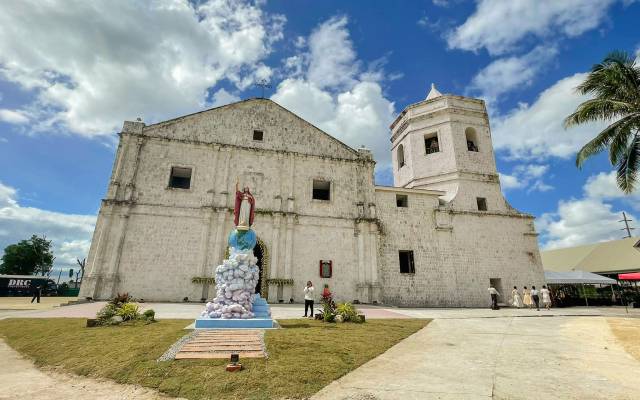
Another Jesuit-founded Bohol church can be found in the municipality of Maribojoc, just a few kilometers north of the provincial capital, Tagbilaran. Santa Cruz Parish Church, though, has a notorious history behind it. Between 1798 and 1816, the first church in the area was constructed by way of forced labor. According to historian Regalado Trota Jose, native parishioners were ordered to carry at least four pounds of rock every time they attended services as their way of contributing to the construction. Administration of the church was eventually turned over to the Augustinians, who oversaw the construction of the coral stone church, which was completed by 1886. In 2010, Santa Cruz Parish was declared a National Cultural Treasure by the National Museum of the Philippines. The church may have survived both wars and natural calamities since, but it was ultimately destroyed by the 2013 Bohol earthquake. Only the image of the Sacred Heart of Jesus was left standing amid the rubble. Perhaps just as miraculous, however, is the fact that the parish was faithfully restored after eight years, reopening its doors to parishioners again in late 2021.

Our Lady of Light Parish Church
Tagbilaran North Road, Loon, Bohol
A parish in Loon was first established by the Jesuits, who were tasked with evangelizing Bohol, in 1753, under the patronage of Our Lady of Light. When the order was expelled in 1768, the Augustinians took over, doubling down on the church complex’s defenses throughout the succeeding decades, while at the same time continuing with their religious missions. A fire in the 1850s compelled the parish priest at the time to order the construction of the present stone church. Director of Public Works in Cebu, a certain Domingo de Escondrillas, was tapped to design the church, which was completed in 1864, thanks largely to forced labor. As with several other churches in Bohol, Our Lady of Light was declared a National Cultural Treasure in 2010. It was completely demolished during the devastating earthquake that struck the island three years later. Eight years of reconstruction followed, and the church began welcoming parishioners again in September 2021.

San Francisco Javier Parish Church
Rizal Street, Barangay Ipil I, Palompon, Leyte
The small port town of Palompon, Leyte, may be more renowned for being the municipality where Kalanggaman Island belongs, or even for the mangrove-roosting bats that fly out at dusk and cloud the sky. But for those whose interests lie more in the historical and cultural rather than the natural, then the San Francisco Javier Parish Church is the place to drop by should you find yourself in this locality. Situated right along the town’s main road, San Francisco Javier was first established as a parish in 1784, making the church the oldest on the island. More recently, the parish gained some recognition for being the second Visayan church to have its ceiling painted by the Dibuho Kisame Crew. Many of this artist group’s members hail from Palompon after all. Since 2020, their brightly colored religious murals have greeted—and amazed—parishioners of and visitors to their hometown church.
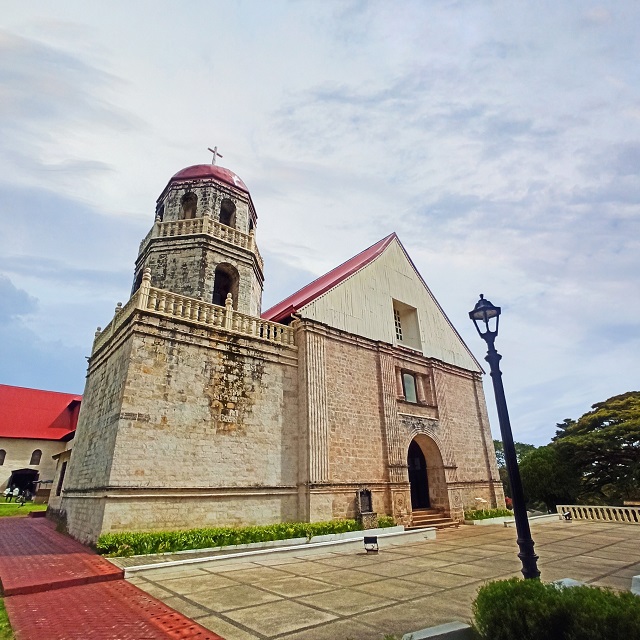
San Isidro Labrador Parish Church
Siquijor Circumferential Road, Lazi, Siquijor
Even on islands tied to a certain mysticism still influenced by pre-colonial practices, Christianity appears to have left its indelible mark. Such is the case of the San Isidro Labrador Parish, located in the municipality of Lazi, and established by the Augustinians in 1857. The present church was completed in 1884, with the bell tower following suit the year after. The builders’ use of local sea stones has given the church its distinct burnished red look. Siquijor hardwood also seems to be pretty reliable: whereas most Spanish-era churches have since turned to tiles for their flooring, San Isidro’s floor still features its original hardwood. The original convent as well still stands, though it has since been converted into a museum.