

Reyna’s Chef Erica Paredes on Cooking Filipino for Parisians, Breaking Cultural Boundaries
Reflections on cooking, one's identity, and more from the chef who brought Filipino flavors to the City of Lights via Reyna Paris.
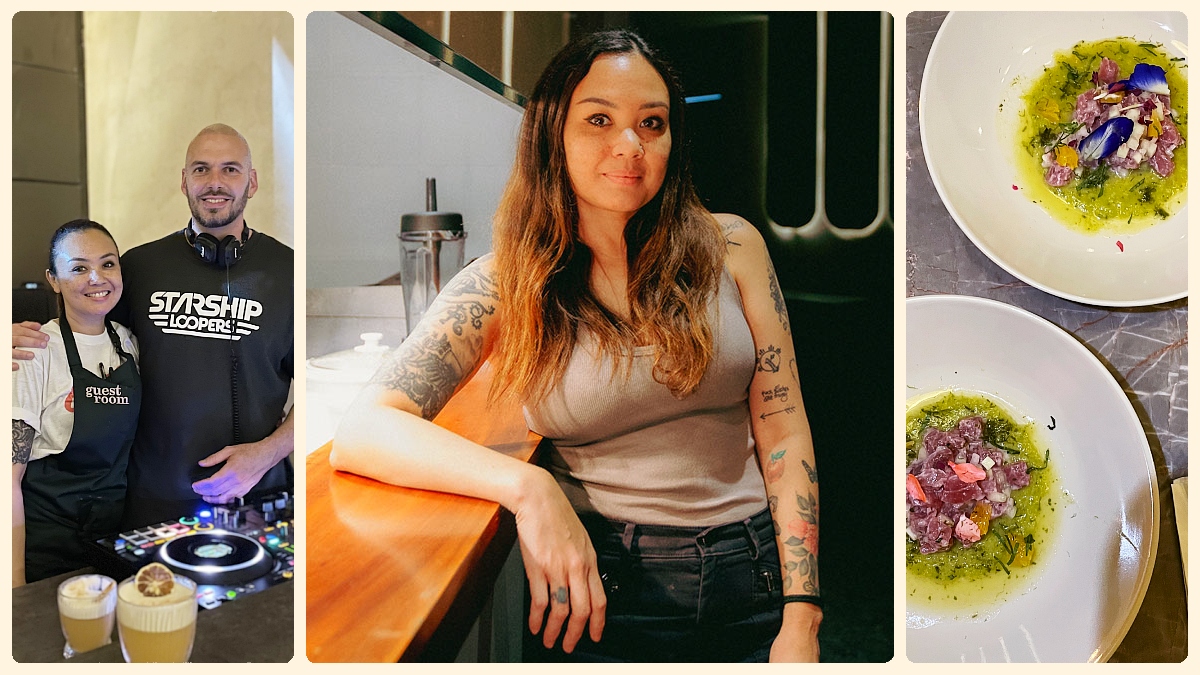
(SPOT.ph) When I think of Erica Paredes, chef and owner of Reyna Paris, the word cool immediately comes to mind. I’d see her bylines in copies of Pink magazine I’d steal from my cousins growing up, and given her long career in the local beauty publishing space—a dream job for many—I was surprised to hear a few years back that she was now holding boodle fights in the City of Lights of all places. Only a gal as spunky, nay, as badass as Paredes would dare. It was probably that very determination that led to the the opening of Reyna’s brick-and-mortar counterpart along Rue de Montreuil in 2022. And just last July, Reyna was recognized by Bon Appetit as one of Paris’ best restaurants.
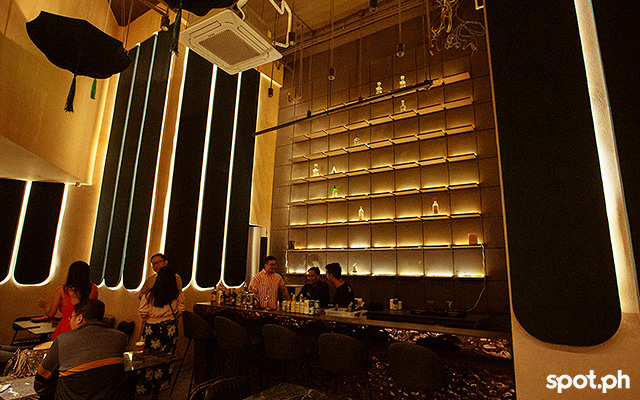
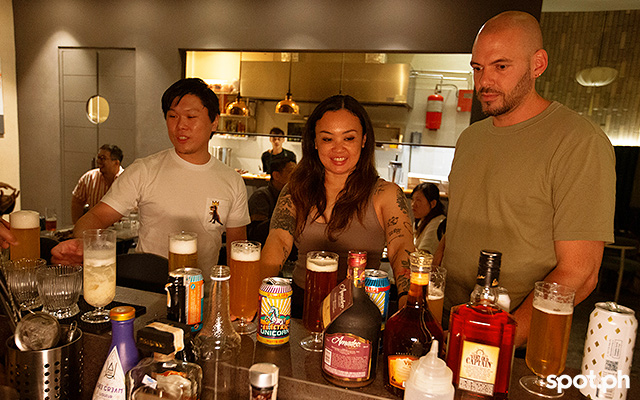
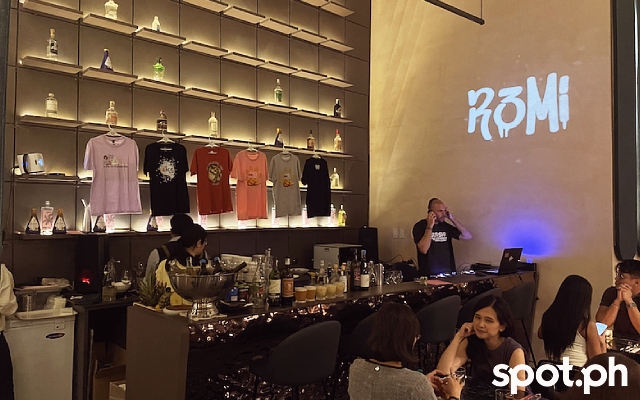
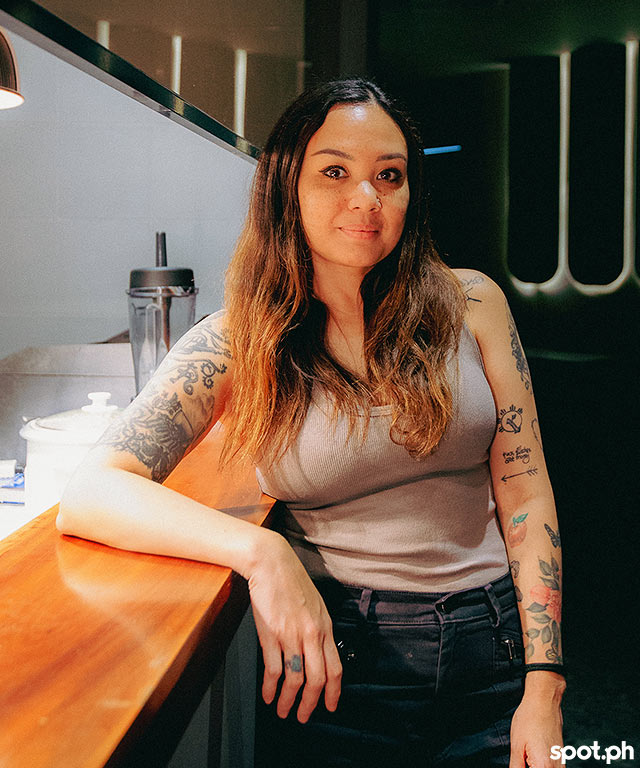
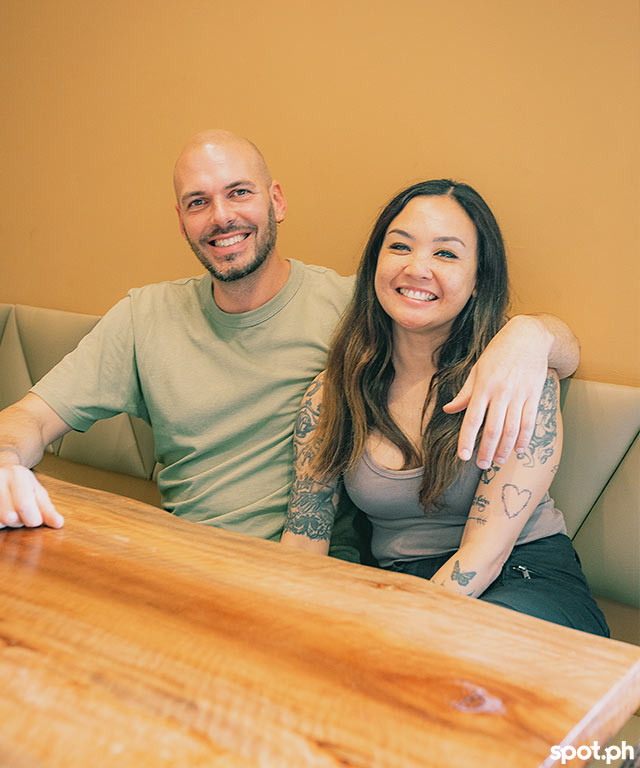
Erica walks into the welcome party at Guest Room, San Juan where we are to first meet, her smoky eyes visible from afar, her tattooed arms stark in contrast to her casual tank top-and-jeans ‘fit. I see a more giddy side of Paredes as we surprise her with a pink tarpaulin. She had just arrived in Manila the night prior and was set to do a pop-up in the same place that week, along with her French partner R3Mi, who’d be working his DJ-music producer magic for the pop-up. At that point the menu had yet to be finalized and coordinations had to be made between her and the staff, yet Erica agrees to a chat to answer this author’s burning questions over coffee: Why’d she change careers? Why the chef route? Why food?
Also read: This New Restaurant in Paris Shines the Spotlight on Filipino Flavors
Get to know Reyna Paris’ Filipina chef Erica Paredes:
Reyna was birthed as a pop-up and private-dining venture, beginning with supperclub-style private dinners in 2018 and pop-ups in 2019. In its early days she served classic French fare, thinking that's “what people want.” But it wasn’t long before she started incorporating into these dishes distinctly Filipino touches: fish sauce, calamansi, soy sauce into her beef Bourguignon (“like an adobo beef Bourguignon”), quenelles of chicken in tinola consomme, and so on. As she experimented more in the kitchen, Paredes developed her distinctive cooking style.
“I realized that the more I put my own flavors into it, the more people liked it—and so I found my identity.” But Paredes doesn’t let herself be limited by the need for “authenticity” as far as Filipino-ness of food goes; instead, she uses Filipino elements in such a way that’s just a logical byproduct of her background growing up in the Philippines.
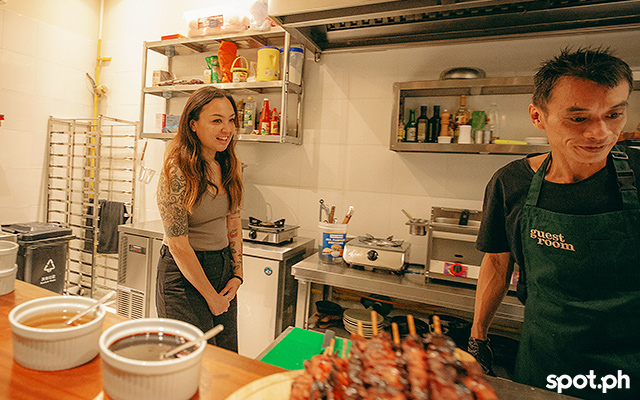
“I realized… I'm having fun doing this, because I didn't want to make classic French food [nor did I] want to make classic Filipino food,” says Erica. “It was such a joy for me to be able to combine both, because it's like all these ideas—it's a lot of creativity and critical thinking of how you're going to pull it off, so you get the spirit of both dishes.”
Growing up traveling throughout her life (particularly in Australia, London, and Paris, where she’s lived) has also contributed to her “very specific taste palate,” which comes across in her cooking. Present are ingredients and flavors from other parts of Southeast Asia—nam jim to go with pig’s head (served whole, like it would be in the Philippines); to a tri-topping of kecap manis, ginger sauce, and chili oil in her Hainan Burrata. “As Filipinos, the flavor profile is very familiar to us—a lot of us have traveled to Thailand [and] Singapore [and the like],” says Erica. Some Mexican influences are present, too, like the Morita chili oil that goes with her lemongrass-stuffed lechon.
Today, she describes her food as playful. “Very Filipino [and] Southeast Asian leaning in terms of flavor profile, but just playful in the sense that we will pull from any place… we have our current obsessions,” she explains. “There's no boundaries. [Or] there is our boundaries [that is] Southeast Asian and Filipino, so if we want to put something on the menu, it's like, how do we make it a little more [us]?”
To better entice the French audience to try Filipino food, Erica shares she’s learned to pay attention to the way her dishes are presented. “The one thing I learned in France from my French chefs that I've worked with is… they're very visual. So you eat with your eyes first, right?" Knowing how Filipino food is notoriously not “pretty,” at least by conventional standards, Paredes ups her plating game, using garnishes to add pops of color, or playing around with the arrangement of proteins and sauces.
In French fashion, Paredes incorporates the ethos of seasonality, or using fresh produce only when they're in season. She also makes as many components in the kitchen from scratch—sauces, longganisa, even noodles for a palabok dish she served before. “Sometimes Pinoys come, they're like, ‘This is the best version of Pinoy food.’ I was like, you know, it's fresh. I find that, me included, we grow up with so many packets that I think, even as Filipinos, we've forgotten what real food tastes like.”
With her early pop-ups and kamayan dinners for Parisians, Erica helped spread awareness about Filipino cuisine and flavors in the area where it’s still relatively obscure—thus landing her features in major publications like Vanity Fair France. She’s also caught the attention of both Filipinos and French people in the area, albeit for different reasons: “Pinoys [who’ve tried my cooking]... tell me, it's like the flavors you know, the soul of the food is still there—but it's so different, it's so new. And for French people, [I’m asked] ‘what is this,’... [it’s] calamansi.”
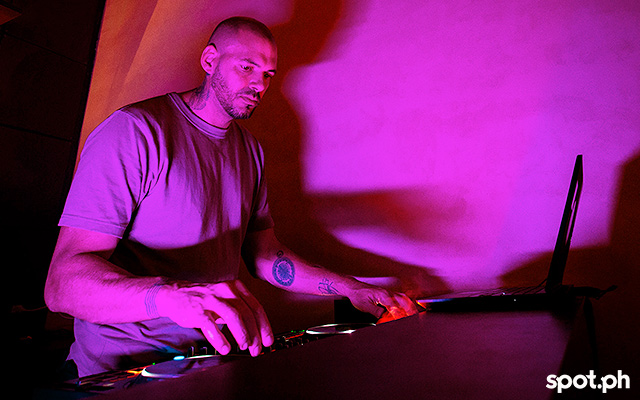
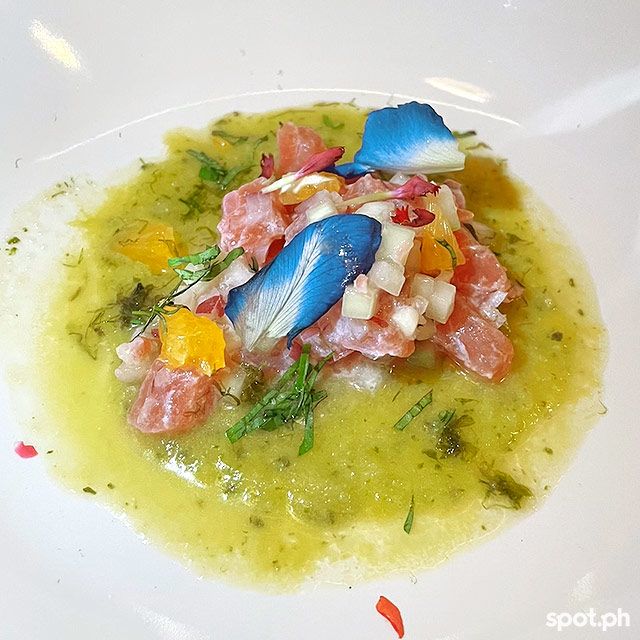
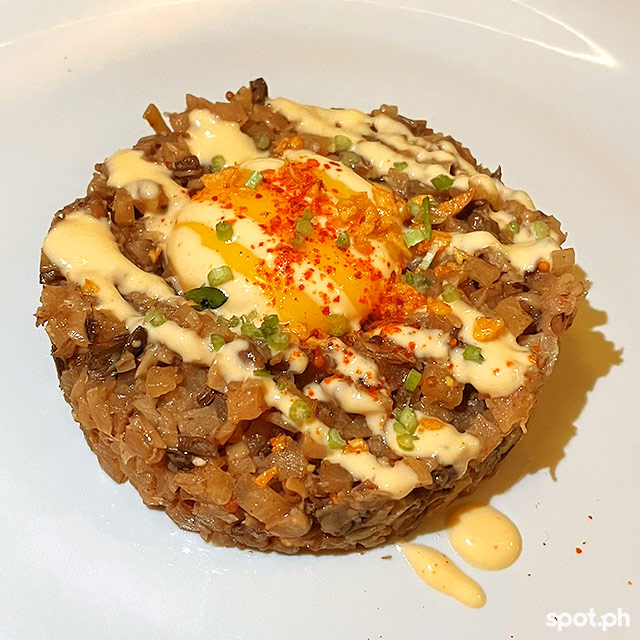
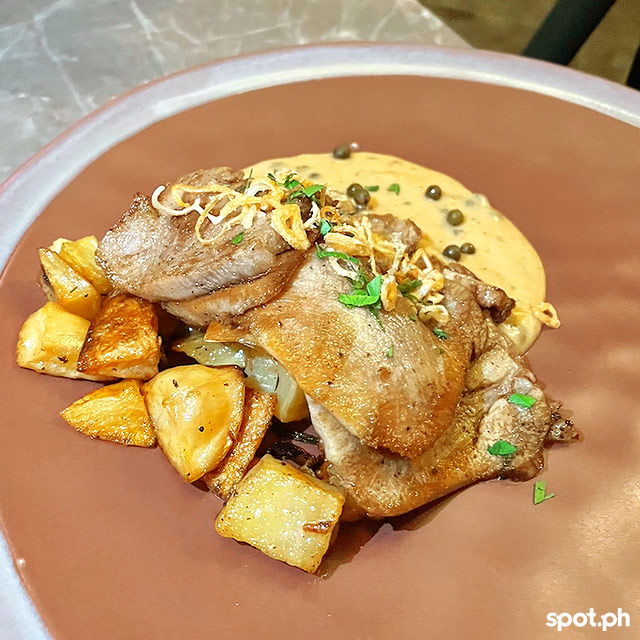
We saw all these points in practice at the Guest Room pop-up that took place days after our interview. After scouring the local markets, Erica served vivid plate after plate: Apero of puff pastry tinged with Davao blue cheese and etag plus tinapa quenelle “fishballs”; Kinilaw of tuna in a vivid mix of verjus, pineapple, and basil; a texture-triumphant (and meatless) Sisig of oyster mushrooms, banana hearts, singkamas, wholegrain mustard, roasted garlic tofu mayo, garlic chips, and a raw egg yolk; Hainan Kesong Puti, taking after the burrata version mentioned earlier; Arroz Caldo starring meaty sugpo in a surprisingly potent seafood porridge base; Bicol Express with lapu-lapu from Quezon in a spicy coconut-bagoong sauce; French Kiss, pairing thin slices of beef tongue with a zingy calamansi-pepper sauce; and a Mousse au Chocolat made distinctly Reyna with coconut caramel rum, annatto coconut oil, cashew polvoron, and asin tultul.
She chalks up Reyna’s success not to luck but to years of hard work. “Everybody thought [with] Reyna, they're like, ‘Oh, you're so lucky with [the venture].’ I was like, it's not luck! It's a lot of hard work, a lot of years, no sleep, meltdowns, everything, you know,” Erica laments. “I always wanted to do my own thing but Reyna kind of developed through the years, until I was sure of what I wanted to do. I feel like it took years for me to find my identity as a chef. And I think it's really important, right? Because you could be good technically but if your food has no character or personality that's yours, no one's gonna remember it.”
Paredes’ Writer Beginnings + Coping Through Cooking
“If your food has no character or personality that's yours, no one's gonna remember it.” Erica holds a similar sentiment toward her first love, writing. “The worst thing that you can be called either as a chef or a writer is mediocre,” she explains. “I would rather be polarizing and have people love or hate what I do, rather than like—it's [just] okay, you know. So in that way, you love these pieces that you read sometimes [where] even if you don't agree with their opinion… you'll have an opinion of it.”
When asked what she finds similar about the writing process and cooking, she says: “I think, in creating things, like writing, it's about using the right word at the right moment, the right expressions, and the right tone depending on what publication you're [writing for].”
Avid readers of magazines and other forms of media from the early 2000s would know where she’s drawing from—after all, Erica’s early career between the late 2000s and early 2010s largely revolved around lifestyle publishing, specifically in the beauty arena. She landed roles as beauty editor of magazines like Pink and Metro (both under ABS-CBN Publishing), and even dipped her toes into makeup artistry at one point, taking a makeup course in London (“It kind of made sense—I was a beauty editor”). Who’d have thunk she would one day trade keyboard and makeup brushes for a chef’s hat and apron?
But food’s long been on her mind. Paredes has always loved cooking, initially self-studying the ways of preparing food at home (with her daughter as her “guinea pig”) and reaching out to chef friends to help troubleshoot problems as needed.
A turning point for Paredes was when the time came she realized she was dissatisfied with the things in her life. “It was a few years of me being really unhappy,” Paredes confesses. “And I couldn't figure out why… I didn't like everything. I felt like, you know when you feel like you're in a place you're not supposed to be. Or you've gained weight and you're still trying to fit into your old clothes instead of just buying new clothes, you know? Like you just feel uncomfortable, right? And I didn't feel right. I didn't feel I was in the right place anymore; I didn't feel like I was doing the right thing anymore.”
Following a breakup, Paredes also struggled with a “bad depression” that had her on medications and seeing a therapist. She found herself in France for a wedding and took the opportunity to turn the trip into a tour for self-discovery. “I was already there and I had three weeks, so I made it kind of like an ‘eat pray love’ [moment]. So after the wedding I traveled alone in France. I went to Annecy. I went to Dijon. I went back to Paris by myself. I did this whole thing, and by the time I came home—by the time I was on the plane coming home—I was already like, that's it. I'm moving to Paris. I'm going to culinary school.”
Diving Into Professional Cooking
Even in her 20s, Paredes’ parents were encouraging her to enter culinary arts—more on that later—but it was only at this point around 2016 that she decided to enroll in the esteemed Le Cordon Bleu in Paris. She was always confident in her palate and flavor profiles but she knew she needed to learn “techniques and time management,” which would give her the skills to survive the pro kitchen. “Because if you really think about it a chef is more a manager than anything, right?”
“I wanted to go to school—I wanted to work for a couple of years and then I wanted to do my own thing.” Her parents just as supportive this time around. “I told my parents, so i'm gonna sell my car, I'm gonna do this, I'm gonna—whatever… I had a whole plan and and then I did it like months later.”
Working in professional kitchens in France as a Filipina can come with race- and gender-related challenges, but Paredes is thankful her environment is more progressive. “I have a lot of women chef friends in Paris. We're all restaurant owners or chefs, and I have a really good network where we always really encourage each other—we're always [making shoutouts to] each other when we get introduced... I have a very strong female network in the industry. And I think the good thing is now, because Reyna's been getting a lot of publicity from international publications... it’s garnered respect for the restaurant and me as well, I guess. So now, I don't see the difference anymore whether you're a male or female colleague or whatever. It's nice.”
The culinary-school experience was all in all “super fun,” but she emphasizes there’s still plenty of hard work required outside of it to reach success. “A lot of people think, ‘Oh, she went to Le Cordon Bleu… a prestigious culinary school. [She] must be a great chef.’ But you're not a great chef right out of school.”
Cooking as Therapy—and a Medium of Expression
Paredes sees joy in cooking outside its pragmatic function of feeding people. Even when she was in her 20s, her parents had offered her the chance to enter cooking school—an offer she was then apprehensive to take as she wanted to maintain the leisure aspect in making food. “[Back then] I was like, ‘I don't want it to be my job—I just want it to be something that I do to relax me. Like it started for me as… a passion, but [it’s] also [like] therapy.”
She adds: “For me, mental health is super important. I've had my own… issues and stuff like that—and [cooking] has always kind of relaxed me.”
More than that, being inclined to creativity herself (“You can put me in any industry and i'll always gravitate towards the creativity part of it,” she tells me), Paredes was—and still is—adamant about cooking as a form of expression. “Cooking is a way to express yourself in a form that people actually consume. [It’s] therapeutic, but also a way for me to really show my creativity with no boundaries, right?”
“I mean, there's a lot of societal boundaries for us here [in the Philippines], whether it's unspoken or spoken,” she admits. “I think moving away and completely changing careers and changing content and whatever has really helped me learn so much about myself and become the version of myself that I think I really am supposed to be.”
She does admit going the chef route can be stressful. “Loving cooking… [versus] being a chef and owning a restaurant are two separate things. I mean they work together, but it's not the same—[the latter] is really work and hard work and stress. And I think you have to really love it. I always say you have to be a little bit crazy to to do this job.” Still, it's a job she’s courageously taken on and, inevitable difficulties aside, looks to be rocking all in all.
Photos by Jason Tan and Patricia Baes
Special thanks to Myles Hontiveros of Guest Room
Hey, Spotters! Check us out on Viber to join our Community and subscribe to our Chatbot.