(SPOT.ph) Touchdown Bacolod-Silay International Airport—it’s less than two hours from NAIA, when things go well, but the sun seems to shine brighter here than high noon in Metro Manila, sans the scorching. The City of Smiles lives up to its name immediately; it’s hard not to sense that you’ll be in for something special.
The journey really begins with the food, of course—Slow Food, to be precise. This international movement’s roots are Italian, but the Negros region in particular seems to be in the running for Best in Show (and Substance) in the global culinary and agricultural arena.
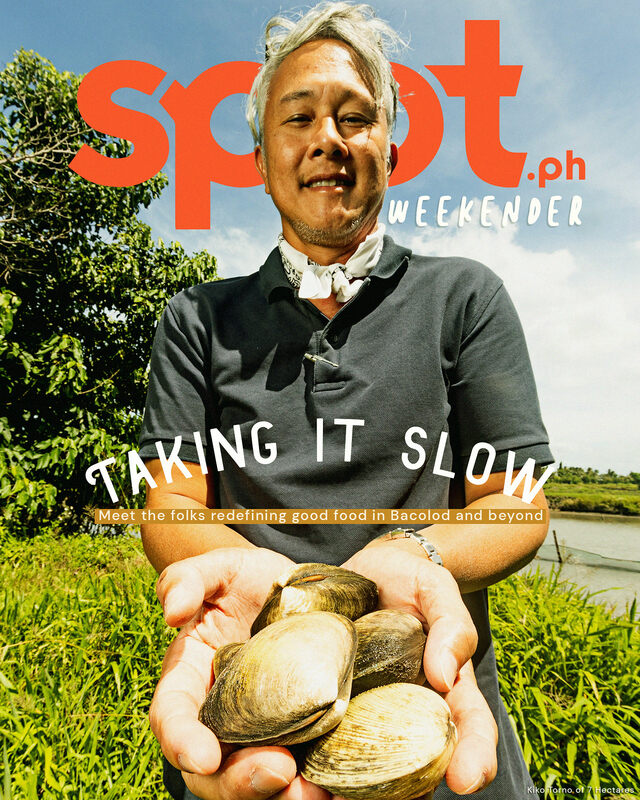
Kiko Torno at 7 Hectares
PHOTO BY Aeson Baldevia ILLUSTRATION Warren Espejo
It’s unsurprising, even from the first day of a Slow Food Travel tour here; Bacolod’s most obvious strength is its well of both quality resources and top-notch talent, the full experience of which is only enhanced by fields and trees as far as the eye can see, mountains and clouds that feel so close you almost know exactly how small you are in the universe, and the enthusiasm that radiates from every Slow Food guide and team member.
The congestion of big cities is virtually non-existent here; as one of our guides put it, “If we’re in traffic for over a minute, we start to get antsy.”
Article continues after this ad.
ADVERTISEMENT - CONTINUE READING BELOW
At 7 Hectares. PHOTO: Aeson Baldevia
All-natural, baby
I’m not about to rag on anyone’s perfectly curated Instagram (would that I were so diligent), but when it comes to travel, a question sometimes hangs in the air: What do we gain? Is it just the perfect shots that say, “I was there,” or are they snippets of a time spent so richly that we dare not cheapen it with a bad photo?
I have a question of a similar nature when it comes to the dining experience. Good food of varying degrees can be had almost everywhere now, and for that I’m sure we’re all grateful—but beyond claims of cultural authenticity, ultra-organic sources, or multi-awarded talents in the kitchen, we perhaps ought to start wondering what the food we’re served says about where we are.
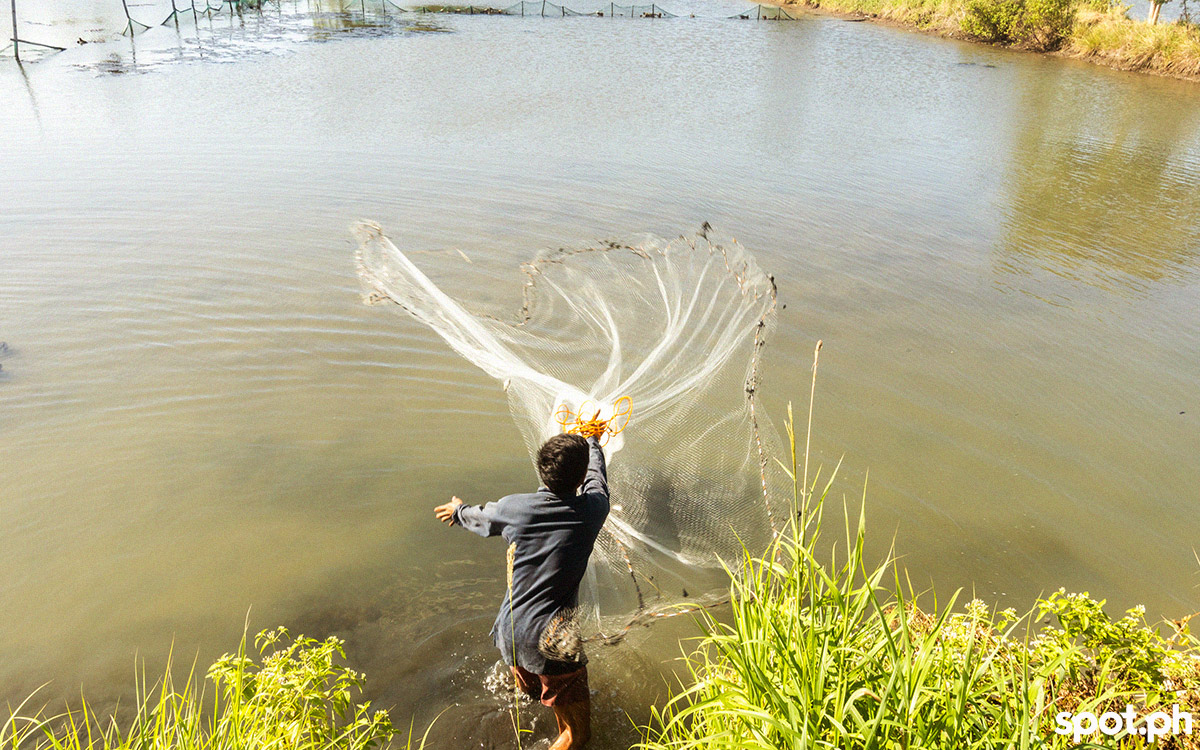
Where you will savor the fattest crabs and the freshest oysters.
PHOTO BY Aeson Baldevia
Fresh and sweet at Kiko Torno's 7 Hectares
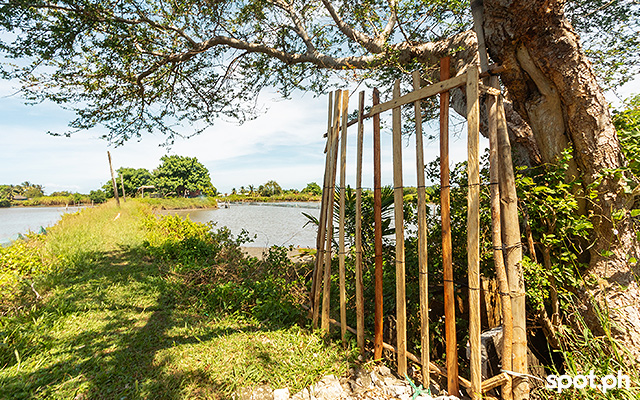
It’s not every day that one has the opportunity to safely consume—let alone savor—shrimp fresh out of brackish waters, but this is the mind-blowing experience we got at 7 Hectares about an hour after landing. While invite-only, those with a genuine curiosity about where our food comes from are more likely to queue up for the ride. “Ride” is really the only way to describe it; getting there requires a little off-roading, but once you hit the clearing, you’re hit with the barest suggestion of sea air.
Article continues after this video.
ADVERTISEMENT
watch now
You may as well know now: They sneak the food heritage and nutrition education into the degustation the way some savvy parents sneak vegetables into dinners for their picky eaters, but it’s just the beginning of what will change you on a Slow Food Travel trip in Bacolod. And it’s hard not to be changed when you’ve never seen fatter crabs or fresher oysters in your life, and realize not only the magnitude to which fishermen are cheated out of capital, but also that the seafood-allergic among us may not be allergic at all.
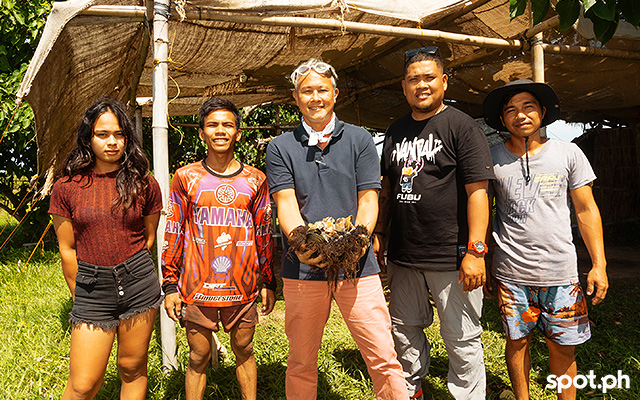
Torno (center), who supplies seafood for Manila's chefs like Margarita Forés, with his staff.
PHOTO BY Aeson Baldevia
“The primary goal was to restore the habitat,” says 7 Hectares founder and aquaculturist Kiko Torno. “It’s likely that people are allergic to the feed that farmed seafood typically get, but here, I feed them what they would eat in the wild. We serve those things, too. We’ve consistently found that those who know themselves to be allergic walk away from the meal totally fine—sometimes they’ll only let me know after.”
Article continues after this ad.
ADVERTISEMENT - CONTINUE READING BELOW
“We do very little to the ingredients, in the end,” says chef Ziggy Segunial. “It’s so fresh, so sweet, you don’t want to overpower that natural flavor. You won’t get this quality in many other places, but I think that’s [what we] are hoping to change.”
Chin-chin Uy and his sources of pride at Bacolod's Lanai by Fresh Start. PHOTO: Aeson Baldevia
"If it's not organic, we don't use it"—Ramon "Chin-chin" Uy Jr. at Lanai by Fresh Start
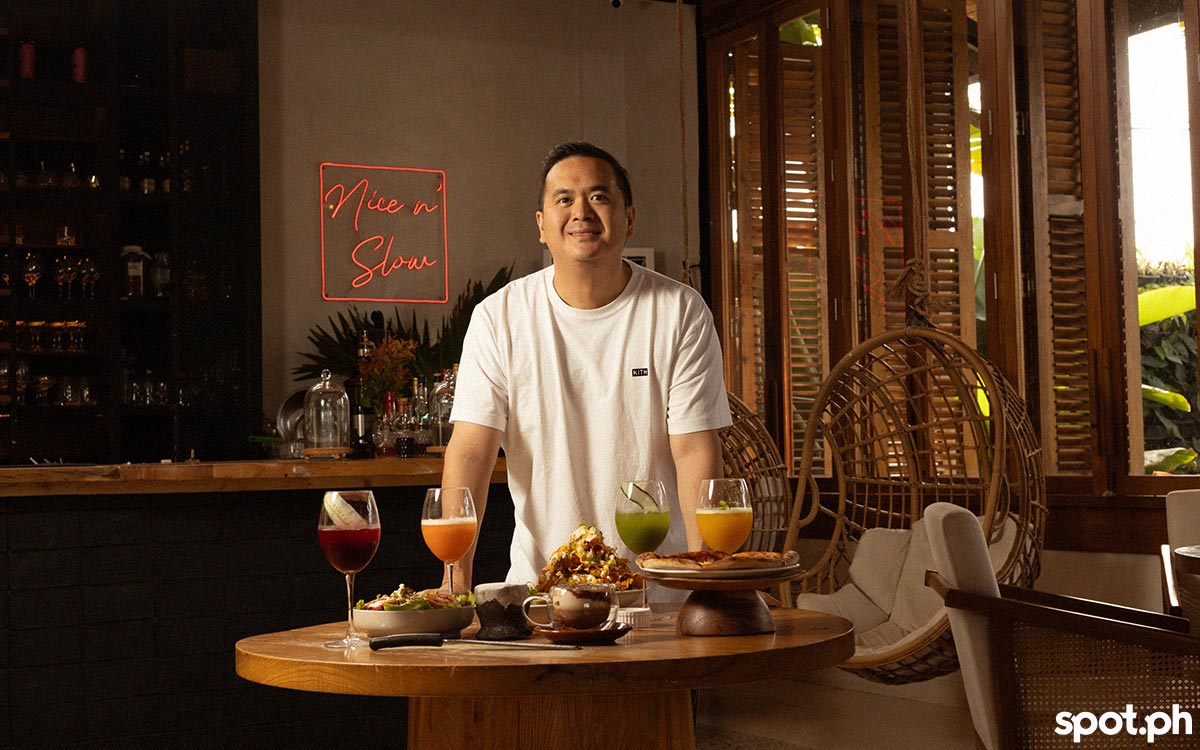
But back on land, you have go-tos like Lanai by Fresh Start, itself not only farm-to-table, but almost self-sustaining if you don’t count the collaborations. The Fresh Start farm supplies much of what’s used in the kitchen, while the restaurant sits at the very entrance of May’s Organic Garden—probably the most magical place to stay in Bacolod—with the local Slow Food office just a stone’s throw away from the gate.
“If it’s not organic, we don’t use it,” says founder, farmer-in-chief (our term), and Slow Food Councilor for Southeast Asia Ramon Uy, Jr. He tours us around Fresh Start, from the worm patch (call him the viscount of vermiculture too, if you must) to the fattest lettuce leaves you’ve ever seen, to a sprawling plant whose leaves smell and taste of root beer—which he of course serves at Lanai.
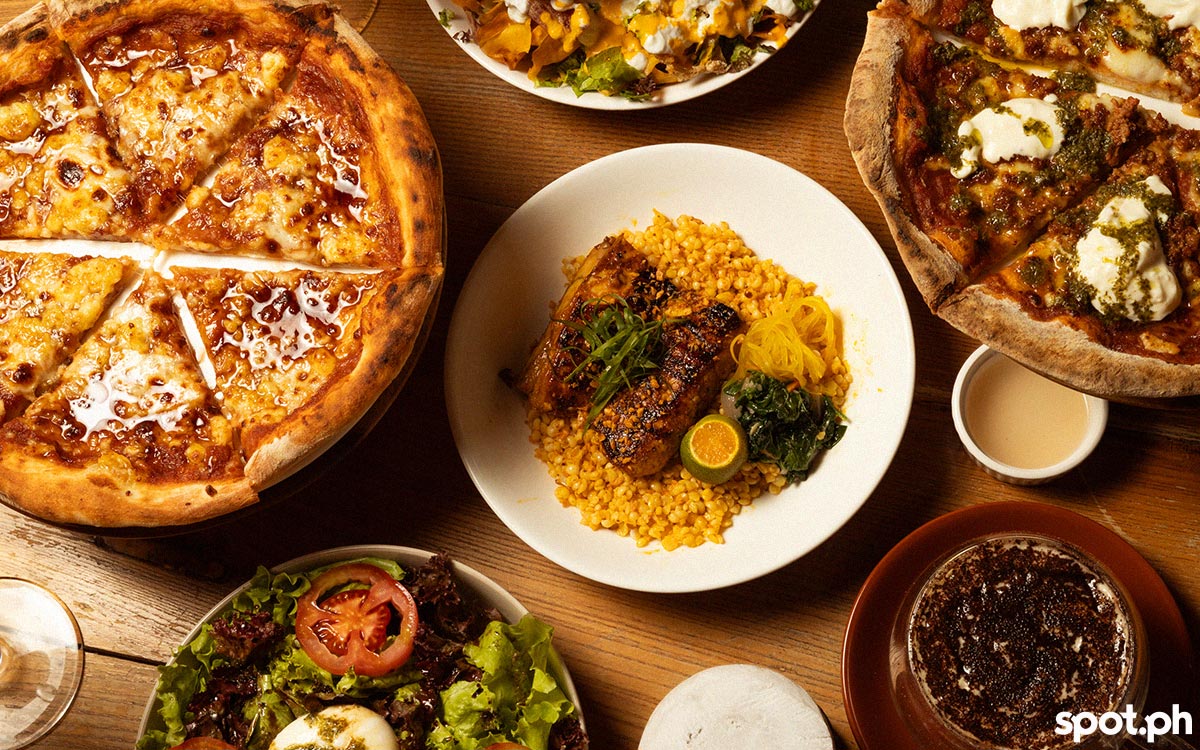
We can't recommend the pizzas enough.
PHOTO BY Aeson Baldevia
Article continues after this ad.
ADVERTISEMENT - CONTINUE READING BELOW
You’ll notice a theme on your first day of a Slow Food Travel tour; Lanai, much like 7 Hectares, serves what would normally feel indulgent—things you’d typically regret on a digestive and perhaps even a moral level in a matter of hours—but you never quite find the bottom of the pit. (It’s not for lack of trying, though, especially if Uy himself is your host.) On that note, we can’t recommend the pizzas, pastas, and literally any of the desserts enough, but if we had to narrow it down: order the Bacolod Chorizo with Stracciatella and the Tsokolate Negrense to get a real feel for the terroir, as it were.
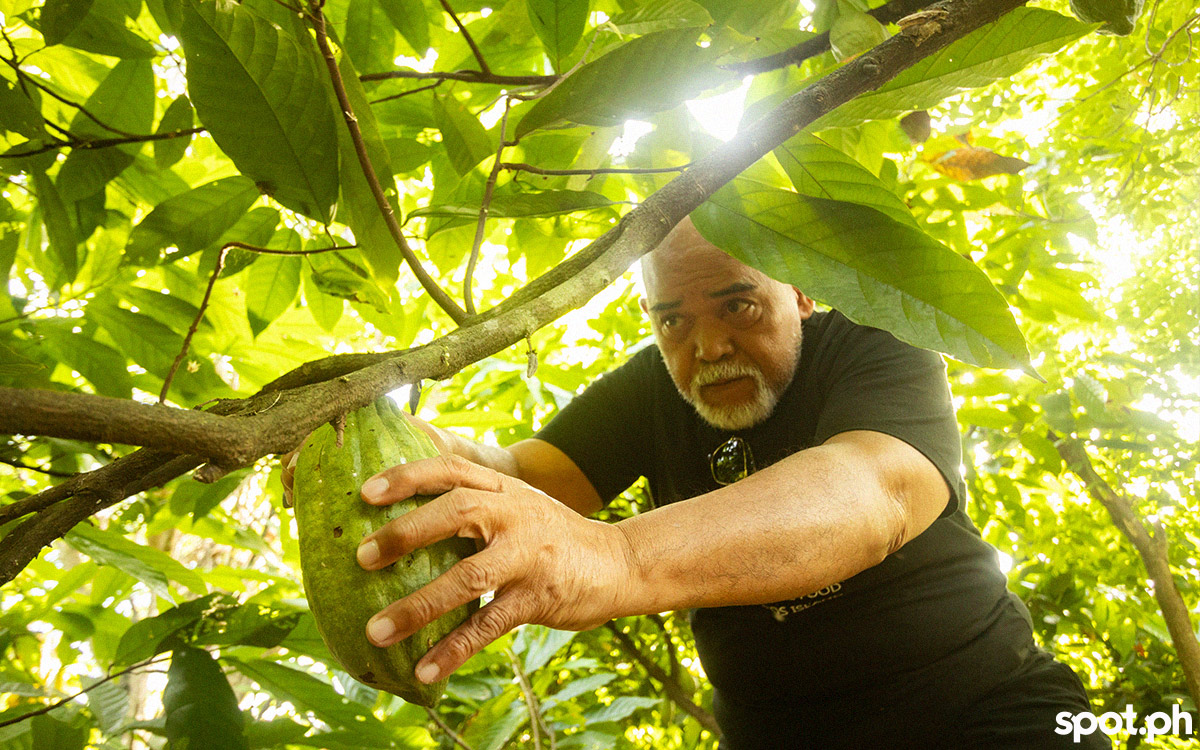
Fadriga at his criollo cacao nursery. PHOTO: Aeson Baldevia
The good stuff at Chris Fadriga's cacao plantation
To be clear, Fresh Start doesn’t do cacao; Lanai proudly sources from the Chris Fadriga Criollo Cacao Nursery & Plantation, less than a 30-minute drive from the restaurant. (Imagine doing 18 kilometers in half an hour; the Manila-based mind reels.) If you weren’t already shaking your head in disbelief at what you’ve been eating, getting to taste the actual fruit of the cacao trees and learning what it takes to grow them should knock your socks off.
“Most of the chocolate you get commercially has to be tampered with,” says founder Fadriga, who can be credited with the resurgence of the coveted criollo variety in the Philippines. “Criollo is naturally sweet, but such a delicate plant,” he adds, “so you have to imitate its natural habitat. It needs to be surrounded by trees that are sturdier and taller to act as windbreakers [and shade]; some of the big producers don’t like that because cross-pollination will be inevitable, which will affect the flavor, but that’s part of what we want to educate the consumer on.”
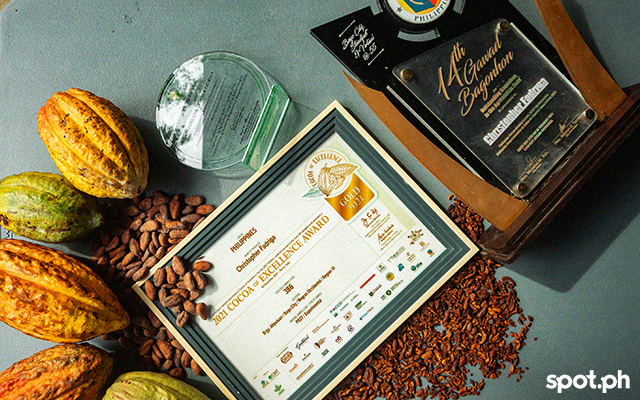
Proof that the world knows about our criollo, and has recognized how good it is.
PHOTO BY Aeson Baldevia
This is how good the stuff is: If you want the unsweetened bar (which the plantation also makes, by the way) to taste sweeter, you sprinkle a little salt. See for yourself; they sell both kinds over at Fadriga’s, but all other chocolate bars may be ruined for you as a result. Consider yourself warned.
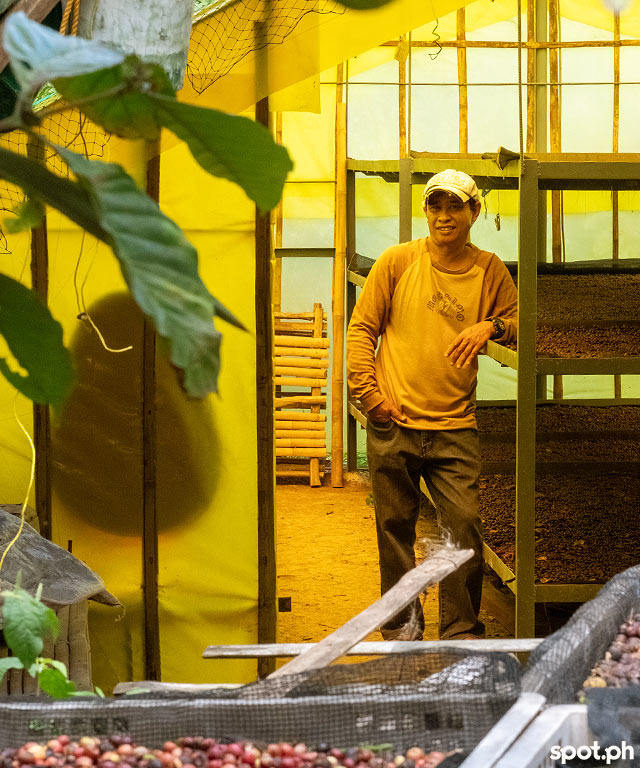
Teddy Cañete at Sugar Valley Farm. PHOTO: Aeson Baldevia
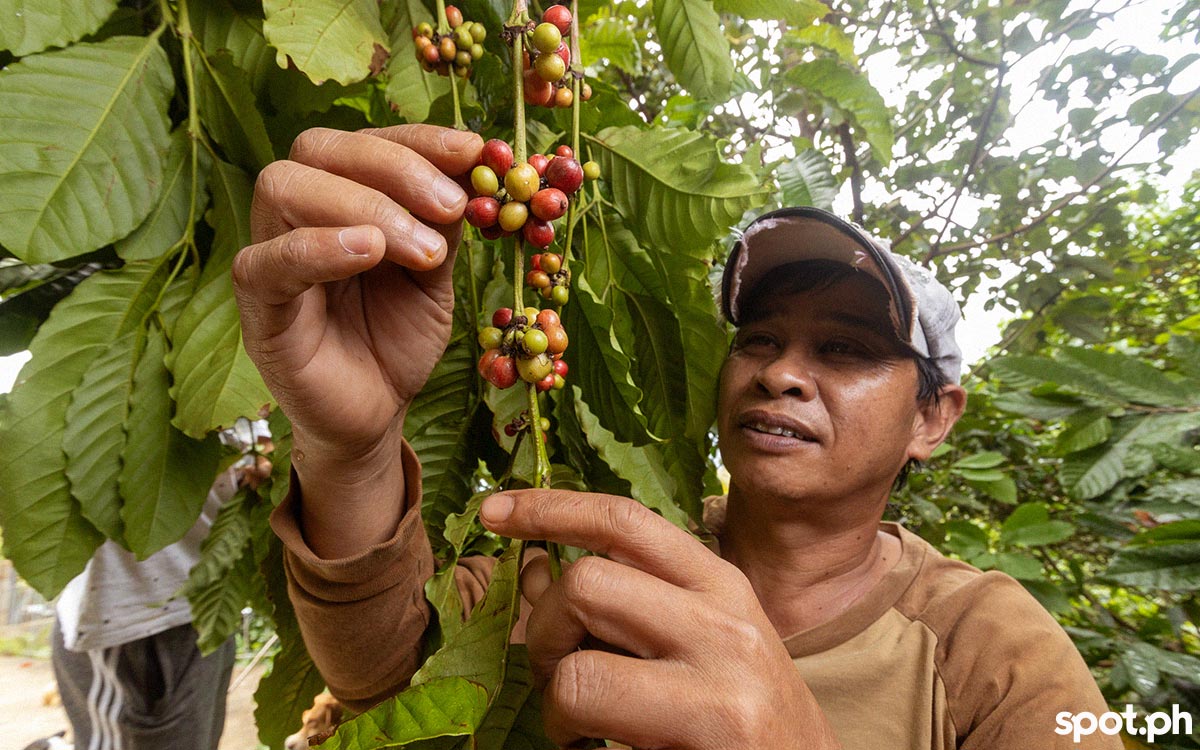
Excellent coffee at indigenous farmer Teddy Cañete at his Sugar Valley Farm
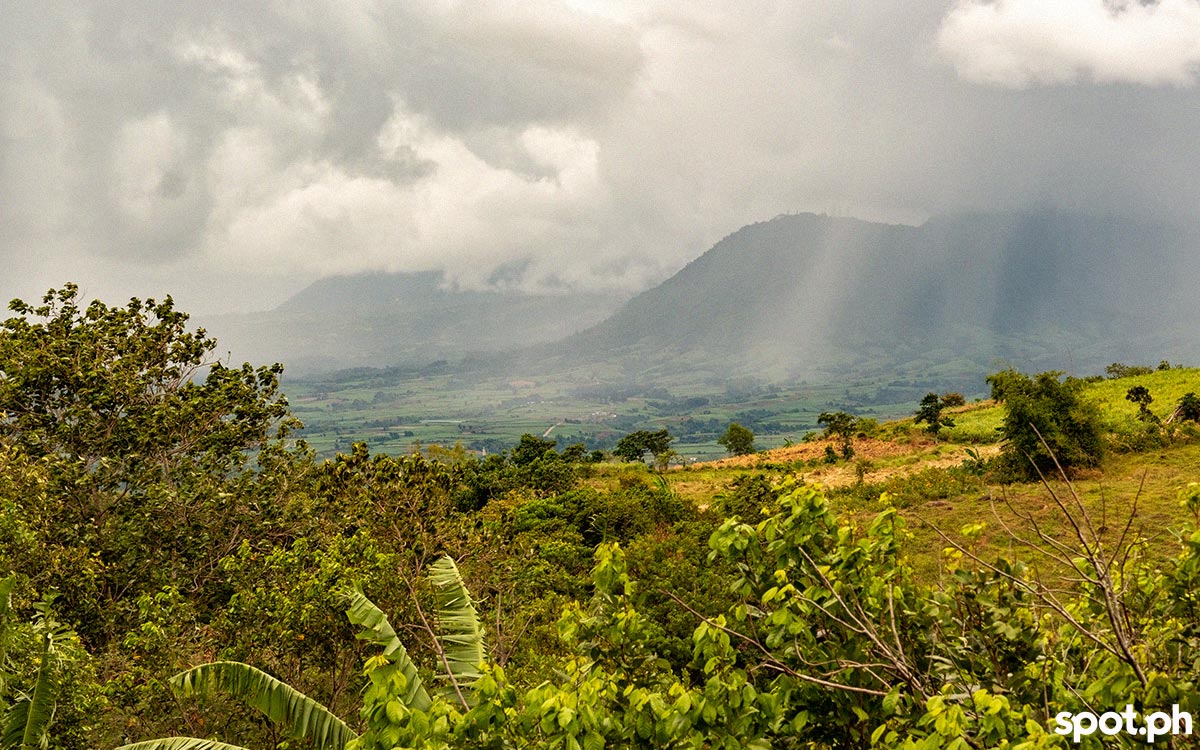
Similar principles apply to the produce of Sugar Valley Farm. While something of a trek—this time about 31 kilometers away from May’s, with a good chunk of that road being the reason over-the-counter dramamine was invented—the view alone is more than worth the 45 minutes it takes to get there. It’s like something out of an old Disney background, with rolling hills and greenery for miles; then it turns into The Godfather upon meeting local coffee rock star and indigenous farmer Teddy Cañete.
This, our guides confide, was not always the case with Cañete. Prior to meeting coffee lovers from around the world and working with Slow Food, the man barely had a spiel; when we arrived, he welcomed us as though we were old friends, introducing his dogs one by one, his wife serving us their coffee with a confidence you sadly don’t see much in Philippine hospitality.
Coffee, too, needs windbreakers and shade.
PHOTO BY Aeson Baldevia
We’ll admit that coffee, like wine, can be a little tricky; cupping activities and different roasts and menu descriptions can (and often do) make one wonder about one’s suggestibility. But Sugar Valley coffee leaves no room for wondering. “I’m getting citrus,” I say, surer than I’ve ever been of anything in my life. “Yes,” Cañete replies, “I believe this batch grew next to some dalandan.”
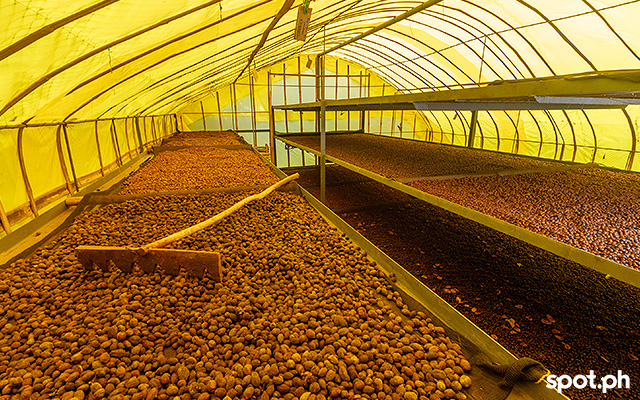
He walks us through the process with the strut of an unbothered CEO—and if anyone deserved to walk like that, it’s a farmer. Coffee, too, needs windbreakers and shade, many being the same ones that would protect a delicate criollo sapling. “And this way,” explains Cañete, “we can sell the bananas when they’re in season, then the rambutan, then whatever else we’re growing… then the coffee. It gives it a cycle, and we don’t [wear out the earth] with one crop.”
The local coffee rock star.
PHOTO BY Aeson Baldevia
“I’ve grown coffee all my life,” he adds. “It was ordinary to me, and so I couldn’t justify [jacking up] the price; now I can. I do the growing, the washing, the fermenting, and even some of the roasting. When someone doesn’t agree with my pricing, ay… ayaw ko nang makipagtalo. Me, myself, alam ko what goes into what we produce.” And there is little arguing with the results; a smooth, subtle Flat White can be had down at Coffee Culture, a primary client of Sugar Valley. In the same vein as 7 Hectares, those who might normally experience an upset stomach after too much coffee can have two cups a day here and feel absolutely fine.
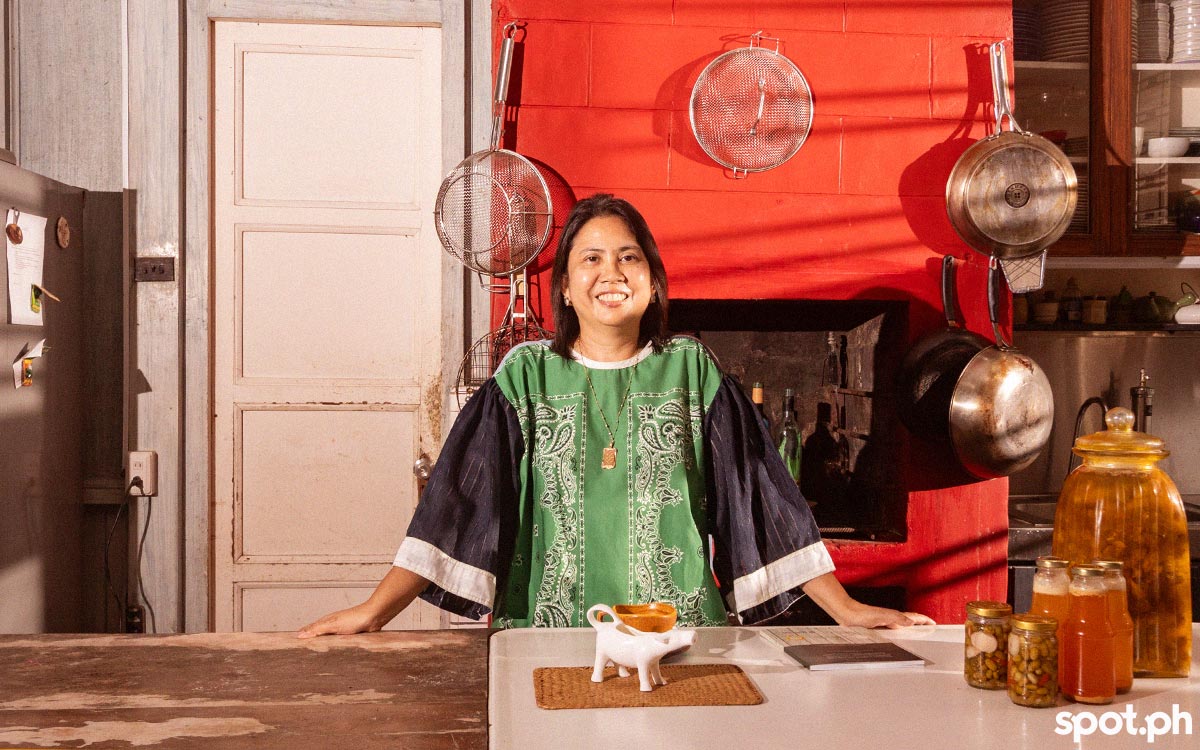
Reena Gamboa photographed in her kitchen in Silay. PHOTO: Aeson Baldevia
Tasting history at Reena Gamboa's home
If it isn’t obvious yet—and it’s easy to miss, to be fair, just given the natural wonder of Bacolod—this is how everything works together to protect heritage ingredients, which make up much of the cuisine unique to the area. The common use of ingredients like batitis and batuan themselves tell their own stories, and techniques like fermentation reflect the mastery of food that’s almost inherent to the local communities—the cornerstones of diversity we claim to prize about the Philippines, which often find a spotlight in the historical Casa A. Gamboa.
“My original intention was to also show off the home of my godmother, Doreen Gamboa Fernandez, who was a food writer and wrote a lot of books on Philippine gastronomy,” shares casa owner and Slow Food Negros Occidental president Reena Gamboa.
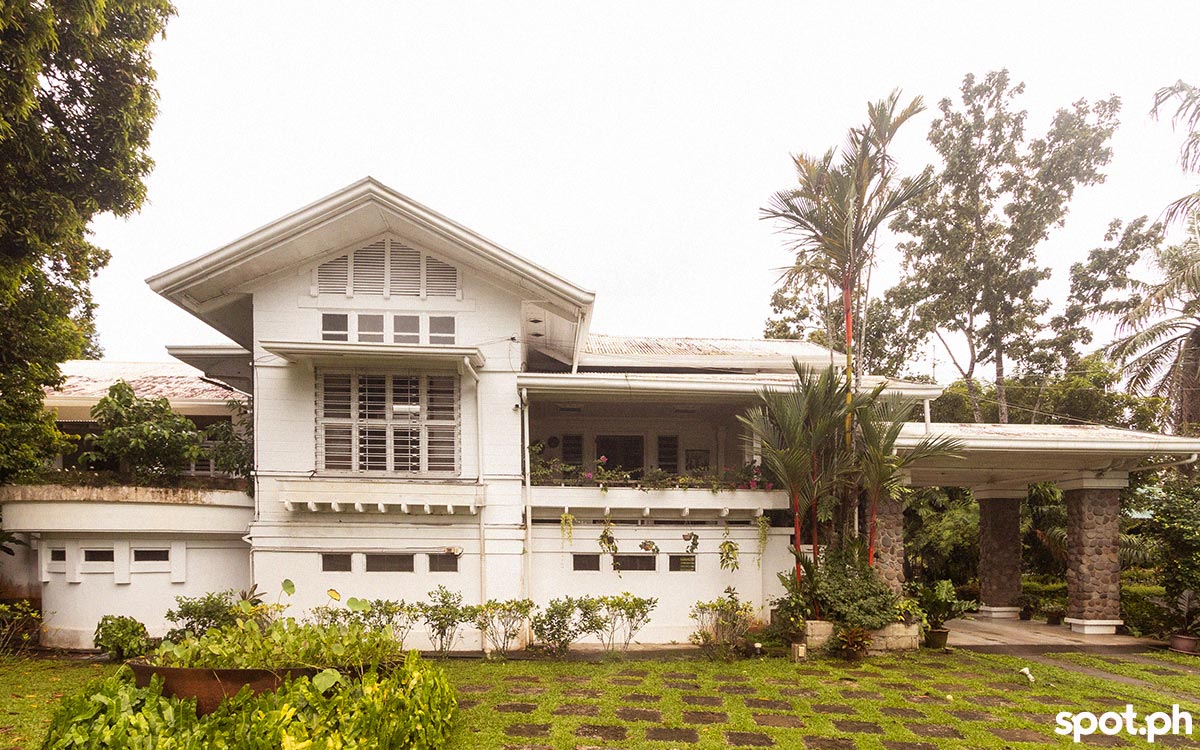
The Casa A. Gamboa mansion in Silay: Where a young Doreen Fernandez lived before the war.
PHOTO BY Aeson Baldevia
This ancestral home has played host to Japanese and American military honchos, even going so far as to receive Gen. Douglas MacArthur during an official visit. When a Negrense family became its masters, the house found itself in the center of a sort of an artistic and culinary boom in Silay. Today, it serves as the local headquarters for the Slow Food movement.
“When we need a venue for our earth markets, we [make Casa available], no charge,” says Gamboa. “It’s an important contribution to the movement; this is where we meet and network, kind of like our clubhouse in the north… while Lanai is our clubhouse in the south!”
Bottled condiments in Gamboa's kitchen accompany a local Slow Food tome.
PHOTO BY Aeson Baldevia
Casa also offers private dining, with the main menu usually consisting of Ilonggo dishes. “I am gradually trying to source all the ingredients that follow the Slow Food advocacy of good, clean and fair food,” explains Gamboa, “and to document them, especially the ones in danger of disappearing… so they can be incorporated again into [mainstream Philippine] cuisine.”
It is these ingredients, farms, techniques, experts, and efforts that keep the incredible food culture of a particular locale alive and thriving. And from the legendary names like Enteng’s and Aida’s and Sharyn’s and Aboy’s to more eclectic, modern takes like Twenty-Six Herb Garden—and right over to degustation again with punchy newcomers like Sauma—there’s a lot worth championing, and it all contributes to a kind of preservation not only of tradition, but also of climate.
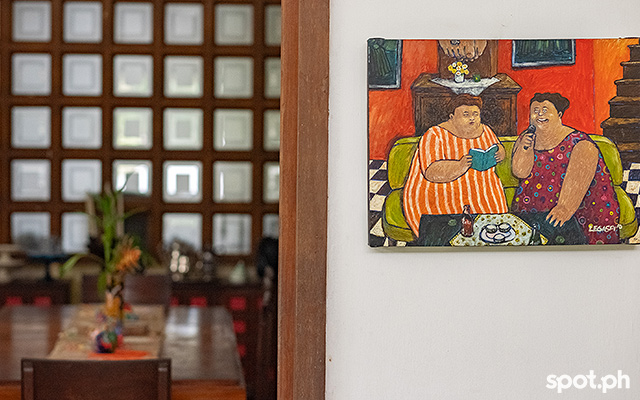
Local artist Raymond Legaspi's painting grace one of two Gamboa dining rooms.
PHOTO BY Aeson Baldevia
But that’s starting about forty steps ahead; it’s highly likely that most of us, even in our efforts to better ourselves, have the time to give the number of hands our food has passed through very much thought. Of the many qualms that plague the food and beverage industry, one spends the least amount of time in the mind of the consumer, for all that hints of it are ubiquitous—the ‘organic’ label slapped onto your supermarket mixed greens or overlooked salad on any menu comes at a steeper cost than most of us realize.
Rolling hills and greenery for miles at Sugar Valley Farm. PHOTO: Aeson Baldevia
You can only go up from here
“Our farmers have to pay to be certified organic,” Uy explains later, “and that eats into the little that they’re making already.” Meanwhile, pesticides and synthetic fertilizers allow for larger and more consistent harvests—endangering literally everything else. Following the 2007 ban on GMOs and synthetic chemicals in Negros Occidental, the local agricultural scene became the first in the Philippines to implement the Participatory Guarantee System, the IFOAM - Organics International alternative. This peer assessment strategy relies heavily on an area’s capacity to be a community—to honestly gauge one another and uplift where possible—and, as evidenced by our time there, it’s basically clockwork.
More and more farms of different kinds are doing their research, imitating natural environments, and charging fairly for their work, cementing Negros as the “organic food bowl” of the Philippines, with a goal of influencing the rest of Asia. Negros also won the bid to host the 2027 IFOAM World Organic World Congress.
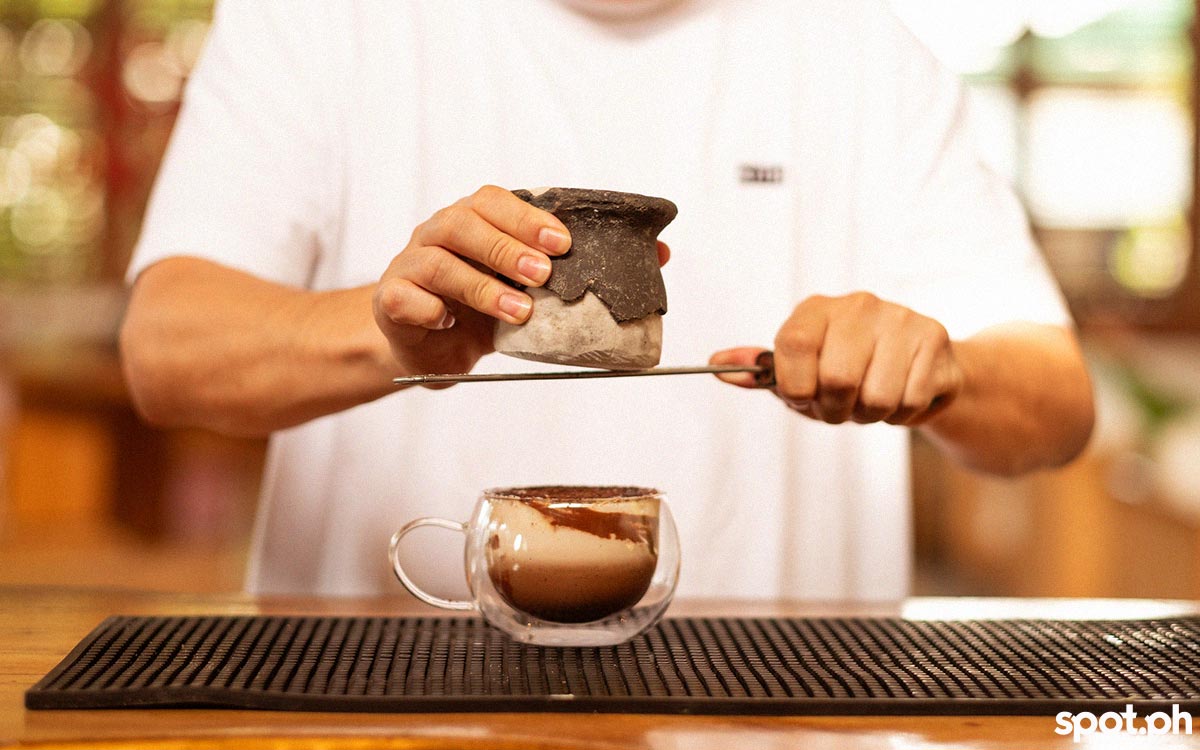
Chin-Chin Uy gives a finishing touch to a Tsokolate Negrense.
PHOTO BY Aeson Baldevia
I fly out of Bacolod before this news breaks out, and well before the Organic Food Festival and Terra Madre Visayas vendors and speakers have all fully set up for the week ahead. It says everything that I wish I had stayed longer, absorbed more, and now still struggle to properly find the words for the richness of the experience. All this and more—and they don’t even have an official Slow Food Travel portal yet. For now, curious minds and itching feet can take their travel or tour inquiries to Slow Food Negros on Instagram or Facebook.
It’s a story that’s still unfolding, especially for the Philippines—the tricky part about how biodiverse our islands are is that we don’t even know what’s dying out because we are so removed from what we eat, and one another—but we know enough to say that it’s one of restoration. This isn’t just about good ingredients or talented chefs or securing our place on the culinary map; it’s honoring the hands that grow and prepare our food, and making sure those hands are not robbed of their dignity—not even by us.
We use cookies to ensure you get the best experience on Spot.ph. By continued use, you agree to our privacy policy and accept our use of such cookies. Find out more here.