
In Defense of Salad: Why You Should Rethink the Dish (and Its Loaded Connotations)
Can salad just be salad? Better yet, can salad be good?

(SPOT.ph) Some subjects just polarize; think thoughts on gun use, or, on the opposite end of the spectrum, pineapple on pizza. The subject of salads, intriguingly, is one of them. The dish carries a bit of a health-halo image, vis-a-vis society’s assigning “good” moral value to food that (supposedly) doesn’t make you, gasp, fat. But it’s almost always implied that outside this quality—e.g. where actual flavor is concerned—salads have nothing to offer. It’s just rabbit food whose saving grace, if at all, is the bland dressing it comes with.
But can salad just be salad? Better yet, can salad be good, nay, enjoyable? We say it deserves better—and it’s about time people learned to appreciate the dish not (just) for its supposed function, but for the pleasure it delivers. Because when done right, it can be make for some of the best and most satisfying meals on the planet.
Also read: The Restos to Check Out for A+ Plant-Based, Vegan, Vegetarian Eats on GrabFood and Foodpanda
Salad has a multi-pronged image. Here's why you should give it a chance:
What makes a salad a salad, anyway? Though the word brings to mind green leafy veg, it actually comes from the word “sal” (Latin for salt) and refers to a medley of ingredients mixed or covered with dressings with salt. You can thank the first-century Greeks and Romans for the veggie-centric versions popular today, though, with early salads in these times being composed of raw veg plus a dressing of oil, vinegar, and salt. For convenience, we refer to salad in this article as being along those savory, veg-centric lines, though there are many others that exist in the world—macaroni salad, egg salad, ambrosia salad, and so on.
Most folks would attribute its supposed health value as salad’s main (or sole) appeal. As INSEAD marketing professor Pierre Chandon notes in a Washington Post article, calling anything a salad immediately gives said food a “health halo.” Compare “buffalo wings” and “buffalo wing salad.” “Taco” versus “taco salad.” You get the idea. And because we tend to assign moral value to certain foods—in particular considering “healthy” food to be “good”—people view those who eat salads in a particular way.
Bring a salad to work or order a salad at a restaurant and you’re bound to incite gasps for being “disciplined,” or simply on a “diet.” On one hand, that’s one way to look virtuous in a world that values self-control and likens self-indulgence to greed. But that also implies it to be the so-called boring option, only to be taken if you’re that strict about the way you eat—and by extension the way you live. As Jim Gaffigan writes in Food: A Love Story, ordering a salad—“just” a salad—is likened to the act of a “martyr giving up their happiness to the waiter.” “‘Just’ is a word of abstention, and salad the food of abstainers.”
There’s a gendered element to it, too. Salads—typcasted as the dainty, “light” option—are typically considered feminine, as opposed to, say, burgers and steaks being masculine. In practice, you’re especially praised for ordering salad if you’re a woman. As Laura Shapiro writes in the 2008 book Perfection Salad, this was a reflection of the “image of frailty attached to the women who made them.” Makes sense, too, when you consider how women in particular are pressured to be skinnier and thus more delicate and “ladylike.”
The flipside? It’s deemed ~eDgY~ to hate on salad (and instead down chips and beer), if only because salads are thought to be boring and eating them means you’re trying too hard. And in light of its aforementioned feminine image, plus the pressure for women to be adopt the “cool girl” schtick in this day and age, it’s all about downing “masculine” foods like junk food and beer, rather than “finicky” and feminine foods like salad (while maintaining a conventionally “hot” body because of course). Y’know, to look cool.
Salads = #Health?
With most versions containing, if not being based almost entirely, on the inclusion of fresh veggies and fruit, then salad generally ticks the nutritional boxes of having fiber, vitamins, and antioxidants. True enough, Filipinos could use more of these produce in their diets, with daily intake of fresh fruit and veg said to be on a decline by the Food and Nutrition Research Institute. But many in the health community will often point out something many overlook: the contradictory “unhealthiness” of other ingredients, such as fatty salad dressings, croutons, cheese, fried proteins, and so on. No shit about it; some restaurant versions, especially in the U.S., go up to a thousand-plus calories a plate. Some even call it the ultimate "unhealthy healthy food.”
To which we say, so what if it is—or isn’t—healthy? What the heck does “healthy” mean, anyway? Merriam-Webster defines the word a couple of ways: “enjoying good health” (i.e. being free from disease), being “beneficial to one's physical, mental, or emotional state,” and “showing physical, mental, or emotional well-being.” All generally right, and easy to understand. In the context of food, though, and when it comes to which foods or kinds of foods can be considered “healthy” or not, the topic becomes more complicated.
Some points are more or less a no-brainer: whole foods trump processed, nutrient-dense foods over “empty” calories, that sorta thing. But with the rise of fad diets and diet culture also comes specifications about healthy eating—for some it’s low fat, for some it’s low carb, for some it’s high fat, and so on. Consider the fact, though, that no one diet works for everyone; some folks might feel better on keto while others thrive on carbs. It’s also necessary to bring up how colloquially, most folks just think of health as being good for weight loss, or basically not making you fat. But weight alone doesn’t determine health—especially when you consider that people come in all shapes and sizes, and eating disorders, even among people who aren’t dangerously underweight, are a very real thing. (Needless to say, it especially doesn’t say anything about your value as a human being.)
The bigger issue here is our tendency to assign moral value to food, and to equate being morally “good” or virtuous to eating “healthy” (however you define it). Well-intentioned as it may be, this sort of categorization also has classist implications, not to mention promoting guilt and shame around so-called morally “bad” foods that can contribute to eating disorders and disordered eating. Should health be your goal—of course, feeling physically and mentally better in your body is always a plus—perhaps the better aspect to focus on is a healthy lifestyle, which focuses more on habits and choosing better-for-you foods regularly over time. And in a healthy lifestyle, there’s room for everything in moderation—“clean” as well as fatty, indulgent salads included. (Portion control, folks!)
Okay, So Why (Else) Eat Salads Then?
With healthiness being a negligible, allow me to introduce what might, for a lot of folks, be a novel concept: salads can taste good. Like, not just okay or acceptable (when deep inside you’re dying for a burger), but actually genuinely good that you’d crave it from time to time, even every day.
Look, I get it. A lot of salads suck. You know what I’m talking about: those drab, dull plates of a few pale leaves of lettuce plus whatever sad, wilted veggies with uninspired dressings that do nothing to satisfy you, physically or spiritually. Those soulless pretenders shouldn’t represent the idea of salads—not when the dish (slash format) holds so many possibilities in terms of what you can add and how you can jazz it up.
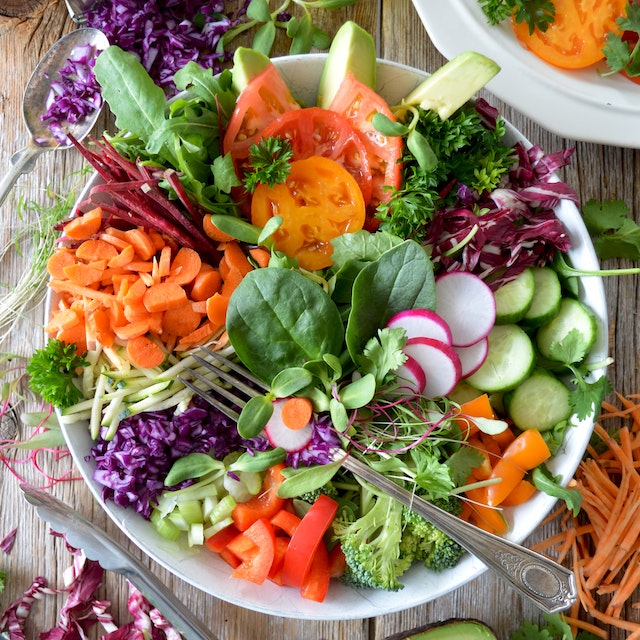
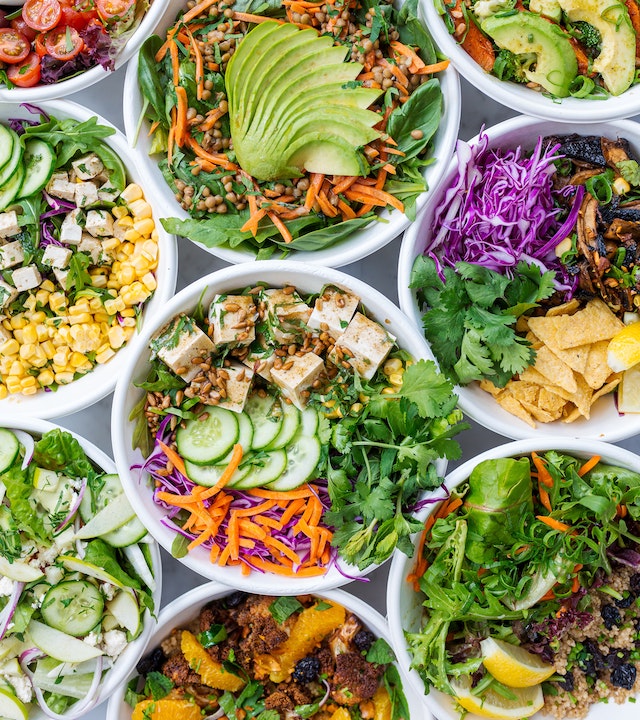
I always think of salads as parties in a bowl (or on a plate). It’s a festive gathering of ingredients; a celebration of varying colors, tastes, and textures bound together by some dressing for oomph as well as moisture. It's an ode to abundance. And sky’s the limit when it comes to making your own.
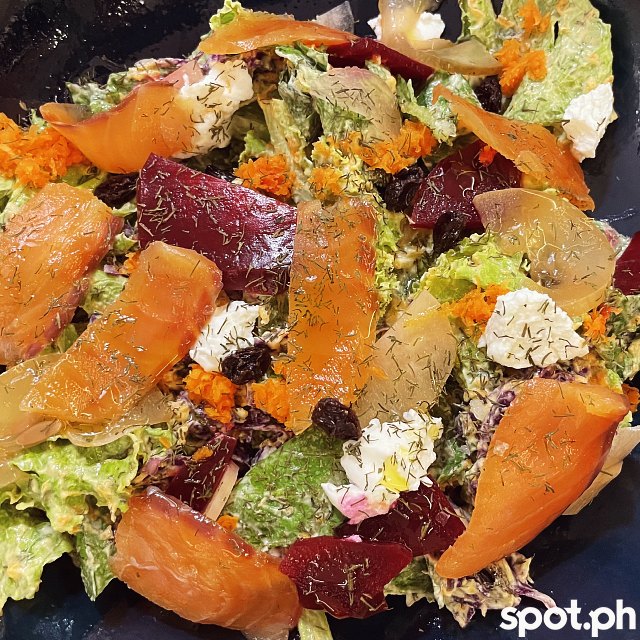
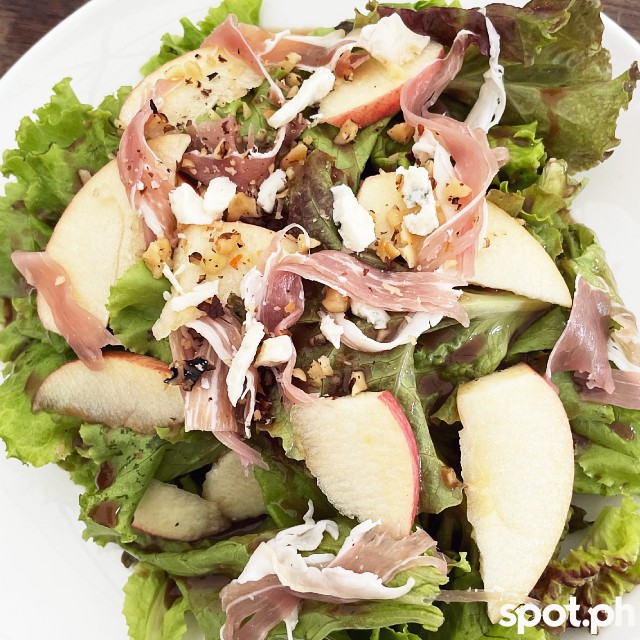
For the veg, you could stick to the usual lettuce, carrots, tomatoes, onions, and/or cucumbers—nothing wrong with that (pro tip, using the freshest you can find makes all the difference)—but there are also so many other ingredients you can play with. Try dark leafy greens (everything from arugula to alugbati!), pickled or fermented veg (kimchi, anyone?), or any fruit (think orange wedges, or fresh or dried mangoes). And don’t underestimate the power of fresh herbs (time to put that basil or mint you’ve been growing to good use!) to breathe zingy life into the mix.
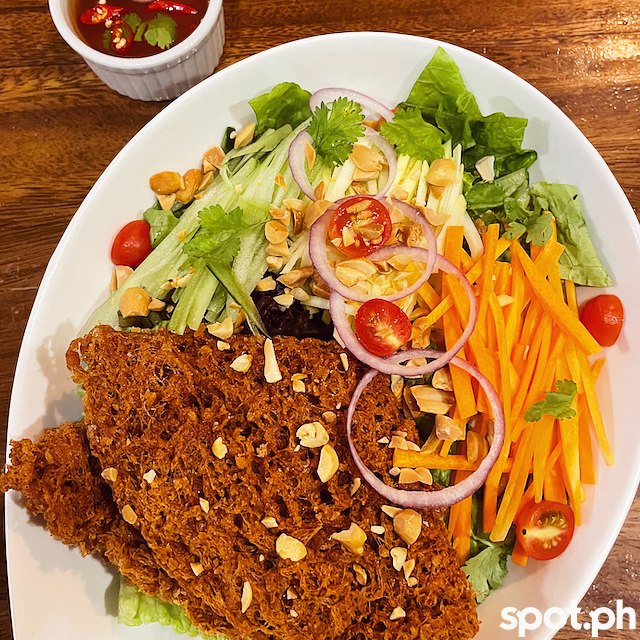
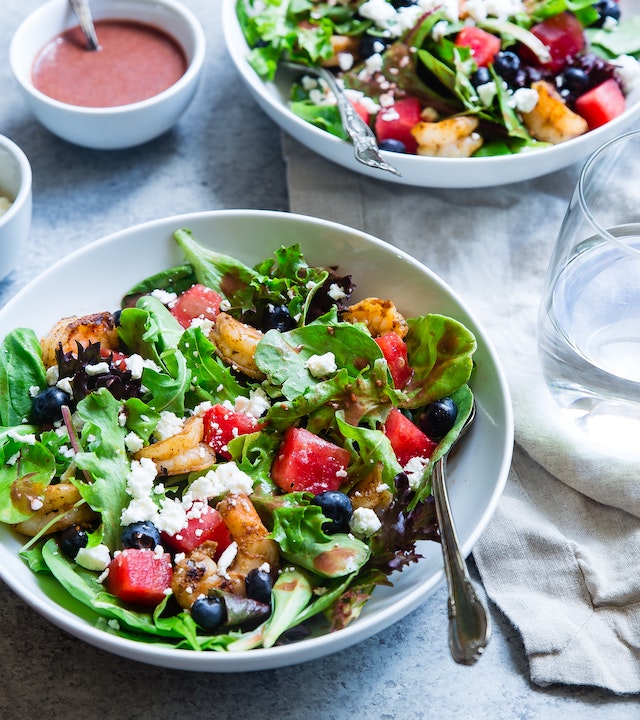
From both a flavor and physical satiation standpoint, it’s also worth adding in bulkier, more calorie-dense ingredients to the mix. We’re talking things like nuts (for crunch!), any leftover proteins in the fridge (rotisserie chicken or that leftover ham from Christmas), cheeses, beans and legumes, croutons or pita wedges, even grains (like brown rice or quinoa!). Feel free to play around with temperature as you fancy—most salads are served at room temperature or cold, but you can also add warm elements like sauteed mushrooms or roasted veg. As for the dressing, sure, you could go with any popular Western variant like caesar or thousand island—but why not put on your creative hat and experiment with making your own, using other ingredients like gochujang or bagoong with any neutral or flavored oil and your favorite vinegar?
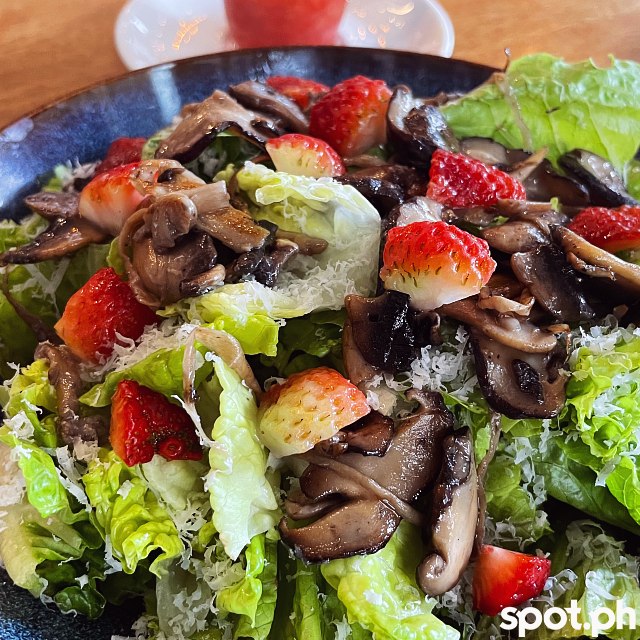
The beauty of salads is in its versatility; there’s no limit to the combinations you can whip up, really. That makes it a fantastic way to use up leftovers, and it doesn’t hurt that it takes just minutes to make with whatever you’ve got on hand. From there, just mix everything up, take your fork (or chopsticks), and dig in—then relish the contrasting sensations and vibrant flavors you get in every bite.
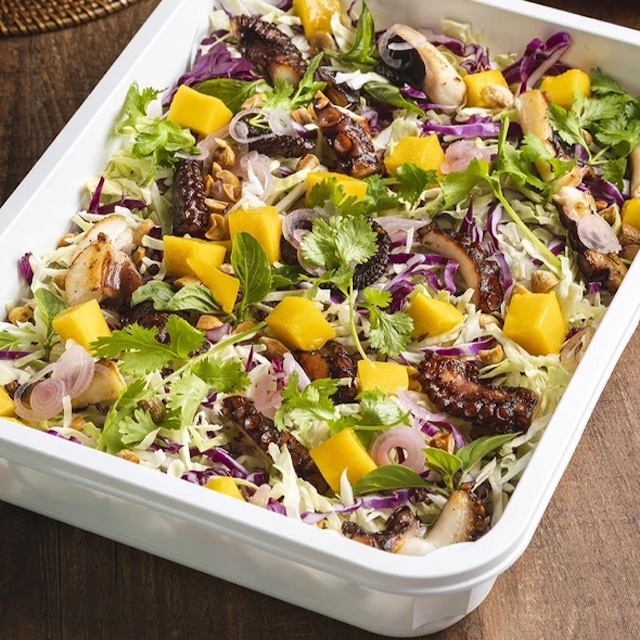
Salads deserve better, that much we can say—or at the very least, they don’t deserve the healthism-rooted glory or contrarian hate. Eating it doesn’t make you a better person or worse; it’s just food, and not necessarily a moral statement. But when done right, damn, what a delight it can be.
Also read:
Leafy Salad Recipes That Will Make You Feel Good About Yourself
Quinoa Salad Recipe
Hey, Spotters! Check us out on Viber to join our Community and subscribe to our Chatbot.