
Progressive Japanese Flavors Unfold in Modan's New Origami-Inspired Tasting Menu
The art of Japanese paper folding holds personal significance for Chef Jorge Mendez.
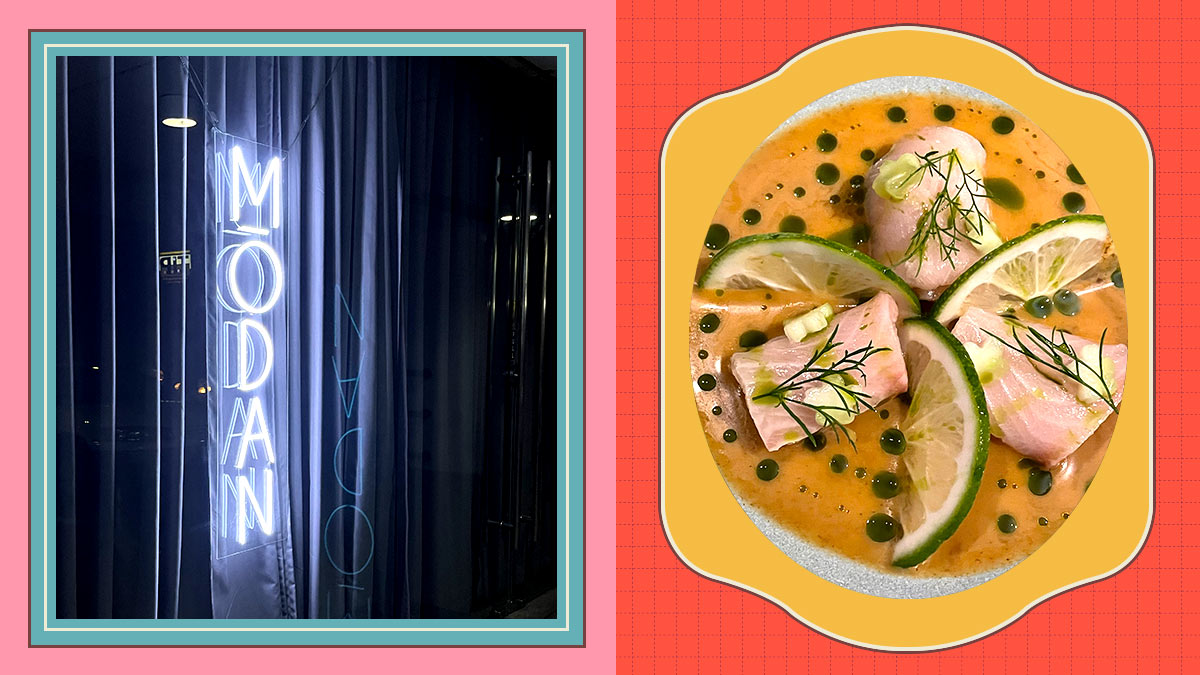
(SPOT.ph) Origami has a long and fascinating history that dates back more than a thousand years past in China and Japan. For Mōdan’s Chef Jorge Mendez, however, the Japanese art of paper folding holds a significance that’s much more personal—and closer to home.
“I’ve associated origami with a lot of my memories because it’s really a recurring theme [in my life],” the chef shares in an exchange with SPOT.ph. He explains how he’s long been in awe of those with origami skills; plus, his mom (who then worked as a singer in Japan) would also often bring him origami pieces as pasalubong as he was growing up. Mendez may now be a full-fledged adult—one of Manila’s most celebrated chefs to be exact. But he continues to hold those moments dear, and immortalizes them in the hearts of diners via the latest menu of the private-dining spot.
Also read:
Memories Are Pieced Into Modern Japanese Plates at This New QC Private-Dining Spot
10 Essential Tasting Menus in Metro Manila to Try Right Now
10 Great Private Dining Options In and Around Manila
Take a look at the latest tasting menu of Modan:
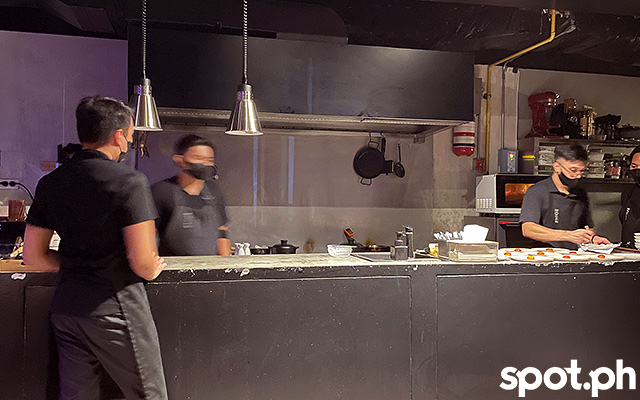
Close to a year has passed since Mōdan made their splash, with Mendez paying tribute to the figures close to his heart through the course of his life with his highly personal, progressive Japanese (also called neo-Japanese) tasting menu. They're still in their original location in Cubao that doesn't scream for attention; their space, likewise, is still on the compact side, seating just 12 diners a night (for the most part) on their communal table five times a week.
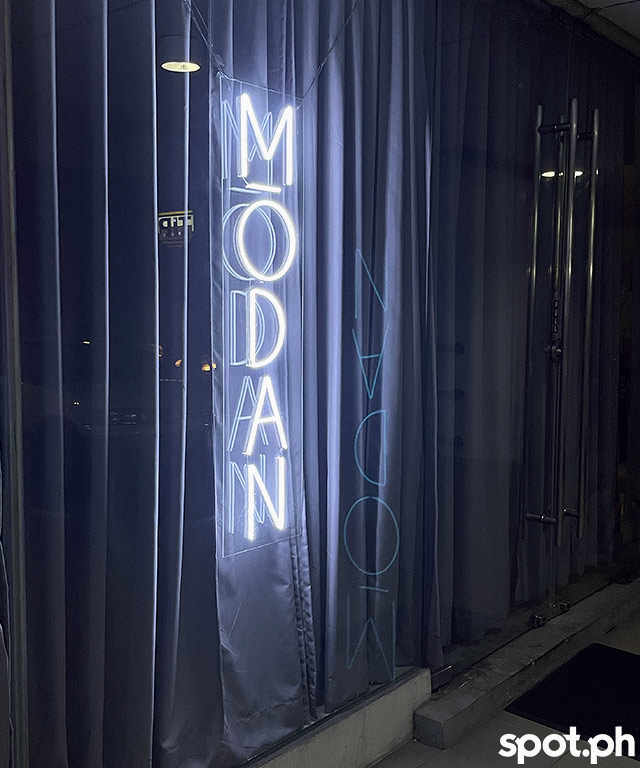
Location and size aside, they've managed to capture the hearts of Manila's dining enthusiasts nevertheless—so much so that slots to try their highly coveted degustation has been rather elusive to say the least (the author once inquired in late June and was told they're fully booked until September). No surprise there, though. The food speaks for itself: from the thought and creativity behind it, to the team's use of proper technique (mostly Japanese with other influences here and there), and the enthralling flavors that come about as a result.
The new Origami Degustation Menu (P6,500/head, two to four pax per group for the first seating, four to eight pax per group for the second seating, and subject to availability) remains one that reflects Mendez' personhood, but also wedges in the idea of orizuru—the Japanese paper crane that's considered among the most classic origami shapes, and seen as a symbol of peace and healing (cue the famous tale of Sadako Sasaki during World War II). Inspired by the origami piece, Mendez fashions an eclectic menu, with each course representing a part of, or element in, the bird—and displaying modern Japanese flair in the process.
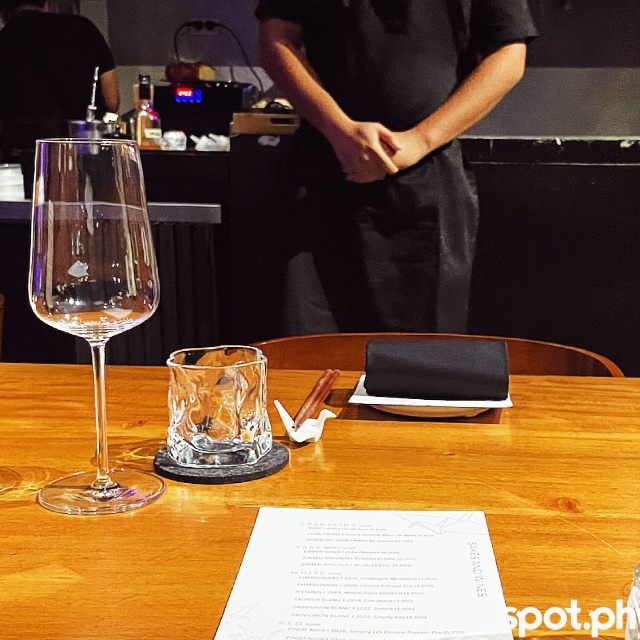
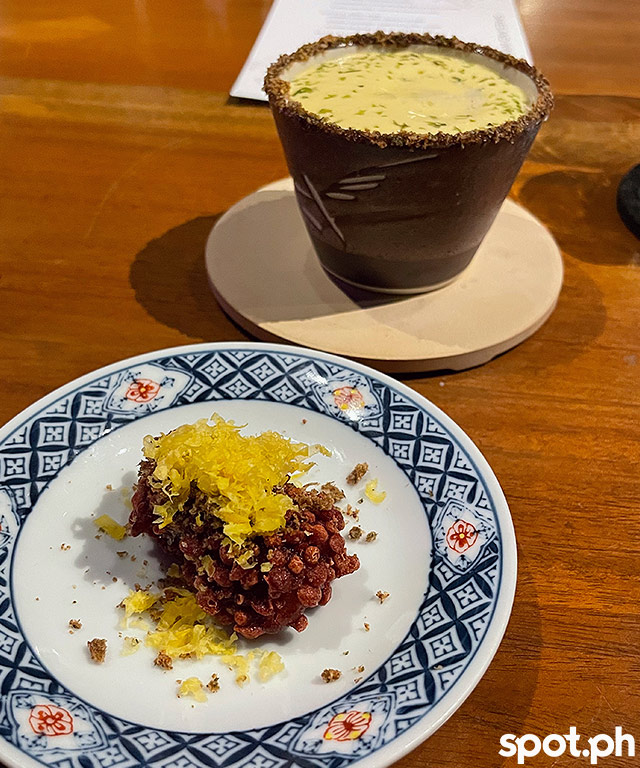
The Beak, a nugget of fish lip tempura (beak, lips—you get the idea), opens the multicourse meal; having been deep-fried, the fish lips take on a sort of gelatin-like yet cartilagenous texture (think jellyfish) that’s an excellent contrast to the craggy crispness of its beetroot tempura crust. This is served alongside the Sustenance—you’ve gotta feed the bird after all—which takes the form of a soothing soup of corn foam, kinoko dashi or mushroom broth, and housemade furikake. Bite the tempura first, we’re told, then sip the soup slowly.
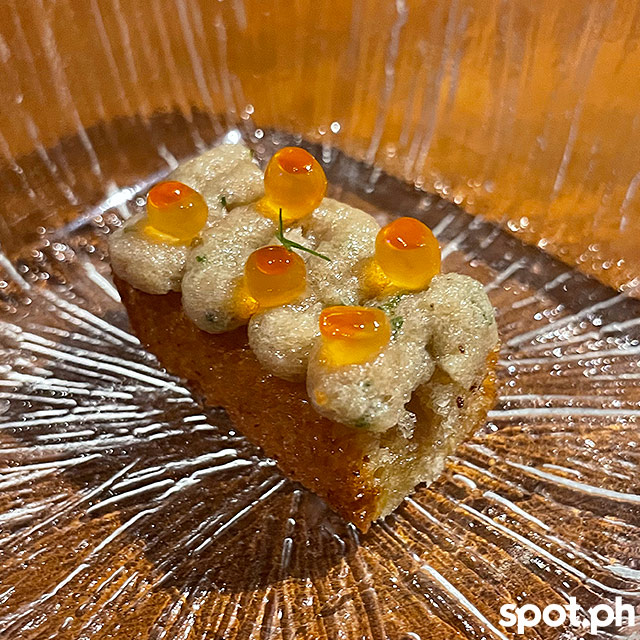
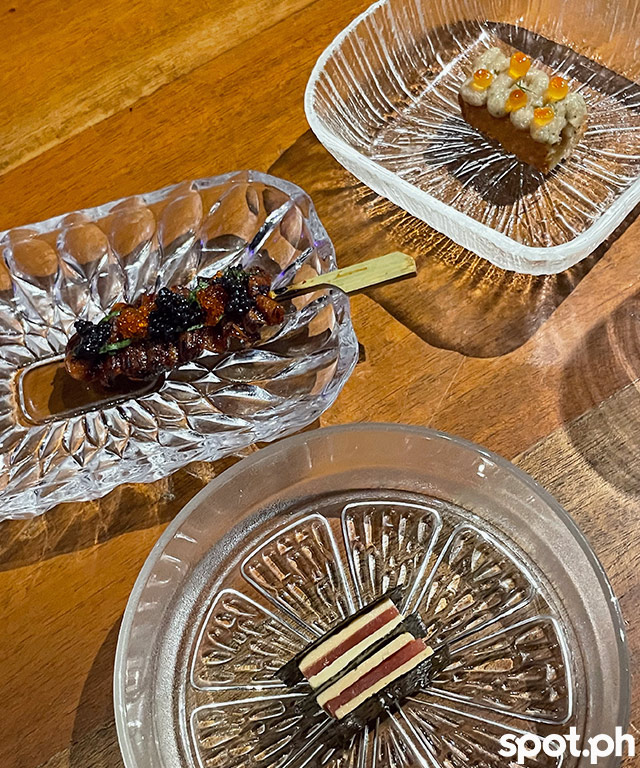
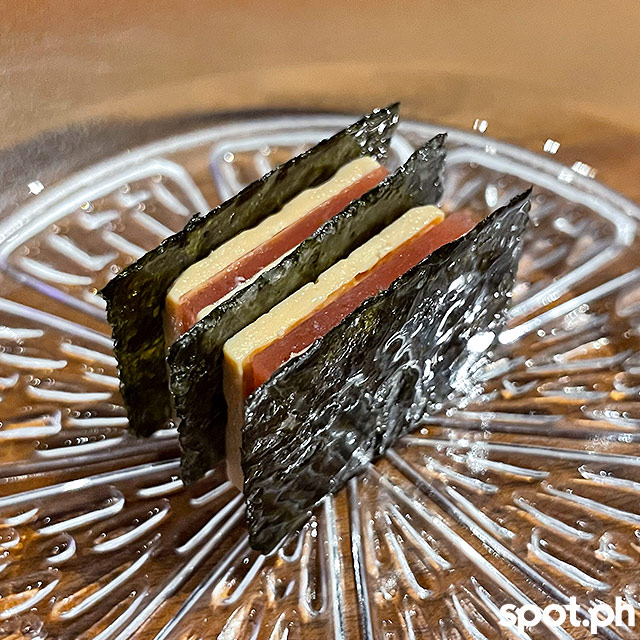
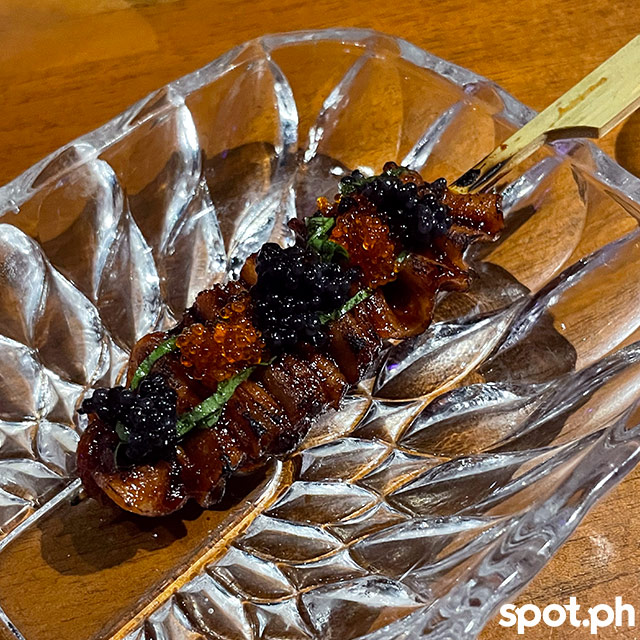
Perhaps alluding to the digestion of said sustenance is the Liver, Tongue, Egg—a triple-threat course of multiple parts, each with its own personality. The Liver translates to a savory-sweet mille feuille, where sheets of crisp nori sandwich sheets of foie gras and strawberry jelly; meanwhile, gyutan (beef tongue) yakitori given a cherry teriyaki glaze make up the Tongue part of the equation. And the Egg? That’s the chutoro and ikura toast for ya—ikura refers to salmon roe (egg!) after all—and it rewards you with Japanese-meets-Scandinavian flavors as you pop it in the mouth.
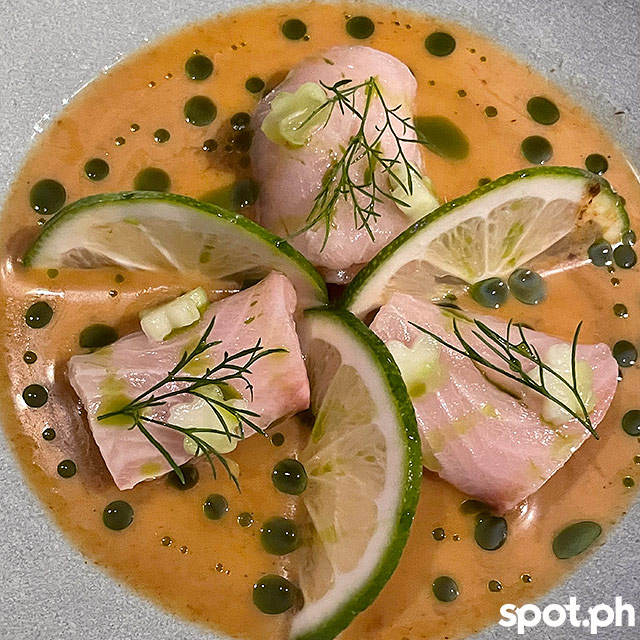
The Modan team made use of the trick of aging fish in their debut menu, and keeps the momentum going for this round with the course dubbed Flesh. This time they age buri, a fish in the same family as the more popular hamachi—making for a meatier bite that’s divine taken with the vibrant iyokan (Japanese orange) vinaigrette underneath and dollops of nira oil on top.
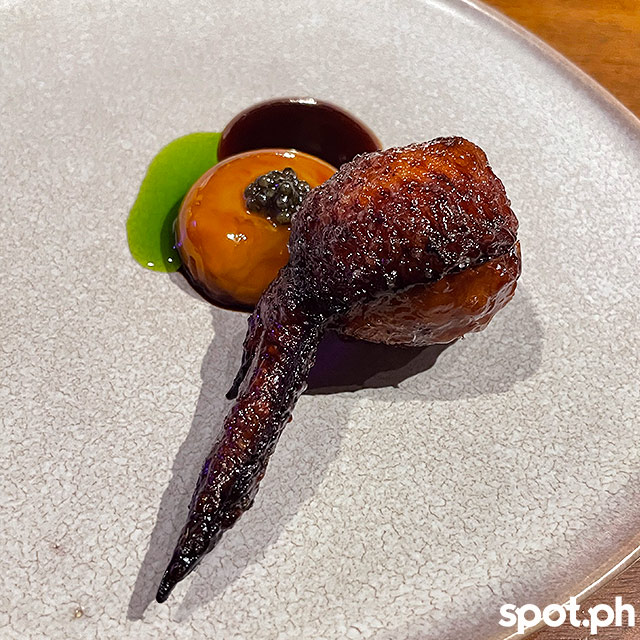
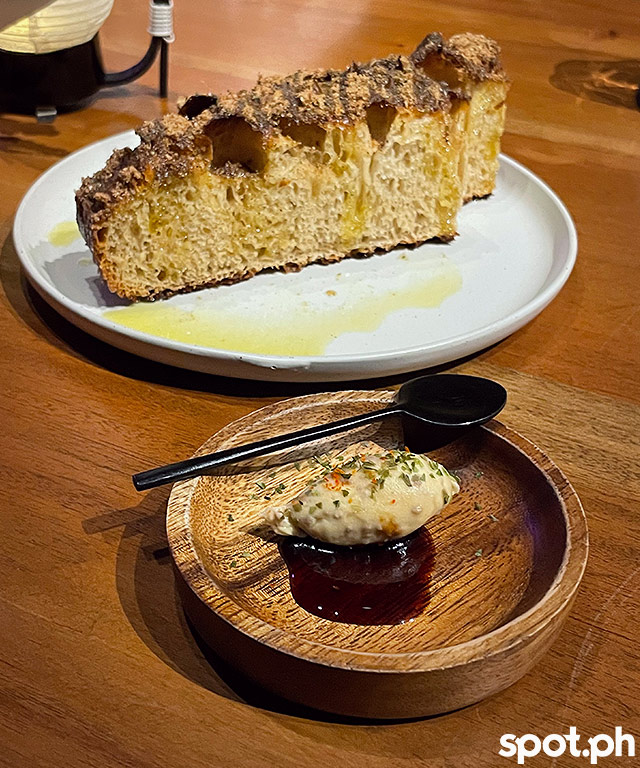
They likewise bring back the Debasaki course from the last menu, now called Wings—which similarly involves the tandem of a caviar rice-stuffed chicken wing and soy-cured egg yolk, but also includes more caviar than last time. You know the drill: poke the egg with the wing tip, dip and smush your chicken wing into the lava-like yolk, and dig in. Any leftovers of that liquid gold can be further mopped up with their Japanese-style, gyofun (fish powder)-topped focaccia—which is accompanied by a deadly oxtail butter in the succeeding Tail course.
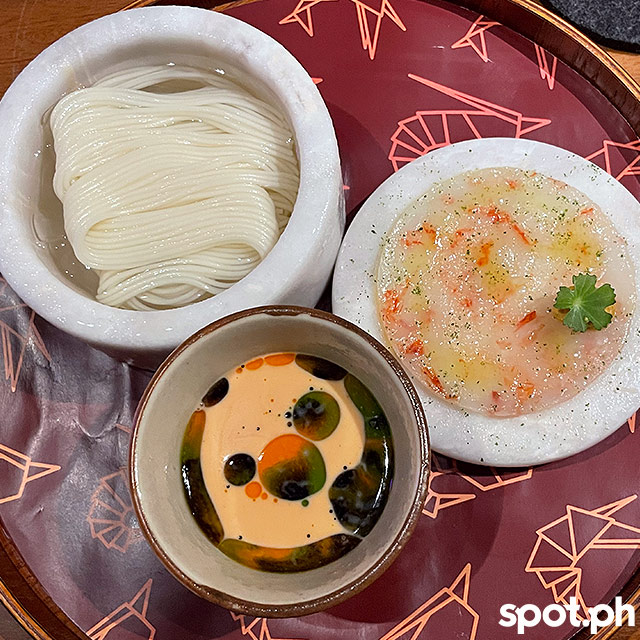
The crane’s Head is next. The corresponding course on the menu stars Botan ebi (shrimp), the sweet flesh of which is turned into a carpaccio, while the contents of its head—with all its naturally umami shrimpy juices—flavor a silky chawanmushi that glides on the tongue like velvet. Cold somen (white wheat noodles) are served on the side, for you to dip into the rest of that chawanmushi liquid. (Don’t you dare waste a drop of that, BTW.)
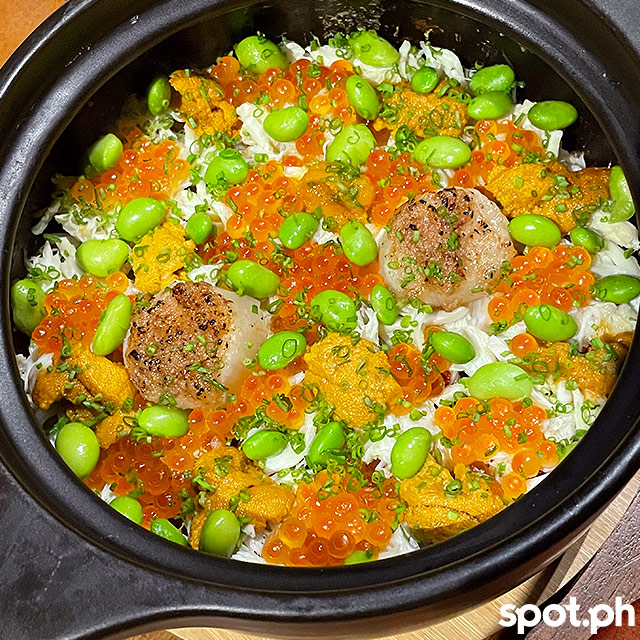
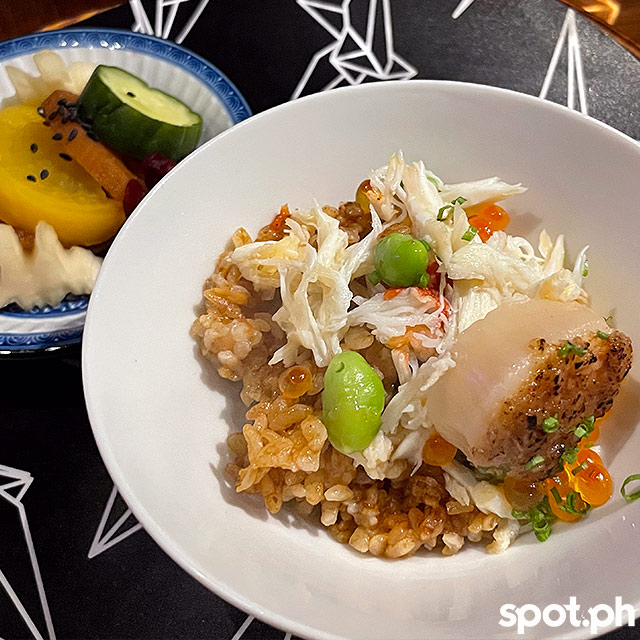
From here the team brings out the menu’s big gun, symbolizing the crane’s Limbs—the crane's very framework. We’re talking a whole donabe (clay pot) of rice and all the works: king crab, uni, scallop, ikura, and edamame, which eat contribute their own distinct tastes and textures into the mix. Modan has designed this course to be for sharing; spoon some into your bowl, and don’t forget to nibble on the tsukemono and braised lotus root served on the side in between chopstickfuls of the rice.
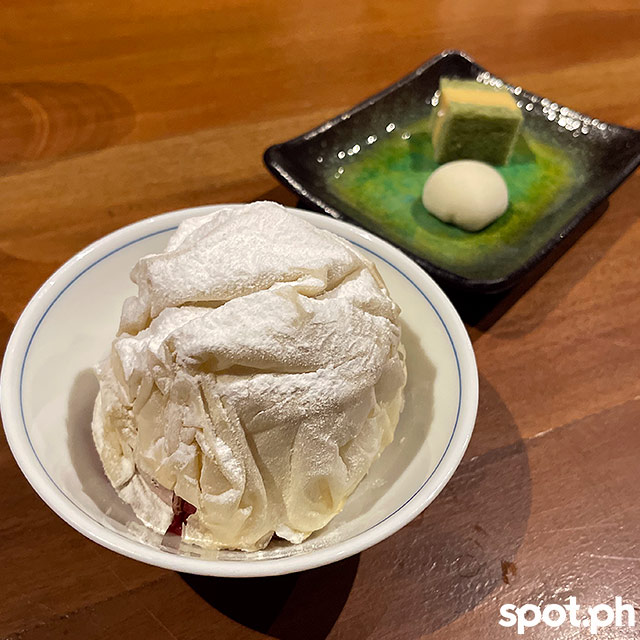
Having traversed the crane’s entire system, where does one go from this point? We’re brought back to the orizuru’s origins with the menu’s sweet finale: Paper. It arrives as a bowl with what looks like a sheet of paper crumpled—inspired by a time Chef Jorge’s son Cibo (with whom he bonds over making origami pieces) crumpled and threw a sheet of paper in frustration as he couldn’t figure out how to fold a paper airplane. That’s actually phyllo pastry baked just a tad to make it slightly crisp; tap on it with the back of your spoon and you’ll find Hokkaido milk ice cream, frozen berries, black fish sauce (!), and rice crispies hiding within.
In Japanese lore, the crane (tsuru) itself symbolizes longevity as the birds are believed to live for a thousand years. It's perhaps in the same vein that Mendez eternalizes his cherished moments, with culinary artistry as his medium. He gives us a glimpse of his life story from within, and—along with the rest of the Mōdan team—whips up splendid plate after plate with the neo-Japanese spirit he’s long been known for.
Mōdan is at Unit 3 Level 1 Escalades East Tower, 20th Avenue, Cubao, Quezon City. For more information, check out Mōdan's Instagram page.
Hey, Spotters! Check us out on Viber to join our Community and subscribe to our Chatbot.