
Try a Korean Steak Omakase at This New BGC Steakhouse
They also serve Hanwoo beef, the prized variety that's compared to Japan's Wagyu.
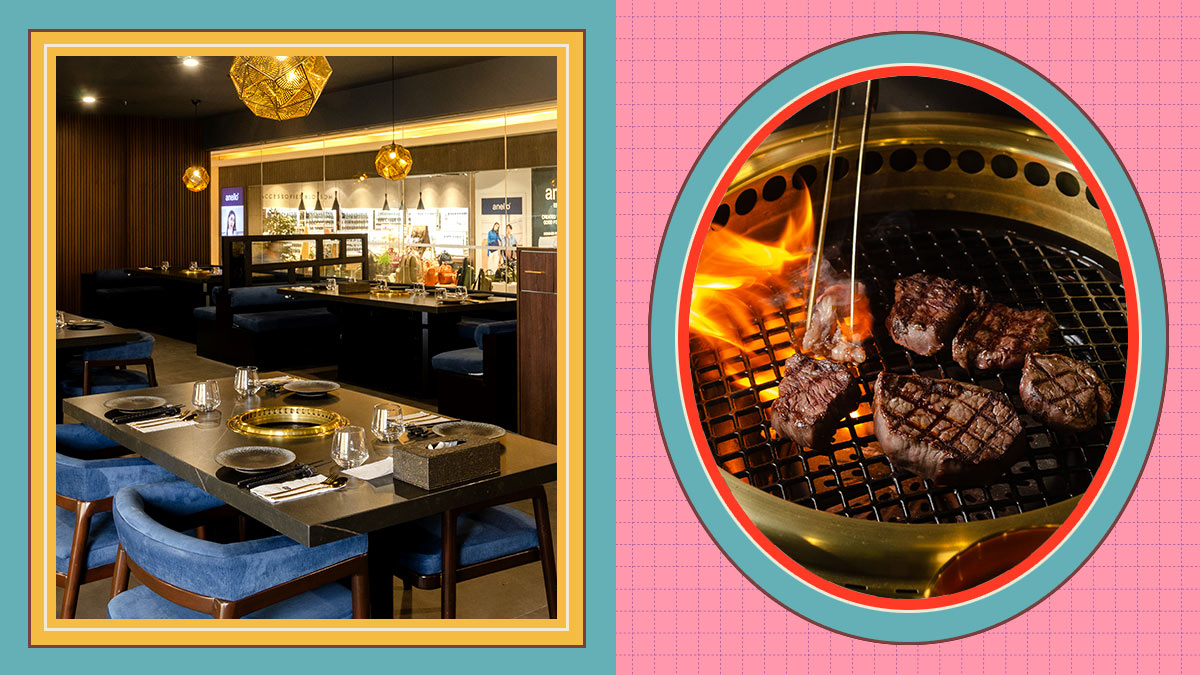
Giwon Korean Steakhouse
2/F MITSUKOSHI BGC, Bonifacio Global City
Contact: 0956-941-5333
Facebook: www.facebook.com/giwonkoreansteakhouse
Open from 11 a.m. to 10 p.m., Monday to Sunday
(SPOT.ph) Filipinos love steak. That’s a fact. So, a steakhouse opening in town is always a good thing, especially if it brings something new to the local meat-loving dining scene. Amid the typical steakhouses, however, are those focusing on specific kinds of meats or cuisines—as with Giwon Korean Steakhouse located at MITSUKOSHI BGC.
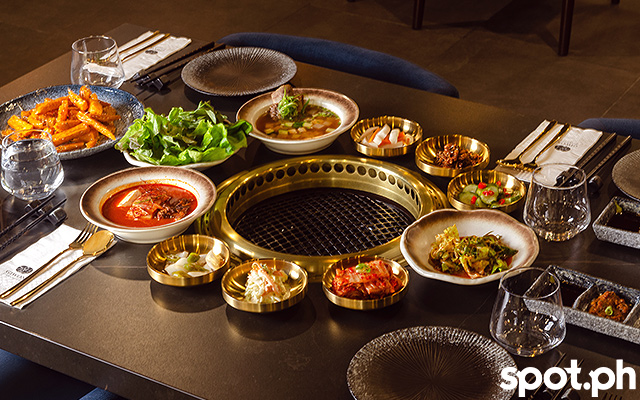
Giwon Korean Steakhouse marries the high-end concept of steakhouse dining with Korean BBQ grilling. And throw in a premium beef-tasting course modeled after the finest Japanese omakase-style dining of “Chef, I leave it up to you”, and you get an unforgettable dining experience.
Also read:
The Serious List: Your Comprehensive Guide to Steak and Where to Get It in Manila
10 Steaks in Metro Manila for Every Budget
10 Best Steak Restaurants in Makati
Here's the deal with Giwon Korean Steakhouse:
Upon entering, you are treated to the luxury of a spacious dining area that overlooks BGC’s Grand Central Park. The generously spaced seating between tables makes you feel as if you have your own private dining nook, each one elegantly appointed with plush blue seating and dark wood furniture. But unlike other Korean BBQ restaurants, Giwon Korean Steakhouse lets their staff cook for you at your table, so that all diners can just sit back, relax, and fully appreciate the food. This is to ensure that all the meat is grilled perfectly for you in a relatively smoke-free table setting on the special grills shipped straight from Japan.
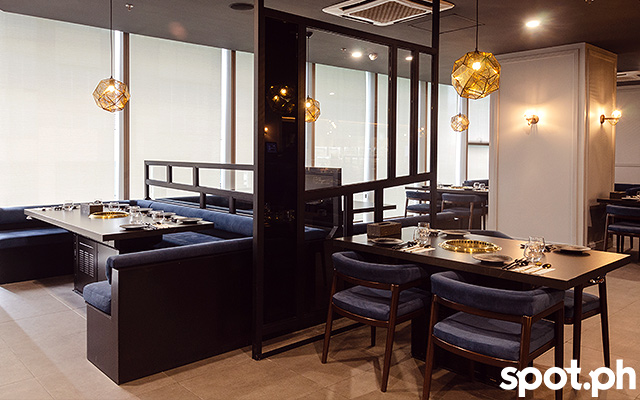
Giwon Korean Steakhouse has an impressive menu that'll tempt the whole spectrum of food lovers—whether you're looking for a one-of-a-kind spot to eat in while on a date, or just feeling celebratory and looking for a special place to share the experience with loved ones.
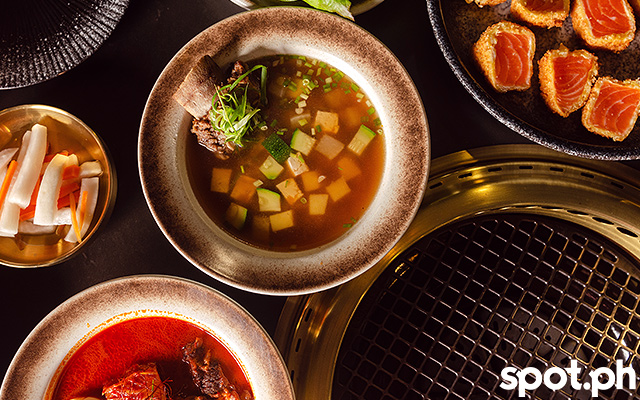
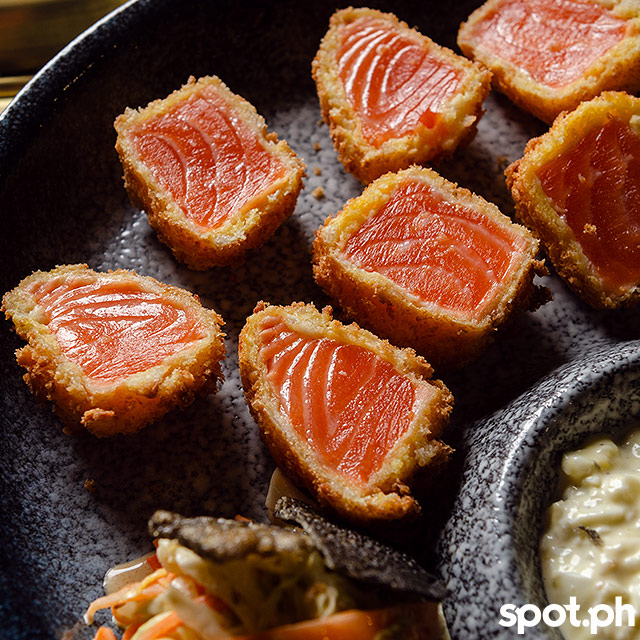
Being a steakhouse, we all know what the star of the meal will be—but the entrées are just as crave-worthy too. For seafood lovers, the Salmon Sashimi Katsu (P650) is an indulgent treat with air-flown chilled Norwegian salmon served Katsu-style, with the inside still red and juicy. Known for its fresh and clean flavor, Norwegian salmon is marbled as well with evenly distributed fat, deserving of the oft-coined title: "Wagyu beef of the ocean." This is served with a house-made Japanese-style egg salad and tartar sauce on the side.
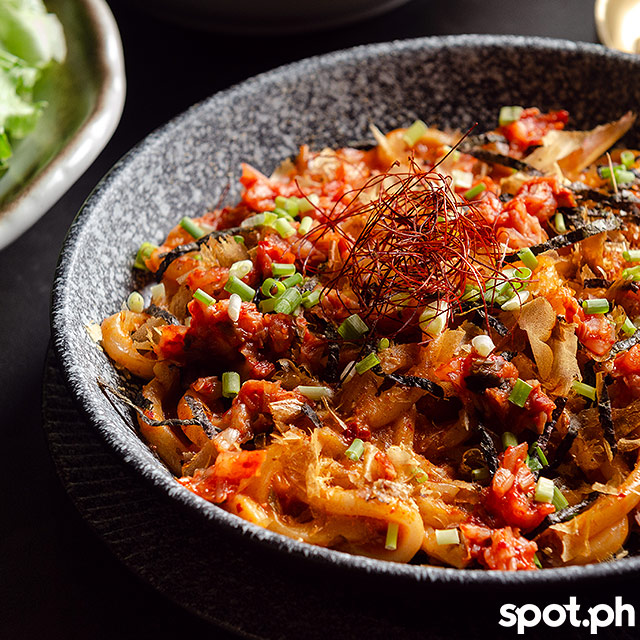
The Kimchi Udon (P450) marries Japanese and Korean cuisines. The udon noodles are made in-house, resulting in a chewy and bouncy textured bite. They're then stir-fried in a secret sauce with a base of house-made dashi made from locally caught Yellow Fin Tuna (from Mindoro or Gen San, as the restaurant supports local fishing communities) that's dry-aged before being added to the stock. Bonito flakes and pollack roe add the signature Japanese seafood flavor for an umami punch, and combined with the kimchi, this noodle dish may just be on your BOTB list of Best Comfort Noodle Dishes for any time of the day or night.
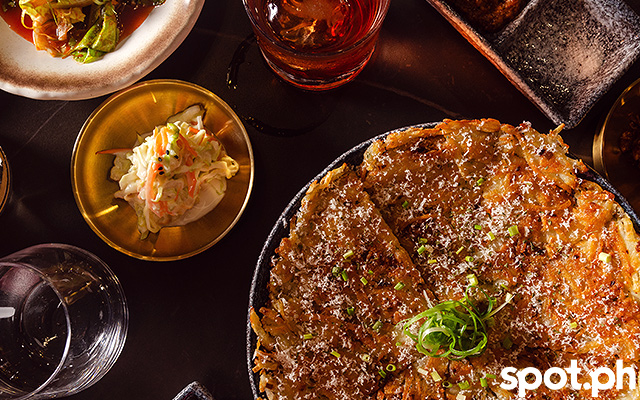
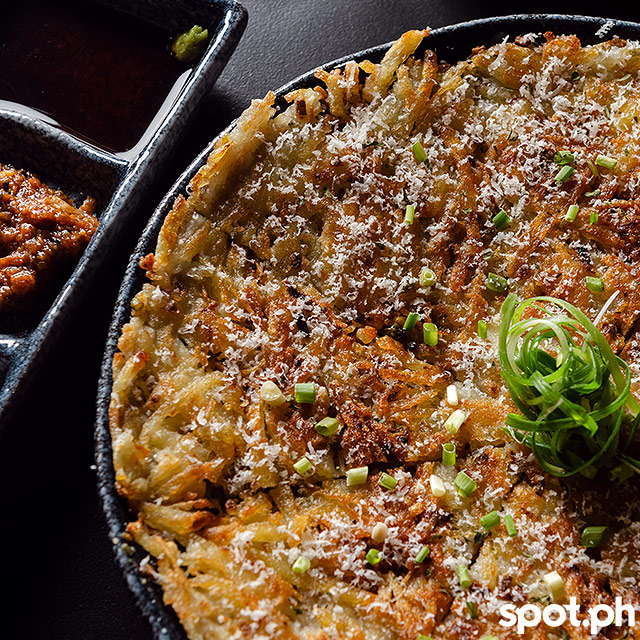
For a luxe treat that serves as a pat on your back for a job well done, the Truffle-Jeon has your back. This is their version of Korean potato pancakes (gamjajeon) with a European twist, as it has the flavors of truffle and parmesan and comes drizzled generously with truffle oil. Choose the Black Truffle version (P450) for a mellow and subtle truffle flavor or get the White Truffle version (P500) for a stronger flavor profile and garlicky after-taste.
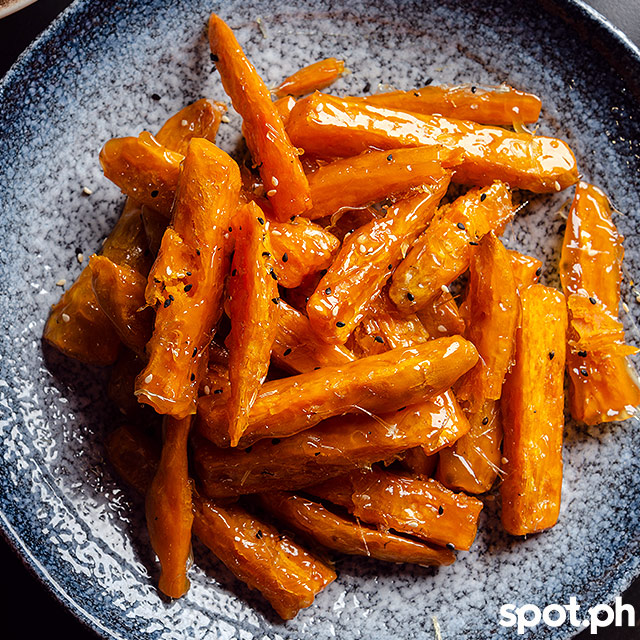
For those looking for a sweet entry into the meal, the Matang Fries (P380) are an absolute must-try with Korean sweet potato fries crisply coated with a salted caramel shell then topped with roasted sesame seeds.
After your chosen appetizer or entrees, it’s time for the main event.
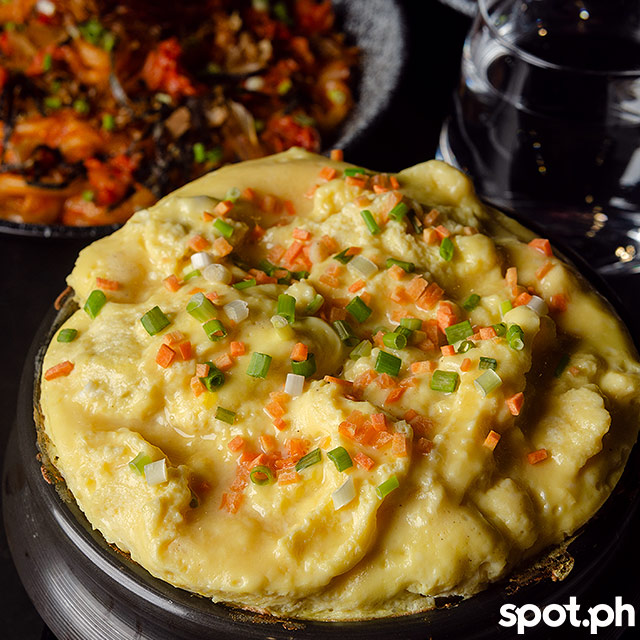
The real bang for your buck comes in the form of the Course Sets that are good for two to three or bigger groups of four to five. All the sets are served with your choice of soup (this writer had the option of kimchi soup or the beef short rib soup, both hearty and tasty), white rice, banchan, a huge bowl of gyeran jjim or steamed egg, and the dessert of the day (choose between Bingsu or Mochi). There are also three special condiments for diners to customize their steak-tasting journey: Sea salt with dehydrated Italian black truffles, the special house-made ssamjang with Korean black garlic mixed in, and ponzu wasabi. The last they recommend for the fattier cuts of meat like the Japanese Wagyu.
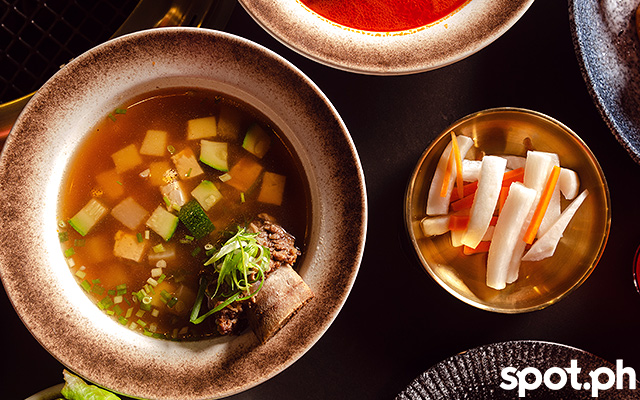
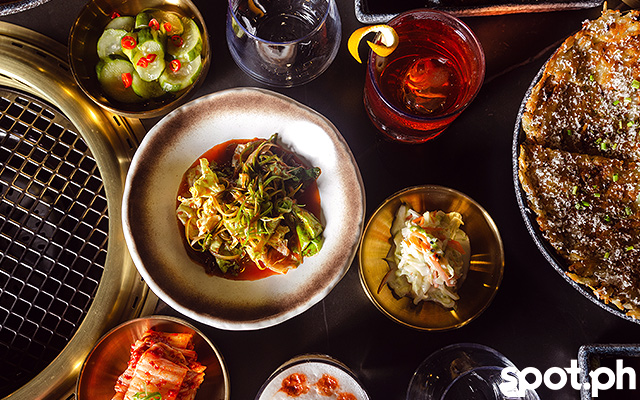
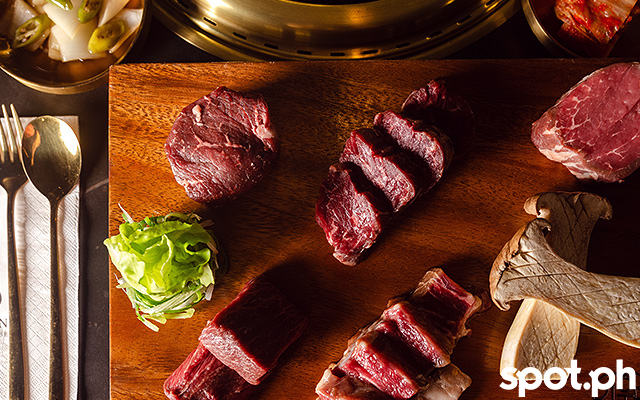
The WOO-makase (Php 7,500) is a five-steak course perfectly proportioned for two to three, where diners can go through different cuts of steak sourced from farms in the U.S., Australia, and Japan. It's served the proper omakase way—from the most lean to the fattiest cuts of beef—and cooked on a table grill, just like Korean BBQ.
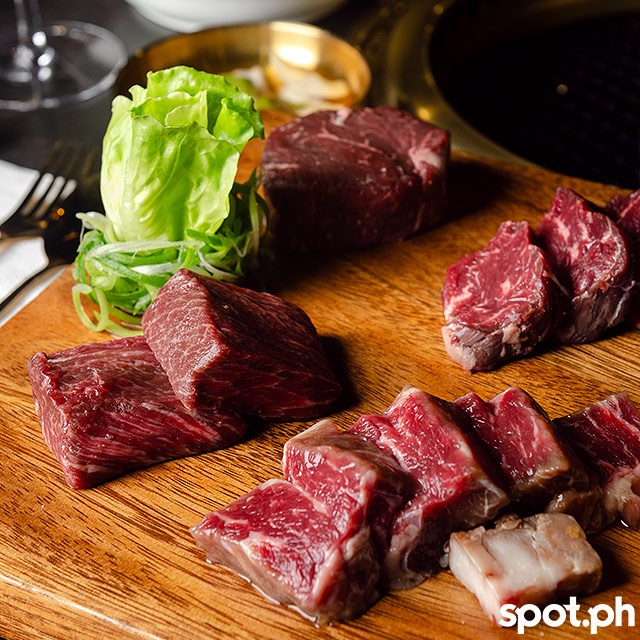
First up is the Dry Aged Australian Hybrid Wagyu Rump that's dry-aged in-house—ensuring maximum attention to quality and proper aging time. Dry-aged beef cooks very quickly on the grill so it’s also good to have a knowledgeable staff member cooking this for you at your table. Because this is a hybrid Wagyu cut, you get that Wagyu flavor in your mouth without the overwhelming fat. This first course of beef goes well with the truffle salt as this is the leanest and chewiest cut.
Next up is the Hanger steak or the Angus Beef Onglet. This flavorful cut of meat is more tender than the Rump and is very beefy and iron-rich in taste. This pairs perfectly with the house-made ssamjang as the black garlic comes into play here with a creamy and slightly cheesy taste that suits the full flavour of the onglet steak nicely.
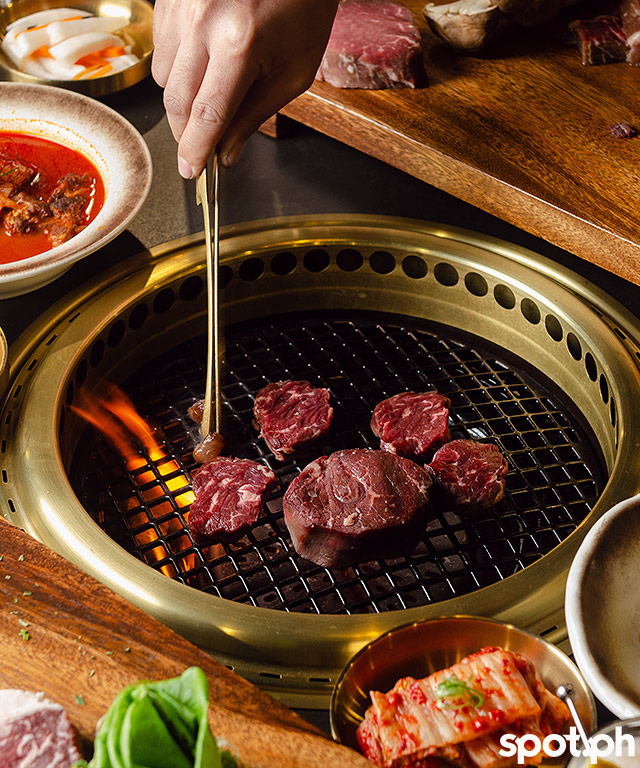
The third course is the Giwon Galbi that is specially prepared so that it’s still in a thick steak cut. The beef is marinated in a special pineapple marinade for a slightly sweet but still beefy profile.
The fourth course is the Tenderloin which, when grilled to your desired doneness, is as tender as one would expect; it pairs beautifully with any side dish from your course set. This writer wrapped a few tender meaty bites with some kimchi and ssamjang in the locally sourced, hydroponic butterhead lettuce that came with our set. True to its name, the butter-smooth textured green is the perfect foil for any and every mouthwatering morsel in your mouth.
Fifth up is the American Wagyu Misuji which is not a typically popular cut from the shoulder of the cow, but one that's well-loved in Korean and Japanese culture. The fat content is as melt-in-your-mouth delicious as you’d expect from Wagyu and the Japanese Ponzu Wasabi sauce partners well with this fatty cut of beef.
The special treat for this visit to Giwon Korean Steakhouse is that we were given the chance to try the famed and one of the rarest and most expensive steaks in the world…the famous Korean Hanwoo (P6,000/200g for Hanwoo Buchaesal and P6,700/200g for Hanwoo Striploin).
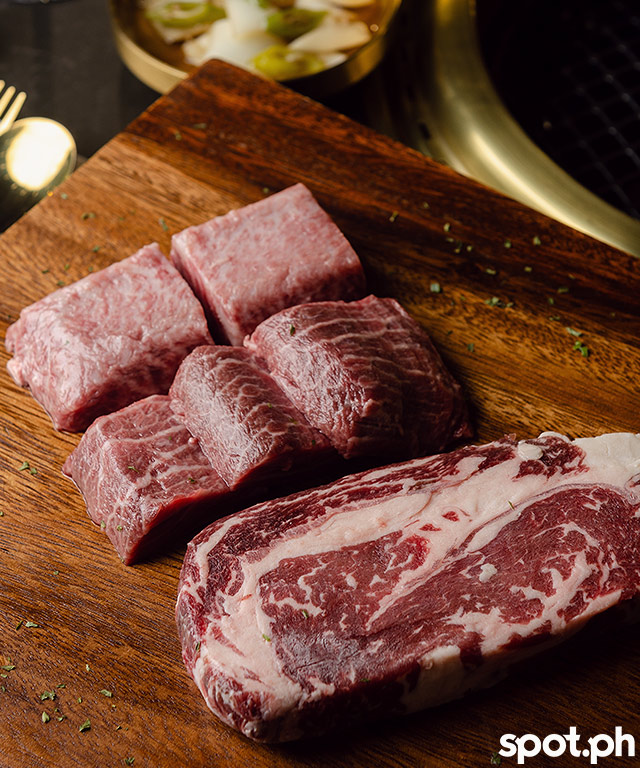
Hanwoo cattle are only found in Korea and around 99% of Hanwoo beef is consumed within South Korea alone. This leaves the remaining 1% for official export to only 4 other countries: Hong Kong, Macau, Cambodia and Malaysia. For other countries, the only way is to hand-carry the precious Hanwoo beef from Korea yourself.
Compared to Wagyu beef which has ratio of 60-to-70% fat to 30-to-40% meat, once you bite into Wagyu, there’s a rush of fat that's uber-juicy but can also be overwhelming if you’re not used to it.
Hanwoo beef, on the other hand, has a ratio of 50%-50% fat to meat—which delivers a stronger beef flavor. It’s not as tender or melt-in-the-mouth as Wagyu, yes, but the flavor and the extravagant marbling make it worth every peso in its steep price point. And Giwon Korean Steakhouses’ Hanwoo Beef has a grade of 1++ , meaning this is the equivalent of A5 wagyu at the top of the class. 1++A beef is the best of the best.
If your budget allows you to splurge, definitely go for the Hanwoo beef, which they grill to perfection at your table with all the sauce and Korean side dish combinations of any food lover's dreams.
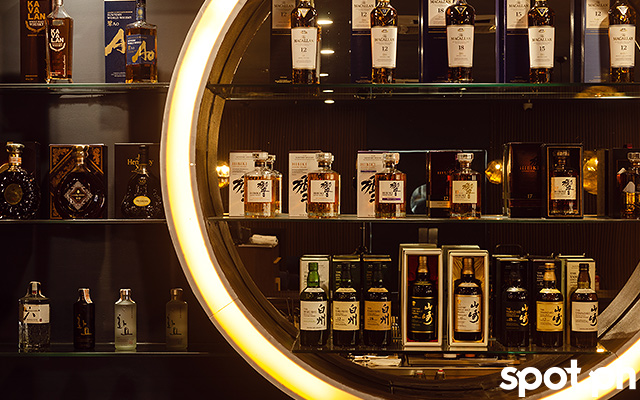
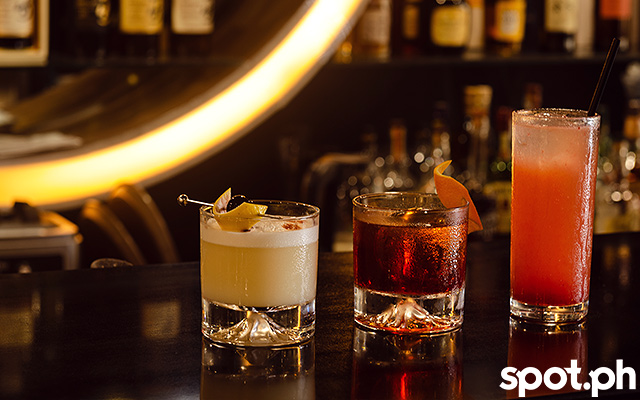
Pair your meal at Giwon Korean Steakhouse with your wine of choice from their impressive wine list, or go for a well-deserved cocktail from their well-stocked bar with an extensive array of Japanese and Scotch Whiske. If you prefer Korean soju and wine, they’ve got you covered as well. Kanpai, cheers, and geonbae any way you like.
“Giwon” is an old Korean word that means “original" or "origin” and the name was deliberately chosen to show what sets them apart in the local steakhouse scene. If you’re looking for a special place to unwind in or celebrate, take your carnivorous meat-loving self here on a journey that you will never forget.
Hey, Spotters! Check us out on Viber to join our Community and subscribe to our Chatbot.