

The Kin of Drug-War Victims Keep Their Stories Alive at This Coffee Shop
Silingan Coffee continues the call for accountability amid EJKs.
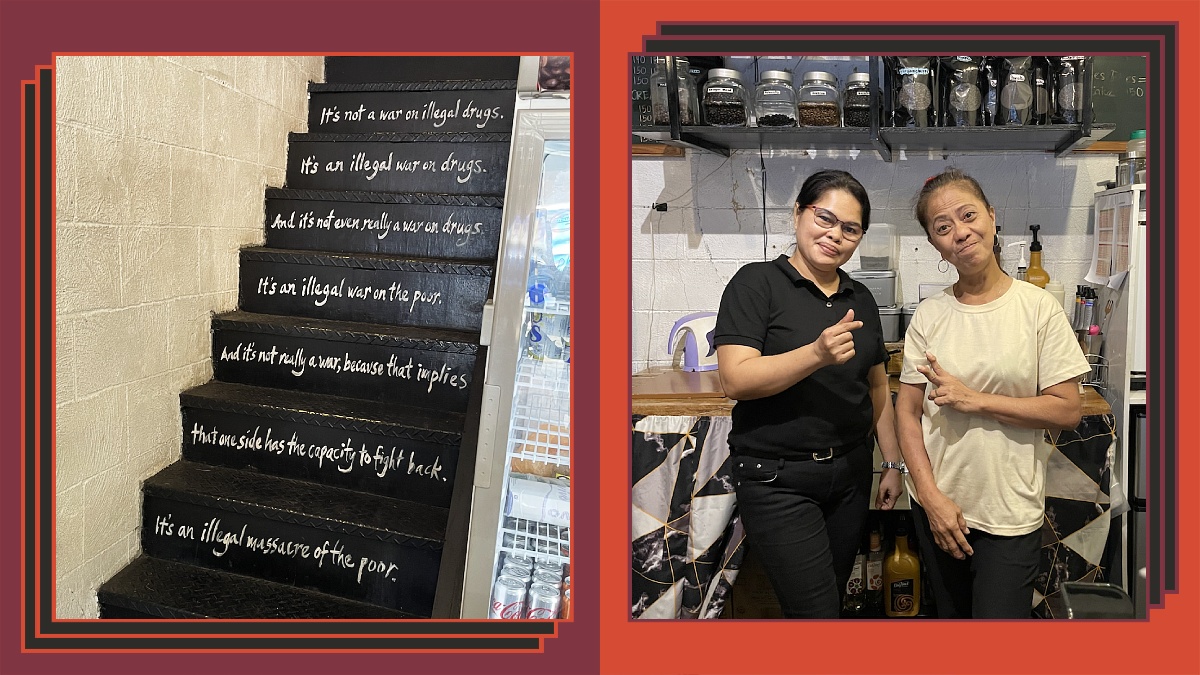
Silingan Coffee
Stall 9, Cubao Expo, 3 General Romulo Avenue, Cubao, Quezon City
Contact: 0917-146-8108
Facebook: www.facebook.com/sinirangancoffee
Open from 11 a.m. to 9 p.m. (Monday to Wednesday), 9 a.m. to 11 p.m. (Thursday to Sunday)
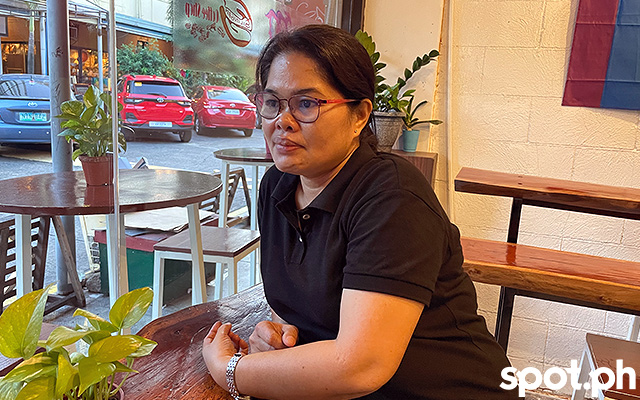
(SPOT.ph) Marilyn Malimban and Isay Sarmiento are taking orders and brewing cups of joe at the Silingan Coffee counter on a Sunday afternoon. In between busier spurts, they would occasionally stop to chat with customers—some of them seemingly regulars who’d share updates from the last time they were in the small café.
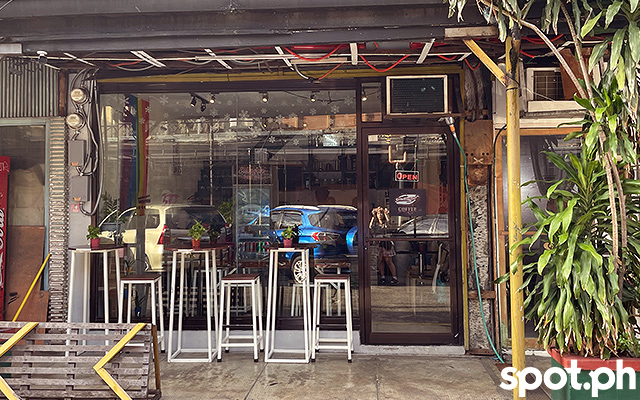
An upbeat song from the TikTok app soon blasts from phone speakers; to this, Ate Marilyn and Isay wave their hands and dance in synchrony. “‘Pag walang customer nagti-TikTok kami,” Malimban says in an exchange with SPOT.ph. “Gano’n lang po, masaya [na] kami dito. Kahit panandalian lang, nakakalimutan namin yung mga past namin na nangyari.”
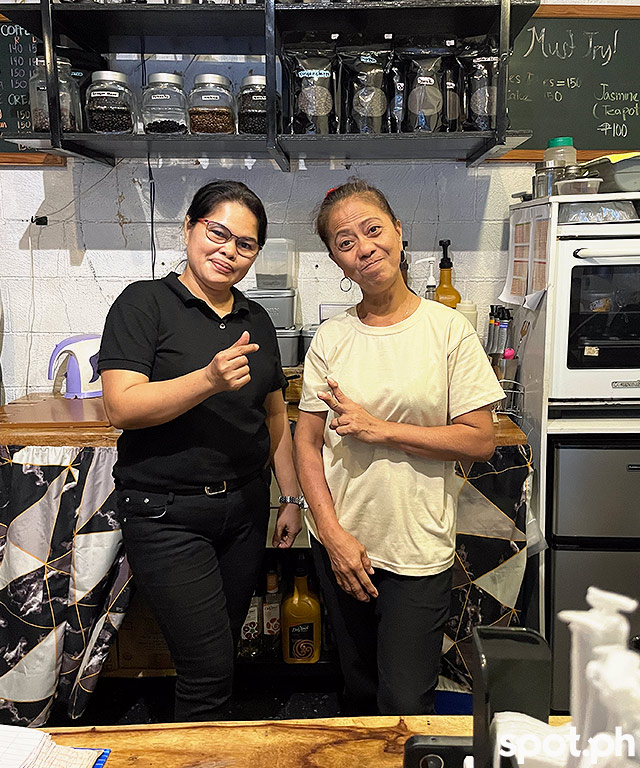
Behind Malimban’s cheery demeanor is a story of love, loss, and the call for justice following the killing of her partner in 2016, in light of the so-called drug war of the Duterte administration. She and Sarmiento are among the staff members of the coffee shop, which opened in 2021 and has since been committed to helping—and sharing the stories of—the kin of victims of extrajudicial killings.
Also read:
20 Brutally Honest Placards That Protest Duterte's War on Drugs
The SPOT.ph Guide to Coffee
This is the story of Silingan Coffee:
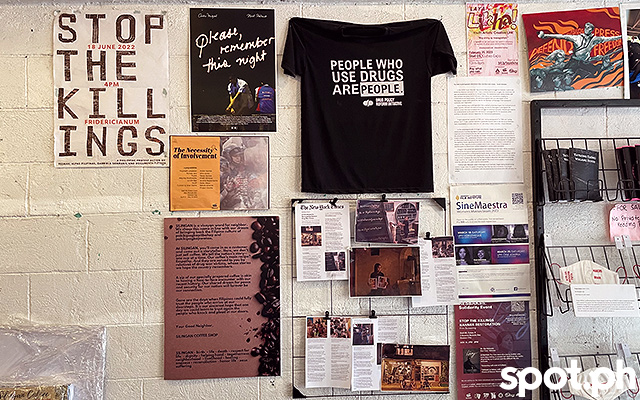
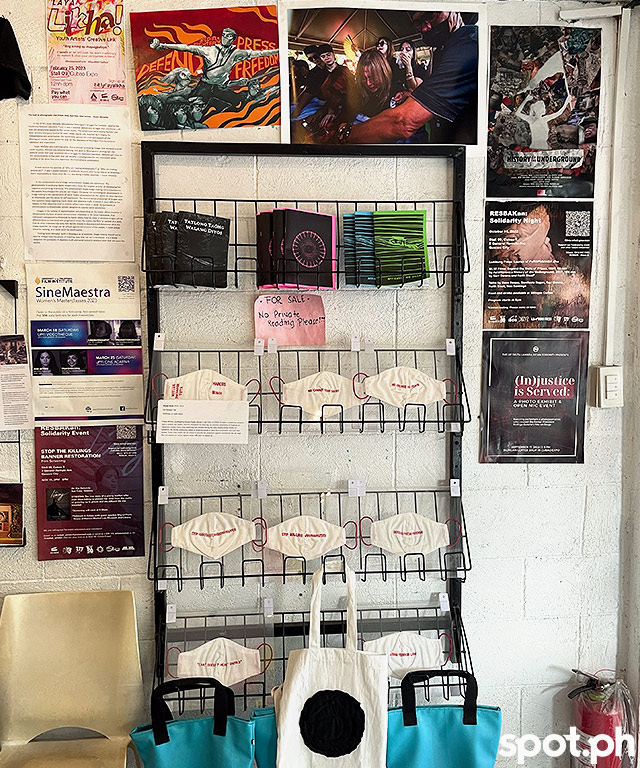
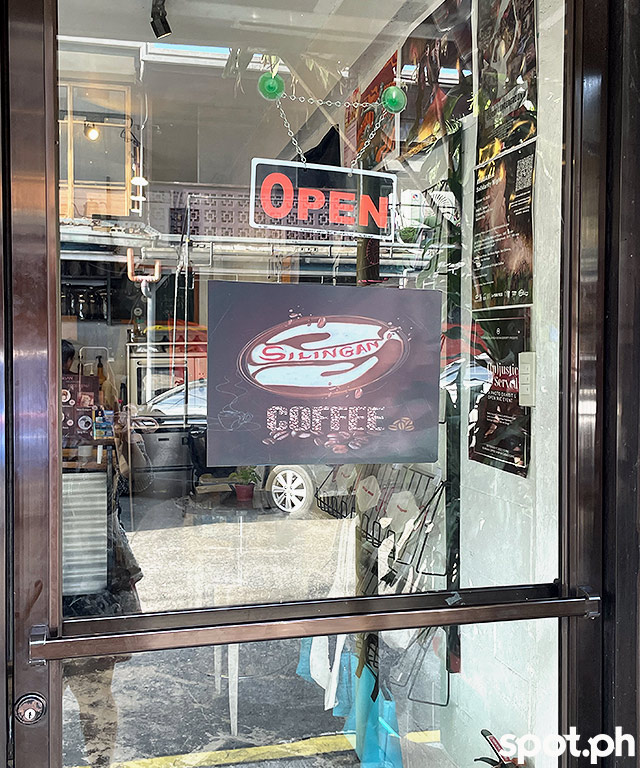
Though more low-key compared to the quirkier shops of Cubao Expo, Silingan Coffee—named after the Visayan word for “neighborhood"—makes its message clear as you walk in and look around their small space. Printed on a black shirt hanging on the wall is a line of text that goes, “People who use drugs are people.” “Stop the killings,” a poster near it says; beside it are also print-outs of posters of other events and initiatives bringing awareness about extrajudicial killings (EJK). By the door is a rack of merch—totes bags, readings, face masks—available for purchase, with proceeds going to the cause.
Perhaps their most famous spot is the staircase in the corner, each step conveying a line of text. The first four are especially striking: “It’s not a war on illegal drugs. It’s an illegal war on drugs. And it’s not even really a war on drugs. It’s an illegal war on the poor.”
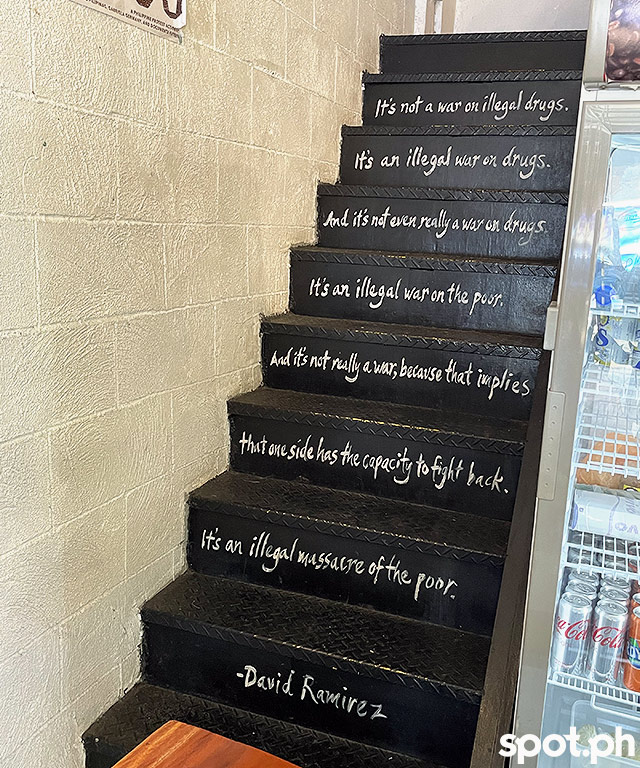
It was over the course of the Duterte Administration’s “war on drugs,” after all, that 12,000-plus people accused of using drugs were killed (acknowledged to have been, anyway). Beyond being a statistic, every single one of those 12,000-plus folks are, well, people. People with hopes, dreams, jobs, families, loved ones. People who care for them; people they care for. It’s their tales and grievances that Silingan Coffee aims to spotlight, to keep them from being forgotten.
Silingan Coffee Shop’s Origins
Owner Ciriaco “Jun” Santiago shares the roots of the coffee shop over a conversation with the author on Zoom. A redemptorist and religious missionary, Santiago would go around Metro Manila, Bulacan, Rizal, Laguna, and Batangas to pick up donations and deliver these relief goods—ayuda, as they’re also called—to the families of victims of the war on drugs. He’d mostly do this himself, without a driver (though he’d sometimes be accompanied by a photojournalist friend), traveling some 27,000 kilometers in the process. Also a photojournalist himself, Santiago had already been covering the drug war for a number of years.
“Pero noong huminto na [‘yung pagbigay ng ayuda], patuloy pa rin yung paghingi ng mga mothers,” he laments (note: mothers or nanay in this context is a general term referring to the relatives of EJK victims, though they may not necessarily be their literal mothers). “Lockdown pa din, wala pa ring ayuda. So parang, ang hirap i-sustain.” At one point, one of the children of the EJK victims approached him for job opportunities. “‘Sabi, ‘Brother, baka pwede mo naman kami bigyan ng trabaho, kahit na... pa-dalawang araw sa isang linggo para lang sigurado kaming may makakain,’” he says.
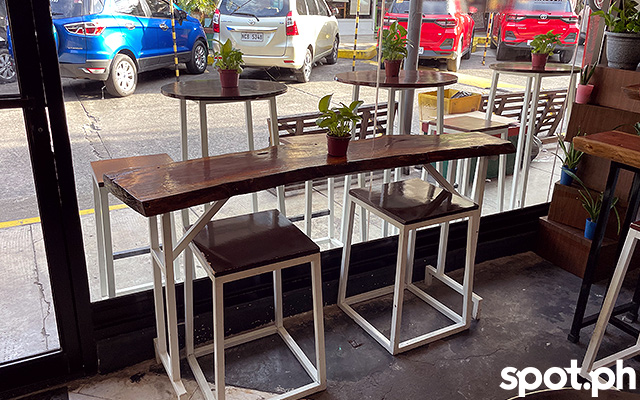
Thankfully he found the opportunity to open shop in Cubao Expo—specifically at Stall 9, which was previously occupied by friends who’d use the space for art exhibits and performances. “So, sabi ko, okay ba sa inyo na sa’kin itong baba?,” he says, refering to the first floor of the small shop. (The second storey is used for exhibits, talks, and the like, but you can also dine there at other times.) “May mga tutulungan ako nanay… ite-train ko sila as barista, ganun-gano'n… makaka-unload doon sa kanilang expenses.”
Challenges
Born in August of 2021 and officially launched in October 28 of that same year, Silingan Coffee turns three this 2023—and has been through multiple ups and downs since their debut. Santiago admits they struggle to get customers in their early days, what with the enhanced community quarantine (and related limitations) implemented at the time. “Swerte na lang pag may customer… minsan, sa isang linggo, may apat na customer,” he laments.
As the weeks went on, however, community quarantine statuses and alert levels evolved. With it came changes in dining capacity both in—and outside—restaurants, and with it, changes in sales. You probably remember how it was: toward the end of 2021 folks were going out; in January 2022 Omicron broke out and forced people back indoors; by March to April people started venturing out once more.
Through it all, Santiago sought to keep providing them with their livelihood—to the point of selling miscellaneous old equipment from his own collection to be able to pay them. In the meantime, he looked at the low periods as time for the staff to “practice” their coffee-making skills. “Kahit na malugi yan. Kasi tatlo naman ang mission namin ay laging masasabi sa kanila: coffee, stories, and human rights,” he says.
Perhaps the brightest light at the end of the tunnel was the later coverage they got from media outlets that greatly assisted in giving them the exposure they needed to bring in customers. Among them was a feature published in May of 2022 in the New York Times. “Paglabas no’ng article na yan, kinaumagahan, pumasok si Sharon [a staff member], gulat siya… akala niya nasusunog ‘yong tindahan,” Santiago laughs. “‘Ang daming tao, bakit nakakagulo sa shop namin?,’ [Sharon said]. For two weeks talaga. First time in my life hindi ako naglabas ng pera.”
Sharing the Love for Coffee
Santiago knows his coffee, having formerly established a program for Typhoon Yolanda victims that had him planting and roasting his own coffee beans. (He also once opened a small coffee shop in Baclaran.) But he acknowledges it to be a niche interest, and admits it took time to train the staff on the ways and hows of the beverage.
“Isang art din ang preparation ng coffee,” he says. “So, [tinuturuan] ko [din] sila about the coffee industry.” With constant practice, the staff have refined their skills, and serve great-tasting cups of joe using our own Barako beans.
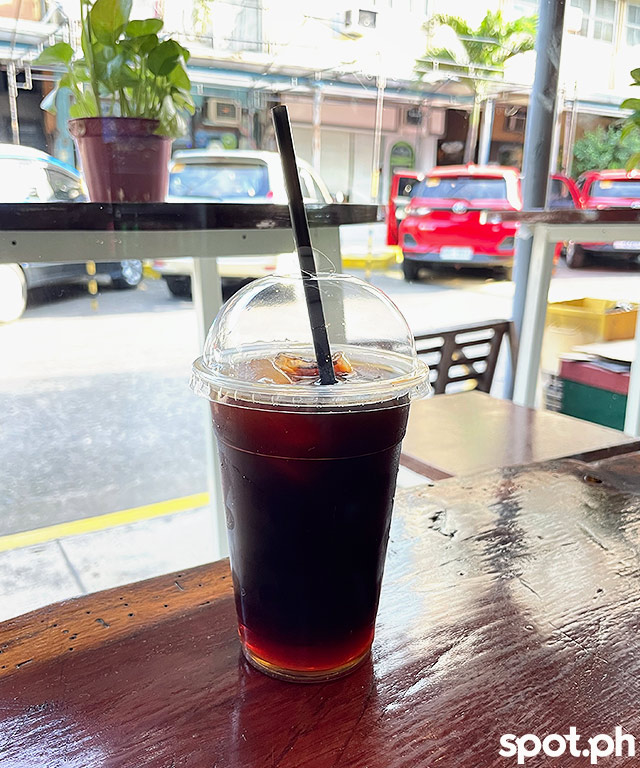
The Silingan menu today covers basic hot and iced coffee drinks that include an Americano (starts at P90/hot, P115/iced), Cappuccino (starts at P105/hot, P120/iced), and Mocha (starts at P110/hot, P125/iced); fun frappes like the Car-Mocha (starts at P150) and Cookies & Cream (starts at P150); smoothies with fruits like Strawberry (starts at P130); and more. They also have a small menu of savory eats that include the Tapang Kabayo (P145), and Chicken Hainanese (P180).
On Grief and Healing Amid Injustice
Coffee may be their main draw, but the lifeblood of Silingan is really in their staff, each with their own story to tell. “Their life stories is equal to opportunities,” Santiago says. “Opportunities to tell their story. Opportunities to tell their nation's story. Opportunity for them to earn also.”
Which brings us back to our visit to the shop that otherwise-slow Sunday. Ate Marilyn Malimban, a seamstress and single mom who works part-time at Silingan Coffee for extra income to help fund her son’s college education, recalls the 2016 incident in Payatas. Policemen allegedly burst in and aimed their guns at four garbage collectors playing pool; the four were accused of involvement with illegal drugs—and shortly after, were said to made to kneel on the ground and shot in the nape. Jessie Cule, Malimban’s partner, was one of those who died that day.
The police further accused the victims of being armed and fighting back ("nanlaban," in Filipino). “[Ang] hirap maka-move on talaga kasi ‘yon bang pinaratangan ka’ng nanlaban pero hindi naman totoo,” Malimban shares. She admits that she used to be one to side with the police—until she found herself on the other end. “Masyado din akong judgmental. Pero noong time na nangyari sakin, dun ko na-feel na kasi nangyari sa’kin, ako ngayon ang hinusgahan. Kaya nga masakit din sa part namin.”
The sole survivor of the bunch, Efren Morillo—who played dead at the time and escaped, yet would be charged with direct assault—was acquitted just last March, almost seven years after the killings happened. Morillo also filed charges of murder against the cops in 2017, but these have been dismissed.
She also brings up the difference in treatment between the rich and poor who’ve been accused of drug abuse. “Kung wala kang pera kawawa ka. Samantalang ‘yung mga mayayaman, kausapin lang, pera sa pera na lang,” Malimban explains. “Kaya ang Pilipinas, lalong naghihirap di umaasenso, gawa nga ng mga nakaupong opisyales sa gobyerno.”
Ate Marilyn has since found solidarity with PagHILOM, a holistic program focused on “spiritual, physical, social, and psychological healing and development” for the families of EJK victims. “Ang laki ng tulong ng foundation sa amin... inassist kami, tapos dati diba 'yung sakit na nararamdaman namin .. [ang] hirap mag-overcome. Ang hirap maka-move on. Sila [ang] nakatulong.
“Pasalamat po kami kay Sir Jun… na natulungan po kami dito. Pasalamat [din] po kami ‘pag maraming customer, maraming bumibili, kasi ano din para din sa amin. [Nilagay] ni Brother Jun ‘yung sarili niyang pera para puhunan para makatulong sa amin. Kaya malaking bagay po sa’min.”
Venturing Outside Cubao + Future Plans
Santiago has plans to expand Silingan Coffee’s reach to five other areas around the country.
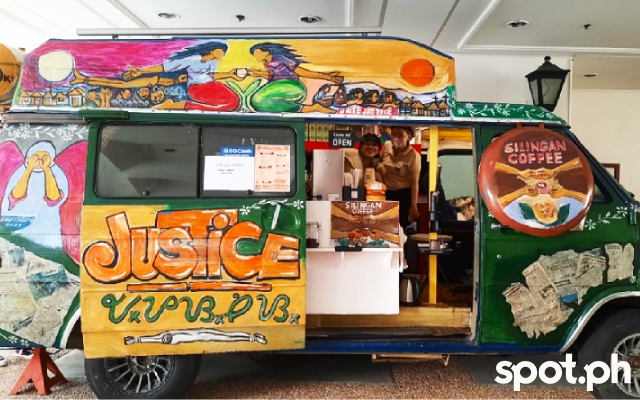
Granted, opening a full new branch would take more time, not to mention resources. In the meantime, Silingan has a roving van that pops up in different areas, with a striking mural designed by Filipino visual artist Emil Yap. The van was recently in the De La Salle University’s Yuchengco hall and is currently in Ateneo de Manila, serving its students freshly brewed cups of joe—and then some. “[We’re there] to tell our stories and then to serve coffee. And then to promote human rights.”
The Ongoing Call for Accountability
Both Santiago and Malimban acknowledge the improvement in the rates of EJK killings with the Marcos administration, which promised to continue the war on drugs yet focus on rehabilitation. “Walang utos na pumatay,” Santiago says of the difference today. “Pero wala namang mga rehabilitation centers na binuhay uli o itinayo.”
Santiago brings up a larger need at hand, however: the call for accountability—which entails the acknowledgement of what had happened during the previous administration, restitution for the relatives and other affected loved ones of those who lost their lives to the drug war, and penalizing those who’ve committed the killings as needed.
“‘Yung mga mothers, kahit na may tumutulong, kahit may employment, parang hindi pa rin talaga [naririnig] ‘yung malalim na panawagan nila,” says Santiago. “Malalim na panawagan pa rin nila ‘yung accountability. Kasi naman… sa mga family members, ito [ay] pang-araw araw na buhay. They've been in a very traumatic situation.”
Releasing data—police reports, autopsies, and so on from the EJKs of the previous administration, for example, would help in achieving this goal, he explains. Ultimately, true healing for them would only come by punishing the perpetrators accordingly.
“‘Yung pagkukwento nilang ito ay para huwag kalimutan, [pero] hindi sila ma-heal,” Santiago continues. He cites one Mother who insists to work on her supposed day off, if only as a way to fend her mind off memories of the incident. “Sabi ko, grabe ka naman, pahinga ka naman. [To which she responded,] ‘Kapag wala akong ginagawa, o kahit pala busy ako, naisip ko pa din kung paano pinatay yung tatay at kapatid ko,’
Without accountability, Santiago shares in an exchange over Facebook, there would be no justice. "Ayaw kasi namin ang selective justice, ibig sabihin hindi lang 'yung maliliit na pulis ang mananagot—kasama dapat ang mga nag utos. Justice is there naman dapat kasi, but the coffee shop is there kasi sa story ng buhay nila ay may malaking need for accountability para sa bansa natin. Kahit tayong hindi namatayan ay makaramdam ng may accountability na mangyayari kapag [accounted for] ang mga nag-utos na kalabitin ng gatilyo o programa. Magiging multo kasi ng bansa natin ito kapag makakalimutan ang nangyari."
Forgetting and moving on does have an allure, arguably of the band-aid sort. But Silingan Coffee emphasizes the importance of keeping the stories alive—lest they be erased by history.
Hey, Spotters! Check us out on Viber to join our Community and subscribe to our Chatbot.