
Bruce Ricketts to Bring His Martial Arts Philosophy + His Stylish Wife’s Eye to Next Restaurant
The chef's martial-arts background plays a surprising role in how he approaches food.

(SPOT.ph) The announcement of Mecha Uma’s closure left a hole in the hearts of those immersed in the local dining scene—and if you're anything like us, you're probably checking your calendar to squeeze in one last meal at the establishment before they close on December 30th. But with the end of that chapter also comes a brazen new beginning: that of iai, Chef Bruce Ricketts’ upcoming venture with partner Jae Pickrell slated to open in 2024.
Also read:
After 9 Years: Mecha Uma Is Closing Its Doors
New Restaurant Alert: Mecha Uma at Bonifacio Global City
10 Locally Loved Restaurants We Said Goodbye to in 2022
Here’s what you might expect to see at iai, the upcoming restaurant of Chef Bruce Ricketts:
iai describes itself to be a "chef's counter" and "innovative sushi kappo," kappo being the term for small restaurants with bar counters serving multicourse meals somewhere in between uber-casual izakaya fare and high-end kaiseki. In an exchange with SPOT.ph, Ricketts explains the soon-to-open spot to be a continuation of Mecha Uma's legacy. "For me, it's just really more a continuation to where we left off," says the chef. It won’t exactly mirror the latter nor is it a completely new, unrelated establishment.
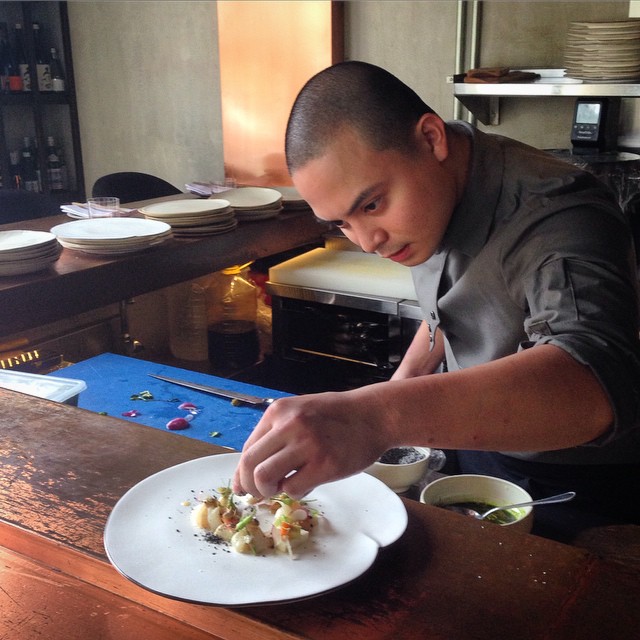
Like its predecessor, it’ll feature a chef’s counter that lets you get up close and personal with Ricketts as he prepares his plates. “I’ve always been known for counter seating where I personally cook for my customers,” he tells us. “And I intend to still really keep that type of service. The way I see it is, the way a lot of my regular customers see me as I constantly grow. I’m always just behind my cutting board, and I’m always just constantly looking for ingredients to work with.”
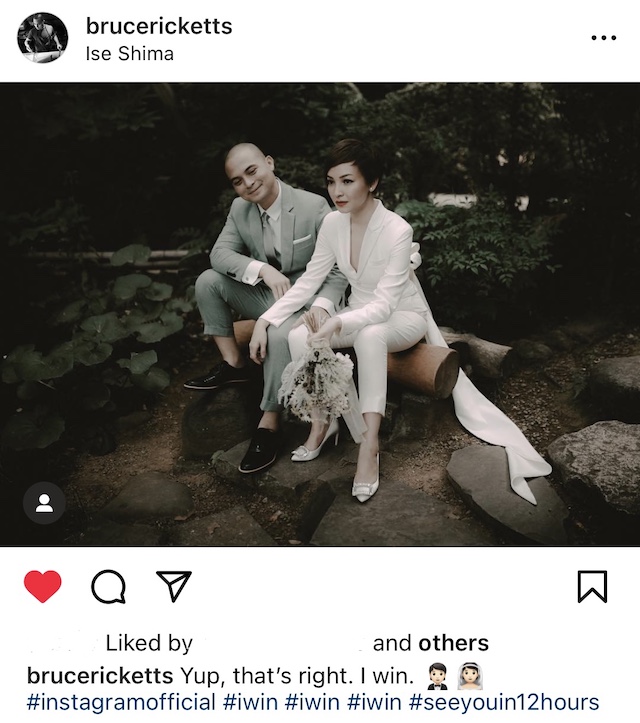
Ricketts will be teaming up with spouse Jae Pickrell for the restaurant; expect to see Pickrell’s “taste and style” incorporated into their space. “For me, [iai] is even more exciting because my wife knows my cooking and knows my personality, and there's so many things that we share together. [There’s] so many things now from all of our travels—there’s so many things that we’d bounce ideas back and forth off of, that I'm so excited to be sharing with my customers in six months’ or mid-[2024]’s time.”
Asked how his approach at iai would differ from that in Mecha Uma, Ricketts says the “instinctive” attitude he’s long been known for would still be present. “In the end, it's still always gonna be this instinctive style of cooking that's based on a collection of experiences and techniques that I’ve acquired when I travel, or from just doing things over and over and over again.”
Ricketts’ cooking has long carried a Japanese sensibility on a fundamental level—that is, beyond just the literal sense of using Japanese ingredients or remixing Japanese classics. We saw this at play at Mecha Uma, and you'll be seeing it at iai as well. Going by the Japanese notion of shokunin, Ricketts strives for mastery of the craft (of cooking, in this case)—an ethos he’s picked up from his years practicing martial arts.
“[The name] iai actually comes from iaido, which is a form of Japanese martial arts. And me myself coming from that martial-arts background, ever since I was young, the kind of cooking that I do has always been kind of geared [toward that philosophy],” says Ricketts. “I've drawn parallels towards the discipline of just self-betterment day-to-day and putting in the hours—in the same way that I idolized craftsmen, and shokunin and specialists in Japan, it's really kind of still in that same breath.”
You might also be seeing more Filipino ingredients and products in Ricketts’ courses in iai, though he clarifies that their grounding philosophy is still to use great, high-quality ingredients—wherever it might come from. “It's more [like], I'll do my best to apply my techniques that I've acquired over time with Filipino products, especially [with] the Filipino dishes that I feel like I'm just starting to discover now… but I also don't want people to come and expect [that it’s purely Filipino]... For me, at the end of the day, it's still the quest for deliciousness and finding the best stuff. And if I happen to find it in Philippine waters, then even better, because I have techniques ready for that. But I also won't exclude the use of Japanese or European products, as long as they’re up to the quality and the standard that I will try to be seeking out.”
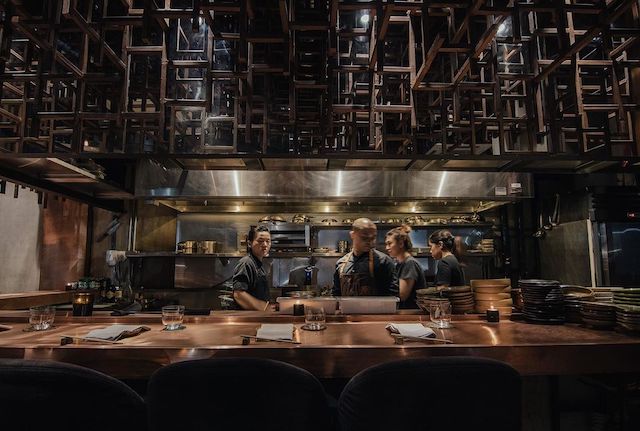
Mecha Uma’s nine-year journey has been a long, but most fruitful one. “[Mecha Uma]’s evolved in so many ways,” Ricketts tells us. As he’d written in the post on his public Instagram account, it was the first restaurant in these parts that primarily revolved around the idea of a chef’s counter—which challenged the notions of fine dining of many a Manileño at the time. “There was a bit of a reservation for a lot of customers… you sit in the bar, it's a waiting area, [whereas]… for [most] people, the idea of fine dining is sitting in a table. So that was a bit of a challenge.”
Also rather radical at the time was the spontaneity Ricketts would take in his cooking. There was no printed menu, at least if you were going the omakase route (Mecha Uma did introduce a separate ala-carte lineup at one point). Ergo, diners would have to put the control (and thus the trust) in the hands of Ricketts and his team—true to the core of the Japanese leave-it-to-the-chef manner of dining. “The spontaneity of it all was… either they loved it or it made people uncomfortable.”
Still, Ricketts says he’s ultimately “so happy and so lucky… [to have come] at a time when there were so many people who were open minded, and gave us so many chances to grow.” That they've also garnered global recognition, even making it to the likes of the 2019 50 Best Discovery List and Opinionated About Dining, is of course a happy bonus.
“For me to improve my craftsmanship—where I went from a young chef with so many ideas, to now and the future, becoming more obsessed about the craftsmanship of things. So I think, because of that also, I grew with my customers; my customers grew with me; we needed each other. For me, like, I must continue that relationship,” Ricketts explains. “The deeper you go, the more I feel the need to be a better craftsman and to be able to constantly cook for them. That’s why in my caption [on the Instagram post], I kind of said that it's like the next permanent home. Because when I when I build something, especially at the next place, I intend to see my see myself there pretty much until… I’m [still] cooking.”
Hey, Spotters! Check us out on Viber to join our Community and subscribe to our Chatbot.
this strange new world.