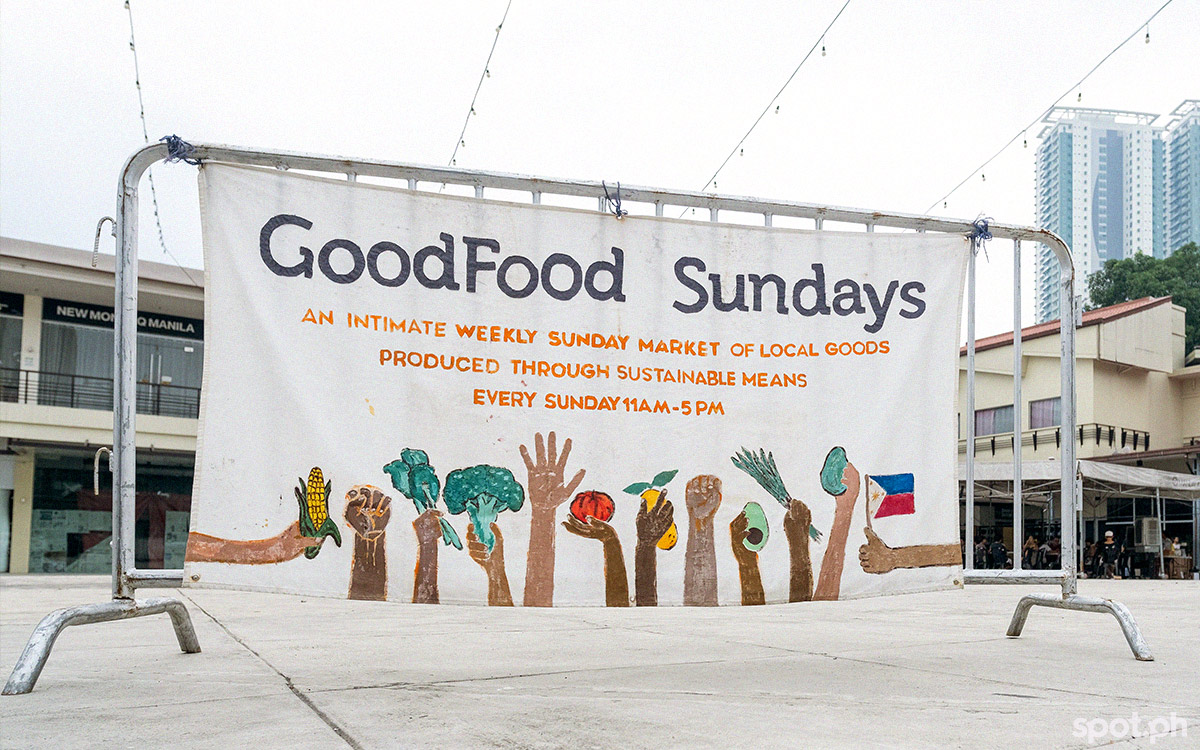
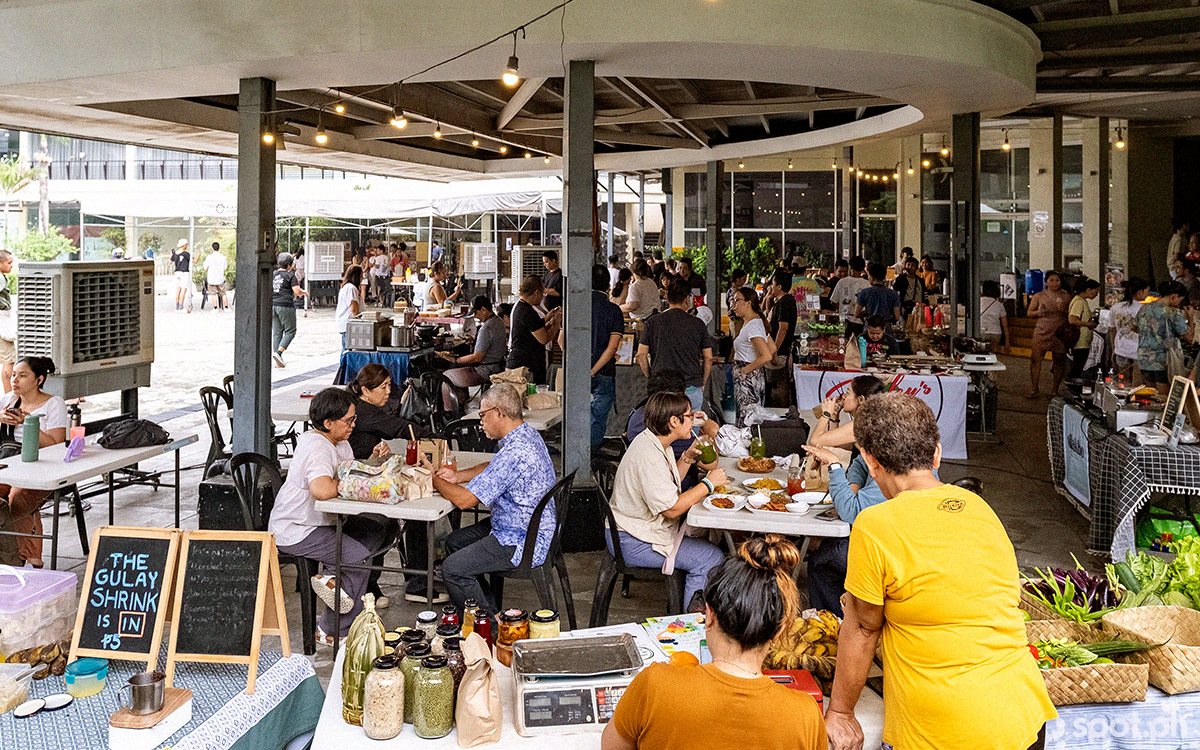
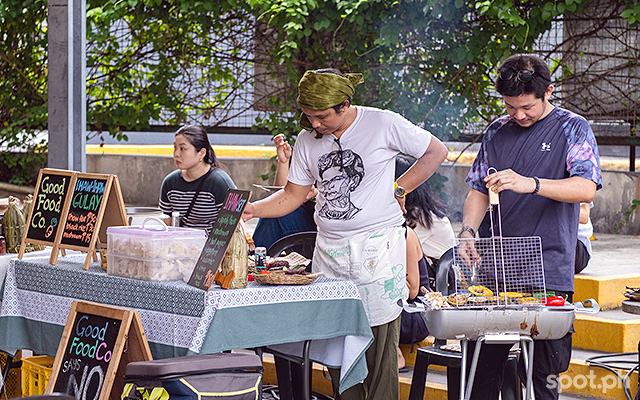
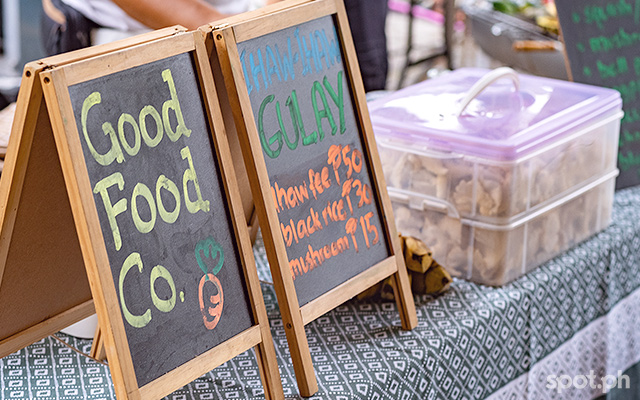
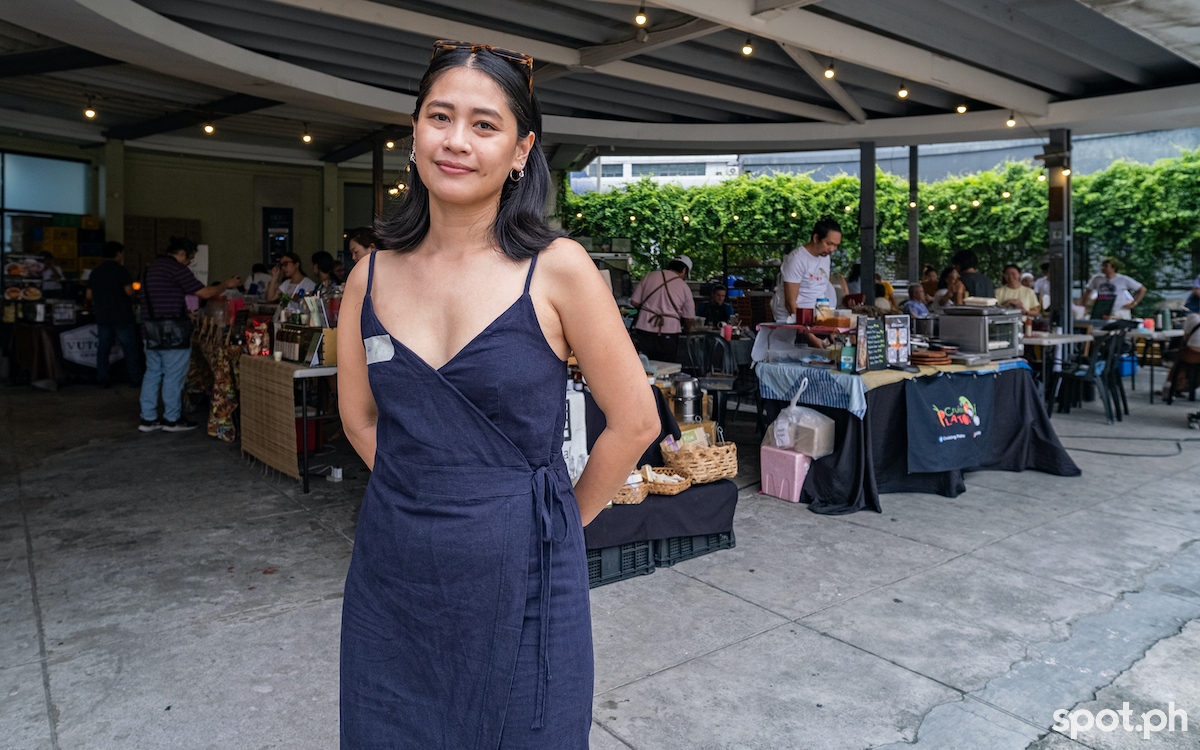
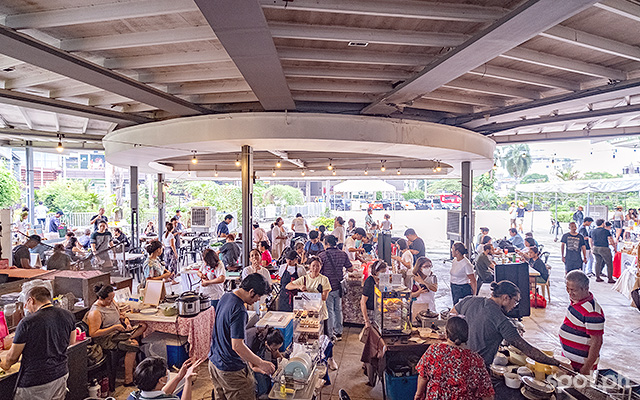
(SPOT.ph) Mandala Park is quiet on any other day, but on Sundays, a soft buzz fills one of the open lots inside the neighborhood compound along Shaw Boulevard. On some weeks it’s quieter, but on this particular Sunday we are met with a moderately sized crowd milling about under white tents. Some are seated watching a presentation by Good Food Community; they're holding a fundraiser in celebration of their 13th anniversary. Some we see toting eco bags filled with jarred ferments and fresh produce. Others are at the dining area, downing orders from the market’s different stalls, using reusable plates and utensils—no single-use styros or plastic spoons and forks are to be found here.
PHOTO BY Majoy Siason
This is Good Food Sundays, a weekly market known for their ample vegan selection and adherence to eco-friendly and sustainable principles. It has a diverse following, covering both vegans and non-vegans; eco-conscious consumers; social activists; adventurous food lovers; and everyone in between. And since their launch in February of 2015, they’ve moved homes, hosted different merchants, survived the pandemic, and had customers come and go—all while maintaining their goal of rallying for a better world for everyone.
The story of Good Food Sundays begins with Good Food Community, a social enterprise that started in 2011. The aim? To help farmers out through the community-shared agriculture model—that is, by connecting producers (small-holder farmers in this case) and consumers (that’s you and me) through farmshares, or a subscription service where you’d get bundles of fresh produce from small-holder farmers delivered weekly to your doorstep.
Founder Charlene Tan had heard about and gotten inspiration from the concept of community-supported agriculture. “The idea of being a co-producer by pledging to support the farmer really captured my imagination. I thought, you know, smallholder farmers, especially in the Philippines, could use this.” Their Filipinized term for the idea is pamayanihan, says Good Food Community's Ernest Barreiro.
“I think there was always the social justice part. [The desire to know] why are our farmers hungry,” Tan explains when I ask what gave her the push to start the venture. “[It’s] just so wrong. It also breeds curiosity, like, why? Definitely we can do better. It was also the time of sustainable development—that was the discourse, right? Social enterprise. So how can we create alternatives to the existing social order?”
PHOTO: Majoy Siason
Post a Comment
The Good Food team would work with farmers from different communities and bundle together available produce in tampipis going by set themes—the Gulay Pambahay pack, Salad Pack, and Juice Pack. “Basically, what you're buying into is a commitment… subscription siya,” says Barreiro. “Pero [what you get is] dependent on what's available on the farmer's side.”
Article continues after this video.
ADVERTISEMENT
watch now
Team Good Food Community.
PHOTO BY Majoy Siason
Because the produce you'd get depended on what was available from the farmers, the time soon came that they sought to “move more vegetables”—that is, help more farmers by making their produce more accessible to more people, even sans a subscription. With that came the idea to open a physical market. “Good Food Sundays came from an effort to move more vegetables. So you can just buy whatever [is needed], you don't have to buy the subscription pack.” Think ala carte versus a set menu in a restaurant, with the added perk on the consumer front: they can choose exactly what to buy, and how much to buy of it.
PHOTO BY Majoy Siason
Article continues after this ad.
ADVERTISEMENT - CONTINUE READING BELOW
Going the physical market route also allowed them to foster more personal interactions between the involved parties. “[Back then], much of the interaction between us [and] the farmers. The customer was only through social media or online sharing, ganyan,” says Barreiro. “We wanted a space where we can share face-to-face interactions. Para we can tell the story of the vegetables, of the produce.”
“When people receive the [Good Food Community tampipi], there isn't that personal connection and there isn't the face of the farmer. So we wanted to create that space,” Tan adds. “Even more, we realized that a lot of what we're selling or what we're offering is not just what you see in front. We need to understand the larger world that we're building with this. So Good Food Sundays was meant to co-create that.”
PHOTO: Majoy Siason
Post a Comment
Good Food Sundays’ first home was at Quezon City’s Uno Morato, which was part-owned by a friend who offered the small space outside the bookstore-bar itself. Their lineup initially consisted of small sellers for goods of all sorts—baked treats, coffee, local cheese and milk, jarred provisions, the works. Many were goods from friends of the group members, but the uniting element was that these goods had to be local and directly and sustainably sourced. Not all stalls were vegan, though the focus on the products’ sourcing did attract a certain clientele—one that shops more intentionally and cares about the ethics behind the goods’ production.
Their early days had the group “really experimenting” in terms of market schedule—they tried to do it every week, but at some point switched to being open just every other week or on selected weeks—and Uno Morato’s rather hidden location made visibility to new customers a challenge. They eventually moved to holding their every-other-week pop-ups at Maginhawa Street, which brought in new additions to their roster of stalls. But this soon had to shut down—in part due to the small customer base but also because Good Food Community found it challenging to keep the market going regularly with their small (three-person) team size.
Article continues after this ad.
ADVERTISEMENT - CONTINUE READING BELOW
“No’ong nasa Maginhawa kami, dahil nga super konti kami, parang we were only doing it part-time,” Barreiro laments. “So sabi ko, if we can't do it na fully-fledged [and] consistently with the same level of commitment, parang it doesn't seem like it's worth doing.”
But a big chance to revive Good Food Sundays came around 2016, as they were approached by the folks of Mandala Park and presented the opportunity to hold the market there. By this time, Barreiro felt they were better-equipped and thus more ready to try giving it another go. “I think we were better man-powered na… in a sense. There were [more people with us on the team]... four or five of us [in total].” The goal, as with before, was to provide "whatever it is that we think people would need in a market"—but they had a new roster of merchants (along with some old participants) joining them this time.
PHOTO BY Majoy Siason
Like other restaurants and F&B ventures at the time, the lockdown proved to be a challenge to recover from. After closing the market amid the pandemic, they reopened in May of 2022, with Tan asking help from then-smoothie vendor Genevieve T. Iñumerable to help with tasks like increasing foot traffic. "The whole world changed after the lockdown. So, iba na ‘yung buying habits ng mga tao. Mga merchants namin, kumonti din compared sa before… so we had to do everything to pull in people.” Some routes she took include opening their space for events at no charge at the time (“just buy from our vendors”), running ads on Facebook, and doing a pasabay service where visitors could pay online and have items from the market delivered to their doorstep. “It's a continuous struggle,” she admits. “But it comes from the love for the community.” Today, she works as Good Food Sundays’ organizer, managing their social media pages, talking to merchants, tending to the market's upkeep, organizing events, and engaging in community-building activities with potential partners.
Post a Comment
A Rainbow of Options and Avenues to Learn
Today, the selection of stalls at Good Food Sundays varies weekly depending on who’s available, although there are purveyors who are more consistently present every week. Offerings from the stalls generally happen to be plant-based and/or vegan (for the purposes of this article we’ll be using the term vegan to refer to both)—more an apparent fact than one by design (more on that shortly). Either way, there’s always bound to be a variety of cuisines and genres covered, easily disproving the notion that vegan equals salads and nothing more.
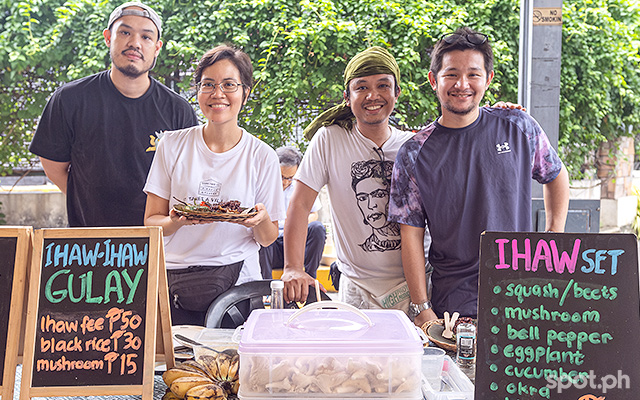
The folks of Wildthyme.
PHOTO BY Majoy Siason
PHOTO BY Majoy Siason
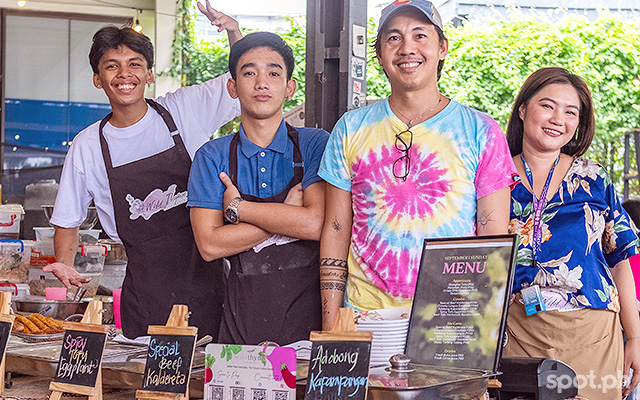
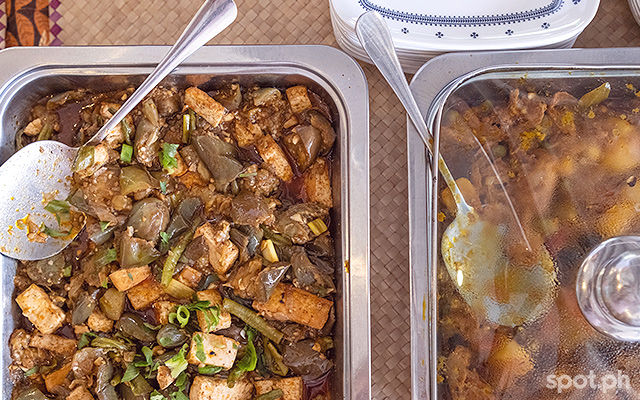
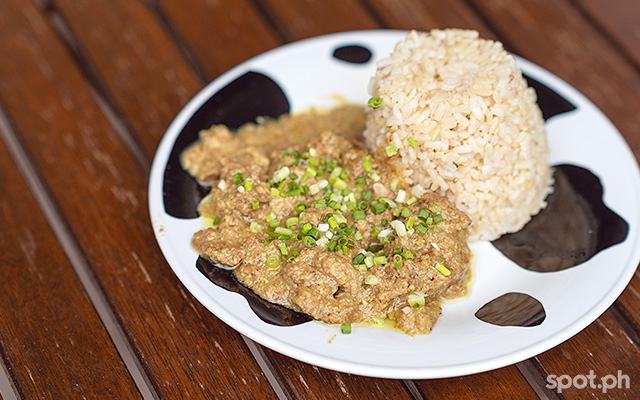
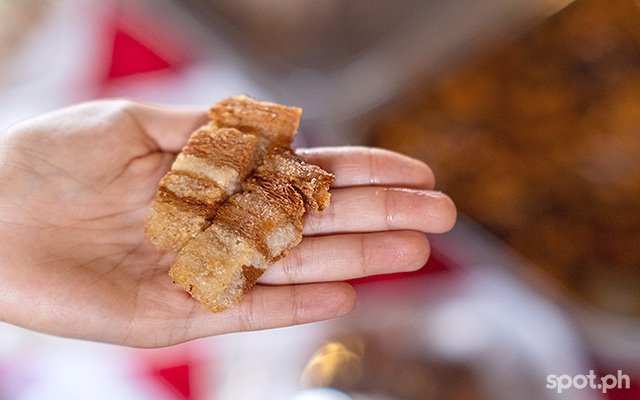
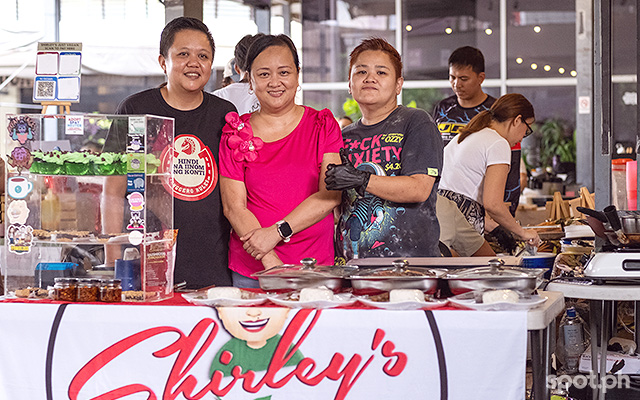
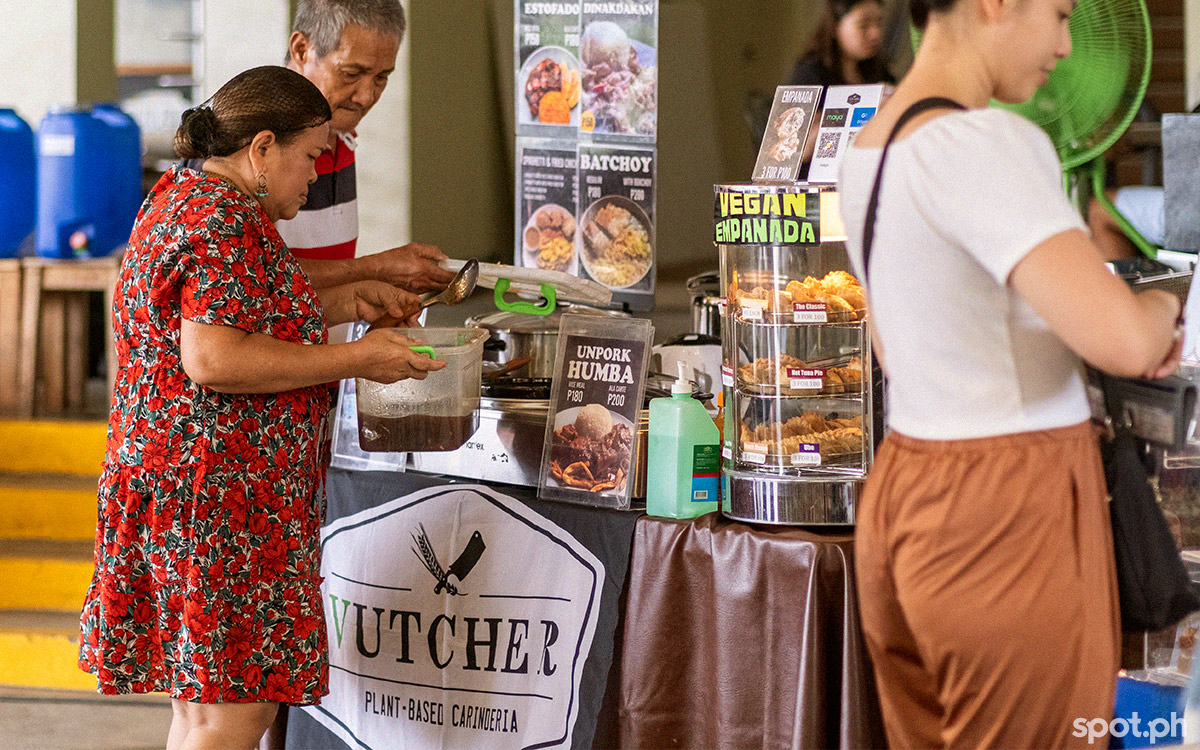
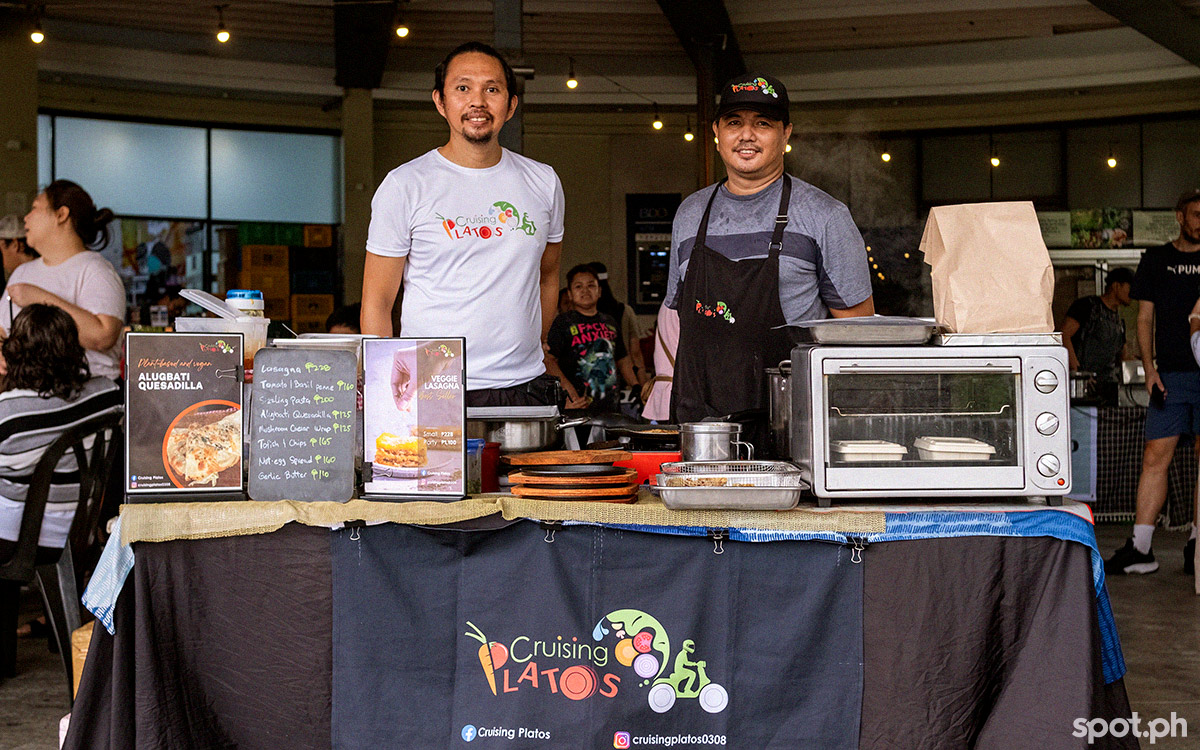
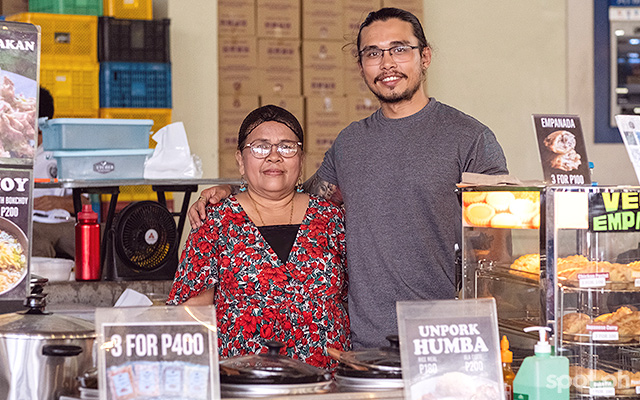
There’s Vutcher, a favorite for Filipino-style meals and “Fried Chick’n,” mostly using soy protein in place of meat. Wildthyme also offers Filipino viands with tofu and other meat substitutes—all perfect with steaming-hot rice. The Real Happy Cow is a Good Food Sundays OG whose vegan takes on rendang and caldereta are cult faves. Cruising Platos dishes out plant-based takes on Filipino-favorite pasta dishes; their most popular is the veggie lasagna. Pandemic baby Shirley’s Just Vegan has vegan bagnet that impressively replicates the layers of fat and lean “meat” of the original—using soy protein.
The Real Happy Cow's vegan rendang.
PHOTO BY Majoy Siason
Shirley's Just Vegan's "bagnet" well replicates the layers of fat and lean parts of the original.
PHOTO BY Majoy Siason
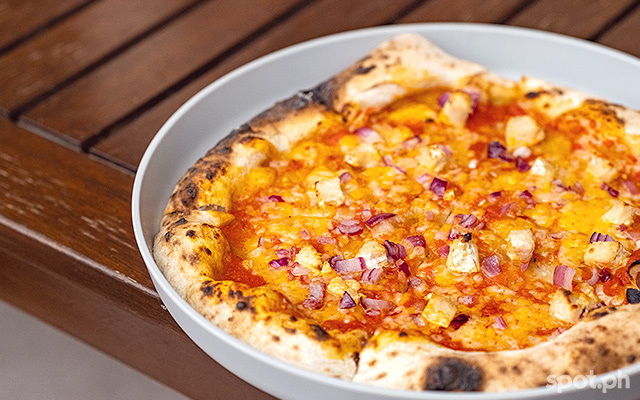
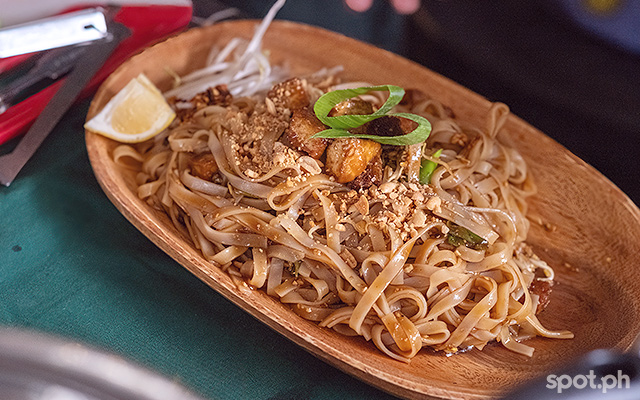
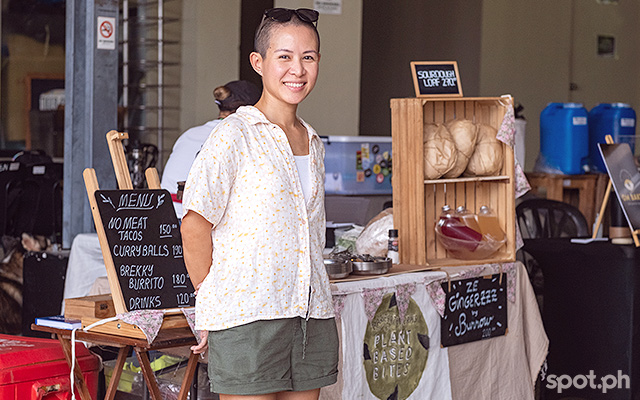
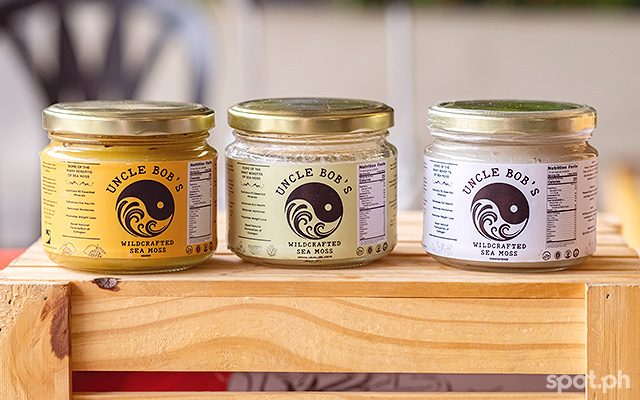
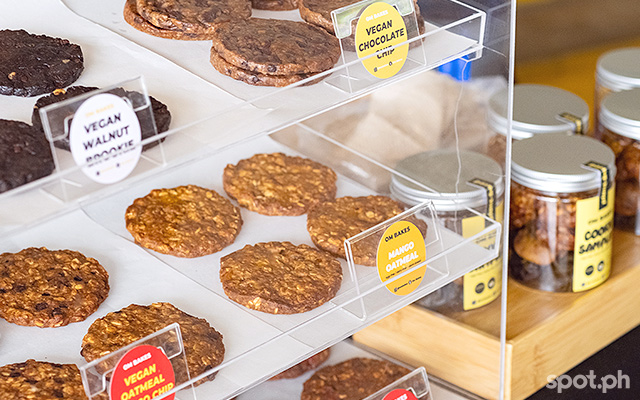
Relative newcomers to the market present during our visit were Vegan Bytes, who makes Neapolitan-style pizzas with properly charred-chewy crusts and vegan cheese, cooked in a KYLN oven; Siklabo, who cooks up Asian-style noodle dishes; Uncle Bob’s Sea Moss, who sells jarred and bottled sea moss (a vegan source of Vitamin B2, calcium, and other nutrients, I’m told); Marieathworm, who whips up "Brekky Burritos" and curry balls that are great downed after walking around the market; and Om Bakes, who whips up vegan cookies.
Neapolitan-style pizza by Vegan Bytes.
PHOTO BY Majoy Siason
Siklabo's noods.
PHOTO BY Majoy Siason
Mariearthworm sells meat-free tacos and burritos.
PHOTO BY Majoy Siason
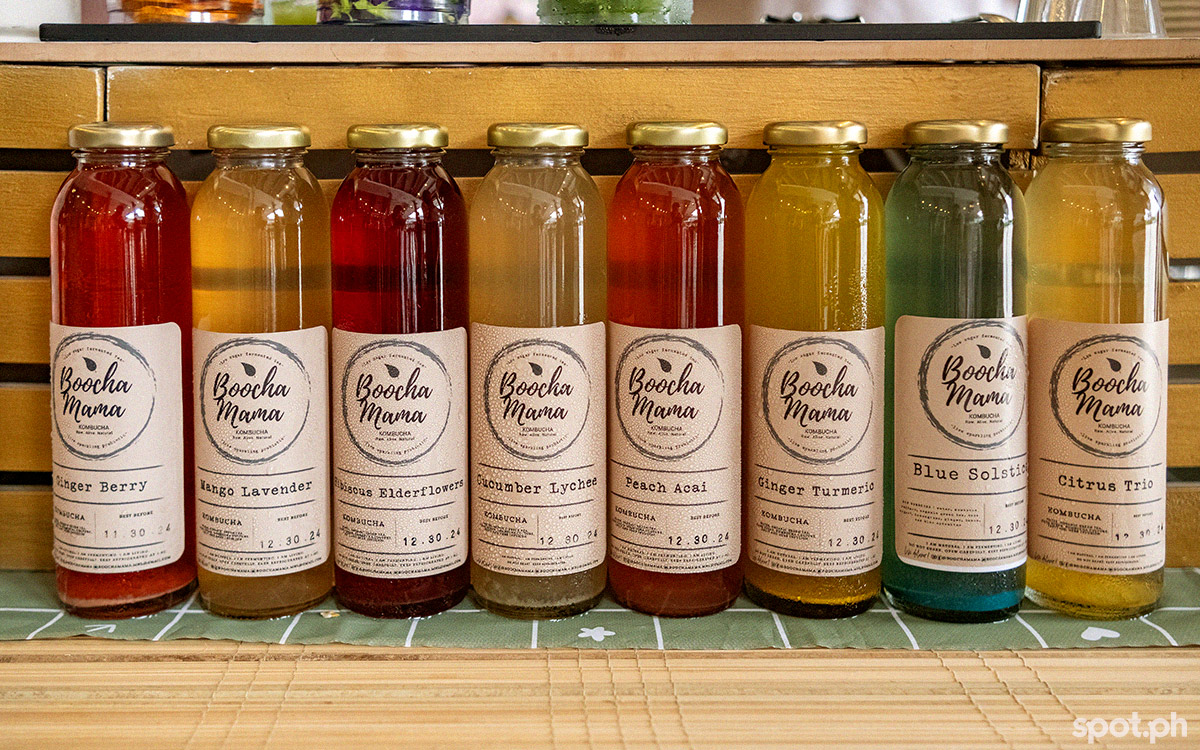
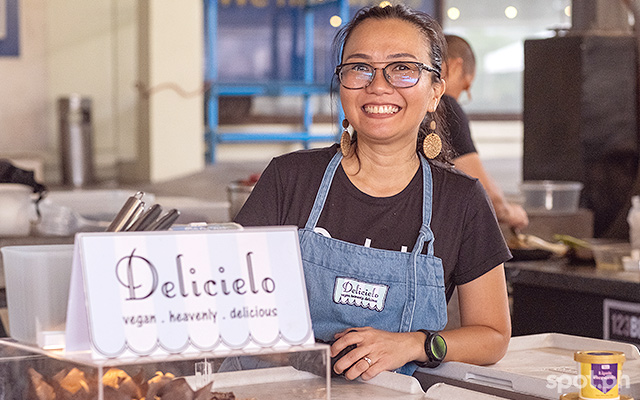
For a fizzy thirst-quencher, there's Boochamama, known for their not-too-sweet kombucha with fun flavor combos (Mango Lavender, Peach Acai). Delicielo, another Good Food Sundays OG, is the answer to the market-goer’s sweet tooth with their line of vegan desserts, some using indigenous Filipino ingredients (like katmon and lipote) sourced straight from the farmers. Good Food Community itselfsells fresh produce from smallholder farmers, and products that use them. There’s also Ritual for local, organic, and sustainable goods from different parts of the Philippines.
Boochamama's colorful range of kombucha. PHOTO: Majoy Siason
Post a Comment
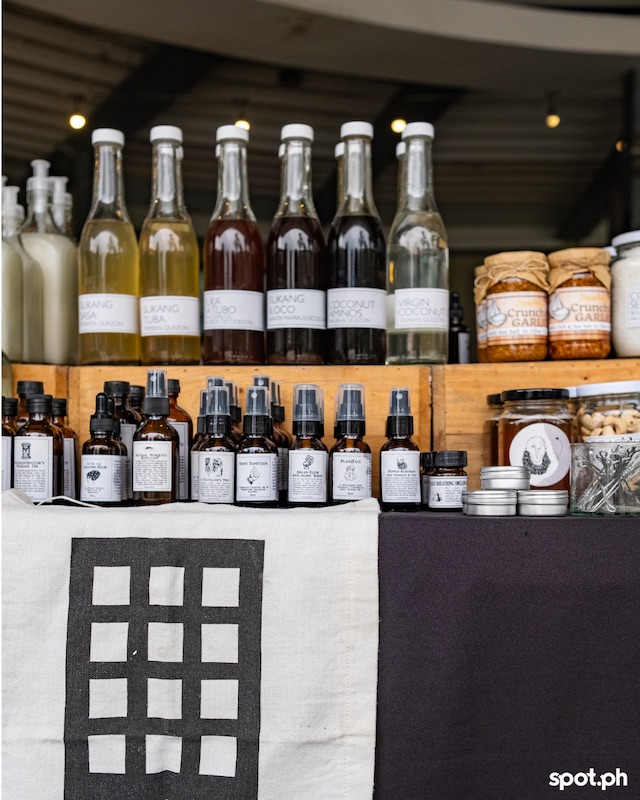
Local, organic, and sustainable goods from Ritual.
PHOTO BY Majoy Siason
As was mentioned earlier, Good Food Sundays being a zero-waste market, you won’t find single-use (e.g., plastic or styrofoam) dinnerware, utensils, and the like from their stalls. Instead, you’d usually be handed your orders on regular plates with metal spoons and forks if you’re dining in. You can also opt to bring your own crockery and/or tupperwares, the latter being useful for takeout orders.
Sea moss from Uncle Bob's, which can be consumed by the spoonful or mixed into beverages.
PHOTO BY Majoy Siason
Om Bakes' vegan cookies.
PHOTO BY Majoy Siason
They also hold a wide range of events within the space. There are recurring cooking and food preparation workshops, like the recent Cassava Pizza Party by plant nutrition advocate Ecology of Food; and community cooking sessions with food heritage advocate Gulay Na!. Beyond food, they also cover other topics like art (recent examples being watercolor and ink-painted abaca bookmark workshops), poetry (in April they hosted a place-based poetry workshop), ecology (with a recent talk on climate science), and health (like the recent Uterus Dialogues in light of Happy International Working Women’s Day).
It's not just about food here.
PHOTO BY Majoy Siason
Beyond individual concerns, they also use their platform to educate consumers on relevant issues. Some recent events are Farms, Food & Freedom, a talk on women farmers’ struggles; and Farm to Table, a talk on the current situation of farmers and Indigenous Peoples with advocacy groups SAKA (Sama-samang Artista para sa Kilusang Agraryo, a group of artists cultural workers advocating for land justice and food security) and TAKDER (Cordillera Youth Movement for Democracy and Prosperity, a national democratic mass organization of Kaigorotan and its advocates). They also hold community kitchens post-calamities like the recent typhoon Enteng, and fundraising activities for issues like the Israeli-Palestinian conflict.
Accidentally Vegan
Given their largely vegan selection, Good Food Sundays has become and continue to be a place where followers of the diets-slash-philosophies commune. “This is a solid community for all vegans. Vegans support this community,” says Malou Cabiles of Shirley’s Just Vegan, who herself has been following the lifestyle for seven years—initially out of health issues but now from a more ethical standpoint. “And we're like family here.”
Shirley's Just Vegan, known for their vegan bagnet.
PHOTO BY Majoy Siason
Surprisingly, Good Food Sundays wasn't intended to be a vegan market—nor do they officially brand themselves that way to this day. “But the vegan community took hold,” Tan says with a laugh. They’re essentially open to everyone, she clarifies, but would note to vendor applicants that what they have is largely a plant-based and vegan market. “It's not required [for them to be vegan], but it's also like, let's be mindful of people's access needs. It's not going to make much business sense [to offer food most of our audience can’t consume].”
PHOTO: Majoy Siason
Post a Comment
The market welcomes both vegans and non-vegans and has its share of regulars and vendors from both categories. Caitlin Alolong (a vegan herself) of relative newblood Vegan Bytes would already visit the market regularly as a customer even before joining them as a seller. “I really love that everyone is close, even though there's a lot of borders. I really like [that] I also get different kinds of people, like vegan, non-vegan, and then other people who are into healthy food, or just people who are avoiding meat.”
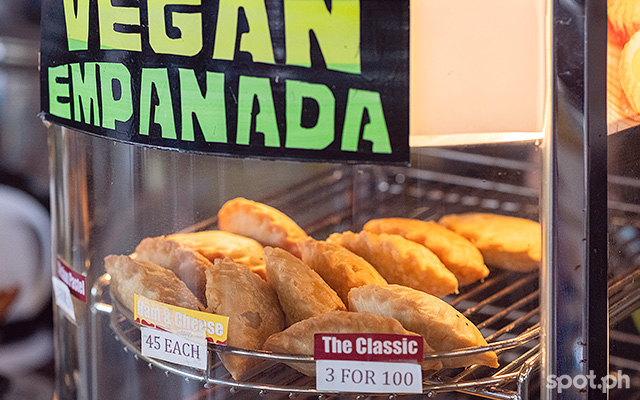
Vegan empanada from Vutcher.
PHOTO BY Majoy Siason
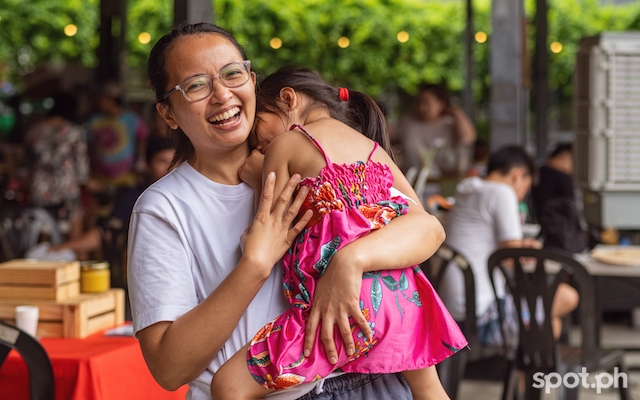
Regular visitor Macy Copaway learned about the market while she was browsing online resources to support her transition to veganism in 2023. A former health researcher and current stay-at-home mom, Copaway now visits “whenever we have the chance… at least once or twice a month,” often with her four-year-old daughter Shanti (who started as a vegetarian and is now vegan) and husband (who is vegetarian). She notes that its open-air environment helps her reconnect to nature: “I love this atmosphere. It's like, let's go back to the basics, without all of [the usual] air-conditioned rooms and high-rise buildings.”
Regular visitors include vegans like Macy Copaway...
PHOTO BY Majoy Siason
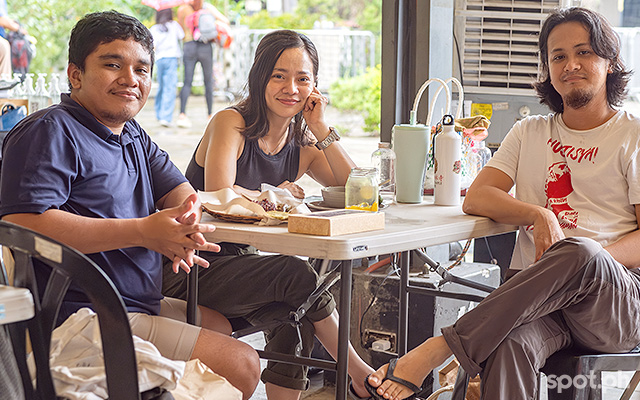
Numerous non-vegans—like freelance writer Nea Reyes and her friend and former workmate Mark Guanzon—have found themselves continually returning to Good Food Sundays as well. Reyes, who is formerly vegan (her diet today is “around 60% vegetables”) and writes for a vegan chef abroad among other clients, discovered Good Food Sundays during the pandemic from hanging around the Manila Vegans group on Facebook. From there she began ordering through GFS’ shop-and-delivery service but was eventually dropping by more regularly, inviting (fellow non-vegan) friends like Guanzon who was impressed by flavors on offer at the market. Guanzon found that the relatively lighter nature of the food was a good fit with with his biker lifestyle, “kasi busog ako pero it's not so full. I can still go around.”
...And non-vegans like Mark Guanzon, Nea Reyes, and Michael Beltran.
PHOTO BY Majoy Siason
That Good Food Sundays has a solid following amid conceptions of Filipinos being meat eaters is worth noting. “We also send a message that we can have a market like this—that there's abundance, variety, there's so much more to vegan food than what they think. It will open their eyes,” says Cielo Castro-Magisa of Delicielo, who’s also been vegan for seven years—similarly out of health concerns initially but for more ethics-rooted reasons today. “Kahit na ayaw mong mag-vegan ngayon, pero you want to be more conscious of what you eat, we want [customers] to be able to do that—kahit na once a week lang.”
From Food to the Animals, the Environment, and Human Rights
Good Food Sundays doesn't stop at the consumption part of the ethical-living equation, however. More than being an avenue to cop food and other products that are sustainably and ethically produced, they also foster discussions on bigger topics surrounding food production and the supply chains involved—a lot of which comes down to spotlighting local farmers. Among other events they host at the market are talks and workshops touching on, or specifically covering, these issues previously mentioned, facilitated either by their team members or by other related organizations.
The group also sheds light on and calls for donations in light of relevant matters; recent examples are the detention of human rights and animal liberation activist Edison Yu, who was pressed with false charges and detained at Camp Bagong Diwa amid joining a protest against Palestinian genocide in Gaza; PUV drivers and commuters, amid the jeepney phaseout; and the Bagsakan Farmers, a group of farmers who were harassed and subjected to intimidation by military forces.
Genevieve T. Iñumerable handles the social media page of Good Food Sundays, among other tasks. PHOTO: Majoy Siason
Post a Comment
Iñumerable is among those who turned a new leaf, admitting she "lived in a bubble" and wasn’t initially very political. “I didn’t know about anything… so dito ko lang nalaman ‘yung mga problems [katulad ng] mga struggle ng farmers.”
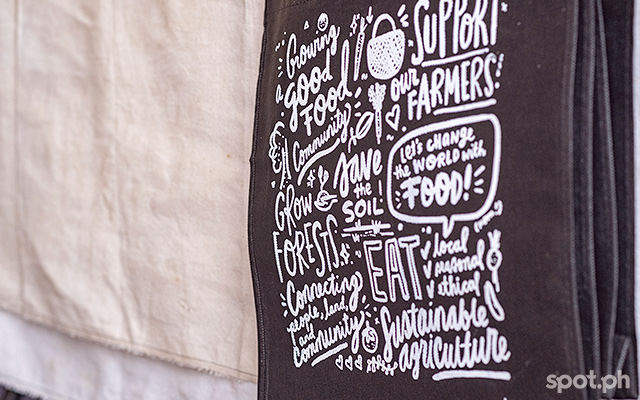
In particular, the market paved the way to Iñumerable learning about Amihan Women, an organization of peasant women advocating for genuine agrarian reform and women's rights. The group gave a talk on the Rice Liberalization Law, which makes it easier for imported rice to come in—at the expense of local rice farmers. It was also at Good Food Sundays that Iñumerable crossed paths with SAKA, as the organization was selling tote bags at the venue with the message, “Stop killing farmers.”
Good Food Sundays spotlights struggles faced by local farmers.
PHOTO BY Majoy Siason
“And I'm like, 'What? Farmers are getting killed?',” Iñumerable exclaims, recalling her reaction. “Parang, wala talaga akong alam… 2019, ang daming farmer killings noon. Mas do’n ako na-radicalize, I guess.” She started fundraising for the group with vegan friends before officially joining them, thus linking her interest in better food with the betterment of its producers. Today, when talking to new vendor applicants, she asks questions that stimulate critical thinking, with the hopes of expanding their views from "veganism as just a diet."
“Good Food Sundays is… focused on, in a way, community building talaga. [And] it became a vegan market, right? But like now… tinatry ko talaga na parang… I’d interview each vegan [and ask], how can you help the farmers? Parang how, why is standing with farmers important?,” she explains. “Para mas naiintindihan nila na it's not just animal rights but it's also fighting for the food producers' rights… and also, you know, the importance of… intersectional veganism. So it's not just like vegan for the environment. It's not just vegan for the animals. But it's also for human rights.”
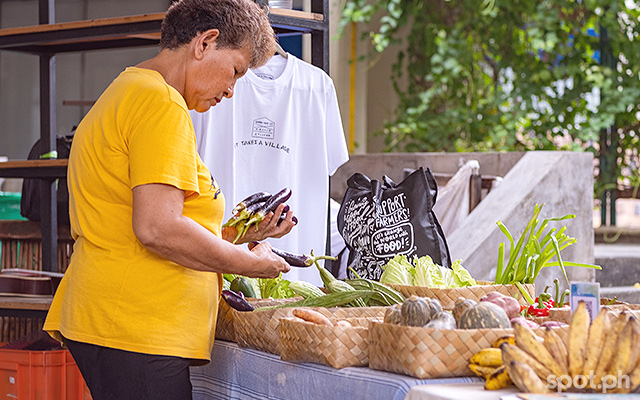
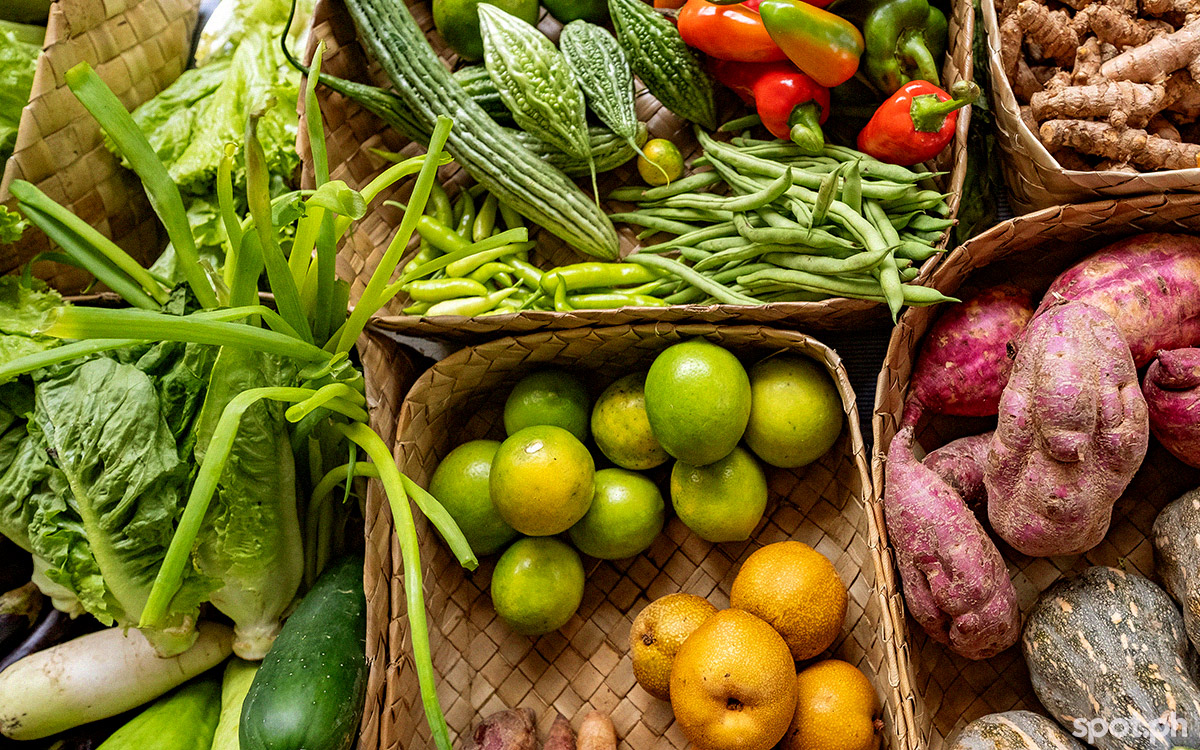
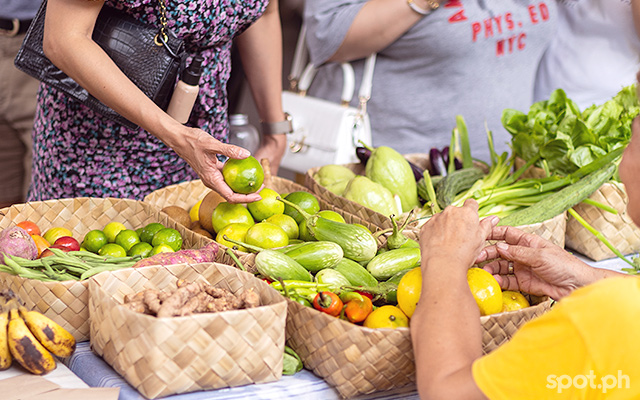
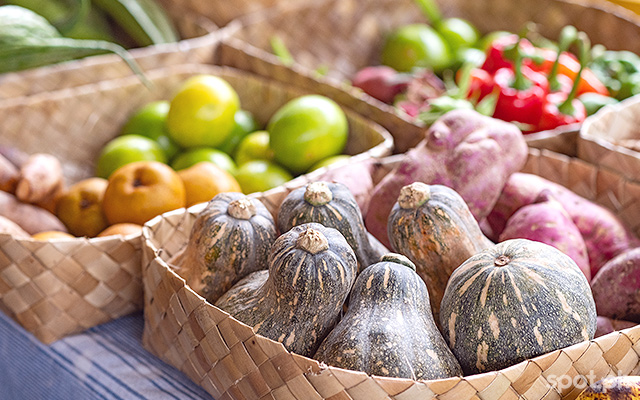
We have local farmers to thank for these vibrant fresh produce.
PHOTO BY Majoy Siason
It’s this very social consciousness that also keeps aforementioned guests Macy Copaway, Nea Reyes, and Mark Guanzon coming back to Good Food Sundays. They rave about how visiting the market has enriched their knowledge about issues surrounding food and the environment—and then some.
“Matatalino ‘yung tao dito,” says Reyes, laughing. “May mga educational discussion. Tapos mayroong mga eksplosibong exposé minsan,” she jokes. Copaway, too, shares she learned “to realize more how to scrutinize the existing food system—the interconnectedness of things. Talagang makikita mo na… every decision that you make is not just about you. It's about you and your family, the people, and the planet.”
Good Food Sundays as a Community, United by Values and a Common Goal
While they are primarily a market, the relationship between vendors as well as their returning visitors feels much like that of a family. “‘Yung community na nagtutulungan, damdam mo din. Ramdam na ramdam mo,” says Cruising Platos’ Christian Reyes. “[Kapag] may activity na ganyan, magbibigay lang kami ng something." He also shares how Iñumerable would help promote the stalls when she sees that sales are tight: “Tutulungan niya kami. ‘Yun ang masaya sa community.” Inah Lee of Boochamama, who started selling at Good Food Sundays in 2018, agrees. “When I first joined, they were very welcoming and very accepting of everyone. I think [from then] until now… we got to know each other, we’ve become friends, and then you can really feel the support.”
The guys of Cruisin' Platos.
PHOTO BY Majoy Siason
That she’s with like-minded people helps Lee uphold her own principles. “It's a sustainable market… I think it's more aligned with how I live my life. Although I am not vegan, I try to be more compassionate and be mindful… that's why I try my best to retain [the practice of reusing] bottles… keeping the carbon footprint smaller.” Vutcher’s John Ross Rawolle, who works a day job at PETA, appreciates the way it brings together similar folks as well. “'Yung tumutulong sa mga farmers… tapos nakakapagbigay din sa amin ng opportunity ma-share ‘yung mga vegan food na ‘to. And ‘yun, linggo-linggo meron silang [mga] event.”
Team Vutcher.
PHOTO BY Majoy Siason
This extends to their guests: Reyes admits one of the things that led her to discovering Good Food Sundays was her long quest for a “local community who had similar interests,” as she and Guanzon both work from home and admit “medyo wala kaming friends.” This market, they tell me, provides a platform to meet like-minded individuals—similar to online communities they would frequent, but with the added element of face-to-face interaction. “Parang, you need someone na makaka-jive mo with the same frequency,” Reyes tells me. They would sometimes share tables with people they don’t know at the onset—and in the process, make new friends. “Parang kanina na, di ba may nakatabi tayo, hindi naman natin kakilala? Share lang natin. Tapos, ayun, kwentuhan,” says Guanzon.
Delicielo's Cielo Castro-Magisa.
PHOTO BY Majoy Siason
It’s a similar case for Castro-Magisa of Delicielo. “We joined Good Food Sundays because we have the same advocacy… Supporting farmers, making sure that our farmers hindi nagugutom. Because the common problem of farmers is they’re poor pero sila mismo ‘yung nagtatanim [and yet] sila yung nagugutom. Amazing 'yung advocacy ng community, that they’re going to the root cause,” she explains. “And then [the] environment [aspect]—we promote reusables, so ‘di kami gumagamit ng mga plastics so it all adds up kasi. We believe that our little contributions contribute to the bigger picture. Also the market-goers—kahit na wala silang interes doon, if they notice that all the merchants are like that, magiging mas conscious na sila, magdadala na sila ng reusable containers, ‘di ba? So kahit papaano, nababawasan ‘yung mga trash na napo-produce.”
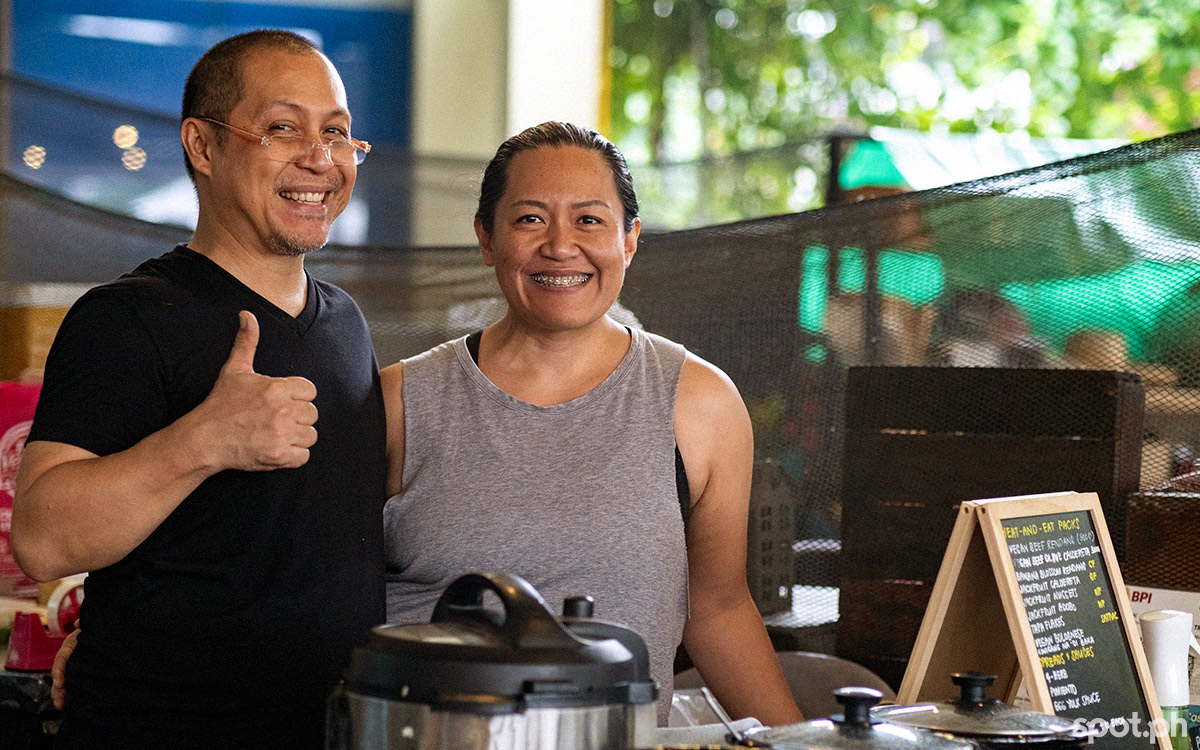
The Real Happy Cow's Lakapati and Alvin Jose Basa PHOTO: Majoy Siason
Post a Comment
Real Happy Cow’s Lakapati Basa holds a similar sentiment. “We found Good Food Sundays [around] 2015, 2016. They were still in Quezon City. It really resonated with what I stand for—sustainability and all that. That's what got me into this in the beginning,” she shares. “I'm a little bit of an environmentalist… Naturally, I'm a rebelde. A lot of the things that we stand for, like sustainability, we go against the grain. We try to fight [the status quo] if things should be different.” She and partner Alvin Jose Basa make it a point to source directly from farmers; or from a community of seniors near where they live who like to plant.
PHOTO BY Majoy Siason
She admits selling at Good Food Sundays can be challenging at times: “[Minsan] kaunti ‘yung tao sa market, sometimes it rains, mga ganyan… this is very labor-intensive work.” But what drives her is the people around her—the community of vendors, as well as her customers. “One of our objectives [in selling] here is also to connect with the end consumer… When we're here, at least we get to meet them. Get to talk to them and connect… Being here allows us to meet with like-minded people, to share what they do. It's a joy. Like now, people come up to you and it… nourishes my soul to a certain degree.”
PHOTO BY Majoy Siason
That’s not to say everyone shares the exact same views or focus, but what does unite the people of Good Food Sundays is a common ultimate goal. “What I like also about being here is people stand for different advocacies,” says Basa. “Some are for veganism, for animal rights, and also for human rights. And that resonates with me a lot. In short, I just want to be with people who are like-hearted. Who burn for something they really believe in. At the end of the day, we all want one thing. Something like… a better Philippines. In our own little way.”
Good Food Sundays is at Mandala Park, Shaw Boulevard, Mandaluyong City. For more information, check out Good Food Sundays' Instagram page.
We use cookies to ensure you get the best experience on Spot.ph. By continued use, you agree to our privacy policy and accept our use of such cookies. Find out more here.

Comments