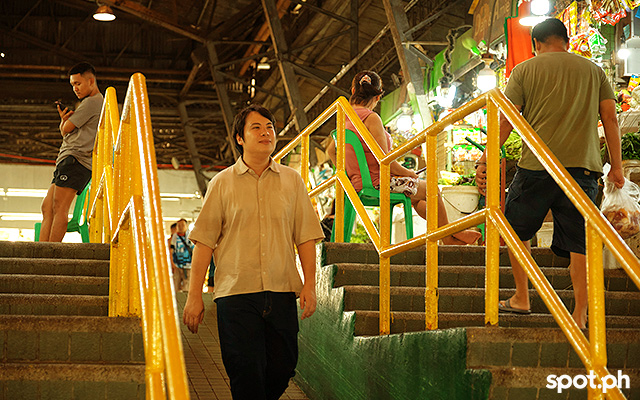
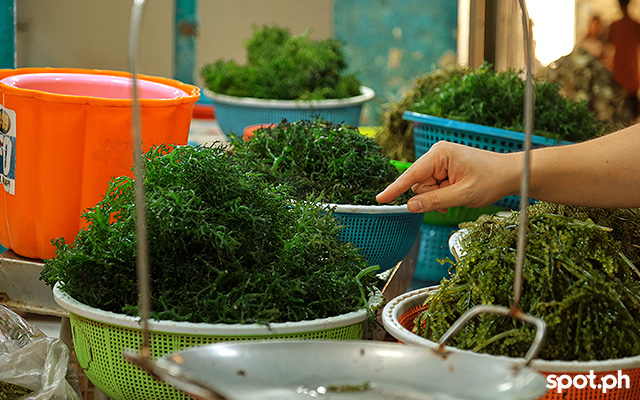
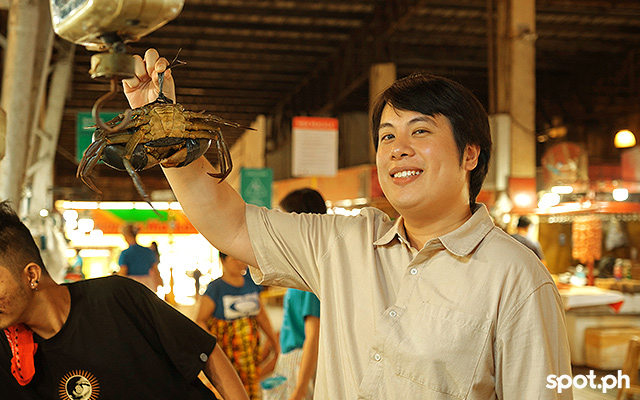
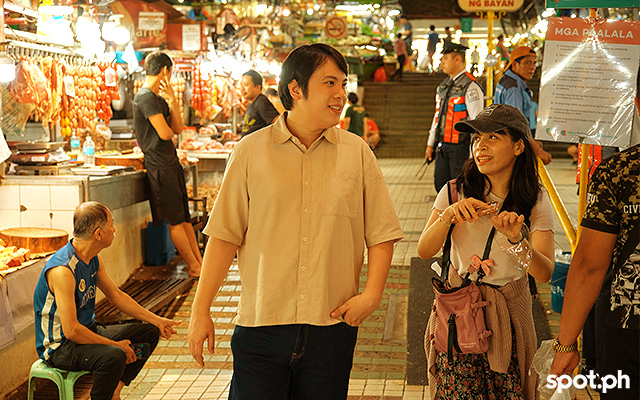
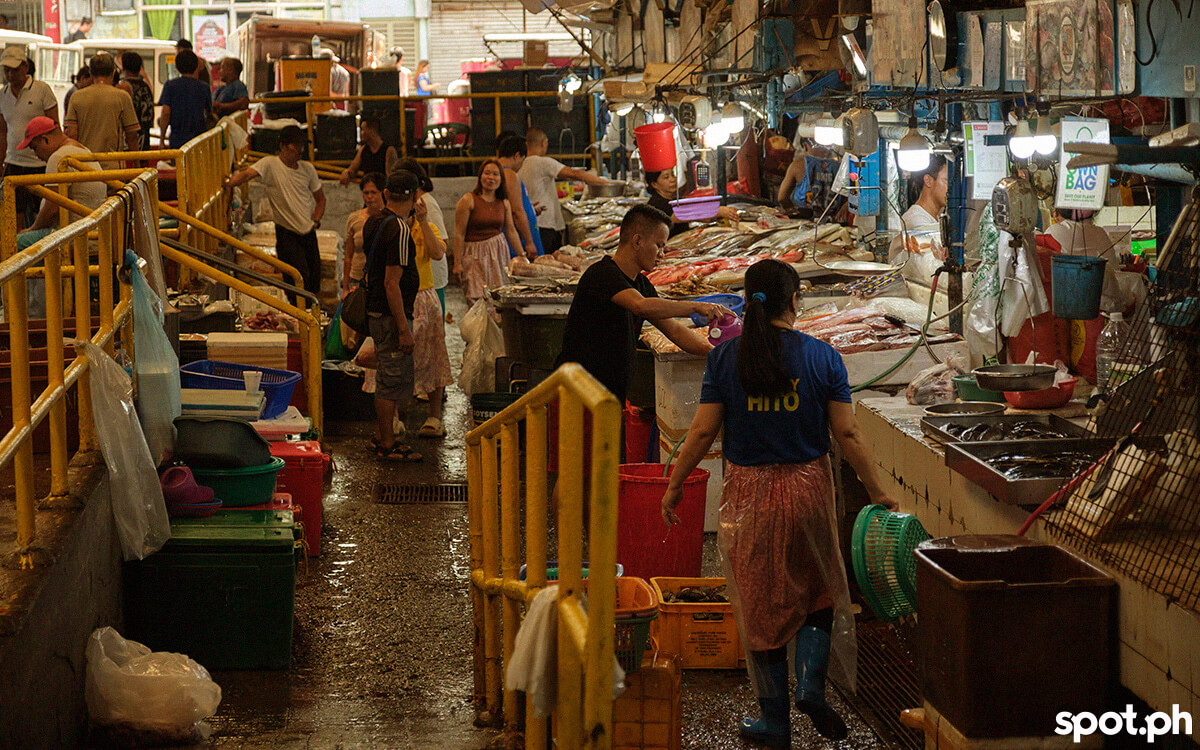
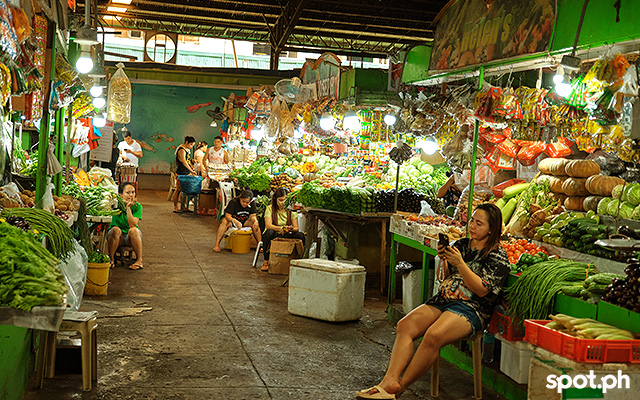
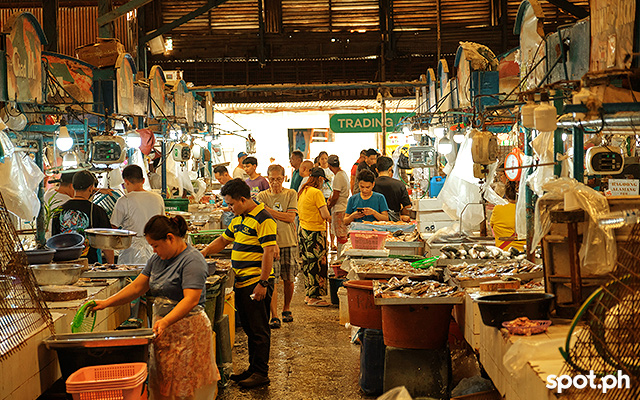
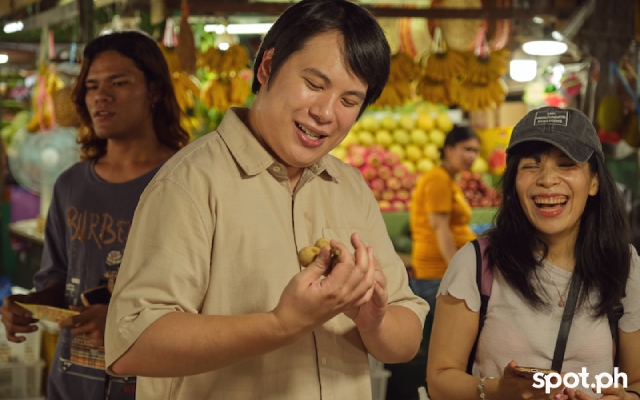
(SPOT.ph) Farmer’s Plaza in Cubao is a treasure trove for Roberto Villarcabral. We walk through the aisles and his hazel eyes light up—a spectacle of a sight against the murky backdrop of the wet market—as he gushes about fresh mud crab, or alimango (“they’re usually found in the mangrove forests”); suso or local snails; piles of fresh seaweed (“this is where gulaman comes from”); freshly caught dalag, ashy in color and still squirming (these are used by the Kapampangan to make buro or make pesang dalag, we’re told).
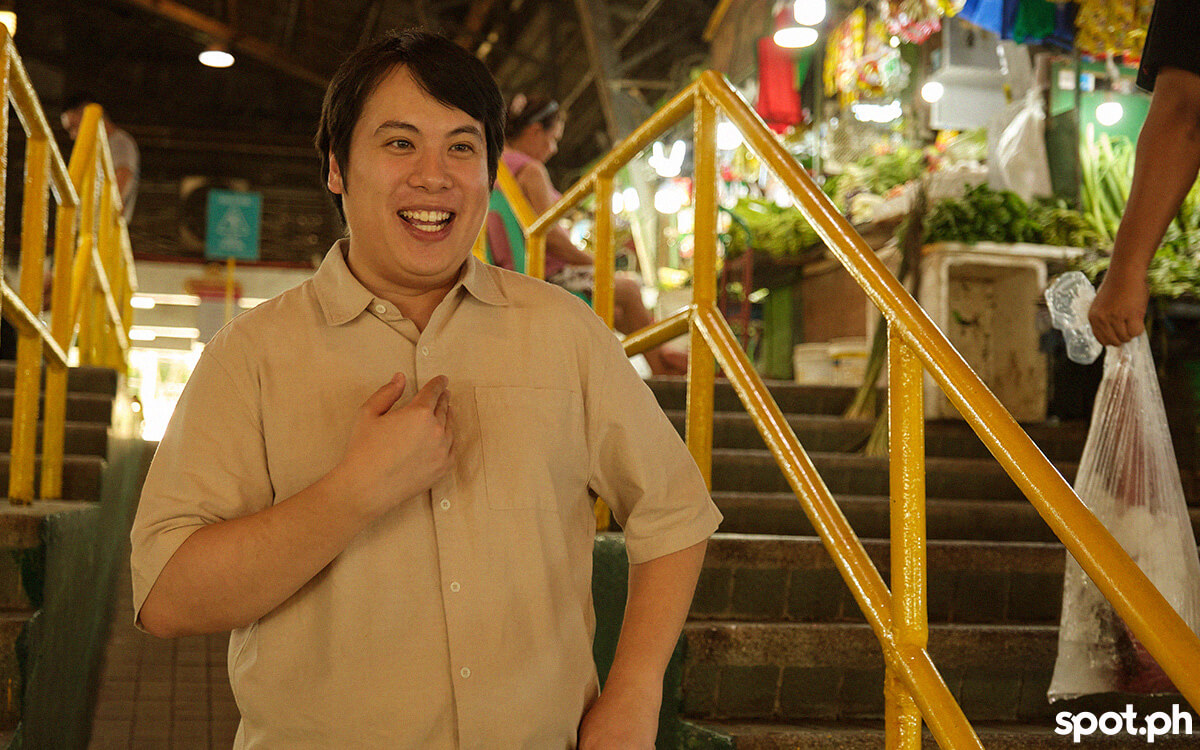
Roberto's eyes light up as we visit Farmer's Market.
PHOTO BY Hans Fausto
Piles of different kinds of fresh seaweed—lato, guso, and lukot.
PHOTO BY Hans Fausto
Article continues after this ad.
ADVERTISEMENT - CONTINUE READING BELOW
Villarcabral holds up an alimango.
PHOTO BY Hans Fausto
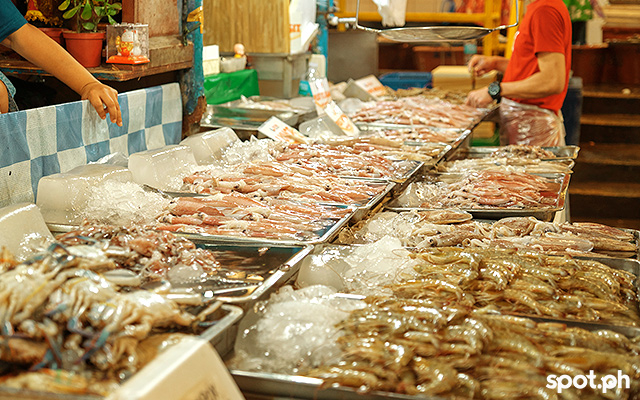
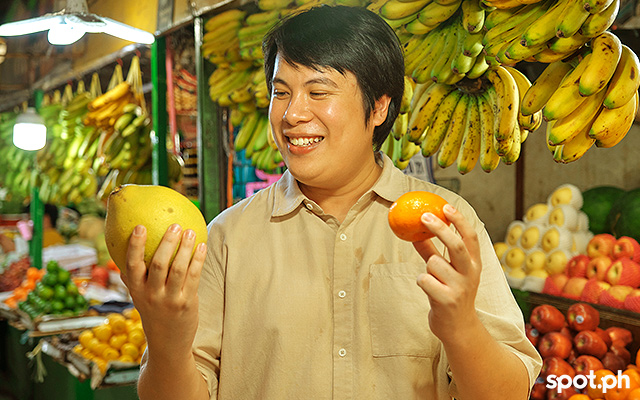
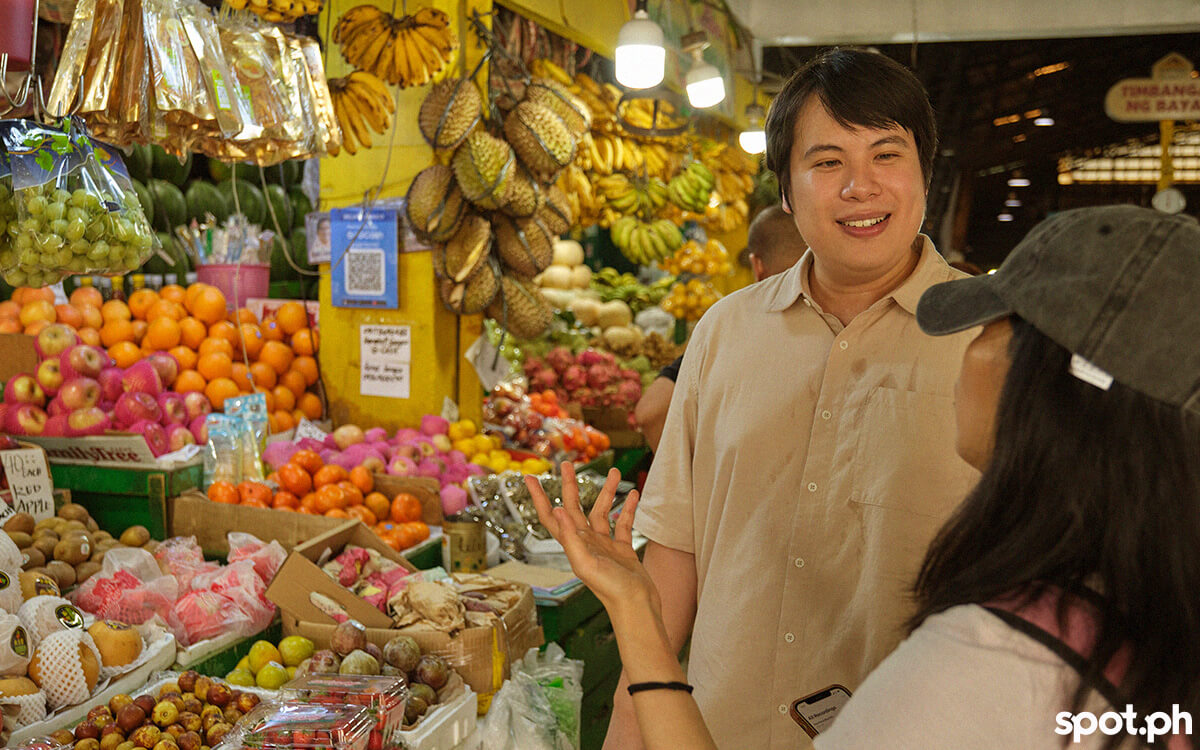
As we reach a stall selling squid, he tells us how we Filipinos actually introduced squid ink to Europe (“The Europeans didn't know it was edible—they thought it was poisonous!”). At the fruit aisle, he holds up an orange and gushes over how oranges are a cross between mandarins (ergo the similar taste) and pomelos (evident in its tough, resilient skin that makes it easy to travel with). Cue the Jackie Chan mind = blown expression.
Fresh squid and shrimp.
PHOTO BY Hans Fausto
Oranges are a cross between pomelos and mandarin, we learn.
PHOTO BY Hans Fausto
Article continues after this video.
ADVERTISEMENT
watch now
We also see santol—a fruit I love, especially with coarse salt on the side. (I've also had ginataan na santoltwice or so in my life; heavenly stuff it is on hot rice.) But I must admit I tend to overlook the so-called "cotton fruit" in favor of the likes of mangoes and ponkan and apples, if only because I thought I’d seen and tasted everything there is to the fruit. I’m mistaken. Villarcabral approaches the box. “I love santolade.” I burrow my eyebrows. Turns out he’s referring to a santol-based drink that he recently did a video on for his channel. Apparently, it's a refreshment popularized during the American period. “Like instead of lemonade, you have santolade.” I’m at once nodding at the clever idea, and stumped I hadn’t heard of its existence previously.
PHOTO BY Hans Fausto
The very act of sharing and imparting knowledge is what drives Villarcabral and his Histolinarya Collective, which gets its name from the marriage of his two passions: history and kulinarya, or food. You might recognize him from videos of the now-defunct social media account, The Lost Filipino Cookbook, which he ran with ex-wife Beatrice Gomez. Villarcabral now moves forward via his new channel, where he spotlights our local food heritage—ingredients, dishes, delicacies, and more of traditional and contemporary Filipino culture.
Article continues after this ad.
ADVERTISEMENT - CONTINUE READING BELOW
Villarcabral moves forward and continues on his goal of sharing the love for Filipino food heritage via his new channel, Histolinarya Collective. PHOTO: Hans Fausto
Meet Roberto Villarcabral of Histolinarya Collective
Getting Into Food and Film
Villarcabral’s love for the culinary world goes way back—we’re talking as early as when he was in preschool, when his class took a trip to the Mondelez factory to show how processed cheese was made, which he thought was "really cool." It so happened that his merienda when he got home was pan de sal with melted processed cheese, which he suddenly had a new appreciation for, having seen the process behind making it earlier that day. His parents nurtured this interest, lining up kitchen ingredients for young Roberto so he could observe how they would cook dinner at home, taking him to dine at their favorite restaurants—Saisaki and Kamayan, among others.
PHOTO BY Hans Fausto
It didn’t take long before Villarcabral started playing chef in the kitchen, experimenting with pantry items like cake mixes, to which he’d add other ingredients (Swiss Miss packets, chopped Hershey’s bars to name a few) before baking to help enhance the finished product. The pinnacle of his early food endeavors involved him preparing an entire multi-course meal for his parents’ wedding anniversary—at the tender age of seven. “I prepared a salad. There was some steak. There were some glasses of champagne with ice—but the ice was filled with imported berries that were frozen in the ice,” he recalls.
Article continues after this ad.
ADVERTISEMENT - CONTINUE READING BELOW
But it was the raw elements that truly drew him in. His curiosity would be piqued whenever he’d see live fish, vegetables, fruits, and other fresh ingredients at restaurants that displayed them—some examples he brings up include a Japanese restaurant in Alabang called Sayuri, and one near it called Perico’s. “I would be so fascinated with all the fresh produce… I was thinking about how the farmers were growing [them]. I was thinking about how the fish was gathered.” His uncle also had a farm in Silang and he’d encounter plantations of pineapples along the road, and he’d wonder how the fruit came about.
Villarcabral is especially fascinated by the raw material, so to speak—the fresh ingredients and delicacies that go into finished dishes.
PHOTO BY Hans Fausto
Villarcabral’s other big love is film. He tried his hands at making an animated film at age 13, as a way to continue an live-action school project that wasn't finished by his group. He did pretty much everything manually, drawing every frame (amusingly, the finished product reflects the changing of his style over the years), and doing the animation using Microsoft Powerpoint and screen capture; he’d approach his schoolmates in their spare time to help him with the voice acting. Roberto completed this project at 21.
At 14, he developed a "socially conscious" outlook and dove in—hard—into the world of cinema, first familiarizing himself with “the masters—from the silent era to golden age Hollywood to Nouvelle Vague [French New Wave]” and other movements around the world. He got acquainted with the works of the greats: Chaplin, Murnau, Warhol, Orson Welles, Kubrick, Kurosawa, Truffaut. "And it gave me the best lesson when it comes to making films. It taught me how to make a proper film through framing, through lighting, through editing.” Years later, he saw a movie aired on TV by pastor and director Alexander Kendrick, who uses cinema as a means to share their Christian advocacy to the world. “Even if I didn't really agree with the film or their approach, [or with] their storytelling techniques, I was very intrigued with [them]. I said, ‘Maybe that's it. Maybe I could share my message through the medium of film.’"
But Villarcabral got slapped with a reality check as he stepped into the film industry after graduating with a Communication Arts degree in college. “I saw how toxic the environment was,” he explains. “I saw how my colleagues were not being properly compensated. My salary was used for commutes, so I didn't really have much.” He experienced the “excrutiating” daily grind, recounting how programs would take long hours to shoot even if, at times, only a small fraction of the materials will be used. Villarcabral also laments the toxic power dynamics in the industry then. “I saw a lot of people backstab each other just so they can get the upper hand or win favors, you know… they [would] always have to suck up to whoever's boss.” Ultimately, he decided: “This is really not for me.”
Villarcabral briefly considered switching gears by entering business school or becoming an entrepreneur. “Then, my dad told me, ‘Why don't you go back to [doing] culinary? I think you're really good for that." And so he enrolled in Centre de Formation d'Alain Ducasse in Enderun Colleges and became part of the pioneer batch of Le Cordon Bleu Manila at Ateneo de Manila. He also gained experience working for the likes of Chef Jessie's Rockwell Club, the Baguio Country Club, and the Philippine Embassy in Madrid. (He also had a cloud bakery that spotlighted Filipino breads and pastries, and which he planned to expand to an eatery, though he didn’t get to push through with the idea given the pandemic.)
“I had an eye-opening experience during my time in the kitchen of Baguio Country Club. A waiter walked in with an order for ‘pakbet,’” Rob shares. “After he left, the cook next to me was snickering. I asked what was funny; the cook replied that the waiter was silly for calling the dish "pakbet" when in fact it should be ‘pinakbet.’ I wanted to look further into that. That's what inspired me to get in to the etymologies of a lot of our dishes.”
PHOTO BY Hans Fausto
Seemingly, things were looking up after his time in films—and then he discovered the food industry wasn’t all that different. “There was a toxic environment too… For something called hospitality, they are not very hospitable to each other,” Villarcabral laments. “So I was there for a while… but then, I saw how people were very mean to each other.” This prompted him to leave the field as well.
Roberto channeled his love of film to another medium—one that also allows him to engage with his love of food and history. PHOTO: Hans Fausto
Post a Comment
Opening the Pages of The Lost Filipino Cookbook
It was his mom who opened the idea of trying out vlogging. “She's an avid YouTube viewer. So, she would catch her favorite celebrities on their vlogs,” Villarcabral says.
Around that time, he also took a trip to Liliw and was “miffed” to find the province’s iconic tsinelas are no longer made there (they’re more often sourced from Santa Rosa now, he says). He also stumbled upon paho mangoes at a kiosk on the street and learned it was on the verge of extinction. Roberto thus had the idea of picking up a batch with which to make burong paho—a delicacy rooted from the Spanish who used them as substitutes for brined green olives. Given his mom’s encouragements, he got the idea of making a video out of the experience.
This ended up becoming the first episode of The Lost Filipino Cookbook, a social media channel he opened with his ex-partner. And thus began Villarcabral's vlogging career. That first video was posted in April of 2023.
“[I did it for] the future generations who are curious to do something with the paho. Or [so when we get to] the time when paho no longer exists, it feeds their curiosity [about]... how it's made. Or [what] it looked like,” he explains. “Because when I was a kid, and things were being described to me, they were just words, but they were not visual. I wanted to provide visual aids to the next generation, so at least they have an idea how it's done.”
Through The Lost Filipino Cookbook, Villarcabral and Gomez explored the stories behind all sorts of Filipino dishes—from the popular sisig and suman, to home-cooking icons like Filipino spaghetti, to the more obscure bukal ya etag (a bean stew loved by the Kankanaey people) and everything in between. The videos gained traction quite fast: “Within two weeks of launching, we already received an invitation from the NCR branch of DOST to collaborate [at an event held in May 2023], based on the strength of our first clip.” This further grew their following. “That one was a memorable experience for me. We shared a double bill with JR Royoll, and we were sort of the ‘opening act.’ What was funny was a lot of people were there to see the Lost Filipino Cookbook. There was even some guy in the audience who called out my name, and I have never met him in my life. It was surreal yet wonderful. From there, everything just kept growing and growing.”
The Lost Filipino Cookbook racked up thousands of followers in its six-month run, amassing a total of, by Villarcabral's count, 228,000 followers on Facebook, Instagram, and TikTok by October 2023. “One must remember; this was a time when a lot of people were still making the transition from being pandemic homebodies to slowly stepping out of their homes. There were still a lot of people tuned in to their gadgets, consuming a lot of social media than they do right now.”
Right at the height of The Lost Filipino Cookbook’s success, the channel came to an end that October as he and Gomez parted ways. Divorce would come months after.
Histolinarya Collective experienced moderate success and gained thousands of followers, but came to an end by October of 2023, just six-ish months since its launch. PHOTO: Hans Fausto
Post a Comment
Reaching a Turning Point
“After my divorce, everything was up in the air,” Roberto tells SPOT.ph. “When things were taking off then, I was wishing how we could keep going on for ever. Unfortunately, it did not work out between us. The days of The Lost Filipino Cookbook had run its course. It didn't feel right to go on using the brand, out of respect to those who were involved in that project: namely, me and my former partner. Also, on her end—regardless of my conscience, she would not have allowed the page to continue.”
There was, Roberto shares, a “civil discussion” about what would happen to the channel from then on. “It was then agreed that an open letter be written and posted to notify our followers. I wanted the words not to come from just me, but from us. However, in the end, I was tasked to go ahead and write the letter. I also did not want to leave them, the beloved community we have fostered, in the dark. With that in mind; I wrote from the bottom of my heart what ever I wanted to say at that point, and on behalf of the team. I let it stew for a while, because I did not want to act on impulse. I still needed to heal from what I have gone through.” Villarcabral spent months away from social media “in contemplation.”
But he knew he didn’t want his food-history vlogging endeavors to end there. “Seeing how Filipinos—and by extension, viewers from around the whole world—wanted to know more about the cuisine of this country, there were just so much stories to tell,” he says. He had the encouragement of his family, friends, and fellow cultural workers, and so he decided he was ready to move forward with a “new page [that] called for a new format." Thus the birth of Histolinarya Collective. The name takes after an endearing term coined by of his followers: “This person would often thank me for the ‘histolinary lessons’ I presented," says Villarcabral. "I caught on and knew what it meant."
PHOTO BY Hans Fausto
“From that time of healing, I was inspired to provide a more holistic approach to what I would soon feature. In addition to the work I do in uncovering and re-discovering Filipino cuisine from a historical lens, I wanted to highlight more about the rich tapestries of heritage, as well as the amazing individuals that make our country truly beautiful.”
For Villarcabral, the new channel marks the “beginning of brighter things to come,” cemented by collaborations with “wonderful like-minded people” and trips to locations he hadn’t been to where he could learn about a culture firsthand.
“When I started The Lost Filipino Cookbook, [the stories were transmitted] just through text, through reading. But being onsite, being on the field, and seeing how things are done by the guardians, by the custodians of these dying or fading traditions, gets me more in touch with our grassroots. I feel like the experience is more tangible that way,” he says.
The Making of Histolinarya Collective Videos
Now a one-man team, Roberto researches, writes, shoots, narrates, and edits all videos himself, at times also doing illustrations, animation, and vocalisations as needed. He does all of this amid technological challenges, like his editing software slowing down frequently. He would lose sleep over it, he says with a laugh. “Everybody who has done post-production will be aware: editing is no joke.”
His aesthetics in terms of content presentation has evolved as well. In Histolinarya’s early stages, his outputs were vertical in aspect ratio, similar to Lost Filipino Cookbook, but he admits he isn’t the biggest fan of that format. “A good two-thirds of the composition tend to get compromised. And being a cinéaste, it pained me to crop those off.” He now gets around this by posting horizontal videos on TikTok. “I decided to make the switch to horizontal and be among the early proponents for it. Plus, with my approach to colour grading, it made my work look more cinematic.” The shift to horizontal also allows for longer video durations versus the more time-bound shortform outputs popular today—thus there’s more room for in-depth discussions on whatever he’s covering. Still, he keeps Instagram and TikTok recipe clips just 60 to 90 seconds long, "for better digestion (no pun intended)."
PHOTO BY Hans Fausto
Inspiration is everywhere for Roberto. Often, he’d just have to look at what’s available in the market, in the neighborhood, even in his fridge; whatever he has on hand at a certain time—especially if that ingredient is particularly “unique and seasonal.” From there, he would work a recipe around it.
“For example, this time of the year is dayap season,” he says, referring to the local citrus (known outside the Philippines as key lime) that’s a “very crucial ingredient” in Southern Luzon cuisine (particularly Tagalog and Kapampangan). “I actually prefer dayap over calamansi… [it’s more] sour with a hint of sweetness.” His eyes further sparkle as he talks about varieties of heirloom rice he learned about while in Lucena with his good friend Lawrence Castillo of Gulay Na!.
At times, he’d take familiar dishes and find more interesting, lesser-explored angles to cover them—be it by talking about their history, by sharing lesser-known facts, and/or by recreating vintage recipes of them. One of his early videos, for example, spotlights banana ketchup—invented by Maria Orosa during wartime, the Filipino adaptation of the Western condiment using a more locally available fruit. (As it turns out, Orosa’s OG recipe didn’t survive the war; Roberto bases his take on a related recipe she made for roselle ketchup.) In a video posted in time for Buwan ng Wika in August, he cooks five kinds of adobo from around the country—adobong puti (braised in pure vinegar), dilaw(with turmeric), pula (tinged red by atsuete), sa gata (creamy with coconut milk, patis, and ginger), and itim (darkened by soy sauce). And in a recent video about kinilaw, he highlights the Kagayanon variation of the dish, where fish is washed in bahal (aged tuba) then seasoned with fresh tuba plus tabun-tabon and suwa (both fruits abundant in Cagayan de Oro) versus the vinegar typically used elsewhere.
He also spotlights more obscure ingredients, delicacies, or recipes the current generation might not be aware of: the aformentioned santolada, which was enjoyed by Filipino elders; bakalaw Kabitenyo, a Caviteño adaptation of Spanish bacalao a la vizcaina that came about as the Spanish arrived at Tangway in the 16th century; and tinuwa, a Visayan favorite of protein and veg stewed in an aromatic broth (fowl, malunggay, and papaya in the case of his video), just to name a few.
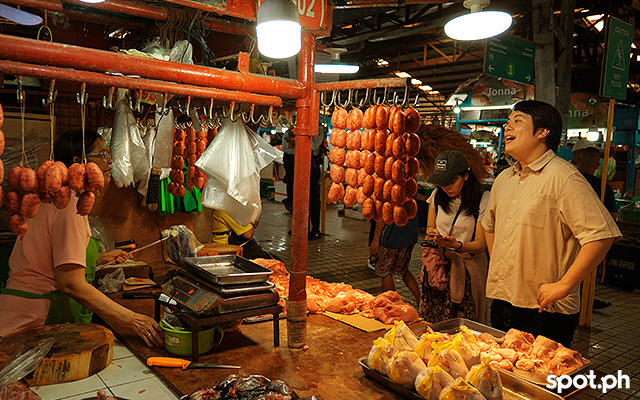
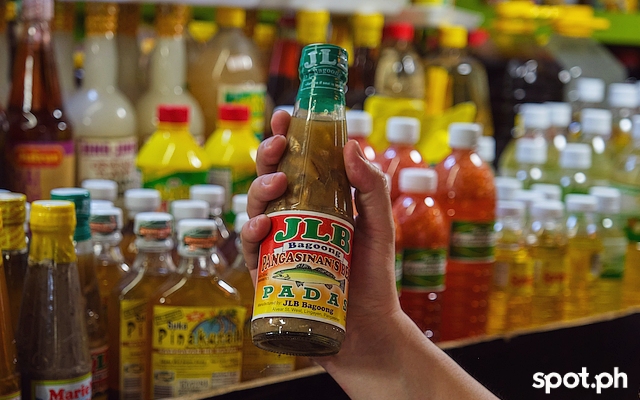
One of the delicacies we spotted at Farmer's Market: bagoong padas from Pangasinan, made with fermented rabbitfish.
PHOTO BY Hans Fausto
The Histolinarya videos juxtapose the background of the ingredients or recipes in question with the how-to of preparing it. Roberto begins by talking about the dish or subject at hand—sometimes simply through a voiceover. He would sometimes show on-site clips. The making of the dishes is shown POV-style. He concludes a video with himself sitting down to enjoy the meal he prepared.
Other videos he’s done were shot on location: Batangas (where he enjoys a meal at OG spot Wanam Food House), Baguio (where Roberto—an autism rights activist looking to raise awareness about Filipinos on the spectrum—attends a seminar celebrating Autism Awareness week), and Antique (where he attends food contests with friend and fellow food heritage advocate John Sherwin Felix of Lokalpedia). Occasionally, he also publishes more fun work—like a video he did in time for Halloween, retelling the tale of the headless ghost of a Spanish friar at the Pindangan Ruins in San Fernando, La Union.
“I am happy with where I am at this point, and how the new format is garnering cheers,” says Roberto. "One of the cultural workers I know… had said to me, ‘What I like about Histolinarya is you finally get to be who you are, and people can see how much you genuinely enjoy what you do.’ That was comforting to hear.” Granted, some Lost Filipino Cookbook fans have also expressed their sentiments, waxing poetic while pining for what once was. “I have received responses such as, 'Man, The Lost Filipino Cookbook was such as a great name', or was a great concept,’” says Villarcabral. Still, he stands firm on his present whereabouts. “I agree, The Lost Filipino Cookbook was a great name and a great concept. But now Histolinarya is where I choose to be.”
"Histolinarya is where I choose to be," says Roberto. PHOTO: Hans Fausto
Post a Comment
A Bigger Purpose
For Villarcabral, teaching—and (continually) learning about—food’s history and our cultural heritage go way beyond navel-gazing. “I learned that there are some things I was not even aware of about our culture,” he says—the tradition of budbud salt in Antique, made by drying seawater in bamboo poles, for example. “I only discovered them as my career kept going. And I realized a lot of these cultural traditions are being endangered. So I thought maybe if I could bring awareness, just like how I [became more] socially conscious years ago… I want to bring awareness to that and tell people, hey, this is something that is still existing right now.”
Doing so could also help save these traditions and keep them alive for years to come, Villarcabral explains. “We can actually keep it going for the future generations to experience and appreciate.”
PHOTO BY Hans Fausto
An extension of this is the goal of instilling a sense of hope in his viewers, especially given the cynical attitudes many Filipinos have toward our own. “I wish we can remove that mindset where we're so negative about our culture. Because maybe in general, we still have a lot of things to work on, but I have met people who are willing to change [things]... and by having this defeatist attitude, nothing is going to happen.”
“We have a lot of great things [in the Philippines]—we're just not able to highlight it. I want to highlight them so people can be aware and go, ‘Hey, this is something that we can be proud of.’”
We use cookies to ensure you get the best experience on Spot.ph. By continued use, you agree to our privacy policy and accept our use of such cookies. Find out more here.


Comments