

The Batchoy Debate: Is Hapag Wrong To Take On The Ilonggo Soup?
Where was this outrage when they made batchoy into instant noodles?
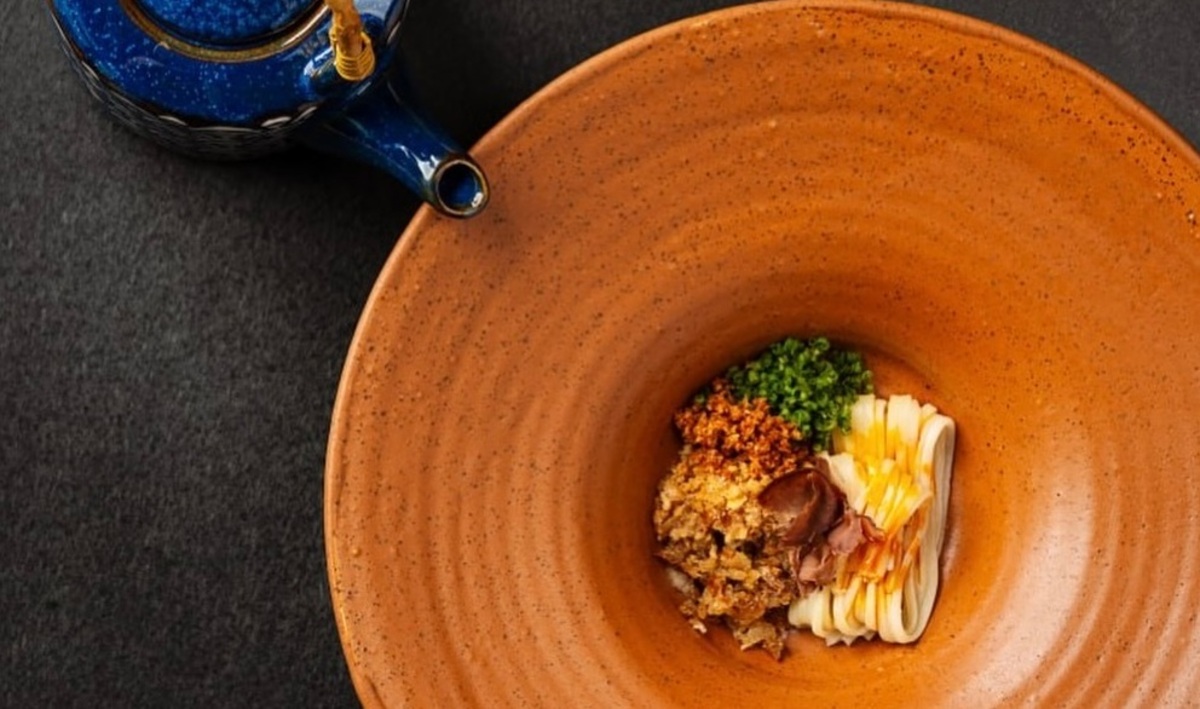
(SPOT.ph) Take a good, long, hard look at yourself: Do you want to spend any longer than 15 seconds raging about noodle soup? If you believe in God, would you care to explain to Him at the end of your life why you argued with someone on Facebook over a dish you haven’t had? Because in the immortal words of some less-than-admirable people who sometimes make a good point, “Kim, there’s people that are dying.”
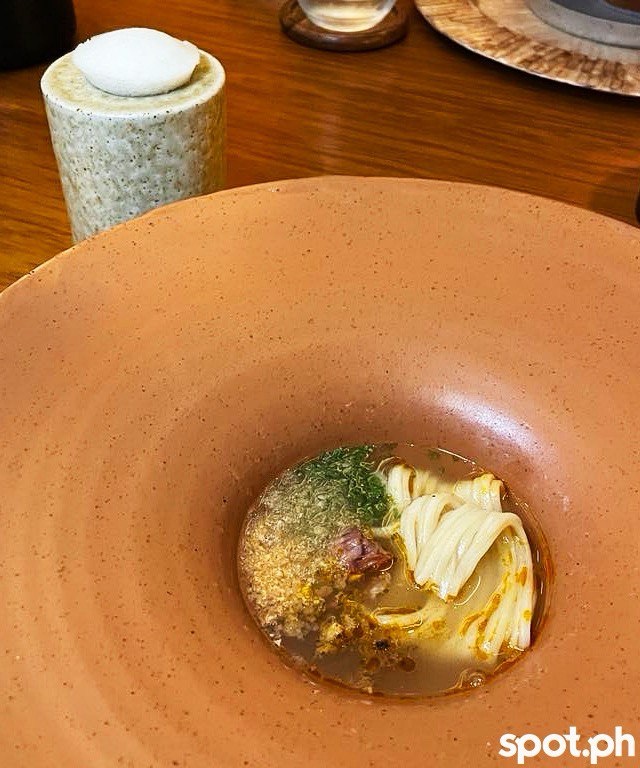
For the uninitiated, the December 2024 edition of Disproportionate Online Hubbub That’s Going to Blow Over in Two Weeks Anyway concerns award-winning restaurant Hapag, their recently launched Western Visayas-inspired tasting menu, and people throwing a fit about their take on batchoy. We have thoughts. Naturally.
We Get It, Though
It’s no secret that there’s tension between Metro Manila and almost every major city or province south of Luzon. While many Manileños are actually blissfully unaware, we don’t want to dismiss these feelings—the discrimination is real. Whether it’s genuinely diminished or just gone quieter these days is hard to say, but I personally remember a time when Cebuanos in particular were the butt of jokes centered around their accent. It’s akin to, say, Americans from New York or Los Angeles making fun of the Midwest, or the deep South; it seems harmless because they’re all citizens at the end of the day, but the stereotypes are established enough that it’s almost funny to imagine someone with a heavy Texan accent as a professor of art history. And that sort of thing could cost someone fair opportunities, funny or not.
It sounds like a thing of the distant past; these days, many of us so readily embrace and appreciate the diversity that the Philippines offers. But it is also true that the weird spotlight given to Metro Manila is a phenomenon that’s thrived well within living memory. A Manileño’s genuine curiosity about what other food or music their country houses can be and is often enough met with reasonable suspicion, based on an emotional truth that Filipinos outside of Luzon (if they even want to be called Filipinos) can’t be logicized out of for now.
Emotional it may be; it is, however, still the truth.
The People vs. Fine Dining
This part of the story is like ogres and onions—she’s got layers. We’re calling ourselves out this time; we know that fine dining and tasting menus can come off as a little esoteric, and we write about them anyway. But their role in the world of restaurants is a necessary one, even if it isn’t immediately obvious; in the words of Warner LeRoy, a restaurant is a fantasy—fine dining, we’d argue, is the peak of that fantasy. As much as anyone might want to say that there’s something perverse to the act of “heightening” or “elevating” a necessity like food, we have to ask: Does having a premium version invalidate the original? Because some people seem to think so.
However, we also understand how fine dining can be misunderstood or misrepresented; goodness knows how easily it’s parodied in pop culture, a victim of its own buzzwords. Deconstructed something-or-other in a so-and-so reduction with a side of dry-aged doohickey is a fill-in-the-blank activity that needs very little imagination if you’ve watched enough TV. It’s a format of dining that’s easy to resent because everything seems small and weird and expensive, to the point that you could parrot our earlier sentiments: “There’s people that are dying, Kim.”
But ultimately, it’s also one of the many pillars of our progress as a society; fine dining can pay homage to an unassuming cultural dish or a commonplace ingredient, much as Hapag has done with their current tasting menu. If a chef cannot enjoy what is simple or see the value in preserving culture through food, you probably shouldn’t trust them to make your food, period. There may be an element to the anger of “why can’t the privileged and wealthy in Metro Manila just stick to their fancy foreign food, let us keep what’s ours”—and while that’s not a feeling that comes out of nowhere, it’s also not a feeling that will get anyone anywhere.
(Also, I have to ask: Where was this outrage when La Paz batchoy was commercialized as instant noodles?)
Trickle-Down Cuisine
The cultural and class divides seem to be more prominent than ever, and that’s good, in that their deniers will have a harder time… well, denying. We have to know what we’re all up against if we’re going to dismantle it all one day, and in pursuit of that goal, we’re going to need some powerful allies.
Bringing the humble to the haute actually highlights its potential to those who would have never previously given it a second look; trying to coach the expert—the farmer, the grocer, the home cook—usually gets you a funny one. When a family of farmers have grown corn all their lives, it’s ostensibly ordinary to them; when a trained professional makes polenta out of it, it becomes a conversation. Conversation becomes demand, and demand keeps farmers fed and an heirloom ingredient from dying.
At the very least, that’s the hope we cling to in terms of fine dining. More and more chefs in that space are dealing directly with farmers in order to offer them a fair price; experience and immersion form the base of their research. Cuisine is now and has been as much a creative endeavor as it is one of survival—chefs can be and are as much artists as they are cooks. Some of them (like Inés Castañeda and Filippo Turrini of Roots in Siargao) try not to work with an ingredient until they are presented with the opportunity to learn and internalize what it means to the people who grow it—and, to us, that sounds like the furthest thing from appropriation or disrespect.
To Everything, There Is a Season(ing)
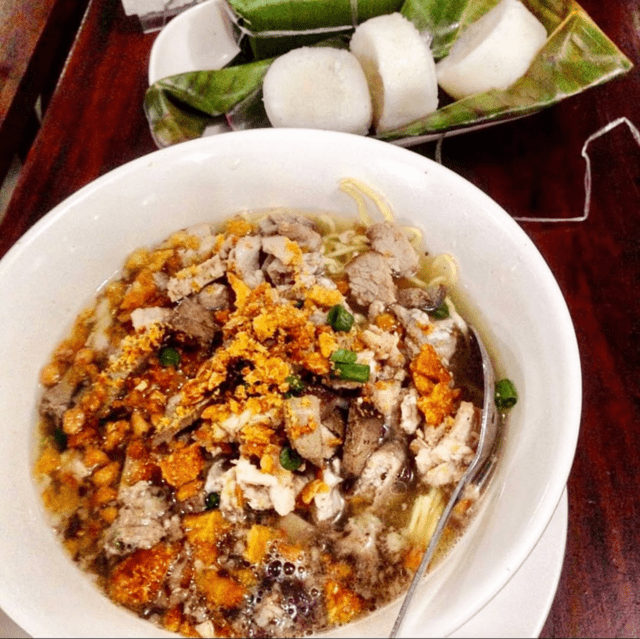
Another way of putting it is this: You can crave authentic batchoy, and many do; no one craves a tasting menu. You’ll dress up for a tasting menu when you can; batchoy can and should be had in your comfiest pajamas. These experiences are completely different, but are not in competition with one another—they’re staying firmly in their own lanes, as it were.
“I’m devastated [at the reaction], it was totally uncalled for,” says the Ilonggo Chef Tibong Jardeleza. “Thirty years of advocating for Ilonggo food heritage, and it’s like I have to explain what a tribute is. The chefs did their research, in person, and through a storm, no less! Whereas I feel like the naysayers don’t know what Hapag is about—I’ll tell you, it’s not a batchuyan, and they don’t claim to be. It was such a disappointing reaction to a gesture of support. My last word on it is that it is batchoy in taste and preparation, in degustation form. Nothing wrong with that.”
After all, we’ve accepted that dishes like adobo vary from house to house, from carinderia to carinderia—so, to quote Jardeleza further, “What’s the fuss?”
Also read: The Spot.ph 50 Great Restaurants: Special Awards Edition