
Gallery by Chele's New Tasting Menu Honors the Great Versatility of Coconut
It's as much a degustation as it is an exploration of the fruit's endless possibilities.
(SPOT.ph) Venetian scholar Antonio Pigafetta encountered all sorts of local delights on the Spanish expedition to Spice Islands in the 16th century, led by Ferdinand Magellan. And among those he got to come across (and write about) are coconuts, the fruit of the palm tree with a bounty of different uses. He details the many things that can come out of the humble coconut tree: wine, a powder from the hard coconut shell, the coconut flesh, oil, butter, vinegar, milk—the list goes on. “A family of ten persons can support itself on two trees, by utilizing one for eight days and then the other for eight days for the wine, for if they did otherwise, the trees would dry up; and they last one hundred years.”
It’s for this reason the humble coconut tree is also called the tree of life, in that all of its parts can be used to support human life. And honoring the idea (as well as going by the same name) is the new tasting menu at Gallery by Chele, where the team explores all the different ways ways coconut can be used, played around with, and ultimately enjoyed.
Also read:
The Night the World’s Best Chefs Cooked for Chele Gonzalez
Celebrate What's Available: Lessons From Gallery by Chele, Toyo + Asia's No. 1 Resto
New Tree of Life tasting menu at Gallery by Chele
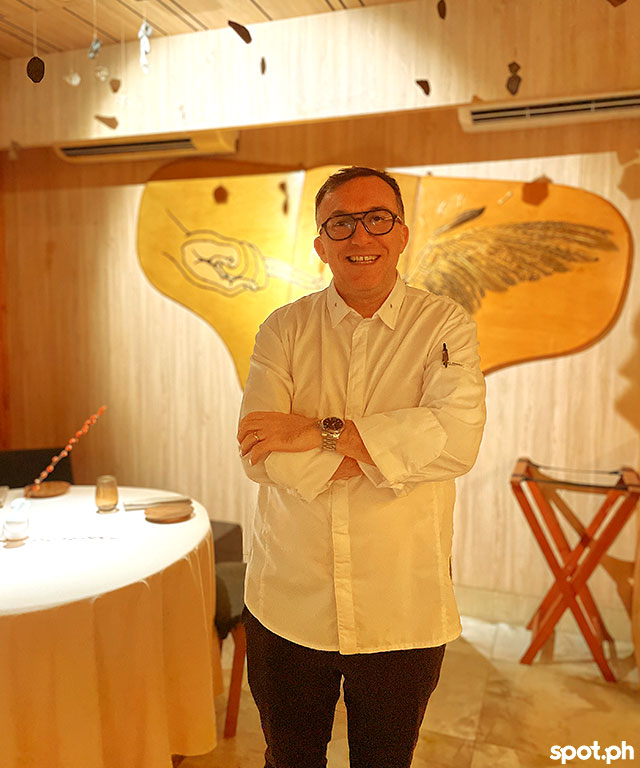
This follows the restaurant's highly successful Cacao menu that launched last year. “I think there was a big pressure after [that]—because the cacao menu was four years of research, it was scientific, you know,” Chef Chele Gonzalez tells SPOT.ph. “So I say, okay, what do we do next? And I think for me, it's always [about] doing things that are real, that are honest.”
The idea to feature coconut came “naturally,” as they’ve been using coconut in many ways over their 12-year run. After all, Gallery by Chele (recently listed at No. 72 on Asia's 50 Best Restaurants for 2025, and a part of the 50 Best Discovery list) has long focused an the Philippines and prioritizing local ingredients. Using coconut makes practical sense because of its abundance in these parts; coconut also plays an integral role in upholding Gallery by Chele’s predominantly Southeast Asian flavor profile. “So sometimes when we do R&D and we do the menu, we need to stop ourselves and say, okay, we are using too much coconut,” he says with a laugh. “Because many sources or many of the foundations of the local and Southeast Asian cuisine [are] coconut-based.”
“When we look backwards and [think], ‘Okay, what happened in those years?,’ [we realize] we have done hundreds of different techniques and elaborations [on coconut],” says Gonzalez.
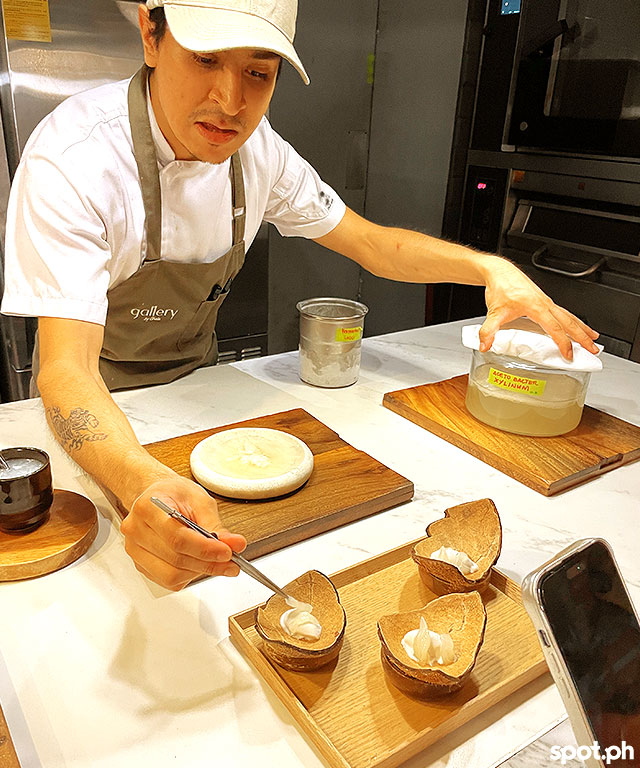
We see this in practice today with the range of coconut products the Gallery team makes in-house: coconut milk and cream, coconut chips, coconut oil, coconut butter, latik, coconut vinegar, lambanog. They even make their own nata de coco—the Filipino delicacy originally discovered by chemist Teódula Kalaw África of coconut water fermented with acetobacter xylinum. (The process is a highly scientific one that requires monitoring aspects like temperature and pH levels and adjusting as necessary, we're told).
In coming up with The Tree of Life (P4,900/six courses, P6,200/10 courses; vegetarian options and beverage pairings are also available), Gonzalez encountered the challenge of finding a way to sew together these different elements into one cohesive lineup. “[We had to figure out how to] do that in a seamless way, in a way that you will not feel that… coconut is fatty [or] overpowering. Like the cacao [menu] last time, [the coconut] had to be integrated in a very elegant, subtle, fine, seamless way.”
The menu shines in the way it showcases the sheer diversity of coconut, with each dish on the roster using a coconut product in some way, while abiding to the restaurant’s general flavor palate. They incorporate coconut in such a way that’s both logical and surprisingly understated, playing on its unique characteristics: the natural sweetness of coconut water; the supple bite of young coconut; the rich and velvety mouthfeel of coconut milk and cream; the robust aroma of smoked and/or toasted coconut; the firm gel and distinct chew of nata de coco; and so on.
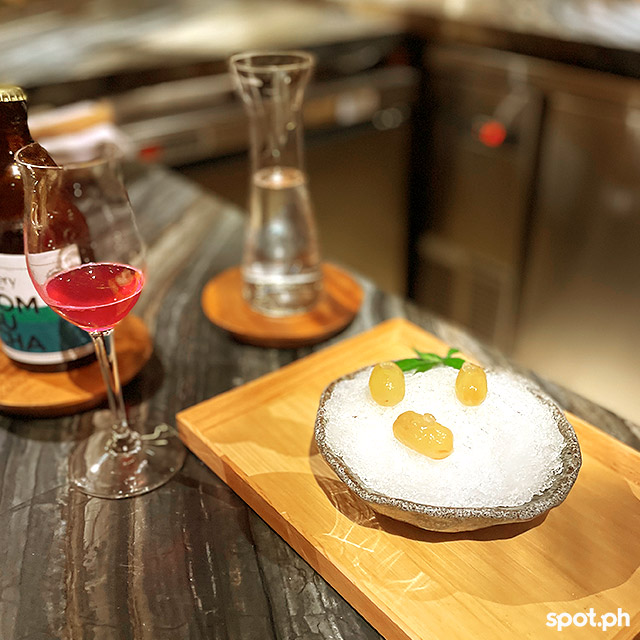
To start we’re offered compressed grapes in citrus, coconut water, and lambanog for a burst of zing, followed by a quick trip to their own urban garden to see the produce they grow in-house. At Stvdio Lab, we’re shown their house-made nata de coco—a process that begins with them combining coconut water and sugar, pasteurizing that to about 75 to 80 degrees, and adding glacial acetic acid and acetobacter xylinum to get the fermentation magic going. Served in strips as opposed to the cube form of mass-produced versions, the resulting nata is more fermented-tasting than sweet, and it makes a great, naturally chewy topper for their fermented coconut ice cream.
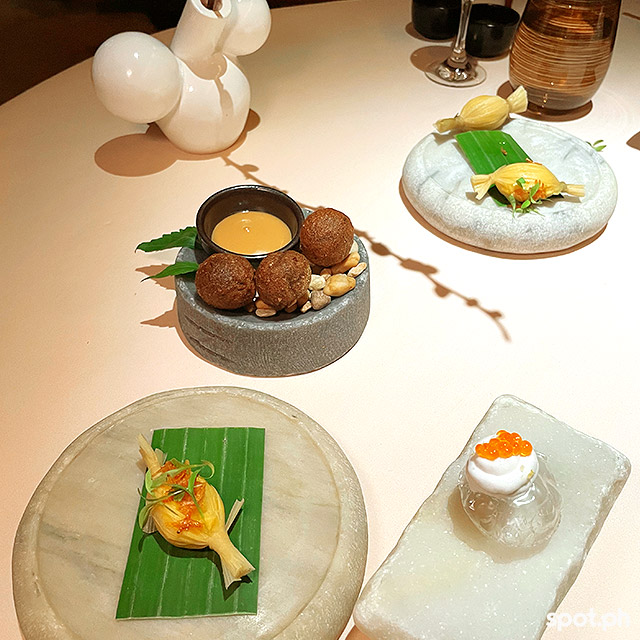
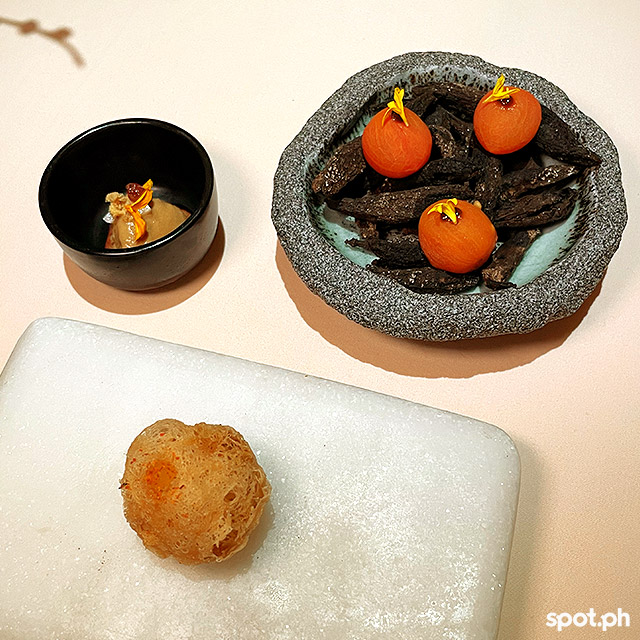
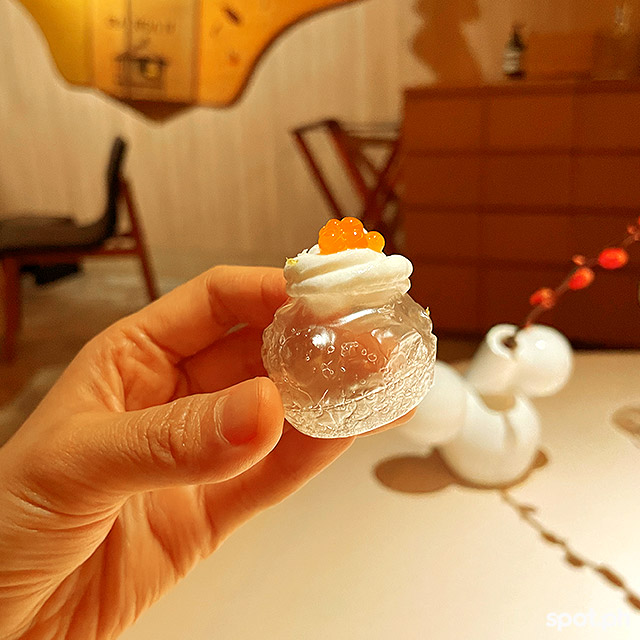
Them being all for sustainability, Gallery by Chele tells us about their ethos of minimizing waste by utilizing as many parts of whatever ingredients they're working with as possible. We see this in practice in the spread of nibbles dubbed Zero Waste, all made using scraps from making their other dishes: seafood ice cream with uni, jicama for texture, and bignay; Wagyu longganisa in a crispy-delicate shell similar to that of Hong Kong’s taro puff dim sum; tomato sinigang, its namesake in one bite; and a subtly sweet, caramel-colored cocktail that highlights tamarind. The succeeding Coco-Nuts set reinforces the coconut theme, with three more bites all with coconut in some form: crystal bread, an ikura-topped translucent (!) blob of sorts made with kuzu and coconut; pintos, inspired by the tamales-like dish from Visayas with corn and coconut; and the kare-kare bonbon, a Gallery by Chele mainstay since 2019 with a filling of oxtail, peanuts, and coconut milk.
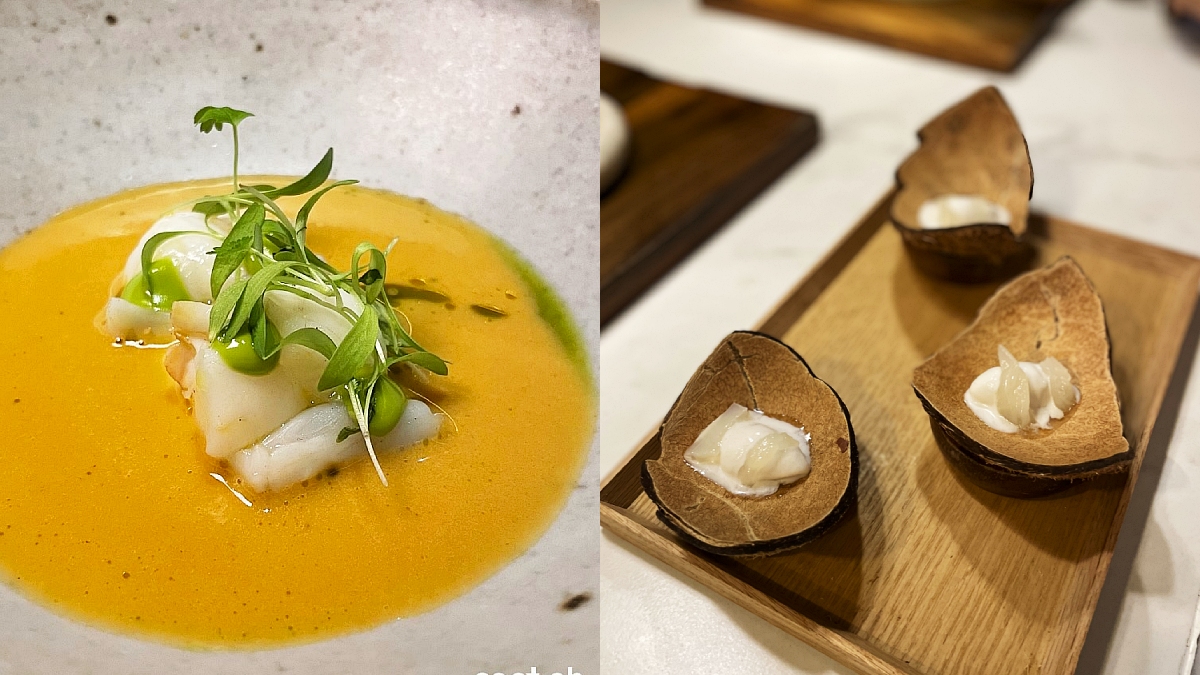
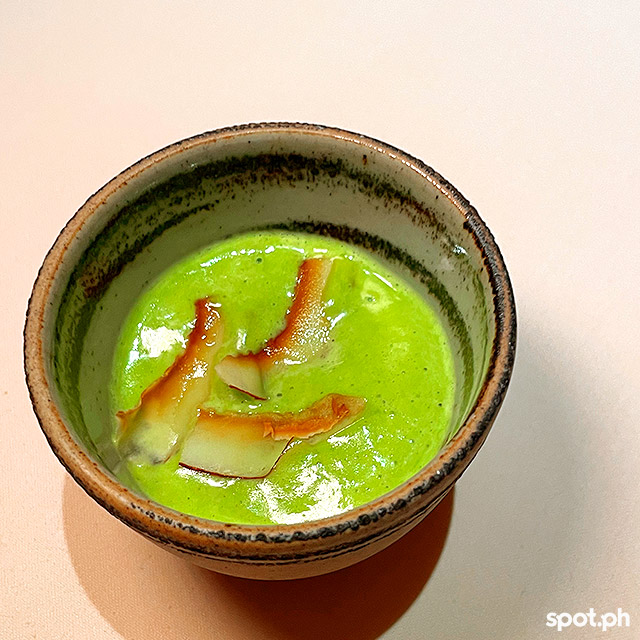
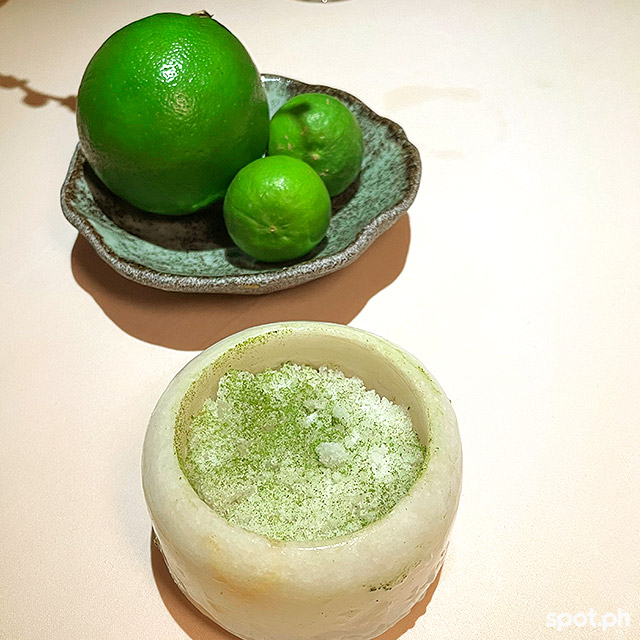
We see the lighter side of coconut in the first couple of courses. The Filipino viand of binakol (classically made with chicken boiled in a coconut-water broth) serves as the inspiration for Lutong Bahay, although Gallery by Chele makes it their own with young coconut gelatin, toasted coconut chips, and a spring-green foam of malunggay poured on top. In the Tropical Ceviche, a granita of coconut juice and cilantro powder makes for a cold, subtly sweet blanket for a dayap-brightened ceviche of local oysters, grouper fish, longgan, and señorita banana.
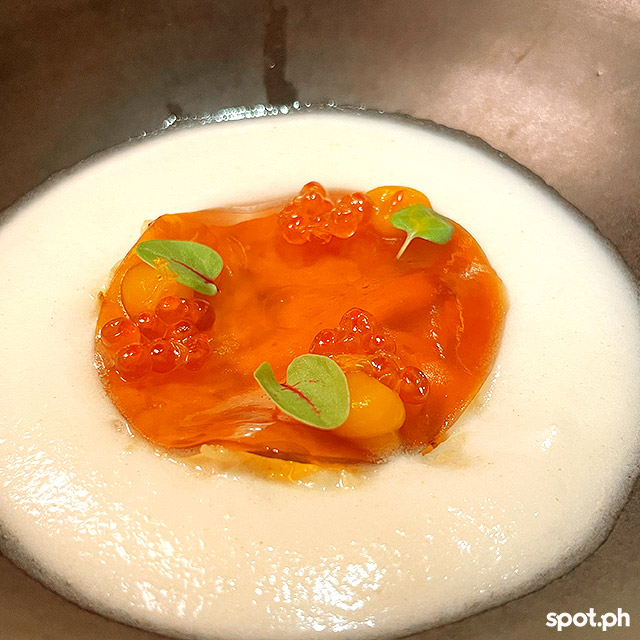
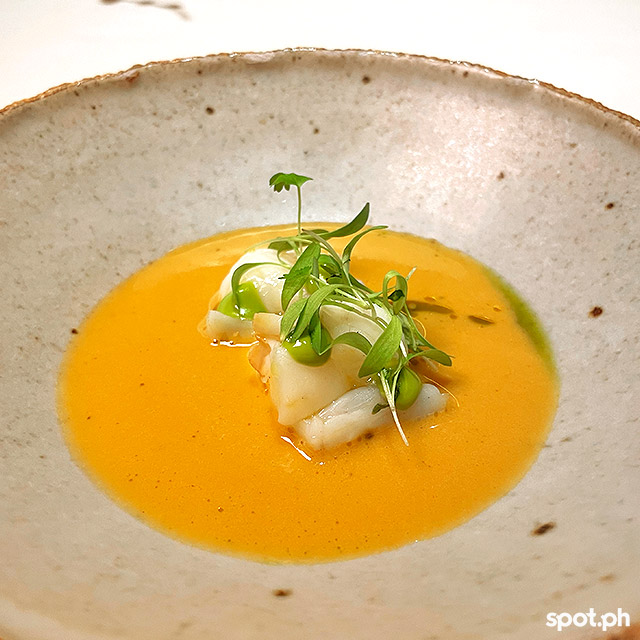
Things go the more umami direction moving forward, beginning with the Crab XO—a multitextured number that starts with a yuzu-aligue emulsion underneath; local blue crab with burnt-coconut XO sauce (which adds a wonderful smoky undertone); ponzu gel; and dashi foam that’s poured over as it’s served. Meanwhile, pitik (slipper lobster) is the star in the Palawan Lobster, where the seafood is grilled a la yakitori and served over calamansi mash with dots of cilantro oil. The team then pours over an emulsion of uni from Sorsogon, enriched with coconut.
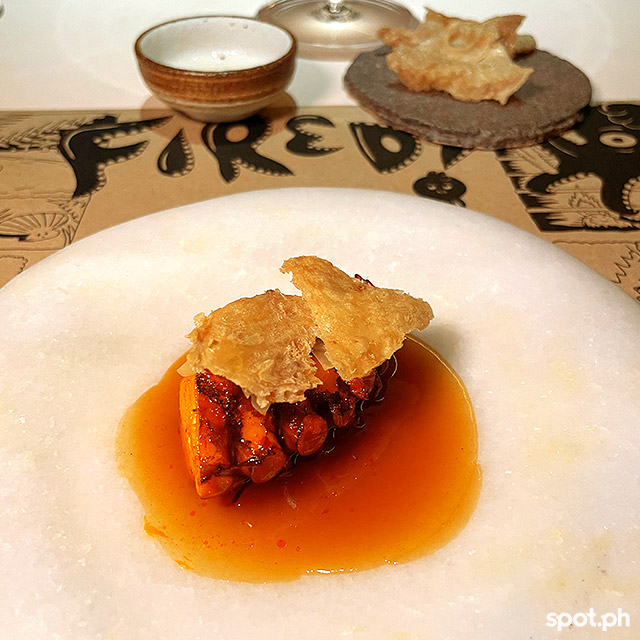
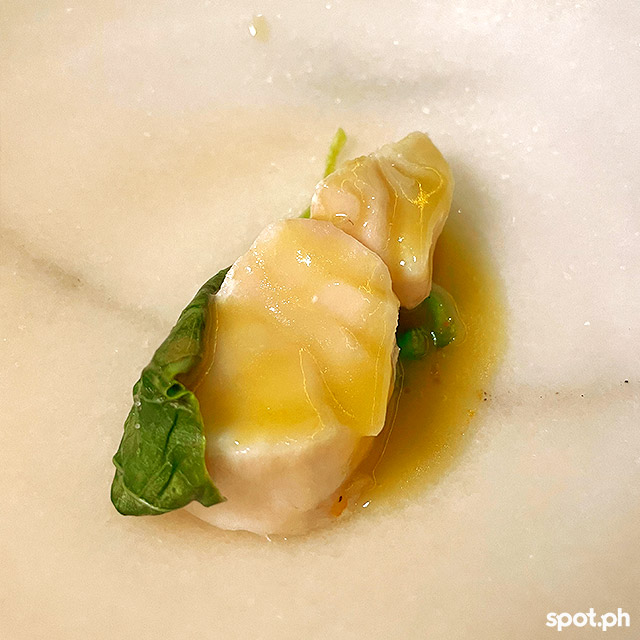
Fired! Pulpo features a tender chunk of octopus in a sauce of chicken jus that leaves our lips wonderfully sticky. It’s topped with crispy chicken skin, best dipped in its sidekick of coconut vinegar. More restrained is the Grouper Pilpil, with delicate-tasting grouper fish cloaked in a silky pilpil sauce infused with coconut and Arbequina olive oil.
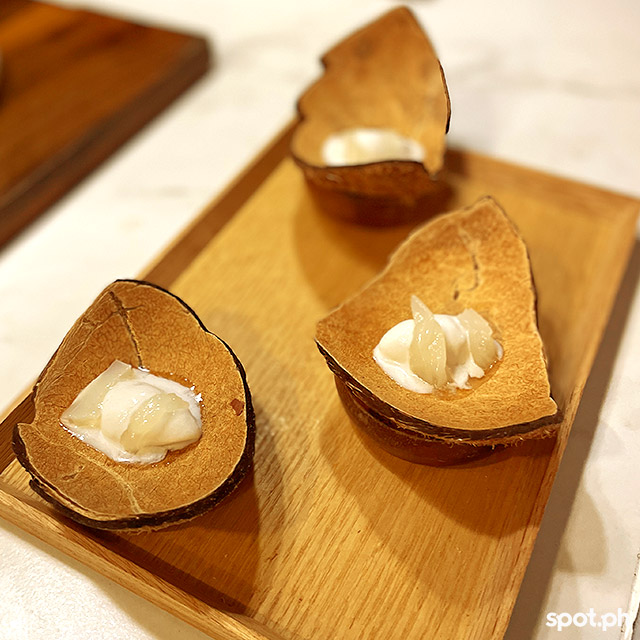
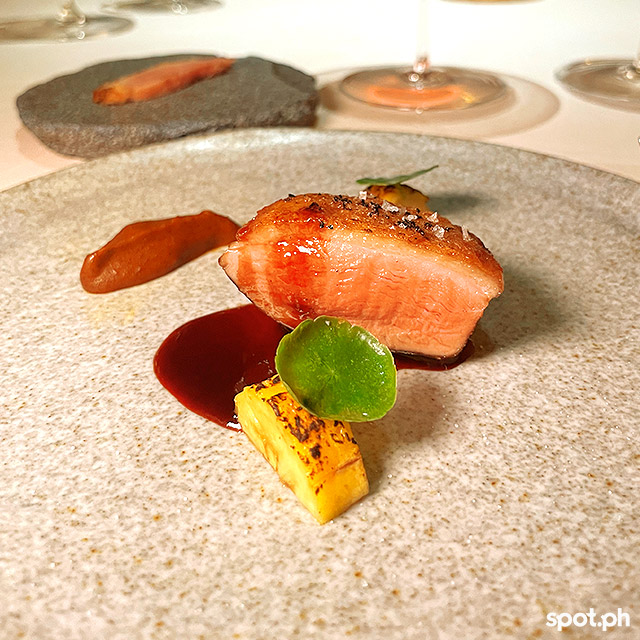
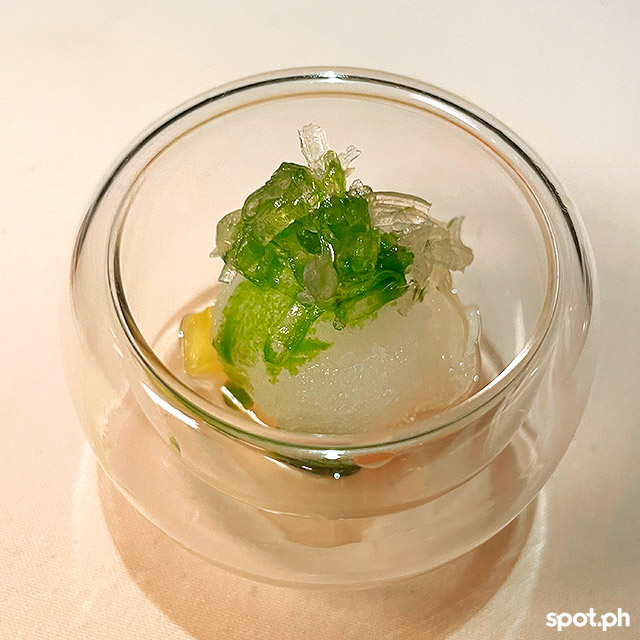
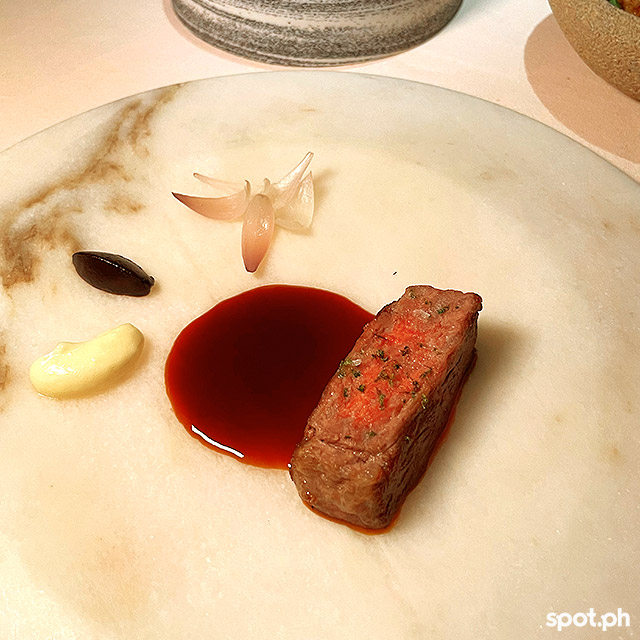
In the Duck Roselle, a mole infused with coconut makes for a hearty, robust-tasting companion to seven-day aged duck whose skin is smoked in cacao husks; a roselle-imbued duck sauce is poured over for a tangy, savory counterpoint. A vessel of Buko Salad serves as a palate cleanser of sorts, uniting their house-made nata de coco and a sorbet of buko water. We’re then served the big gun that is the Wagyu A5, which brings together a chunk of its namesake; Wagyu fried rice lent earthiness by mushrooms; and a one-bite Wagyu tartlet.
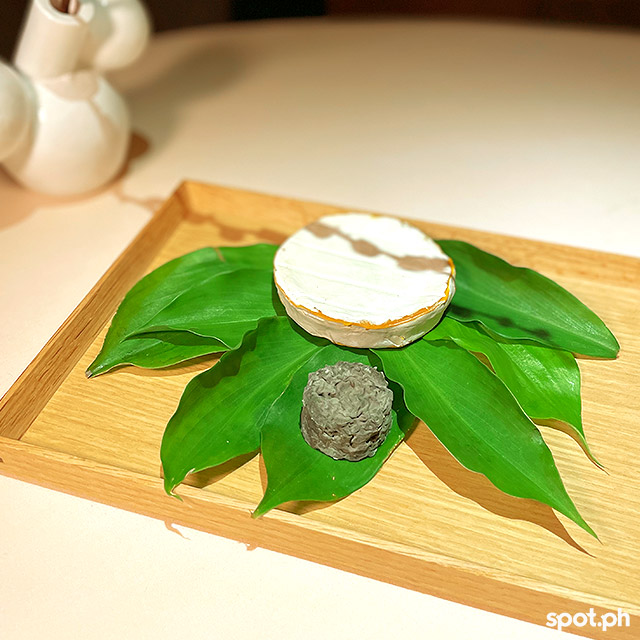
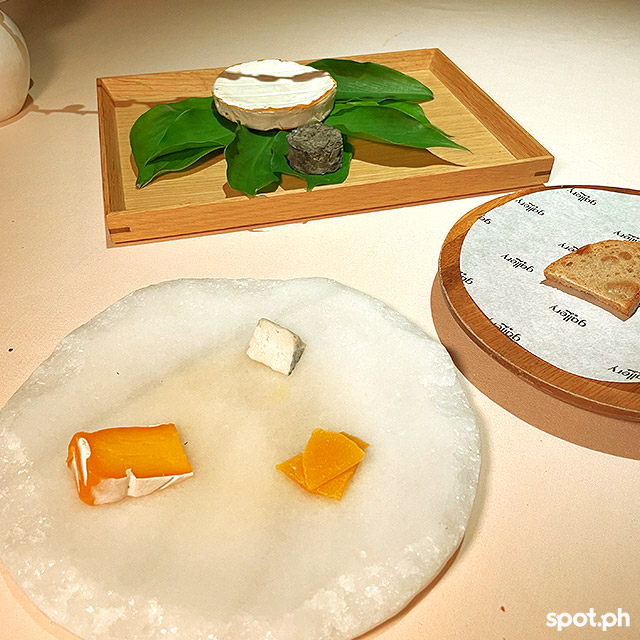
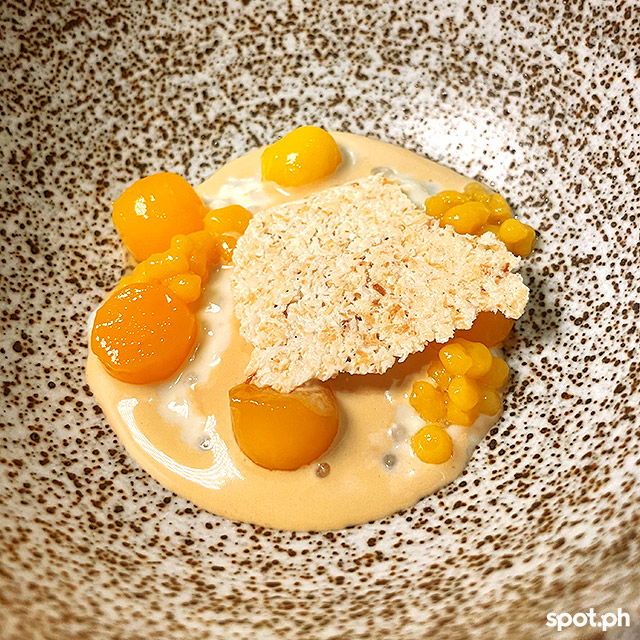
The team’s willingness to push boundaries is especially evident in Our Cheeses, where they present cheeses made in-house using coconut in place of dairy: Orange Kamote, their take on camembert, which is subtly sweet, nutty, and lined with a Penicillium rind; and Coconut Blue Cheese, a sharper number with a touch of pungency, similar to a mild blue. The Mucilage dessert from their previous cacao menu makes a comeback, followed by the more on-theme Coconut Sago—a pudding of ginger-infused coconut cream, latik ice cream, mango, and pearls made of tapioca and coconut milk. Petit Fours, in the form a chocolatey version of Chele’s famous mini bibingka cheesecake, helps conclude the ride that was.
Coconut is one of those things that's so abundant and commonly used in these parts that it's easy to take for granted. The Gallery by Chele team reminds us to do otherwise—and in showing us all of the possibilities with coconut, they're also helping diners rediscover and get to know the subject matter better.