


(SPOT.ph) We've all been ordering a lot of food for delivery lately, and it was helpful to rethink the way we store leftovers. But how about what we refrigerate? Many folks think it's a no-brainer: Produce should automatically be refrigerated, while dry ingredients automatically stay out. But that's not always the case. Here, we round up a few common ingredients that are better left outside the fridge.
Keep these types of food outside the refrigerator:
Cucumbers

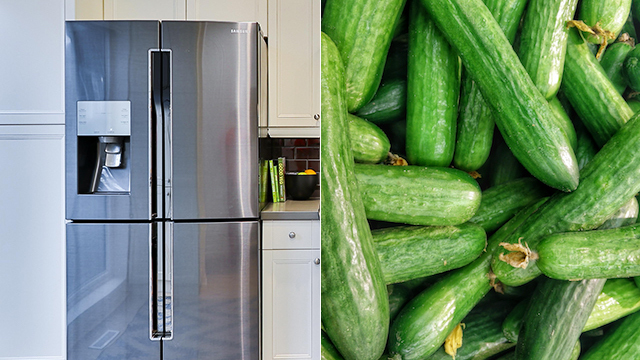
We're surprised, too, but cucumbers are actually best stored at room temperature rather than the refrigerator. According to the University of California, Davis' College of Agricultural and Environmental Sciences, they can easily develop "chilling injuries" such as water-soaked areas, pitting, and accelerated decay when stored below 10°C.
Tomatoes

In general, refrigerating these fruits (yes, fruits) can cause their flavor-producing enzyme to shut down and a mealy texture to develop when they're refrigerated. Still, if your tomatoes are already perfectly ripe, you can refrigerate them for up to three days to extend their shelf life—just allow them to come to room temperature before serving.
Potatoes

According to Nidirect, keeping potatoes in the fridge can lead to the development of acrylamide—a chemical that can harm your health—when the spuds are baked, fried, or roasted at high temperatures.
Melons and watermelons

Uncut ones, that is. Keeping them on the counter not only makes for better flavor, it also better keeps their antioxidants intact. Once cut, you'll have to keep them in the fridge for three to four days.
Onions

According to Huffpost, the cold and humid temperature of the fridge converts the starches in the onions into sugars, rendering them soft and soggy. Your best bet is to keep them in a cool, dry, and ventilated spot in your pantry.
Garlic

Kept in a cold environment, garlic can begin to sprout, rendering it bitter-tasting. It can also lead to their deterioration and the growth of mold. Better yet, store garlic room temperature in a dry, dark place with ample air circulation.
Basil

Got some fresh basil from your garden or the market? You might think to store them in the fridge, but author Harold McGee says they're actually susceptible to damage from the cold. Instead, you can snip off the bottoms of the stems, then place them in a jar, or a jar with water, at room temperature.
Bread

While some people think refrigeration can slow down mold growth in bread, doing so can actually cause its starch molecules to recrystallize—thus making for a hard, stale loaf. If you must extend its shelf life, a better option is to wrap it in an airtight container or bag, then freeze it.
Hey, Spotters! Check us out on Viber to join our Community and subscribe to our Chatbot.
this strange new world.