

(SPOT.ph) Our Korean neighbors may have won our hearts via K-Pop groups, K-Drama, and samgyeopsal, yet—going by the sheer number of restaurants and the influence the cuisine’s made on our own—nothing beats the hold that Chinese food has over the Philippines. Sure, all sorts of Asian cuisine are available in the Metro—we are a hotpot of cultures, after all—but there’s something about going back to the basics of slurping hot bowls of noodles, fighting over the last piece of siumai, and painstakingly trying not to cringe at the fried pigeon staring at you from the window that’s always worth remembering. It also is worth noting that most, if not the entire population of the country, were first introduced to other types of Asian cuisine by way of the Chinese. Not only can you find a Chinese restaurant in pretty much every city, but we also have the oldest Chinatown in the world as well. Our deep ties with the culture add a distinct touch to our definition of Filipino-Chinese cuisine, one that has evolved through the centuries alongside our influences from Spain and the like.
Also read:
The SPOT.ph Guide to Korean Food
Food Crawl: Tried-and-Tested Places to Eat in Binondo (2018 Edition)
The Origins of Chinese Food
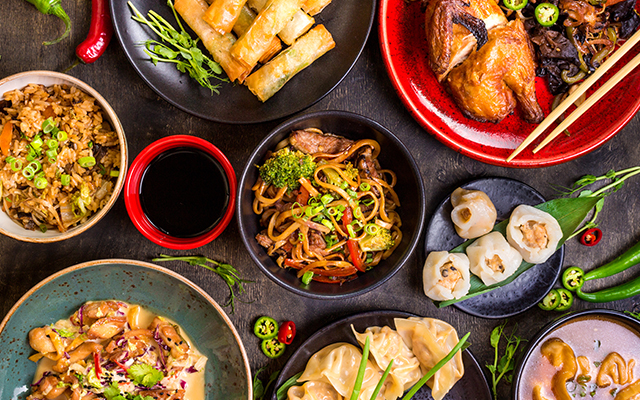
As early as the 11th century, China had already been doing trade in the country. By the time the Spanish arrived, the Chinese had long been well established. In 1594, Binondo was established and up to this day remains to be the world’s oldest Chinatown. Chinese settlers—longing for a taste of their home—shared their cooking as well as techniques and incorporated ingredients that were locally available to replace those that weren’t. Given this fact, it’s no wonder we hardly think of Chinese cuisine as foreign—the culture and its cuisine are deeply ingrained into our own. To date, the pillars of Chinese cuisine are known to be the “Eight Great Traditions”; these are some of China’s most influential and popular regions when it comes to its cuisine. However, among the list, the most known in the Philippines are the following:
Cantonese
Cantonese is a type of cuisine popularized in Hong Kong and is one of the most common types you can find in the Philippines. It emphasizes the minimal use of sauces in order to enhance the dish’s natural flavor. A popular form of Cantonese cuisine is, of course, dim sum, bite-sized portions that are either fried, baked, steamed, or stewed.
Sichuan
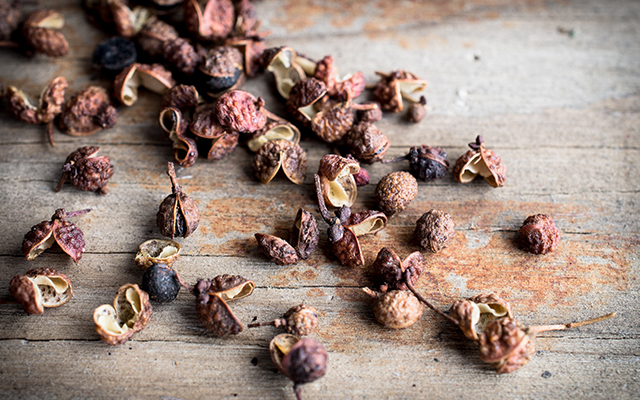
Fans of spicy eats may gravitate towards Sichuan cuisine, sometimes also romanized as Szechuan or Szechwan. The cuisine hails from the Sichuan province located in the southwestern part of China and is known for the use of garlic and various types of chili peppers. The Sichuan pepper—known for its numbing sensation—is often used to create mala, a spicy type of seasoning.
Fujian
Last but not the least is Fujian cuisine. If you’ve met a Filipino-Chinese individual then you’re most likely familiar with their backstory and how their ancestors came all the way from Fujian province. Considering the fact that the province is located near the sea and the mountains, this particular take on Chinese cooking focuses on seafood such as fish, turtle, and shellfish, as well as woodland delicacies like mushrooms and bamboo shoots.
Chinese Food Traditions and Etiquette
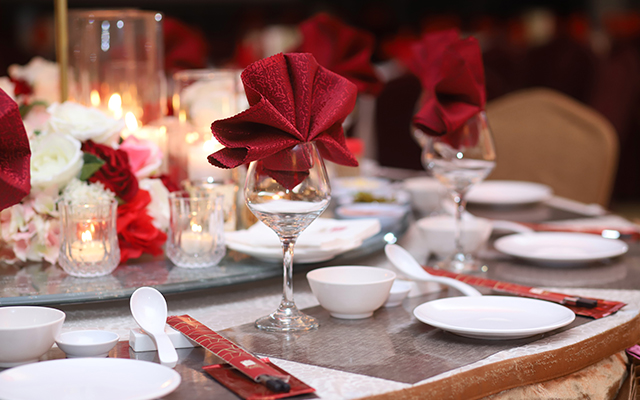
The Chinese typically dine on large round tables with a Lazy Susan on top. In traditional Chinese restaurants, the place setting consists of a small teacup, a large plate wherein a smaller plate and empty bowl is placed on top, a set of chopsticks (often with a chopstick rest)—Chinese chopsticks being distinct from its Japanese and Korean cousins due to its length and blunt ends—and a soup spoon. If not found at the table, a small sauce dish may be requested depending on the final set of dishes to be ordered.
Regular meals typically consist of soup, rice or noodles, and three to two hot dishes. However, in a formal setting or celebration, additional dishes may be served as well as several cold appetizers. In the Philippines, soup is often served before the main course, unlike China’s varying practices.
Also read: The SPOT.ph Guide to Pizza
Chinese Food Side Dishes
Depending on the region, side dishes are either served cold or hot. In the Philippines, these are the popular side dishes you’d often see on top of a Lazy Susan:
Egg Drop Soup
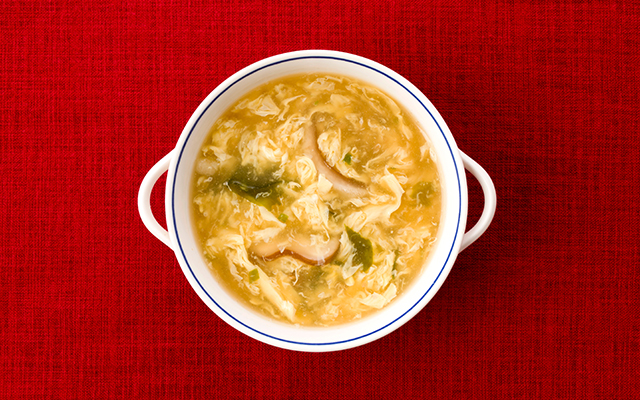
Just like in the United States, Egg Drop Soup is a staple in the Philippines. The soup is often made by adding a thin stream of beaten eggs to a boiling broth—typically with black or white pepper, scallions, and tofu—until thin silken strands appear. Its light consistency is often the best way to start a Chinese feast.
Assorted Cold Cuts
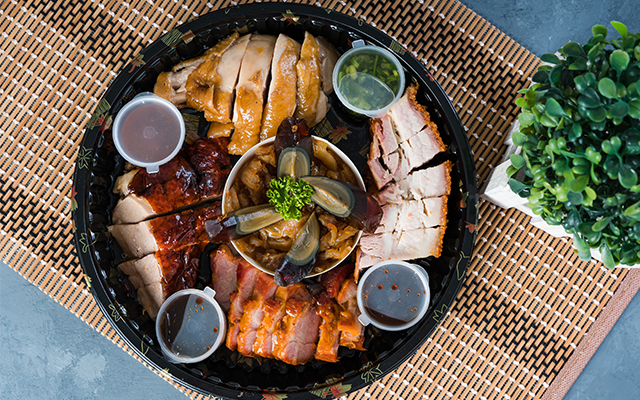
As the Chinese are firm believers of balance, it would only make sense to also have side dishes in a cold variety. Cold cuts are similar to the French hors d'œuvre in that it is also consumed prior to the main course. Among the usual lineup are slices of century egg, which is a preserved delicacy that traces its origins from the Ming Dynasty; jamon; asado; lechon Macau and strips of jellyfish.
Dim Sum
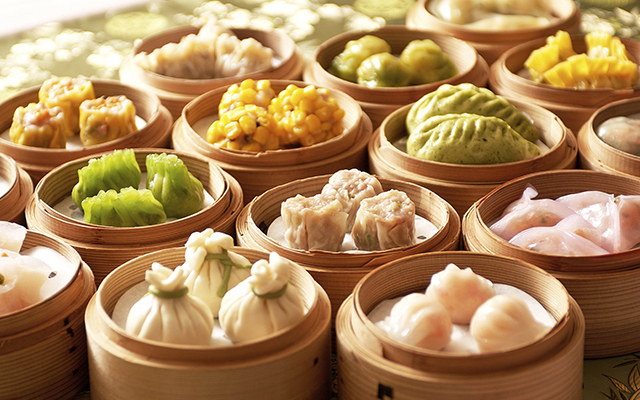
Arguably the most popular side dish in Filipino-Chinese cuisine, dim sum traces its roots to Cantonese cuisine and is a series of small plates meant to be consumed during brunch. However, the consumption of dim sum can be varied, to say the least, as most if not all of the Chinese restaurants in the country serve dim sum from opening until closing. Fan favorites are usually siumai (in both the shrimp and pork variety), crispy fried wontons, the soupy Xiao Long Bao, and of course, chicken feet.
Chinese Food Main Courses
The Chinese firmly believed that there ought to be more than one main dish when at the table. Most celebrations and formal occasions tend to go for seven dishes or more as a sign of prosperity. Here are some of the top choices:
Peking Duck
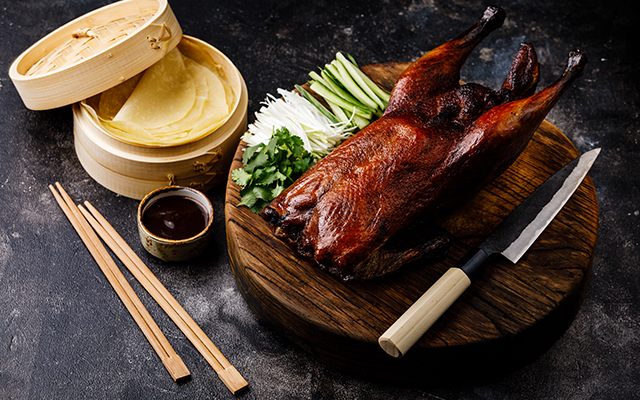
One of the most notable dishes in Filipino-Chinese cuisine, Peking duck is a roasted duck that’s usually carved tableside during meal service. Most Chinese spots offer the dish “two-way” or “three-way”, where they whip up spinoff dishes using the duck slices and the remaining bits. The most common way to have the duck is as part of a wrap, where slices of skin-on duck are topped in sweet bean sauce and topped with spring onion. In the succeeding “ways”, the remaining duck meat is chopped and stir-fried in sweet bean sauce and served with cabbage leaves. Its gamey flavor profile is well-balanced by the sweetness of the sauces it pairs with, leaving you with the need to have a second bite. Some restaurants even cook soup using the remaining carcasses and serve it on your table.
Birthday Noodles
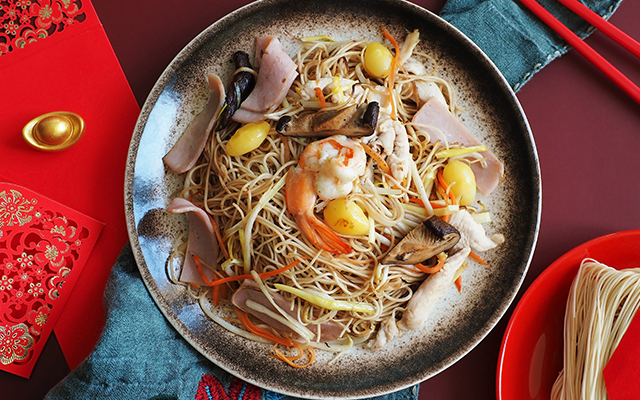
Have you ever heard of the phrase, “You must eat noodles on your birthday to ensure long life?” Well, that statement most probably originated from someone’s Chinese ancestor. Noodles in Chinese lore signify longevity and consuming it on one’s birthday is an important ritual to extend one’s life. While each restaurant has its own version, typically one would find chicken, seafood, vegetables, and quail eggs in this dish.
Fried Pigeon
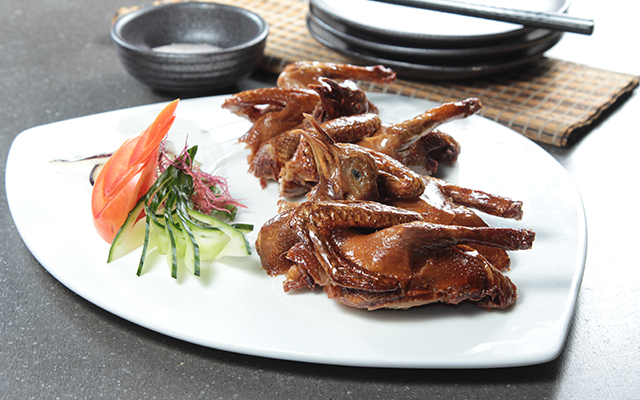
No, it’s not a tiny chicken. It’s a squab, or what you’d commonly call, a pigeon. The Cantonese dish is usually served during banquets or celebratory events in which the bird is braised in soy sauce, and rice wine, and seasoned with a mixture of spices before being roasted to ensure crispy skin and tender meat. In case you’re apprehensive to try the dish, don’t fret; it’s actually very similar to the taste of chicken but with a more gamey flavor profile and is best drizzled with a mixture of salt and white pepper.
Chinese Food in Pop Culture
When it comes to pop culture, one would think of China’s legacy to be that of countless martial arts movies, Jackie Chan, and the like. True, they are the more notable contributions but there are also a ton of content about its cuisine. In 2018, a short film entitled Bao was played before the Incredibles 2 movie. The film was produced by Pixar Animated Studios and tells the story of an aging Chinese-Canadian who was experiencing empty nest syndrome when she receives a second chance at motherhood via a steamed bun come to life. The short film went on to win Best Animated Short Film at the 91st Academy Awards.
Popular Chinese Food Places in Metro Manila
By now you’re hankering for some dim sum or Peking duck. And while there are a ton of Chinese spots all around the Metro, nothing beats the classics that have passed the test of time, and of course, everyone’s tastebuds. These are some of the iconic places you ought to visit:
Gloria Maris Shark’s Fin Restaurant
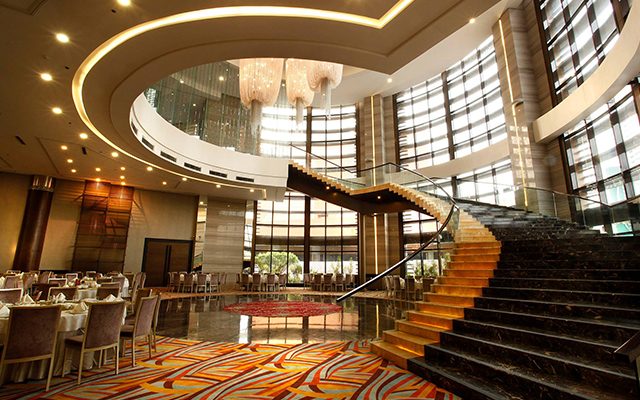
You’ll most likely recall a couple of celebrations held at Gloria Maris if you grew up in a Filipino-Chinese home. More or less an institution at this point, the well-known Chinese restaurant in San Juan is divided into two sections: the lauriat-style dining which is your typical round table setup and multi-course meal, and the dim sum and hotpot section for more casual fare. Get yourself the sweet and savory Chinese Style Beef Tenderloin (starts at P850) or the Crispy Pork (P620) which deserves an ASMR moment on its own for a quick bite during an otherwise hectic lunch hour. But should you decide to dine at night, the Crispy Fried Pigeon (P680/order) and Peking Duck 2 Ways (P1,800 for a half order / P3,600 for a whole duck) deserve a seat at the table. Just be wary for your blood pressure!
Gloria Maris Shark’s Fin Restaurant is at Greenhills Shopping Center, Missouri Street corner Connecticut Street, San Juan City. For orders and reservations, contact 0998-570-0921 or 0917-872-4410. Casual dining is open from 7 a.m. to 11 p.m. while the main dining area is open from 11 a.m. to 2:30 p.m. and from 6 p.m. to 10 p.m.
For more information, log onto Gloria Maris’ Facebook page.
Choi Garden Seafood & Sharksfin Restaurant

Another popular haunt in San Juan is of course Choi Garden Seafood & Sharksfin Restaurant. The boxy building with its instantly recognizable red LED lights is a bright beacon of light during nights when you’re on the hunt for a filling meal. Warm yourself with a steaming bowl of the gelatinous Shark’s Fin Sea Cucumber Soup (P250/cup) or perhaps the Century Egg Lean Meat Congee (P180), both of which are perfect for the rainy season. Oh, and in case it’s your birthday, be sure to wear red and order a heaping plate of Birthday Noodle (P380) to guarantee you that long and prosperous life.
Choi Garden Seafood & Sharksfin Restaurant is at 12 Annapolis Street, Greenhills, San Juan City. For orders and reservations, contact 8727-6042. Choi Garden Seafood & Sharkskin Restaurant is open daily from 9 a.m. to 10 p.m.
For more information, visit Choi Garden’s Facebook page.
East Ocean Palace
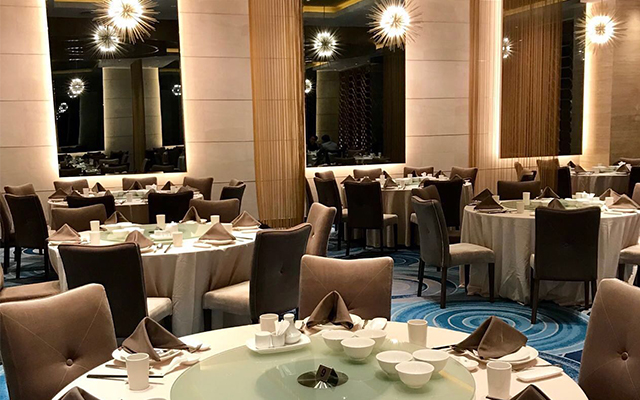
East Ocean is perhaps the most extra when it comes to Chinese dining. And by extra, we don’t just mean the place, but also the price point as well. From the folks that brought us Century Seafood Restaurant, East Ocean’s set meals have a starting price point of P24,800 for a group of 10 people. But if you don’t feel like shelling out an arm and a leg for your meal, ala carte options are available as well. Fancy going back to the basics? Their Sweet and Sour Pork (starts at P500) is consistently more reliable than the either too sweet or too sour takes you might find at other spots. Another popular dish to try is the Baby Pak Choi Simmered in Superior Chicken Broth (starts at P500), a light and flavorful vegetable dish for those that want to add greens to their meal. Now, if you really want to be fancy, splurge on the Rock Lobster Sauteéd in Special Sauce (prevailing market price), which is often bigger than one’s hand and served on top of al dente noodles.
East Ocean Palace is at Lot 37 Block 5 Aseana Business Park, Parañaque City. For orders and reservations, contact 8826-4503, 0917-569-2233, or 0999-880-2948. East Ocean Palace is open daily from 11 a.m. to 2:30 p.m. and from 6 p.m. to 10 p.m.
For more information, log on to East Ocean’s Facebook page.
Ma Mon Luk
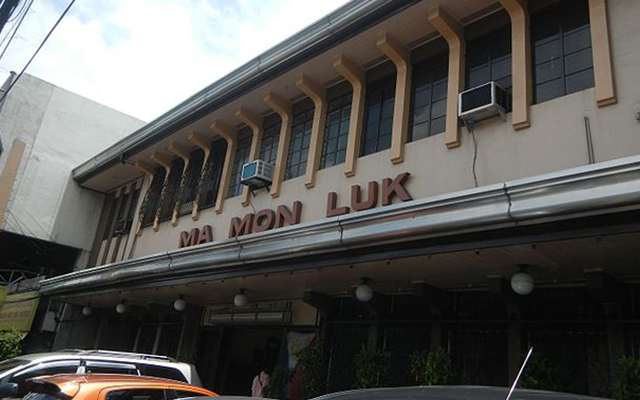
When asked about the best mami and siopao in town, most would definitely point towards Ma Mon Luk. The decades-old establishment located along Quezon Avenue in Quezon City serves authentic versions of both dishes. Their Mami (P150 for regular, P160 for large) is a rich and flavorful bowl that will remind you of weekends spent with your grandparents as you scour the streets of Binondo while their Siopao Special (P90) is a mixture of chicken, asado, and salted egg. Definitely not made out of cat, just kidding.
Ma Mon Luk is at 484 Quezon Avenue, Quezon City and 545 Quezon Boulevard, Manila. For orders, contact 8712-3560. Ma Mon Luk is open daily from 8 a.m. to 7 p.m.
For more information, visit Ma Mon Luk on Facebook.
Ying Ying Tea House
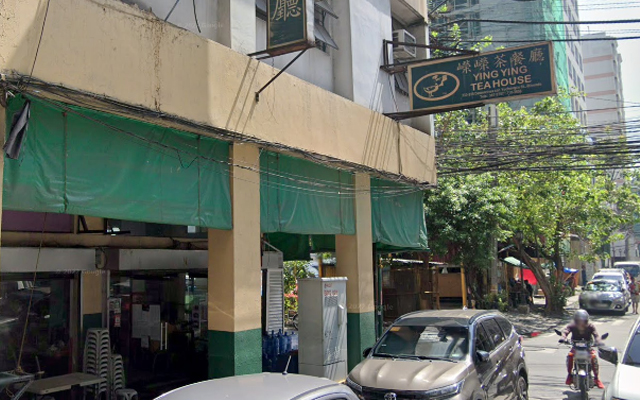
Those who love going on food trips in Binondo will definitely recall pre-pandemic late nights, think 1 a.m. cravings, at this corner tea house located along Yuchengo Street. The multi-level tea house specializes in various dim sum offerings like the savory and spicy Chicken Feet (P105), the soupy Shaolong Bao (P110), and a fluffy and moist Radish Cake (P105). They also have a variety of rice and noodle dishes in case you’re visiting during regular dining hours.
Ying Ting Tea House is at 233-235 Dasmariñas Street corner Yuchengco Street, Binondo, Manila. For orders, contact 8241-6323 or 8710-3856. Ying Ying Tea House is open from 7 a.m. to 10 p.m.
For more information, visit Ying Ying Tea House on Facebook.
Hey, Spotters! Check us out on Viber to join our Community and subscribe to our Chatbot.