

Who is Hayao Miyazaki, Recipient of Ramon Magsaysay Award?
The Japanese animator is one of the latest recipients of the honor.
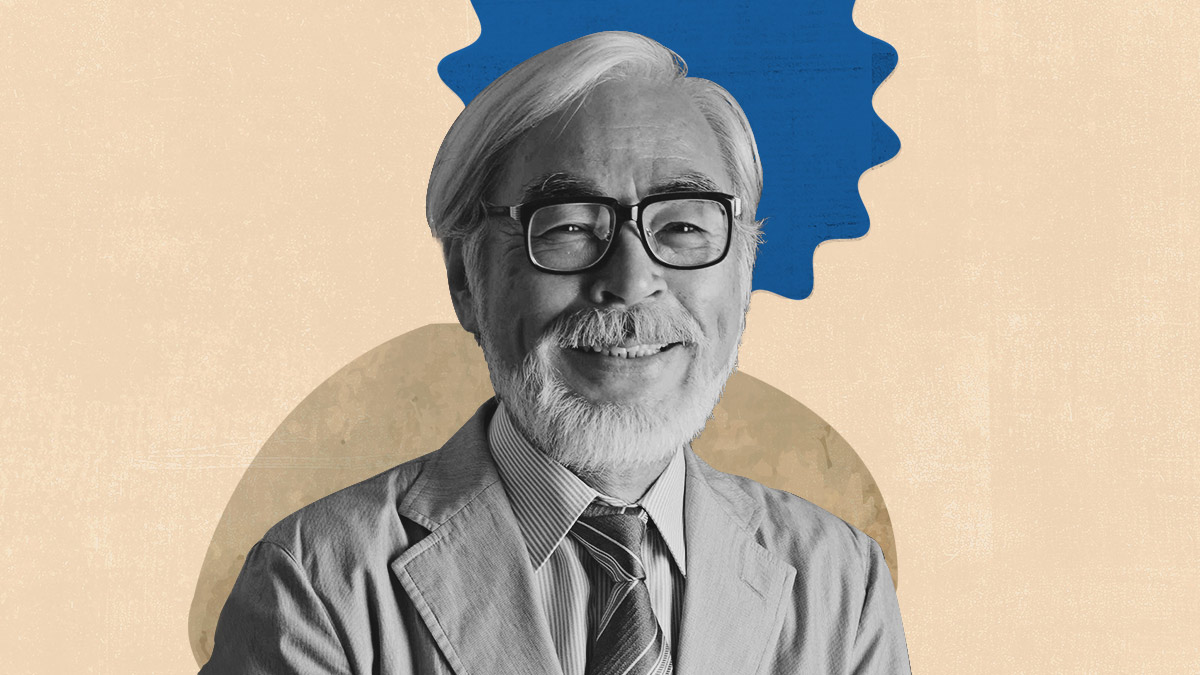
(SPOT.ph) Fans of Studio Ghibli films are no stranger to Japanese animator and director Hayao Miyazaki. Vibrant and thought-provoking, his work transcends age groups, nationalities, and genders, and has gone on to spark conversations on the human condition with the help of his empowered and strong-willed main characters. The veteran filmmaker has received awards for his contributions to the world of cinema and animation, the latest one being a Ramon Magsaysay Award or the Nobel Prize of Asia. Here's why he got it.
Also read: Studio Ghibli's Grave of the Fireflies to Stream on Netflix Soon
Who is Hayao Miyazaki?
Born on January 5, 1941 in the town Akebono-cho in Hongo, Tokyo City, Empire of Japan, Miyazaki fell head over heels in love with art and animation during his final year of middle school, so much so that he snuck out to watch Japan's first feature-length animated film in color, Panda and the Magic Serpent (1985), instead of studying for his college entrance exams.
He later went on to work for Toei Doga, now known as Toei Animation, for eight years, from 1963 to 1971. At this time, he went on to work on anime, television anime, full-length animated feature films such as Gulliver's Travels Beyond the Moon (1965), Wolf Boy Ken (1963), and The Great Adventure of Horus, Prince of the Sun (1968).
After Toei, he moved to A-Pro and Tokyo Movie Shinsha. After working non-stop for animation companies, Miyazaki took a break and created the manga Nausicaä of the Valley of the Wind, which was then adapted into an acclaimed full-length film. Following the success of the adaptation, Miyazaki decided to co-found an animation production company.
In 1985, he co-founded Studio Ghibli with life-long collaborator Isao Takahata to create many animated films that are still making an impact on audiences nearly four decades later. My Neighbor Totoro, Kiki's Delivery Service, and Princess Mononoke are just some of the studio's earlier offerings.
Studio Ghibli's later works released in the 2000s such as Spirited Away, Howl's Moving Castle, Ponyo, and The Wind Rises incorporated new technology for animation, without taking away from the charm and humanity of traditional animation. Newer films also caught the eye of companies and audiences abroad, resulting in global releases and a growing fanbase internationally.
Hayao's body of work has been used in the scholarly setting, inspecting both its function and form. Animation schools, scholars, and students look to his films for best practices, techniques, and technicals, and those studying texts, humanities, and social sciences pick his work apart, seeing as they dabble heavily in the human condition during war, certain economic situations, and under societal expectations.
Also read: These Real Locations in Japan Inspired Studio Ghibli Classics
What is the Ramon Magsaysay Award?
Called the Nobel Prize of Asia, the Ramon Magsaysay Award is an annual award bestowed on "outstanding individuals and organizations whose selfless service has offered their societies, Asia, and the world successful solutions to some of the most intractable problems of human development."
The award was named after the seventh Philippine President Ramon Magsaysay, who earned the admiration, respect, and affection of the Filipino people for his commitment to improve their lives through honest governance. Known for his humility and simple lifestyle, the politician believed in respecting the dignity and importance of each and every person.
Also read: Studio Ghibli Films Are Coming to Netflix Sooner Than You Think
Who receives the Ramon Magsaysay Award?
Recipients of the Ramon Magsaysay Award are annually selected by the Ramon Magsaysay Awards Foundation (RMAF) board of trustees. Awardees are presented with a certificate and a medallion embossed with an image of Ramon Magsaysay facing right in profile.
The award was conceived to honor the incredible contributions of individuals and organizations in service to the people of Asia, regardless of race, gender, religion, or nationality without anticipating public recognition. Over 344 awardees have received the honor. This year's awardees include war doctor Nguyen Thi Ngoc Phuong from Vietnam, thought leader and scholar Karma Phuntsho from Bhutan, rural doctors group Rural Doctors Movement from Thailand, and Hayao.
From 1958 to 2008, there were six categories; Government Service; Public Service; Community Leadership; Journalism, Literature, and Creative Communication Arts; Peace and International Understanding ; and Emergent Leadership. Starting 2009, awardees were honored without categories.
According to the official RMAF website, confidential nominators may nominate awardees annually. "Nominations are carefully investigated and the Awardees are determined after rigorous evaluation by the RMAF board of trustees. RMAF does not accept nominations from the public," it adds.
Why was Hayao Miyazaki selected for the Ramon Magsaysay Award?
In its 39 years as an animation production company, Hayao under Studio Ghibli has endured in creating animated films expressly for children, all the while tapping a broader market with his works' deep understanding and respect for the human condition and history, engaging viewers to reflect on their own reality.
According to the Ramon Magsaysay Award announcement: "Miyazaki and Studio Ghibli have set the bar higher by aiming for a segment of the audience that could be the most difficult to engage and please: children. But Miyazaki has never lost his original and main focus: for him, children comprise a clear and critical audience capable of imbibing complex issues if their imaginations can be suitably provoked and directed."
The Japanese filmmaker has always accorded his young audience respect, refusing to shy away from complicated plots or stories. His art and animation are a reflection of this commitment, making complex topics comprehensible to children, be it about "protecting the environment, advocating for peace, or championing the rights and roles of women in society."
The board commends Miyazaki's "lifelong commitment to the use of art, specifically animation, to illuminate the human condition, especially lauding his devotion to children as the torchbearers of the imagination, to whom he has passed the light and spark of his own."