
Finding His Voice: Pepe Diokno and His Path to 'Isang Himala'
"After three films, I realized that I didn't know who I was."
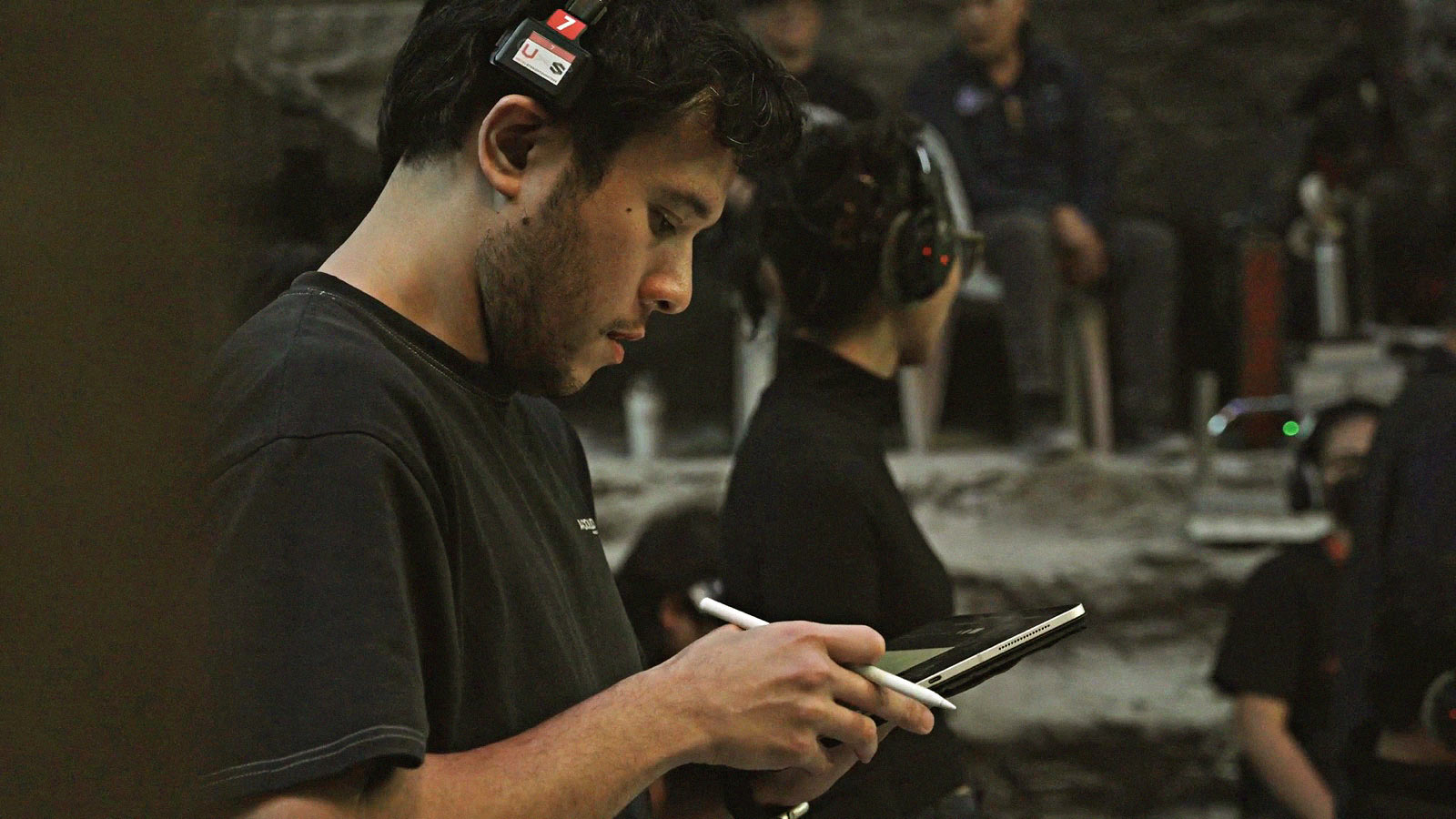
(SPOT.ph) “I really admit that in hindsight, that I started much too early making films,” Pepe Diokno reflects on his directorial debut, Engkwentro, which was part of the Cinemalaya lineup back in 2009. Fifteen years ago, the then-22-year-old Diokno made headlines by competing in the Orizzonti section of the Venice International Film Festival and winning the Lion of the Future Award—a prize recognizing the arrival of an exciting new talent to watch.
Now, Diokno looks back with skepticism. “I don’t know what I was thinking. I don’t know what this fire up my butt was. I don’t think I really knew who I was when I started. I mean who does, at 21, 22?”
Pepe Diokno reflects on success, going on hiatus, and finding his way back to filmmaking
After the Venice International Film Festival, the prize and its accompanying success became more of a burden for the young filmmaker. “It brought me to many different places,” he says. “But at the same time, I didn’t know what to do with that success.”
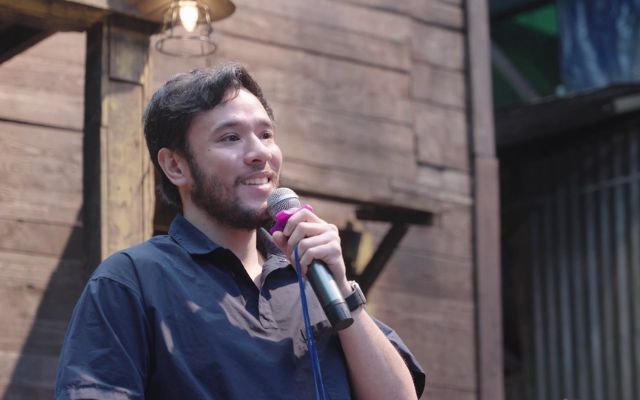
He followed Engkwentro with two other films. “I think I was really trying to figure out who I was as a filmmaker,” offers Diokno. In 2014, he put out his sophomore effort, Above the Clouds, a drama starring Ruru Madrid as a moody teenager on a hiking trip with his estranged grandfather, played by Pepe Smith. It certainly didn’t seem to share the same ambitions as Engkwentro, offering little of the edge that might have turned heads five years prior.
His third film, produced for the 2015 Cinema One Originals festival, was Kapatiran. Diokno calls it an experimental film, stitching together scenes that depict the lives of members of a prominent law school fraternity. Back then, the rumor was that the final film differed significantly from the submitted script, with Diokno making considerable changes in the edit and veering away from a traditional narrative.
“I was going left and right, and after three films, I realized that I didn’t know who I was, and I didn’t have enough skills to properly call myself a filmmaker.”
This realization would lead to his eight-year hiatus from cinema. He instead ventured into the world of advertising. “I did everything—from making six-second cat videos for Instagram, to recipe videos, then eventually, [I] got into making short films for a fast food chain.”
He was “very grateful” for the experience, as it allowed him the space to reflect on himself and learn more about his craft. Although he wasn’t making movies, Diokno devoted himself to honing his skills. “Being on set every month allowed me to try different camera movements and camera styles that I wouldn’t have tried before. I used every project to learn something new about color, blocking and camera movement.
"I read a lot of books, watched a lot of movies. I was becoming more confident in being able to say what I like and what I don’t like.”
Beyond his professional growth, this was also a period of personal development for Diokno. “In those eight years, I came out. To myself, my friends, to family. I just started accepting myself more, but of course, that’s still a process.”
This would all culminate in him starting to feel ready to get back to filmmaking, and an opportunity soon presented itself. “I got invited to pitch for a movie before the pandemic—that was GomBurZa. I really felt like I was running empty on ideas for films, so I was very grateful that the invitation came.”
A return to filmmaking
GomBurZa marked his return to cinema, competing in the 2023 Metro Manila Film Festival and winning seven awards, including Best Director for Diokno. The movie, produced by JesCom, is a full-blown historical period piece studying the execution of three priests that ended up being one of the catalysts for revolution against the Spanish.
Diokno admits that, in the beginning, GomBurZa wasn't top of mind as a potential film subject. “I asked myself, why make a film about these three priests when we know from our history that religion was used to colonize the Philippines? But the more I read about their story, the more I realized that yes, while religion was used to colonize the Philippines, at the same time, it’s also within that framework that we discovered our national identity. It’s where the term ‘Filipino’ first came. It was the first time we started to question why we aren’t equal to our Spanish colonizers.”
And this experience solidified Diokno’s commitment to becoming a filmmaker again. “Making the film came with a lot of challenges. But yeah, it was after I did GomBurZa that I thought, ‘yeah I really love this—this thing called filmmaking.’”
Discovering Isang Himala, silence, and hubris
This brings us to now, with Diokno busy with Isang Himala, an adaptation of the stage musical that itself was adapted from the much-revered film Himala, directed by National Artist Ishmael Bernal and written by National Artist Ricky Lee. The musical, staged by the Sandbox Collective back in 2018 and 2019, was directed by Ed Lacson Jr. and written by Ricky Lee, with music and lyrics by Vincent A. de Jesus. It garnered plenty of acclaim back in its original staging, both from award-giving bodies and the audiences that got to see the “miraculous” rain effect executed onstage.
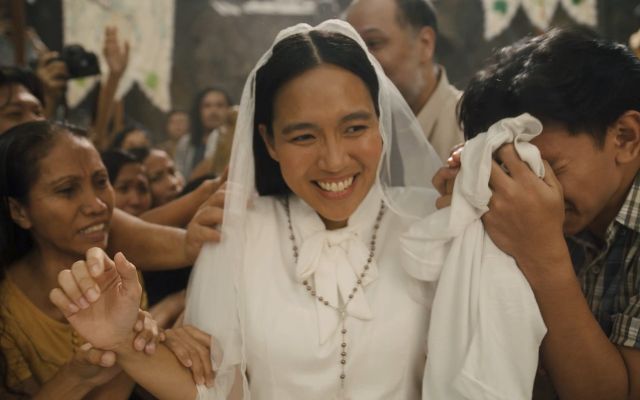
Diokno happened to be one of those people captivated in the audience. “When I first saw Himala in 2018, it was sort of like an anti-musical. I was talking to the director of that production, Ed Lacson, and he told me he doesn’t like musicals. If you watch it, it’s very minimalist in its staging.”
“What I connected with was how expressionist it was; you really saw what was inside of the heart and soul of each character, including Elsa," Dioko says. In conversations with Ricky Lee and Vince de Jesus, he learned that the key difference between the film and the musical lies in their approach to silence. "They looked at the 1982 film again, and there’s so many silences in the film. A lot of it is non-verbal, and you don’t know what’s inside Elsa’s head. They were like, ‘what if we put all that into song?’ That’s the musical.”
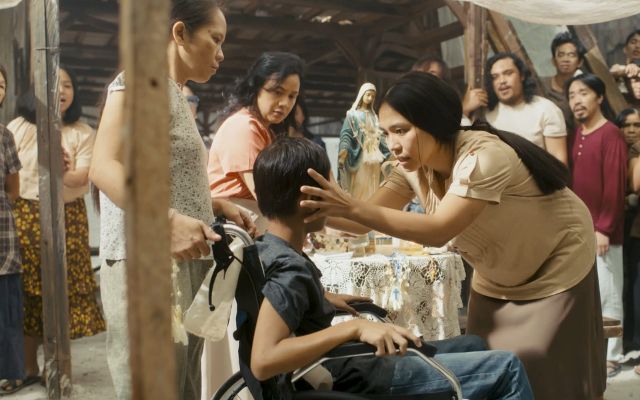
Diokno also appreciates how the musical expands the story of the film. “It’s not just Elsa who was given songs; it was also her mother, also her best friends, also the people of the town. I walked away from that musical thinking it was just as much about the town as it was about Elsa. On that level, it becomes a greater commentary on who we are as a people.”
“The whole production stuck with me for years, and I always had the ambition to bring it to film,” he says.
And so, Diokno is back on the grind. Unlike GomBurZa, Isang Himala was submitted as a script, which means that his ambition to bring the play to screen comes with the extra challenge of the festival's tight production schedule. “With the MMFF, everything is put under a magnifying glass. Everything is rushed and amplified. They announce the finalists in July, and you’re expected to have a film out in December.”
But Diokno carries on. He draws a little bit on his experience with GomBurZa, trying to explore a theme that emerged during the film's screenings around the country. “In GomBurZa, there was a line that always came up in the talkbacks: ‘Malas ang Pilipinas.’ I thought a lot about that line and about how as Filipinos we tend to think of tragedies, of misfortunes as malas. It’s something that just happened to happen: ‘Ah malas lang ‘yan.’ When you read about tragic stories in the Western traditions, tragedies are always caused by tragic flaws within the characters. Hubris.”
“When I saw the [Himala] musical, I saw all of these different characters and their hubris coming out, and being said out loud through this wonderful music by Vincent de Jesus and Ricky Lee. I think that’s something new with this musical and this production. That’s why I felt it was so fresh—hubris is not something we tackle a lot in Filipino stories, and in Filipino movies especially.”
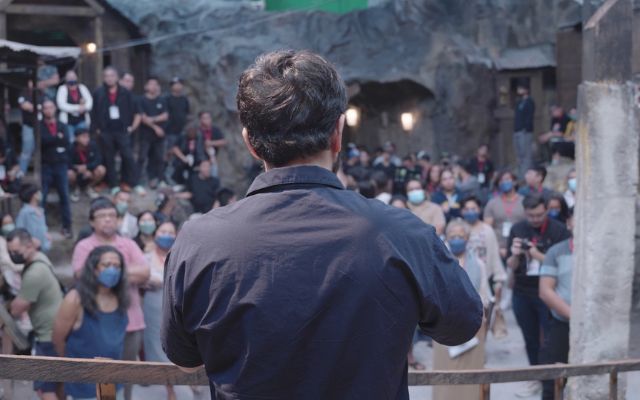
And so, Diokno once again takes on the beast that is the MMFF. Whether this will be another triumph for the filmmaker, or an instance of hubris, remains to be seen.
Isang Himala opens December 25 as part of the 2024 Metro Manila Film Festival.
Also read: Must-Watch Movies This December 2024