

Visions Volume Two Is Star Wars for Non-Star Wars Fans
Anime battles with lightsabers. 'Nuff said.

(SPOT.ph) As far back as 1983, the phrase “from a certain point of view” has served as a strong thematic undercurrent for the Star Wars media franchise. It was first uttered by Alec Guiness’s Obi-Wan Kenobi, when he attempted to help Luke (and the, at the time, unconvinced audience) accept the fact that Darth Vader was his father, while simultaneously being the figure that killed his father, Anakin Skywalker. “What I told you was true… from a certain point of view.”
You can see this phrase echoed in the Akira Kurosawa/Rashomon-inspired sequences of Rian Johnson’s The Last Jedi, wherein Rey hears the different accounts of the night the New Jedi Order failed, from the master and the apprentice.
The phrase, which has evidently been ingrained in Star Wars’ DNA just as much as the “I am your father” twist has, was always meant to unite the disagreeing Star Wars fan bases to accept cathartic, yet hard to accept, truths of the franchise. And it seems to be that same particular motivation that the new series Star Wars Visions is taking and running with.
The second season of the non-canon animated series continues the mission of the Visions banner: allow outside and foreign animation houses the licensing to the Star Wars property in order to see what stories they can cook up, when not bound by brand image, genre, or the established canon. Star Wars Visions season 2 ups the ante with painterly 2D-animated episodes, stop motion adventures, claymation comedies, and even original Japanese anime. It’s Star Wars from certain points of view that we’ve never seen before.
Also read: 10 Star Wars Shows on Disney+ for Your No-FOMO List
Star Wars Visions Volume 2 Review and Best Episodes
The nine-episode second season of Star Wars Visions is prime Star Wars material for non-Star Wars fans. Even while hitting the franchise familiar themes of family, standing up against oppression and fascism, and knowing when to give into or temper human impulses, each episode in the second season creates new sandboxes for these themes to play around in. (The only way you’d not enjoy them is if you’re Anakin and you don’t like sand.)
You’ve got an episode where a young girl, who dreams of podracing and has a seemingly uncool mom, ends up accidentally joining a mother-daughter podracing contest; all told as a Wallace and Gromit-style skit of endearing hijinks.
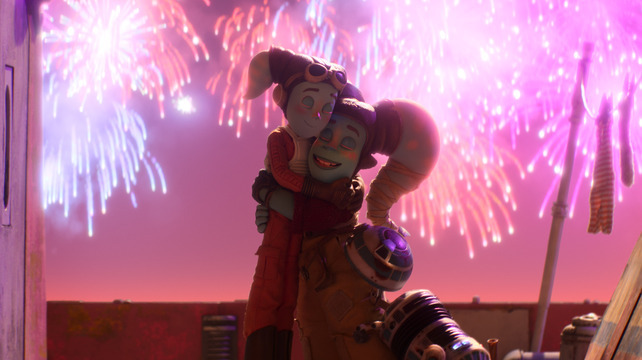
Rather similarly, there’s another episode wherein an older and younger sister from a ravaged community learn to come together and stand against the Empire with their combined might. This one comes packaged in a spirited stop-motion animation display, which works wonders to make the repeated thematic notes between episodes feel more dynamic and invigorated with originality.
Also read: First-Ever Star Wars Film to Be Directed by a Woman Is on the Way
For action lovers, a third of the season centers on stories of the light side versus the dark side (yes, glorious lightsaber battles). However, the episodes truly utilize the animation medium to depict the battle of good versus evil in the galaxy far, far away in a more breathtakingly vivid way.
More than just lightsaber colors, the battles fully depict the engrossing and vibrant moods of the Force, its overwhelming power on individuals, and, as Master Yoda explained, how its energy binds and connects all living beings. The depiction of the Force and lightsaber duels is straight up expressionistic, which is a description you’re unlikely to hear from the live-action Star Wars films.
Each of the nine episodes falls under 20 minutes long, which is the only downside of the series; each episode makes you want to spend a-whole-nother hour or two in the universe. Hopefully, the anthology series gets to revisit certain aesthetics or universes established by these various animation houses in future seasons.
Riots will be had if audiences are not allowed to get more time in Studio La Cachette’s episode six “The Spy Dancer” and Triggerfish’s episode nine “Aau’s Song”—and these are the episodes that are arguably feel the most “complete” narratively.
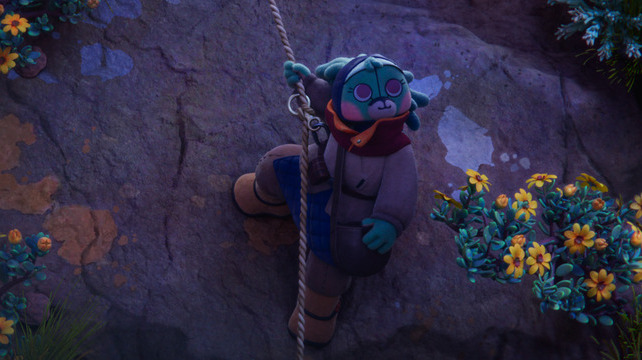
Yet, it can’t be denied that this is the beauty of Star Wars going back to when Luke Skywalker was the singular main character in 1977—the franchise leaves you wanting to spend more time in its world. And now, with increasingly more seasons of Star Wars Visions, we’re not beholden to just one Star Wars universe. There’s dozens more that have yet to be explored.
Also read: 10 Beautiful Places From Movies That You Can Actually Visit