
Review: The Bear Season 3 on Disney+
It's hard to keep the ball rolling after two great seasons.
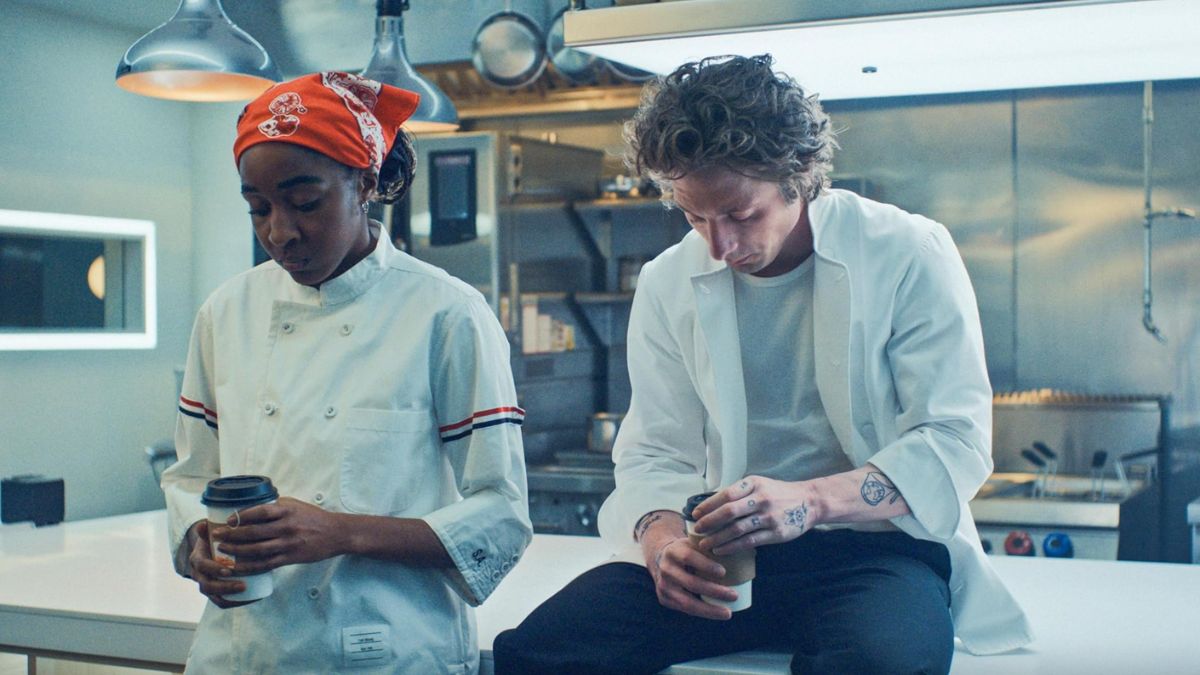
(SPOT.ph) It’s won a ton of awards. It’s made stars out of its actors, with its leading man heralding the rise of a new subspecies of unlikely sex symbol: the “rodent man”. But the true signal of The Bear’s ascendancy into global consciousness is the Philippine arm of Disney+ premiering its third season the same time as the U.S.
I’m kidding...but not really. For the first two seasons of The Bear, I had to pay for a VPN subscription and piggyback onto my U.S.-based brother’s Hulu account just so I could binge-watch the seasons just as they dropped. When I subscribed to Disney+, I kept refreshing and refreshing my search box to see when the local version would start carrying this bracing, inventive restaurant drama. (It finally did—months after the second season dropped, around the time its first season started generating heat from the Emmys and the Golden Globes.)
If you haven’t started following the adventures of a ragtag crew of cooks as they try to open a fine dining restaurant out of what was once a spunky Chicago sandwich shop, I suggest you binge the first two seasons now. The Bear is perfect companion viewing as you peruse SPOT.ph’s latest dining recommendations around the city—a fascinating look at the chaos thrumming underneath the curated elegance of your haute cuisine experience.
Also read: Gallery by Chele's New Tasting Menu Teaches Us There's More to Cacao Than Chocolate
And the fact is, it’s just amazing television. The first season is the perfect base for the drama, in which our troubled hero—Carmen “Carmy” Berzatto (Jeremy Allen White), a chef who bears the psychological scars of his intense training with the best restaurants in the Western hemisphere—returns to the neighborhood joint bequeathed to him by his recently deceased brother (Jon Bernthal) and tries to whip it into something world-class. The Bear is the TV equivalent of getting spattered with cooking grease, but in a good way: It hurts, it makes you jump, but your senses are alive and tingling.
The second season builds on that base beautifully. After overcoming financial and emotional challenges to his plans of renovating what was humble sandwich shop The Beef into fine dining establishment The Bear, Carmy sends his crew out into the world to train with experts at their new jobs, and we watch as their matriculation squeezes their souls, presses down on their psyches to get at the juice of their abilities.
Pressure, pressure, pressure is a constant theme in The Bear. The two standout episodes in the second season spell out that theme painfully. In “Fishes”, we get a clear-eyed look at the pressure of Carmy’s dysfunctional upbringing, as we witness a Christmas dinner at the Berzatto household disintegrate under the manipulations of family matriarch Donna (Jamie Lee Curtis). In the marvelously tender “Forks”, we see family friend and self-anointed “cousin” Richie Jerimovich (Ebon-Moss Bachrach) come into his own—finding his purpose not just as a maître d’ but as a father and a man while he trains in the restaurant of nurturing chef Andrea Terry (Olivia Colman).
The second season ends with Carmy’s rekindled ambitions coming at a steep price: As his crew careens through The Bear’s opening night, his all-consuming quest for excellence comes at the cost of his relationships, fraying his partnership with sous chef Sydney (Ayo Edebiri), damaging his brotherhood with Richie, and sinking his romance with girlfriend Claire (Molly Gordon).
So if you haven’t, go and binge the first two seasons. Then come back to this review. That’s fine. I’ll wait.
Also read: The Manila Film Festival's 12 Shorts, Reviewed
Season 3 of The Bear doesn't quite meet expectations
Done? Okay, I have sad news for you. The Bear’s third season does not measure up to the highs of its first two seasons. I guess it’s always wise to temper your expectations: After the operatic peaks of two seasons, how could any show—effectively reaching middle-age in the life span of streaming—manage to scale those same creative heights?
But in his show’s third season, creator, writer and director Christopher Storer makes some head-scratching choices. The premiere episode, “Tomorrow”, basically serves as a 37-minute recap of Carmy’s journey as a chef...which would be fine, except it feels like a belated way of showing what Carmy had already been telling his Sydney, his sister Sugar (Abby Elliott), his grief support group, and basically anyone who understands the specific culture of fine dining for the past two seasons. Peppered with sparse dialogue, playing with squiggly chronology and undergirded by the drone of Trent Reznor and Atticus Ross’ foreboding synth soundtrack, “Tomorrow” feels like a delaying tactic instead of a deep-dive answer to the central question of The Bear’s third season: Now that Carmy has gotten what he wants, where does the story go?
The rest of the season does not come up with a satisfying solution. For one, the stakes feel lower: There are still issues with financing, but in The Bear’s operatic sense of drama, getting the place opened is more riveting than keeping it open. There’s also a restaurant review from The Chicago Tribune threaded through the later episodes that, because of the show’s divergent narrative structure, doesn’t get the make-or-break attention it should.
Mostly, the whole season feels elliptical, circling back and back to subplots that should have been answered in a handful of episodes. Carmy’s big plotline this season is his fractured relationship with his ER doctor girlfriend Claire, where he keeps seeing her face and remembering their moments together, then he does the equivalent of Hamlet in this wired age by staring at his phone longingly before deciding not to call her. At the end of the season, Carmy confronts a terrible mentor (Joel McHale) and blames him for his emotional dysfunction and isolation. To which said mentor responds: But all that trauma made you great, right? Right. But we already knew that.
The Bear is also showing signs of becoming conscious of its buzz. There were grumblings from real-life chefs that the show portrayed kitchen culture with too much toxicity. So what does Storer do? He uses the closing of a beloved restaurant at season’s end as an occasion to gather a passel of acclaimed chefs to cameo as themselves so they can wax philosophical about all the ways cooking changed their lives. Enough with this kumbayah therapy session! Enough with the repetitive dime-store psychology! Let’s get this story moving!
There is also the matter of The Bear, which is decidedly not funny, winning its awards in the comedy category. And so, as if to counter any allegations of category fraud, Storer decided to give bumbling server Neil (executive producer and former restaurateur Matty Matheson) and his bumpkin brother Theodore (Ricky Staffieri) their own subplot, trying to machinate a reconciliation between Carmy and Claire. Like any dramedy, The Bear’s humor works best in found moments, but this feels like a strained reach towards slapstick.
Tough love for The Bear
I’m only hard on The Bear because I believe it truly is one of the streaming age’s finest shows. When The Bear has its moments, they are very good moments indeed. Among this batch of 10 episodes, two are knockouts. The first is the deeply empathetic “Napkins” (directed by Edebiri, who has fewer things to do this season), in which line cook Tina (Liza Colón-Zayas) is given her own origin story. When Colón-Zayas sobs as she bites into a succulent beef sandwich after the indignity of a fruitless job search, I dare your heart not to break.
The second is “Ice Chips”, in which Abby Elliott’s pregnant Sugar is forced to call on her manic-depressive mother Donna to assist during labor. In a beautiful two-hander consisting of in-your-face closeups—a show trademark—Elliott and Curtis go through an unflinching reckoning of their past and, more largely, deliver their own heartfelt manifesto of what it’s like being a woman today. “I feel like everybody’s mad at me all the time,” Sugar says. “I ask people if they’re alright way too much. If someone feels sick, I start to feel sick. I feel alone. Or ugly. Or like I’m in trouble.” “Ice Chips” is a great example of a bottle episode: characters confined to one setting, creating sparks as they collide, honing each other to magnificent relief.
“Ice Chips” is also a filter, a distillation of the characters’ dynamic: bruising each other, loving each other, bruising each other because they love each other. I still love the show. But this season, it obstinately refuses to offer closure when it can. (Wait until you see that frustrating cliffhanger!) And because it gives no closure, opting instead to spiral around the same questions over and over again, it feels half-done. (Could shooting seasons 3 and 4 back-to-back have something to do with this?) Right now, I feel very bruised by my love for The Bear.
The Bear Season 3 is streaming on Disney+.