
Nora Aunor's 10 Career-Defining Moments
How can one sum up a life so monumental, a life that meant so much to so many?
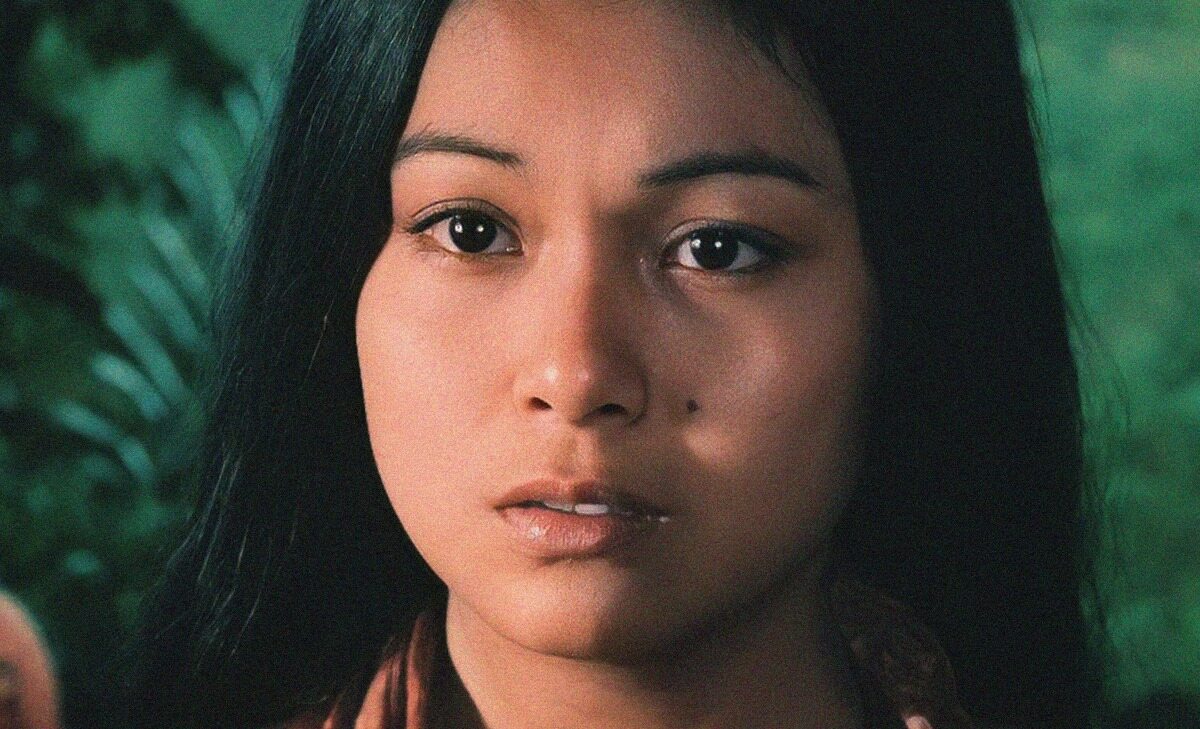
(SPOT.ph) Long before anthropologists coined terms like “parasocial relationships”, decades before media pundits would try to dissect the phenomenon of Taylor Swift and her Swifties, Ate Guy got there with her fans first.
National Artist, star of more than 190 films, recording artist behind 31 studio albums, Nora Cabaltera Villamayor returned to her Creator on April 16, Tuesday, at 71 years of age. She was known as Nora Aunor in the industry, but to the fans who adored her she was always Ate Guy—the big sister whose heartbreak cracked all our hearts open, the member of the family whose triumphs lifted all our spirits.
Nora Aunor did more than form bonds with her fans—she was her fans: In her coffee-toned complexion and petite stature, they saw their own ethnicity and bodies; in her limpid, expressive eyes, they witnessed their struggles; in her meteoric rise from water vendor at the railway tracks of Iriga to Tawag ng Tanghalan champion at 14 to singular Superstar, they watched the story of their own hopes and aspirations. How grimly fitting that she should pass away from complications of heart surgery; her heart is where Nora lived, her heart is where she died, and in her fans’ hearts is where she will always stay.
Also read: Gloria Romero and Her 10 Most Memorable Performances
How can one summarize a life so monumental, a life that meant so much to so many? Once again, we are left only with moments that are but pale snapshots of the width and breadth of Nora Aunor’s impact on the culture. But like words that struggle to capture the ineffable nuance of experience, these moments will have to suffice. Here are ten of them:
Superstar (1975-1989)
Every Sunday evening for 14 years, TV viewers let Nora Aunor into their homes as she sang and bantered with guests on her own musical variety show—the longest-running of its format whose longevity couldn’t be matched even by Carol Burnett and her self-titled show (which ran for 11 seasons). When Superstar was finally cancelled by RPN-9 and aired its final episode on October 1, 1989, her fan club launched a nationwide signature campaign to revive it. Though the economics of broadcast television proved too strong for their ardor, Superstar the variety show forged Nora Aunor’s claim to the title, leaving other marquee names to scramble for their own made-up designations.
Lollipops and Roses (1971), Lollipos and Roses at Burong Talangka (1975)
Careers proceed like lifetimes: First, there is the sweet early hijinks, then the peak of adulthood, and finally the wizened maturity of middle to old age. After winning Tawag ng Tanghalan at age 14, Nora spent the sweet bloom of her youth playing a motorcycle-riding superheroine (1973’s Super Gee) and adopting a life-sized ceramic doll named Maria Leonora Teresa with loveteam partner Tirso Cruz III. But for me, nothing captures the blissfully halcyon days of my early childhood like Lollipops and Roses and its sequel Lollipops and Roses at Burong Talangka.
Produced by Premiere Productions and directed by Artemio Marquez, Lollipops and Roses unspooled in movie houses (not cineplexes!) for six months and cemented Nora’s formidable box-office power. In it, a 17-year-old Nora goes to the States and is serenaded by The Monkees’ Davy Jones and up-and-coming actor Don Johnson (yes, future star of Miami Vice, ex-boyfriend of Barbra Streisand and father of Dakota—that Don Johnson!), even though it is the strapping Victor “Cocoy” Laurel, son of ex-Vice President Salvador “Doy” Laurel and stage actress Celia Diaz-Laurel, who eventually wins her heart. Its sequel, the Elwood Perez-directed Lollipops and Roses at Burong Talangka, was also box-office catnip. Gallivanting across San Francisco and being the apple of dashing, fair-haired foreigners’ eyes...how could the average fan resist?
Ang Makulay na Daigdig ni Nora (1974-1979)
Fans just couldn’t get enough of the Superstar. And so, even though she was appearing in five movies a year, the powers that be decreed that Nora star in her very own drama anthology series...on top of hosting her own musical variety show the following year! Even though more strategic managerial heads would have worried about overexposure, it could be said that playing a panoply of characters every week for five years brought the maturity of Nora’s acting talents to faster fruition, serving as a catalyst for the next phase of her career. Plus Ang Makulay na Daigdig ni Nora turned her into a bonafide Queen of All-Media, long before Oprah Winfrey and even Kris Aquino would lay claim to the title.
Banaue (1975)
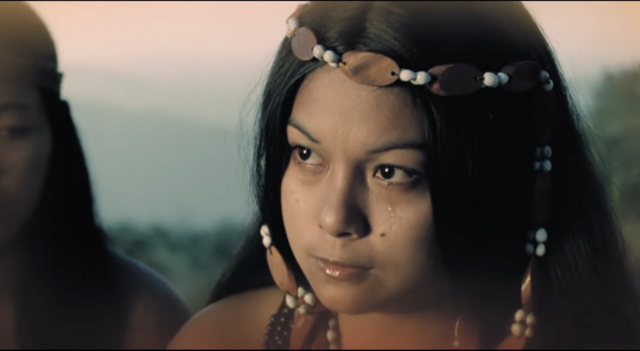
Even though she had served as producer on her movies before, Banaue represented Nora taking full control of her creative destiny, using her box office clout to shepherd risky material into cinemas, confident that her fanbase would go on the journey with her. Directed and co-written by National Artist Gerardo de Leon, Banaue sees Nora playing a courageous chieftain’s daughter defending her tribe from nefarious outside forces. In its visual sweep and narrative ambition, Banaue is Nora’s Cleopatra moment.
Tatlong Taong Walang Diyos (1976)
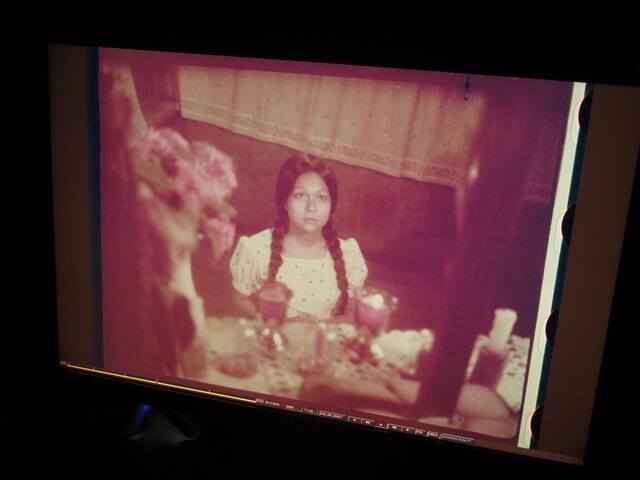
This is Nora approaching the peak of her acting and producing powers. Working with writer-director Mario O’Hara, Nora plays Rosario, a small-town lass who unwillingly endures the indignities of World War II by taking up with a Japanese soldier named Masugi (Christopher de Leon)...and discovering that she can, indeed, love her enemy. Watch out for that heart-rending climax in the church. Nora says not a word, but her emotions carry you along like an irresistible undercurrent.
Minsa’y Isang Gamu-Gamo (1976)
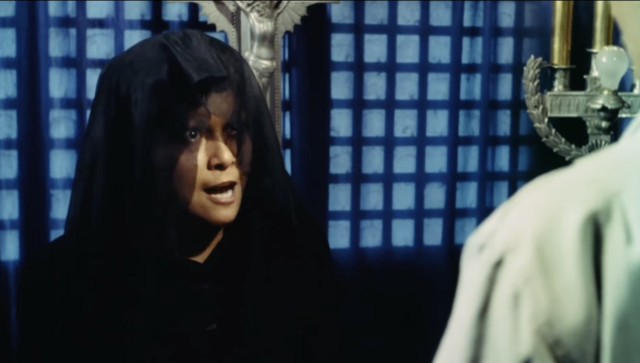
1976 was a banner year in Nora’s filmography, pairing her tour de force performance in the period drama Tatlong Taong Walang Diyos with a contemporary social-issue drama, the Lupita Kashiwahara-directed Minsa’y Isang Gamu-Gamo. In the latter, Nora plays Corazon de la Cruz, a breadwinner whose plans to emigrate to the States are derailed when her brother is shot dead by an American soldier from a nearby American base. Cinephiles remember this searing drama for Nora’s enraged line reading of “My brother is not a pig! Ang kapatid ko ay tao, hindi baboy damo!”
Ina Ka ng Anak Mo (1979)
Nora’s first film with National Artist Lino Brocka was a doozy: It would pit her against another acting powerhouse, the queen of Philippine cinema of yesteryear Lolita Rodriguez, in the story of a woman who discovers her husband having an affair...with her mother. Did I mention that this was an entry to the 5th Metro Manila Film Festival, back when it was true to its mandate of showcasing the best of local movies instead of the mad, four-quadrant scramble for profit that it is today? Both Lolita and Nora won the best actress trophy that year, although to this day, movie fans only remember the moment when Nora’s Ester Postigo discovers the betrayal, mimicking Nora’s wounded eyes and her breathless whisper of one word: “Hayup...hayup...hayup!” Ina Ka ng Anak Mo wasn’t the top-grosser that year though; that honor went to the romantic-comedy Kasal-Kasalan, Bahay-Bahayan...which also starred Nora Aunor.
Bona (1980)
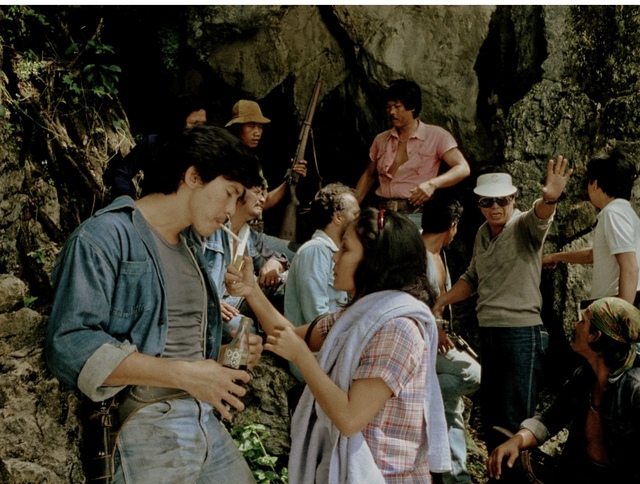
Another Lino Brocka masterpiece. This time, Nora plays an obsessed movie fan. Despite the seemingly fool-proof strength of its meta premise, this is one of Nora’s forays into social realism that did not prove to be a slam-dunk return on its investment, and she would have to balance her creative risk-taking with madcap comedies like Bongga Ka ‘Day, also released that same year. Despite never really explaining her character’s obsession with a bit player (Phillip Salvador) and not a full-blown star, the film makes full use of Nora’s talents at under-emoting, which makes that explosive ending all the more harrowing. The restored version of Bona was met with acclaim at the 2024 edition of the Cannes Film Festival, then a release in arthouse cinemas and film festivals across the U.S.
Himala (1982)
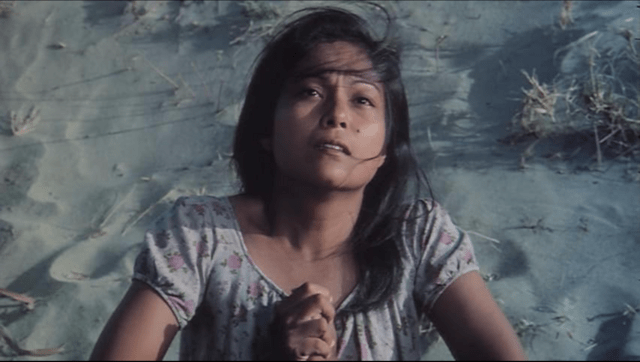
Of course you knew this masterpiece would be on this list. How could it not? This was Nora at the peak of her powers, so attuned to the nuances of the material and the demands of her director that Ishmael Bernal (another National Artist) once said that whenever he would approach Nora to give her direction during filming, she would just nod and tell him she knew what he was after before he could say a word...and then deliver exactly what he wanted.
Bilangin ang Bituin sa Langit (1989)
Determining the performance that would go into the final slot is always tricky. Will I go into Nora’s years with Joel Lamangan in the mid-90s, with the real-life dramatization of The Flor Contemplacion Story (1995) and the revenge drama Bakit May Kahapon Pa? (1996) As a critic, I think...neither. Even though both are well-intentioned, I find their treatments too overblown; why resort to sensationalism when you have the silent spectacle of Nora Aunor’s eyes to carry you through?
Instead, I’m giving the final berth to a guilty pleasure: the Elwood Perez melodrama Bilangin ang Bituin sa Langit, where Nora is reunited with her most successful loveteam partner Tirso Cruz III. The two play lovers-turned-enemies whose enmity echoes across generations. Produced during the heyday of the 1980s glossy melodrama, Bilangin ang Bituin sa Langit is a camp classic. And on this momentously sad occasion, I prefer to remember Nora as the steel-spined matriarch Magnolia de la Cruz acting opposite...herself, as Magnolia’s rebellious teen daughter Maggie. And once more to the fans, say it with me now: “Aso lang ang hindi nakakakilala sa pangalang Magnolia de la Cruz!”
It is a devastating day not just for Philippine showbiz, not just for the culture...but for the nation as a whole. As we mourn the passing of a true titan, we can only take solace in the thought that the one-and-only Superstar is now among the stars.
Himala, Banaue, Tatlong Taong Walang Diyos, Minsa’y Isang Gamu-Gamo, and Ina Ka ng Anak Mo are all available on YouTube. All except Ina Ka ng Anak Mo are restored versions courtesy of ABS-CBN.
Also read: The 10 Jaclyn Jose Performances We Will Never Forget