
(SPOT.ph) It's 1987 and a group of soldiers led by Arnold Schwarzenegger encounters a Predator in a Central American rainforest. It's 1990 and Los Angeles police offers and rival gangs encounter a Predator in the middle of a heat wave. It's 2010 and the world's best mercenaries encounter multiple Predators on an alien planet. It's 2018 and a crew of burnt-out, ex-soldiers encounter Predators in a quiet Nebraskan suburb.
This is the state in which we find the 35-year-old Predator franchise—give or take a couple Alien crossovers—which has just dropped its most recent Predator feature film Prey directly onto streaming on Hulu. The film serves somewhat as a prequel to the whole franchise, with its setting in the year 1719 making it the earliest film in the franchise chronologically.
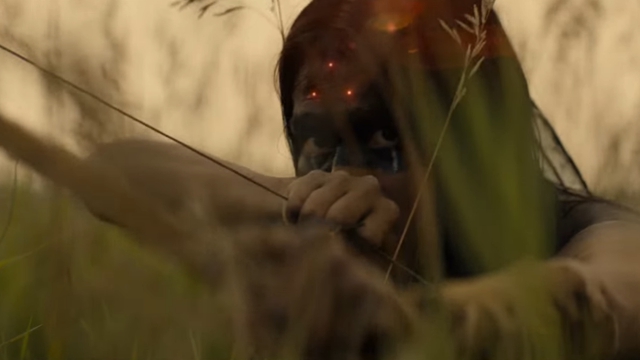
In 1719, a young Comanche woman must select a prey to hunt and kill in order to pass her hunter trial, which leads her to encounter a Predator stalking the nearby forests. Hardly ground-breaking territory for the Predator franchise, as you can clearly tell, but the prequel film cements a pattern that all cinematic universes should follow.
Also read: What Can Be Learned About God and Faith While Watching Alien 3 and Alien: Covenant
Prey Movie Review: This Is How Cinematic Universes Should be Made
If there's one promise a Predator movie always delivers on, it's that a group of badasses will face a Predator that's even deadlier than them. It's the basic formula that has kept this franchise alive for 35 years. From soldiers to criminals to Comanche warriors, it's especially clear now that you can apply this conceit to a range of time periods and genres, and still have it work splendidly as a Predator movie.
Prey is the biggest departure yet from the basic conceit of "action-ready humans fight off technologically advanced aliens," as the central focus on an 18th-century Comanche tribe strips the conceit down to its bare essentials. Literally mud, sticks, and rocks are all our main characters have to fend off the Predator. This is perhaps what makes Prey the most exciting Predator installment since the first sequel, as your mind races to think how could they possibly kill the beast, while locked into the action film, and where could they possibly go next, once the film concludes.
That's exactly what Prey accomplishes by the end of its runtime. It opens up the door to all sorts of concepts being let loose in this "cinematic universe" of somewhat interconnected stories.
A Western where cowboys have to rangle up a Predator loose on the frontier, a Samurai film where the warriors must face off against the deadly Yautja, a historical epic where Spartan warriors have to test their mettle against the beast, or a swashbuckling adventure where pirates encounter a Predator while sailing the seas. All of these weird and fantastic concepts are not only possible but fit very well into the Predator cinematic universe post-Prey.

Prey director Dan Tractehnberg is no stranger to this particular kind of sci-fi anthology-type cinematic universes, as he had previously directed 10 Cloverfield Lane, a sequel that merely plays tangentially to the 2009 found-footage horror movie.
Cloverfield Lane plays a psychological thriller where two men hold captive a woman in a bunker, as they insist the outside world is inhospitable due to an alien invasion. As the audience, we know through the events of the original Cloverfield that a monster did arrive on Earth, but the shadiness of the two men makes you call into question their true motives and even the events of the separate film; all-in-all, adding another layer on tension to the relationships that develop in the film.
What Prey and 10 Cloverfield Lane showcase is a happy mixture of a film being able to stand on its own while also having seeds of interconnectivity and intertextuality that adds layers for those who choose to invest in the wider franchise, which is how cinematic universes should operate instead of every installment being required reading.
That was the state in which the first phase of the Marvel Cinematic Universe found its success. You had your conventional superhero origin story with Iron Man, a Bourne-esque monster thriller with The Incredible Hulk, a Shakesperean drama with Thor, and a World War II serial adventure with Captain America. There was a time wherein it was simply exciting to speculate how these properties would connect, as the filmmakers wouldn't explicitly spoon-feed it to you.
Also read: What Is the Right Order to Watch the Marvel Cinematic Universe?
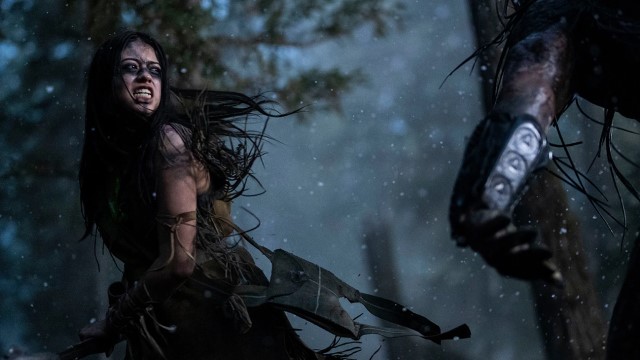
With the Predator franchise, it's exciting enough that one Comanche warrior in 1719 comes to the conclusion that "if it bleeds, we can kill it," only for an American soldier to come to the same, exact conclusion over 200 years later. However, it's also exciting on a thematic level to see the juxtaposition be made between the United States military in the 20th century, European colonists and fur trappers in the 18th century, and the technologically advanced hunters without remorse.
Hopefully, one day, the cinematic universe will come full circle and have another modern-day, machismo, American "hero" scream in terror, "what are you?!" in the face of a colonial monster that's even more frightening than its own.
Also read: Here Are the Movies Actually Worth Watching in Cinemas This August
Hey, Spotters! Check us out on Viber to join our Community and subscribe to our Chatbot.
this strange new world.