
What's Up With Those QR Codes With the Colors of the Philippine Flag?
We explain how this BSP initiative makes things different.
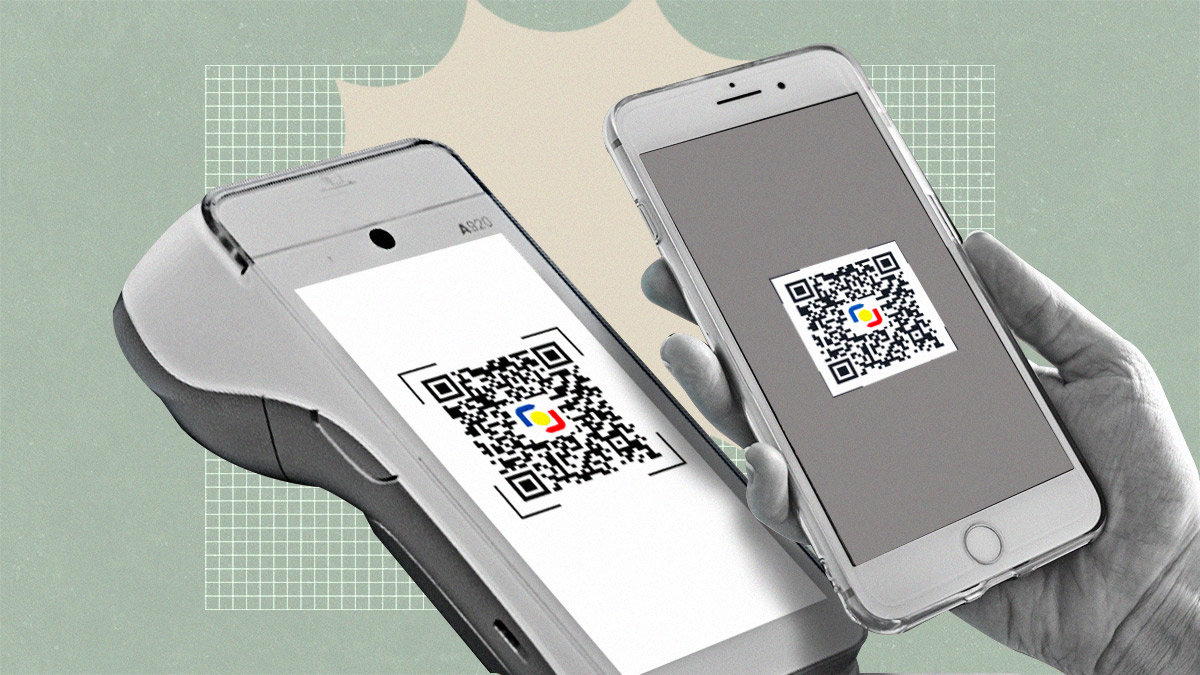
(SPOT.ph) Quick response codes have become ubiquitous as a contactless payment method during the pandemic, but have you noticed that a few have the unmistakable colors of blue, yellow, and red in the middle of those black and white pixels?
That is no ordinary QR code. Those types are called a QR Ph—a Banko Sentral ng Pilipinas-approved type of code with features that make payment even more convenient for us end-users. We explain below.
What is the PH Qr?
Background
In the past, only users and businesses with the same payment service provider will be able to send and receive money from each other using a personal QR code generated by that company. Only Maya users will be able to pay Maya merchants, just as GCash users will only be able to pay GCash merchants.
The Bangko Sentral ng Pilipinas (BSP) was quick to realize this gap and set out to create a National QR Code standard that is powered by interoperability. Before we explain what interoperability is, let’s take a look at how QR Ph began.

It was in 2019 when the BSP issued Circular 1055, which requires financial institutions like banks and e-wallets to adopt the QR Ph in a bid to “standardize the use of QR codes.” The BSP would later launch the QR Ph for person-to-merchant use in 2021 with a goal to cultivate a cashless, financially inclusive ecosystem.
And it was a hit. According to the BSP, person-to-merchant QR Ph facility has almost doubled from 243,000 merchant locations in June 2022 to 473,00 in July 2022. The BSP is also looking to upgrade the QR Ph’s inoperability for end-users to be able pay bills in the future, too.
Also read: QR Payments Rocketed 5,600% in 2020, Bangko Sentral Sees More Growth
Function
So, what is interoperability?
According to the BSP, interoperability is the key feature of QR Ph that allows end-users to maintain only a single bank or e-wallet to be able to transact with other individuals or institutions whose accounts are maintained with other payment service providers.
Increased QR Ph adoption will mean more choices to pay digital without the inconvenience of having to go through InstaPay or install every bank app or e-wallet out there. That’s right—all you need is one merchant with a QR Ph code to cash in and out from any payment service provider.
What this means is that you can use your Maya wallet to pay a seller or store with a GCash QR Ph code, and vice versa. The BSP explains: “QR Ph interconnects participating banks and non-bank e-money issuers much like how the ATMs of different banks are interconnected.”
There’s also an added layer of security when using the QR Ph as it is BSP-supervised. Real-time payment confirmation is immediately received via text message. However, do take note that security and convenience come at a (low) price! Like InstaPay, there will be a service fee, but how much it is will vary depending on the bank or e-wallet app being used.
It isn’t just financial institutions who benefit from BSP’s QR Ph. Smaller entrepreneurs will no longer need to buy point of sale (POS) terminals to process digital information. Instead, a simple printout of the QR Ph code from its chosen payment service provider will suffice (which is generated upon request).
Keep in mind that all transactions are final and irrevocable, so make sure to send the right amount before pressing send. There’s no getting that money back unless the merchant is honest enough to return the excess amount.
Service Providers
Make no mistake: the QR Ph is not a standalone app. You will need to have a smartphone with a camera, Internet connection or mobile data, and an app of the bank or e-wallet of your choice to use it.
As mentioned earlier, every BSP-supported e-wallet should be offering QR Ph by now. We’re talking Maya, GCash, InstaPay, DragonPay, Juan Cash, Tayo Cash, and UMSI. Of course, more traditional banks have also since adopted the QR Ph, including Metrobank, BDO, AllBank, AUB, PSBank, RCBC, UnionBank, and Landbank.
The process is simple and straightforward. For example, paying with QR Ph through Maya will only have three steps: open the app, tap “Pay with QR” bottom, and scan the merchant’s QR Ph code to send payment. The same goes for every payment service provider.
ALSO READ:
You Can Now Use GCash for Payments in Japan, South Korea + More
You Can Use Just One QR Code for Contact Tracing in These Five Areas