
Got an Invite to Do Basic Work for Cash? It Could Be a Task Scam, PNP Warns
No such thing as easy money.

(SPOT.ph) Received a random message from a stranger offering extra income for menial work lately? You’re not the only one. Task scams are surging as of late, with the Philippine National Police (PNP) Anti-Cybercrime Group (ACG) issuing a reminder to the public to exercise caution about fake employment opportunities.
The promise of easy money is what lures people into these task scams, usually on social media platforms or messaging apps like WhatsApp or Telegram.
"There is no shortcut to financial stability. It is imperative to verify the legitimacy of offers before making any financial commitments. Remember, if an offer sounds too good to be true, it probably is," PNP ACG Director Sidney Hernia said in a statement.
Also read: What to Do When an Unknown Number Calls or Texts You via WhatsApp
Beware of the task scam
This is how task scams work, according to the PNP ACG.
Scammers will reach out or use social media ads to victims. Those who express interest will be contacted by the scammer, who will act as company representatives in an effort to look legitimate. The offer will often involve working from home, flexible hours, and require no experience on your end.
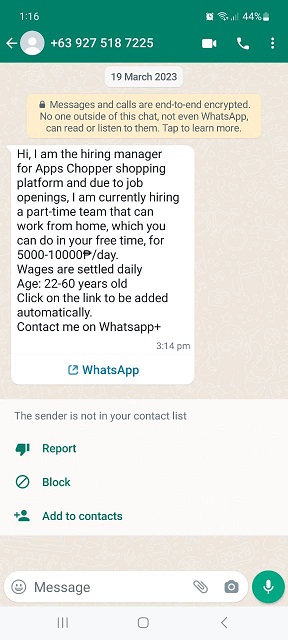
At the start, victims will be instructed to complete basic tasks, such as liking posts, watching videos, or sharing content to earn income. Commissions are given right away, giving them “the impression of additional income opportunities.” As soon as trust is established, the scammer will ask the victim to take on investment tasks that require shelling out personal money to receive a bigger return.
“As victims complete more tasks, the amount they are required to invest steadily increases. When they try to withdraw their earnings, the scammers invent technical issues, blaming victims and demanding more money to fix them. Victims get trapped in this deceptive cycle with no refunds or withdrawals,” PNP ACG said.
PNP ACG cited a recent incident of a 25-year-old from Baguio City who was lured with an online job advertisement on a social media platform. She had initially invested P300, but as her tasks increased, so did the amount of money she had to invest. By the end, she lost a total of P400,000 to this scam. She was unable to get her money back.
Task scams could also take place over text. After all, a fake PhilHealth ID with a picture of a smiling monkey passed the SIM registration test, with reported cybercrimes using SIM cards going up 190% from January to June 2023 compared to the same period in 2022.
Also read: GUIDE: Email and SMS Scams You Need to Know to Protect Your Money