

Dear Binibining Pilipinas: Persons Living With HIV Can Be Beauty Queens, Too
It's high time to stop the stigma.
Trigger warning: Depression, suicide
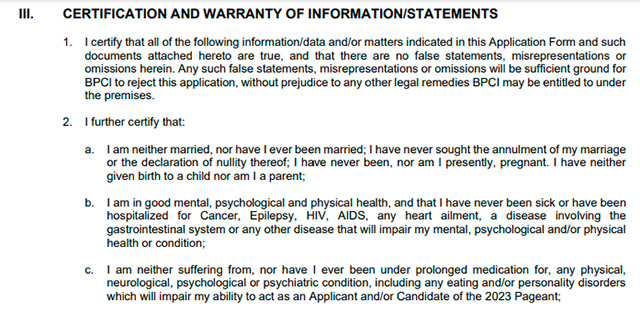
(SPOT.ph) Is Binibining Pilipinas prejudiced against Filipinas with HIV/AIDS? Twitter users asked this as the national pageant, known for producing four Miss Universe winners, announced that the "search is on" for the next batch of queens—but only for those who haven't been sick or hospitalized for HIV/AIDS, among other conditions.
Twitter user Jeff Acaba (@jpacaba) posted a screenshot of the waiver on social media, asking if it's discriminatory against potential candidates. The waiver, however harmless it sounded for others, could add more to the stigma toward people living with HIV (PLHIV) and should be scrapped, some Twitter users said. Binibining Pilipinas has yet to issue a statement regarding the issue.
Read:
This Online Series About HIV-Positive Teens Hopes to Break the Stigma
Mental Health Professional Answers Boy Abunda's Bb. Pilipinas Question
"There have been so many candidates who have raised the issue of HIV-related stigma [and] discrimination yet the institution itself discriminates people who live with the virus? Hmmm," he said with a thinking face emoji.
More than just showcasing baby smooth faces and skinny physiques, pageants such as Binibining Pilipinas have also become platforms for beauty queen activists to put the spotlight on their advocacies; just ask former Binibinis turned Miss Universe queens Pia Wurtzbach and Catriona Gray who fiercely championed for the rights of persons living with HIV.
"You have to remember that there is life after HIV if you regularly take the appropriate medicines. You can still live a normal, happy, and active life,” Gray said in an open letter on International Women’s Day 2019.
The 'hypocrisy' that is HIV discrimination in Binibining Pilipinas
Binibining Pilipinas selects the Filipina representatives for Miss International, Miss Globe, Miss Grand International, and Miss Intercontinental. It also held the national franchise for Miss Universe until December 2019, when Miss Universe Philippines was chosen to select the next Filipina to contend for the prestigious title. Under the Binibini management, the Philippines produced four Miss Universe titleholders: Gloria Diaz (1969), Margie Moran (1973), Wurtzbach (2015) and Gray (2018).
The national pageant still has time to "do better" and scrub off the "bad taste" of "hypocrisy" from its 2023 application forms before its January 31 deadline, said Zoe Black, a trans woman who landed in the Top 15 of Miss Trans Global Philippines 2022. As a person living with HIV, she can say their status couldn't affect their performance in the pageant, not to mention that it violates the Philippine HIV and AIDS Policy Act.
"I don't think that that's necessary, it's very outdated and it's downright discriminatory. It violates the law that you can't discriminate [against] people living with HIV, kahit suspected man 'yan," the 27-year-old HIV advocate told SPOT.ph.
"They [Binibining Pilipinas] need to go back to their roots and to their vision and listen to the girls kasi HIV advocacy 'yong advocacy ng girls nila tapos they put in this regulation. It goes against their beliefs so hindi nagiging genuine and authentic si Binibining Pilipinas in their objectives."
The highly stigmatized view on HIV contributes to the lack of awareness about it, said Black, who went through major depression and battled suicidal thoughts and treatment anxiety on her way to achieving undetectable status because, at many points in her journey, she felt she was facing it all on her own. How can PLHIVs live freely, without any other concerns other than reaching undetectable status, if there isn't a nurturing community that understands their predicament?
"May stigma pa rin sa LGBT people na HIV is a gay disease and 'yon ang nagiging cause kung bakit siya highly stigmatized... kulang pa rin sa awareness kaya meron stigma," she said.
HIV (human immunodeficiency virus) is a virus that destroys the body's immune system. If left untreated, it can lead to AIDS (acquired immunodeficiency syndrome), the World Health Organization said. HIV can be transmitted through certain body fluids like blood, breast milk, or semen; through shared or unsafe drug injections; and may be passed on from pregnant women to their unborn children during pregnancy and delivery.
AIDS was first discovered in 1981 in the United States after numerous reports of rare forms of pneumonia and cancer in young gay men. Initially called Gay Related Immune Deficiency or GRID, the disease was later renamed in 1982 after it was found to infect injection drug users. In January 1983, researched showed that women can also be infected via heterosexual intercourse, further debunking initial claims that it only affected gay men.
It is not a gay disease, nor is it a death sentence because even if it cannot be cured (yet), PLHIVs can still control it and reach undetectable viral load, meaning they cannot transmit HIV to their sex partners and the risk of transmission through shared needles and other drug injections is reduced, the US CDC said.
While we cannot be certain if the Binibining Pilipinas HIV waiver existed in previous applications, it's commendable that people took notice now that Filipinos are more aware and more politically correct about HIV, said Black. If "beauty with a purpose" is its cause, why not allow PLHIV to advocate for themselves, just like how she did at Miss Trans Global Philippines 2022?
"Hindi siya hindrance. If anything, nagiging selling point mo pa siya and you're much more capable because it doesn't define you. You are more than your status and it goes against their vision na inclusive sila," said Black.
PLHIVs, you are loved
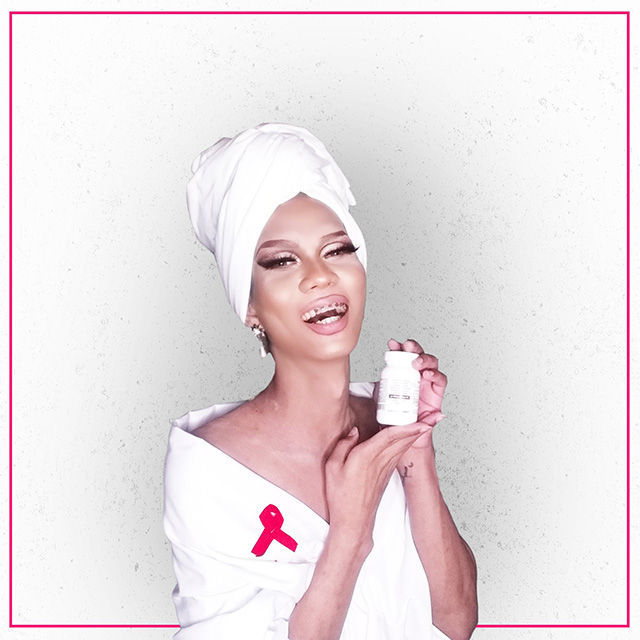
For Black, it was a long, excruciating road to recovery but through the help of her sibling, and eventually her whole family and friends, it is possible.
"It was really a cathartic experience kasi I would never have thought I would achieve it. 'Yon 'yong pinanghahawakan ko rin sa advocacy na it really does get better, you just have to continue on doing what's good and what's right," said Zoe who volunteers at Loveyourself Inc., a nonprofit organization in HIV awareness.
"It took a village to get here. I was surrounded by love and support, 'yong friends ko never nila ako tinalikuran and they're always telling me that I was the strongest person they know, na ang dami ko mami-miss out if I'm gone."
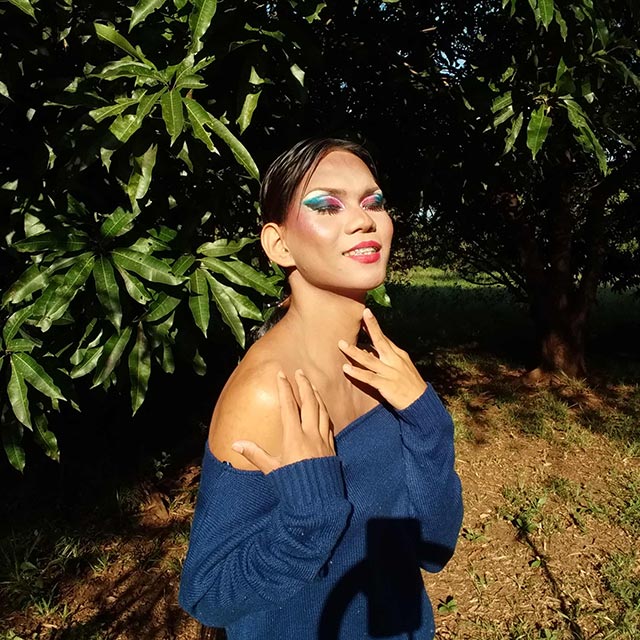
If there's one thing Black wanted other PLHIVs to know, it's that they are not alone, and there are people, even those who don't have firsthand experience of HIV, who are willing to stand up and speak out for them. Don't listen to discriminatory people; they're just "white noise," she said.
"To those na nagdi-discriminate pa rin, deadma na kami sa inyo kasi hindi na kami naaapektuhan. Words can't break us anymore kasi we're surrounded by so much love already and that's something you don't have in your lives," she said.
And for PLHIVs, Black has this to say: "At this point, nothing can break you. The worst thing that can ever happen to you happened already so anything that the outside world is putting out on you, nothing will break you. You will go out in this world stronger and braver."