
Why Does it Get so Hot in Dagupan During the Dry Season?
We asked an atmospheric physicist.

(SPOT.ph) While the average temperature in the Philippines during the dry season is only 28.3°C, it seldom feels that way. Thanks to our location in the tropics, our country's humid weather kicks up this temperature to a heat index of more than 30°C, or even 40°C on its worse days. And if you follow weather reports, you know that the heat index can reach the danger level of 60°C—which happened in Dagupan City, Pangasinan on July 2, 2020.
As of writing, Dagupan City's highest heat index for 2023 is at 42°C on March 26 and 29. The Philippine Atmospheric, Geophysical, and Astronomical Services Administration recorded a 47°C heat index in San Jose, Occidental Mindoro on March 25 and in Butuan City, Agusan del Norte on March 24. The heat index reached 46°C in Catarman, Northern Samar on March 30. These are the highest numbers recorded so far for the year.
Also read: How to Avoid Heatstroke Now That Dry Season Is Here
What is "heat index"?
In simple terms, the heat index is the "what it feels like" temperature. This is calculated by considering both the air temperature and relative humidity in an area.
Sometimes, we would say "malagkit ang init." While it seems counterintuitive, warm air actually holds more water vapor in it. This water vapor comes from oceans, lakes, rivers, plants, and other places with enough moisture. And the more water vapor that warm air holds, the more it can hold and absorb this moisture. This makes the already warm day even more humid.
The thermometer may give a maximum temperature recording of only around 30°C, but if the percentage of humidity is nearing 100, then you can expect a really high heat index.
Why does it get so hot in Dagupan during the dry season?
In an exchange with SPOT.ph, University of the Philippines professor Dr. Gerry Bagtasa, who specializes in atmospheric physics, enumerated three things as to why it feels incredibly hot in Luzon—particularly in Dagupan—during the dry season.
"First, as [previously] mentioned, we are in the tropics (or near the equator), this is why it's hot in the Philippines. It doesn't explain though why particularly in Central Luzon or Cagayan. Second, there's longer daytime than nighttime, so there is a longer time to heat up everything, again. This explains for the whole northern hemisphere but not particularly in Central Luzon
Third, it's the interaction between winds that are coming from the east or from the Pacific and the mountains. It creates what is known as Foehn winds, which are warm dry air rolling down the lee or leeward side of mountains (the opposite side of the prevailing winds). Foehn winds are what make the air hot and not the easterly winds as typically explained. In Metro Manila, for example, it's also the Foehn winds that make it hot here because of the Sierra Madre mountains to the east," he explained.
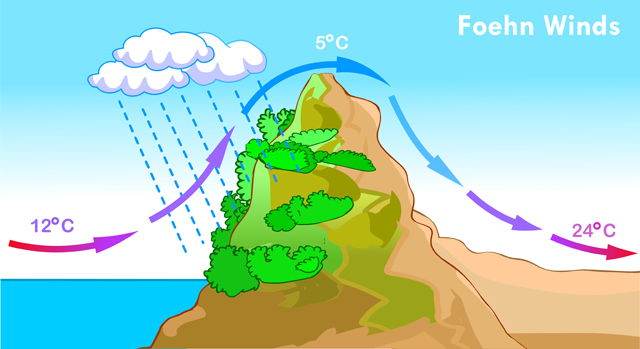
Dagupan, in particular, has one of the highest heat indexes in the Philippines because of its location near the Lingayen Gulf. Moisture from the gulf tends to move inland, and this is combined with the hot Foehn winds created by the Sierra Madre and the Cordilleras. Since the heat index is affected by both air temperature and humidity, Dagupan almost always has a high heat index.
Dr. Bagtasa also noted high air temperatures, not heat index, are usually observed in Cagayan Valley and Central Luzon. This is once again caused by the Foehn winds from Sierra Madre. Although the heat isn't as annoyingly hot as when you're in humid places, temperatures in these regions can be scorching. Tuguegarao, which is considered the hottest city in the Philippines, recorded its highest temperatures on August 19, 1912, and May 11, 1969, at 42.2°C.