
Mama Mo: This Timeless Insult Is Over 3,500 Years Old
Slangs come and go, but "mama mo" is forever.

(SPOT.ph) Mother’s Day is just around the corner—and what better way to pay tribute to the women who brought us into this world than by relentlessly throwing around the classic Filipino insult "mama mo"?
Slangs come and go, but mama mo is a timeless variation of the original “your mother” joke. The entire world has collectively decided that one of the harshest and lowest blows anyone could make is to insult somebody’s mother. In the U.S., it’s yo mama. In the Philippines, it’s mama mo. Beyond borders, the insult is also prone to variations from one generation to the next. For Gen Z, yo mama has taken in a new form of Joe Mama, which can be used as a standalone insult without any succeeding qualifiers.
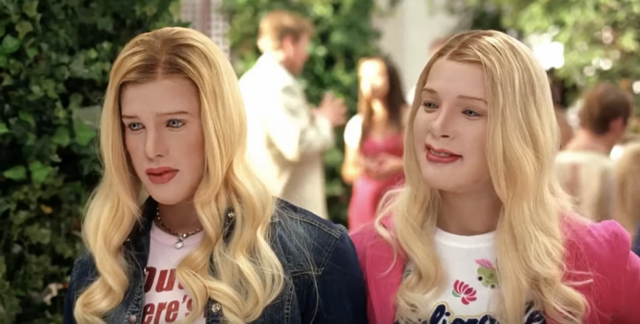
Recent memory might have you thanking the 2004 cult-classic comedy flick White Chicks for popularizing "yo mama" jokes. Iconic as that scene is, White Chicks is far from being the first piece of culture to come up with this sick burn.
We look to a 3,500-year-old Babylonian tablet for that.
Also read: 10 Pinoy Slang Words We Said in the '90s, Translated
The first mama mo insult is around 3,500 years old
According to The Jerusalem Post and NBC News, the oldest "yo mama" joke was immortalized in one of six 3,500-year-old tablets found in ancient Babylon. On them were several riddles about sex, beer, and politics that were written in Akkadian, the ancient Semitic language used by the Babylonians and Assyrians.
The tablet was found in modern-day Iraq by archaeologist J.J. van Dijk in 1976, who claimed that it could have been written by a student since it showed “very careless writing.” Still on brand thousands of years later.
Later on, scholars Nathan Wasserman and Michael Streck teamed up to decipher what was written. Translated to English, one joke read: “…of your mother is by the one who has intercourse with her. Who is it?” There’s no closure to this riddle since the portion of the tablet with the answer was damaged.
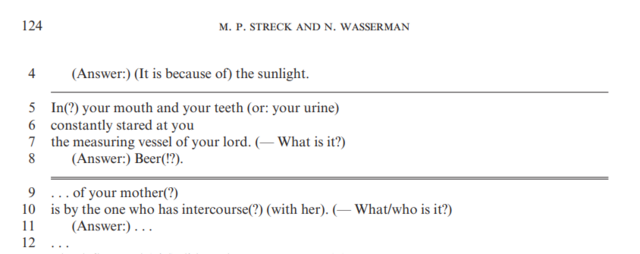
It isn’t the funniest joke, but at least we have a starting point. Wasserman and Streck's translated version was published in the Journal IRAQ by the British Institute for the Study of Iraq.
"Yo mama" would resurface in the late 1500s, courtesy of the greatest writer in the English language, William Shakespeare. The characters in his first tragedy Titus Andronicus have this exchange in Act IV, Scene II:
Demetrius: "Villain, what hast thou done?"
Aaron: "That which thou canst not undo."
Chiron: "Thou hast undone our mother."
Aaron: "Villain, I have done thy mother."
It seems that Shakespeare is (reasonably) fond of this joke, as he uses it again in the opening scene of Timon of Athens in 1606.
Painter: "Y'are a dog."
Apemantus: "Thy mother's of my generation. What's she, if I be a dog?"
"Yo mama" has evolved over time, but it continues to prove, no matter the variation, why it remains the mother of all insults.
Also read: 10 Very Odd Modern Slang Terms Translated for the Boomers and Young-Once