
Sinulog Festival: A Vibrant Tapestry of Faith and Culture
It's not just a random festivity.

(SPOT.ph) The Sinulog Festival in Cebu City, Philippines, is a vibrant and colorful celebration that honors the Santo Niño. This grand festival is a fusion of the country's rich history, cultural heritage, and deep-rooted religious traditions.
This festival is celebrated every third Sunday of January in Cebu City. The dance is in honor of Santo Niño, which is the patron saint of the city.
Read More:
10 Festivals in Metro Manila You Shouldn’t Miss
10 Bizarre and Fascinating Philippine Festivals
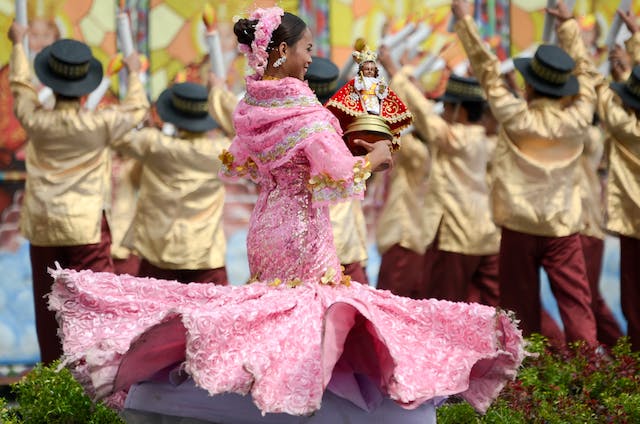
Understanding Sinulog Festival in Cebu
Sinulog is derived from the Cebuano word sulog, which refers to the water current's movement. The festival commemorates the Filipino people's pagan past and their acceptance of Christianity.
The Historical Roots
The origin of the Sinulog dance can be traced back to the pre-colonial period of the Philippines. Back then, it was a dance performed by the indigenous people in honor of their wooden idols and anitos (deity or nature spirit). After the arrival of the Spanish and the introduction of Christianity, the dance was adapted to become a sign of reverence for the Santo Niño.
Portuguese explorer Ferdinand Magellan arrived in the Philippines in 1521 and presented the Santo Niño statue as a baptismal gift to Hara Amihan, the wife of Rajah Humabon, who was among the first native converts to Christianity.
Over time, the Sinulog festival has grown in scale and grandeur, incorporating various aspects of Filipino culture, history, and identity. It has become a major tourist attraction and a significant event for Filipinos, symbolizing their rich cultural heritage and the harmonious blend of their pre-colonial and Christian traditions.
The Cultural Impact
The Sinulog festival serves as a key expression of Filipino cultural identity. Here are some aspects of its cultural influence:
- Cultural Heritage and Identity. Sinulog is a manifestation of Filipino history, blending pre-colonial and Spanish-influenced customs. It demonstrates the fusion of indigenous animistic traditions with Roman Catholicism, which is central to Filipino cultural identity.
- Arts and Performance. The festival is a major stage for Filipino artists and performers to showcase their skills. The colorful costumes, elaborate dance routines, and detailed floats are all expressions of artistic creativity and craftsmanship.
- Tourism. As a significant tourist attraction, Sinulog brings visitors from across the globe, which allows the Philippines to present its culture internationally.
- Community. Sinulog encourages a sense of community, with people from various backgrounds coming together to celebrate.
- Religious Significance. This occasion has deep religious importance for many Filipinos, with activities like processions and masses that underscore the Santo Niño's role in their spiritual lives.
- Cultural Exchange. The festival acts as a venue for cultural exchange, with different Philippine regions showcasing their distinctive traditions, fostering appreciation for the country's cultural diversity.
- Economic Impact. Sinulog boosts the local economy beyond tourism by increasing demand for various goods and services, creating a ripple effect that benefits the community.
- Preservation of Tradition. Annual celebrations like Sinulog are crucial in preserving cultural traditions and passing them to future generations, ensuring these practices remain part of Filipino heritage.
Read More:
10 Chill Coffee Places in Cebu to Add to Your Itinerary
10 Popular Cebu Spots That Are No Longer Around
The Religious Significance
For many devotees, Sinulog is a profound expression of faith. The festival's highlight is the grand parade, which features a procession with the revered image of the Santo Niño, symbolizing petitions and thanksgiving.
Celebrating Sinulog Festival in Cebu with Candles and Devotion
Candles play a significant role in the Sinulog Festival. They symbolize prayers and intentions offered to the Santo Niño. Devotees light candles at the Basilica Minore del Santo Niño and along the parade route. In effect, the number of people who hold lighted candles during this event creates a sea of flickering lights that adds to the festival's mystical atmosphere.
In the context of the Filipino tradition, lighting a candle is an act of prayer and reflection. During Sinulog Festival in Cebu, it becomes a communal act of faith, as thousands join in lighting candles for their intentions.
The Sinulog Dance: A Symbol of Prayer and Celebration
The Sinulog dance is a mesmerizing display of grace and rhythm, characterized by a two-step forward, one-step backward movement to the beat of drums. It is both a form of worship and a cultural performance.