
Men Running in Heels Is the Wrong Way to Celebrate Women’s Month
Especially with the wigs and all the other stereotypes.
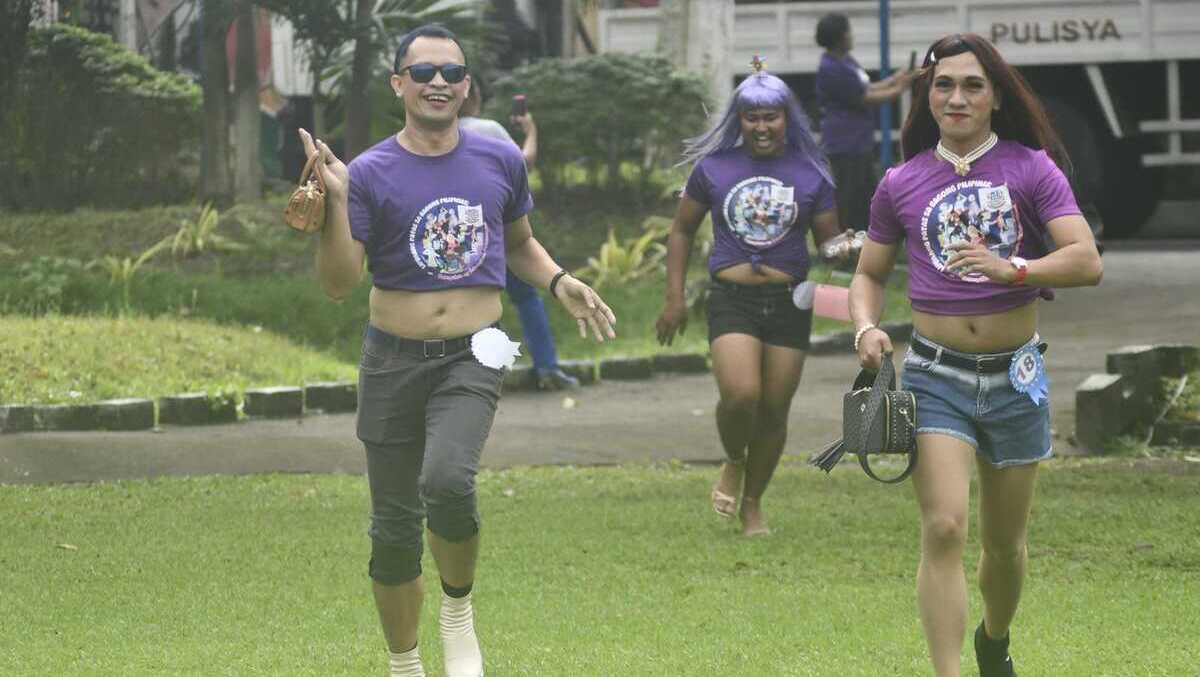
(SPOT.ph) At the beginning of National Women’s Month—the only month in a year where we celebrate Filipino women’s roles in attaining civil liberties, among other significant contributions to society—the Philippine National Police regional office in Bicol had 27 of its male police force run in high heels.
The wig-wearing, fully made-up men in bright purple (the color of feminism) even schlepped purses to the finish line.
In an interview with the Manila Standard, Regional Director Police Brig. Gen. Andre Dizon said the ‘Stiletto Run’ that kicked-off their Women’s Month festivities sought to “demonstrate acceptance, respect, and [provide] a little entertainment.”
Also read: The Time to Retire the Maria Clara Mentality Was Long Ago
The punchline, of course, is that wearing female clothes is funny.
In another part of the country three days later, Quezon's Second District Representative David Suarez delivered a sexist joke at a press conference to a roaring audience: “Kami naman pong mga kalalakihan ay naghahanda na rin po sa pag se-celebrate ng Women’s Month. Handa na ‘yung laundry soap namin, handa na ‘yung mga plantsa namin, handa na ‘yung mantika at kaserola dahil isang buwan kaming maghuhugas, maglalaba, magsasampay, mamamalantsa, at magluluto sa aming mga tahanan.”
Apart from showing how some men manage to make Women’s Month about themselves, these mockeries of women underscore where we’re at with gender equality: a long damn way.
While the Bicol cops appear to celebrate women—and to be fair, some might have participated out of sincerity—they have become complicit in reinforcing the stereotype that women identify exclusively as classic bourgeois, heel-wearing Stepford Wives.
In reality, women can be anything. We can be wives and mothers, and we can also be workers, business people, as well as police officers—even generals. Last year saw the rise of Brig. Gen. Portia Manalad, director of the Women and Children Protection Center (WCPC), as the first-ever female police general from the PNP Academy.
Instead, PNP Bicol chose to minimize the struggles of women into heel-wearing. Never mind the Herculean task of breaking the glass ceiling.
Also read: The Fight for Women's Rights: A Short "Herstory" of International Women's Month
What is purplewashing?
The event is a clear example of purplewashing, the deception in marketing and politics where countries, people or organizations communicate statements that appeal to women's rights but ultimately still uphold gender norms. These performative campaigns are superficial and dismiss the harder, more substantive work required to achieve gender equality.
Unfortunately, the rest of the month, especially International Women’s Day or IWD, will likely see multiple iterations of purplewashing on a variety of platforms.
For example, corporations might host extravagant Women’s Month events but refuse to appoint women executives on the board. Big-name Western brands might claim to drive female empowerment in their advertisements (see: femvertising), but outsource labor in third-world factories with unfair labor practices.
Ironically, while IWD has been weaponized by corporations and politicians for virtue signaling, the event is steeped in historical significance. It is rooted in protests and labor unions against appalling working conditions and unfair labor practices.
Following the official recognition by the United Nations to mark March 8th as a day to celebrate women’s contributions to societies globally, the late former President Corazon C. Aquino—our first female president no less—signed Proclamation No. 224 s. 1988, “Declaring the First Week of March of Every Year as Women’s Week and March 8, 1988, and Every Year Thereafter as Women’s Rights and International Peace Day.”
Investing in women for and beyond Women's Month
The UN’s theme for this year’s IWD celebration is “Invest in women: Accelerate progress”. A key challenge in achieving gender equality is “an alarming lack of financing… on gender-equality measures,” the UN says in its website. “Gender equality remains the greatest human rights challenge. Investing in women is a human rights imperative and cornerstone for building inclusive societies.”
In the Philippines, the Gender and Development (GAD) budget policy mandates “all government departments and agencies to allocate a minimum of 5% of their total annual budgets for gender programs, projects and activities.” It was introduced in the General Appropriations Act (GAA) in 1995 as “The Women’s Budget” and reinforced by the Magna Carta of Women (RA 9710).
Unfortunately, some GAD projects are merely borne out of compliance. A friend I chatted with who happens to work in government says most of the budget ends up in purplewashing initiatives, whether on purpose or not. "Some agencies design their expenditures around GAD to make them GAD-attributable. They just have to justify by saying ‘this project X addressed gender issue Y,’" they tell me. "A lot of it is just for compliance and not really about solving gender issues.”
Wouldn't it have been great if the budget for the Stilleto Run was channeled elsewhere—for example, to eradicate violence against women and children (VAWC) perpetrated by cops? A 2018 study by the Center for Women's Resources showed that 56 Filipino policemen were involved in 33 cases of VAWC over the course of two years.
Getting that number down to zero is a good place to start—not events in purple shirts and marathons in high heels.
Pola is an editor, journalist and communication consultant who works with organizations like UN Women. She posts about writing, communication and media literacy on Instagram: @MissChiefEditor.