
Visita Iglesia: How Many Churches Are You Supposed to Visit?
We look into the origins of the tradition.
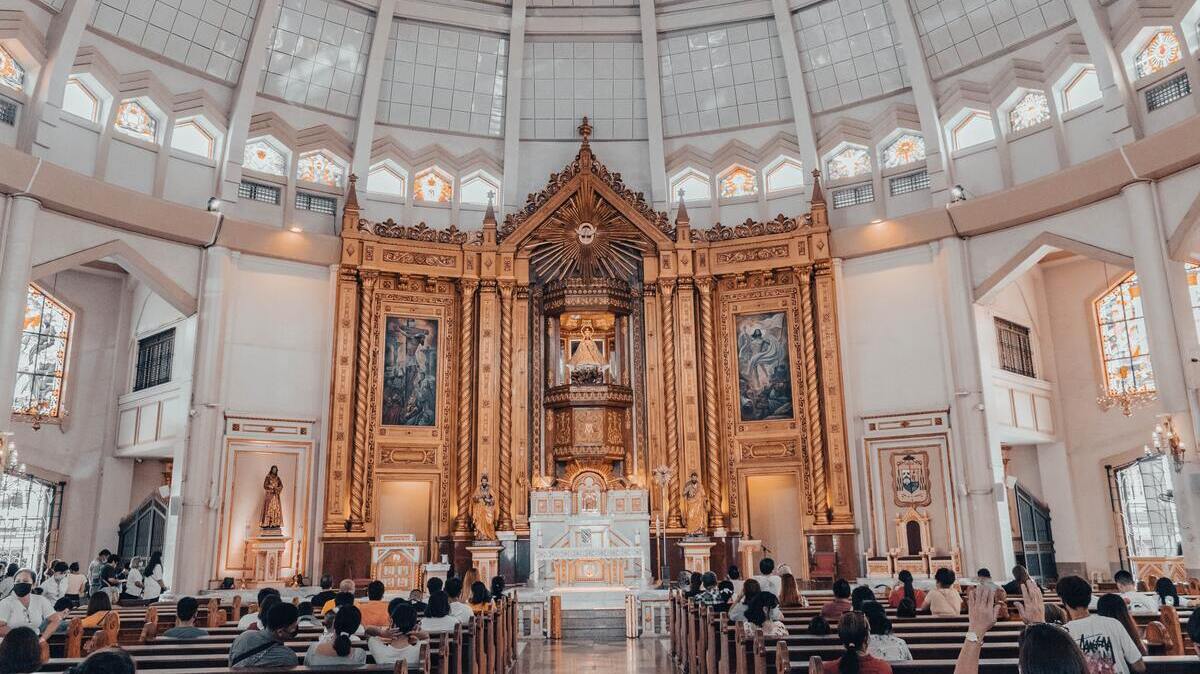
(SPOT.ph) Visita Iglesia. It's a tradition most practicing Filipino Catholics do every Holy Week, praying at the Stations of the Cross across different churches. A large number of us grew up blindly following our elders from church to church on Holy Thursday, so much so that it's pretty much just something that we're expected do to mark the end of Lent. But if you've ever wondered why we do it, likely between bites of street food you've bought in between churches—especially as we're arguably the only Catholic country that practices this, or at least has this specific variation of the tradition—then allow us to lay down the story behind the Visita Iglesia for you.
Also read: 10 Historic Churches to Visit In and Around Metro Manila
The history and origins of Visita Iglesia
The Visita Iglesia was brought over by the Spanish. That much is expected, of course, but the origins of this tradition began long before Magellan set foot on our shores. In a chat with Fr. Eric Ollague of the Our Lady of the Angels Seminary in Quezon City, he tells us that this tradition of visiting different churches and praying at each began in the Middle Ages. "'Pag sinabi nating pilgrimage, 'yung journey of every Christian," he tells us.
It was Pope Boniface VIII that cemented this practice in 1300, Fr. Ollague explains to us, in his declaration of the first Holy Year, also known as Jubilee Year. His declaration granted a special indulgence to those who visited St. Peter's Basilica and the Basilica of Saint Paul Outside the Walls, officially naming these two major churches as pilgrim churches. These two basilicas were traditionally the last stop of pilgrims going on an ancient route called the Via Francigena between England and Rome, a tradition that was done as penance.
Throughout time, more and more churches were added to the list by different popes during Jubilee years, to make what is now known as the Seven Pilgrim Churches of Rome. It eventually became, and still is, a tradition to go on a "Seven Church Walk" visiting these different churches in Rome during the Wednesday of Holy Week as pilgrimage. And yes, that means its tradition to walk from one to the other. Apart from the first two declared by Pope Boniface, there is the Basilica of St. John Lateran, Basilica of St. Mary Major, Basilica of St. Lawrence Outside the Walls, Basilica of the Holy Cross in Jerusalem, and the Sanctuary of Our Lady of Divine Love.
It is this Seven Church Walk that is reflected by our own Visita Iglesia tradition, says Fr. Ollague. "Because of that seven churches in Rome to seven churches in the Philippines, during Lenten season, we have the Visita Iglesia."
When it was first practiced here, the Spanish missionaries prescribed seven churches, too, this time all inside Intramuros. Each church was led by a different order: The Manila Cathedral, of course, then San Agustin of the Agustinians, the San Francisco Church (now Mapua) of the Franciscans, Santo Domingo (now Letran) of the Dominicans, San Ignacio of the Jesuits, Del Carmen of the Recoletos, and the Lourdes Church of the Capuchins.
Over time, as the nation grew and progressed, "nagiging visit in every diocese or parishes." And where in other countries it is the Altar of Repose that is the focus of this devotion, in the Philippines, it is the Stations of the Cross. This tradition Fr. Ollague credits to "association," in that the 14 stations fit neatly into the seven churches, at two each. And, at its root, due to the popularity of this devotion thanks to the Franciscans.
"In 1221, St. Francis started a devotion to the Stations of the Cross after his visit to Holy Land," Fr. Ollague tells us. You might remember that little response we have at the start of every station as we genuflect: "We adore you, O Christ, and we praise you. Because by your holy cross you have redeemed the world." That is based on the testament prayer of St. Francis.
To sum it up, "because of that seven churches in Rome to seven churches in the Philippines, during Lenten season, we have the Visita Iglesia," says Fr. Ollague.

Also read: The Fascinating Story Behind This Cebu Church That Blends Christian and Islamic Architecture
Visita Iglesia: How many churches?
And now, to the usual topic of debate: How many churches should we visit? If we are to follow the original Seven Churches Walk, then the answer is pretty obvious. But as Fr. Ollague clarifies, "Tama rin naman yung 14 kasi 14 stations. Pero 'yung iba, they summarize it into seven churches because the foundation is the seven churches in Rome and the seven churches in the Philippines."
The Visita Iglesia stems from a Catholic tradition made Filipino, and so there is no strict right-or-wrong to it. As Brother Jun Santiago, a Redemptorist brother for 27 years, explains to us, "We value so much 'yung passion, we love so much 'yung sakripisyo." This focus on the devotionary and penitentiary aspect of Lent can be attributed perhaps to our colonial heritage, but whatever the cause, its effects are clear: "Kasi ang Pilipino, unang-una, is Good Friday people. We are not Easter people."
You can see with all the traditions we have for Lent, past Visita Iglesia, that our focus is the Passion of Christ. As Brother Santiago says in his experience, there are always more attendees for Good Friday than for Easter Sunday. Then there's all the penitensya we practice during Lent, from the usual fasting to literally having ourselves nailed to a cross. This is perhaps why the Visita Iglesia, as a form of penance and pilgrimage and devotion to the Passion, is so important to Filipinos—and so if you want to go all out and visit 14 churches in one day, it is not wrong to do so.
As both Fr. Ollague and Brother Santiago point out, there are also practical factors. If you are elderly or infirmed, then there's no need to go all out for Visita Iglesia. You can also do this pilgrimage throughout Lent, after Ash Wednesday to Holy Thursday. Visita Iglesia is a form of devotion and prayer, something that is between you and God and therefore highly personal.
"Wala siyang hard rules kung papaano," says Brother Santiago. "But the essence talaga is pagsasakripisyo." This is not to say that there is reward in suffering, that the more churches you trek to, the more you will reap. As with most things in life, it is not about the quantity, but the quality. When you reach the pearly gates, we doubt St. Peter will be asking how many churches you went to for Visita Iglesia, after all.