

Why Can't We See the Northern Lights in the Philippines?
Everyone seems to have caught glimpse of the phenomenon except us.

(SPOT.ph) Over the weekend, people all over the world were treated to an extraordinary display of the northern and southern lights—what is typically only witnessed in Scandinavian countries was spotted in locations like the U.S., Canada, Europe, Australia, and even as far away as China.
2024 is proving to be a remarkable year for sightings of the northern lights, with some of the strongest displays in over 20 years. This increased visibility is due to heightened solar activity as the sun approaches the peak of its 11-year solar cycle, leading to more intense and frequent auroras.
But why isn’t the astronomical phenomenon visible in the Philippines? It’s actually not just us missing out, but other countries near the equator, too.
“Malapit sa equator ang Pilipinas, kaya mas mahina ang magnetic field dito,” Kuya Kim said during his #KuyaKimAnoNa? segment in 2021. “‘Yan ang dahilan kung bakit ang northern lights ay imposibleng mamalas ang ganda sa ating bansa.”
Also read: Your Complete Guide to Catching the Northern Lights
Here’s why the Philippines doesn’t experience the northern lights or aurora borealis
Here’s the more scientific explanation for the intellectually curious: Auroras occur when solar wind from the Sun travel towards Earth and interact with its magnetic field. The Earth's magnetic field is strongest at the poles, which guides these solar particles towards the higher latitudes. Once there, these particles collide with gases like oxygen and nitrogen in the Earth's atmosphere. These collisions release energy in the form of light, which we see as the auroras.
Likewise, there's also what we call the southern lights or aurora australis—the counterpart to the northern lights in the southern hemisphere. It's visible in high-latitude regions like Antarctica, southern parts of Australia, New Zealand, and South America.
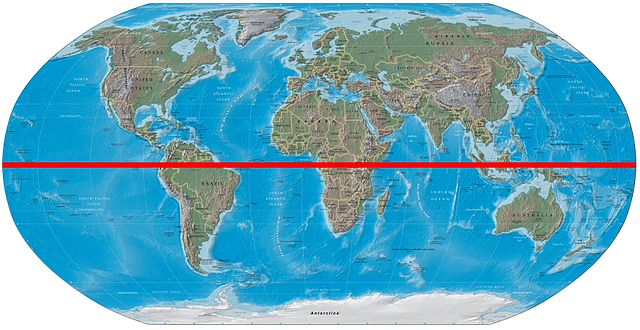
The northern and southern lights occurs near the Earth's poles, which is far from the equator where the Philippines is located. The geomagnetic equator experiences a much weaker interaction between the solar wind and the Earth’s magnetic field. As a result, the conditions to create the aurora are absent.
However, the astronomical phenomenon is not entirely impossible in our neighboring countries. Aurora borealis sightings in Asian countries are rare but have occurred under exceptional conditions.
For example, Japan got a rare aurora borealis sighting in December 2023—a first in 20 years. Unlike most auroras in the northern hemisphere, which feature a green hue, the Land of the Rising Sun was treated to rare red auroras.
Similarly, Beijing and other northern Chinese cities experienced the aurora borealis in a bright purple hue last weekend—and more could be on the way as the current cycle of solar activity could peak between 2024 and 2025, according to a member of the Chinese Astronomical Society.
Also read: Northern Lights Spotted in Japan for the First Time in 20 Years