
GUIDE: How to Use UP Noah to See Your Area's Flood Risk
Be prepared.
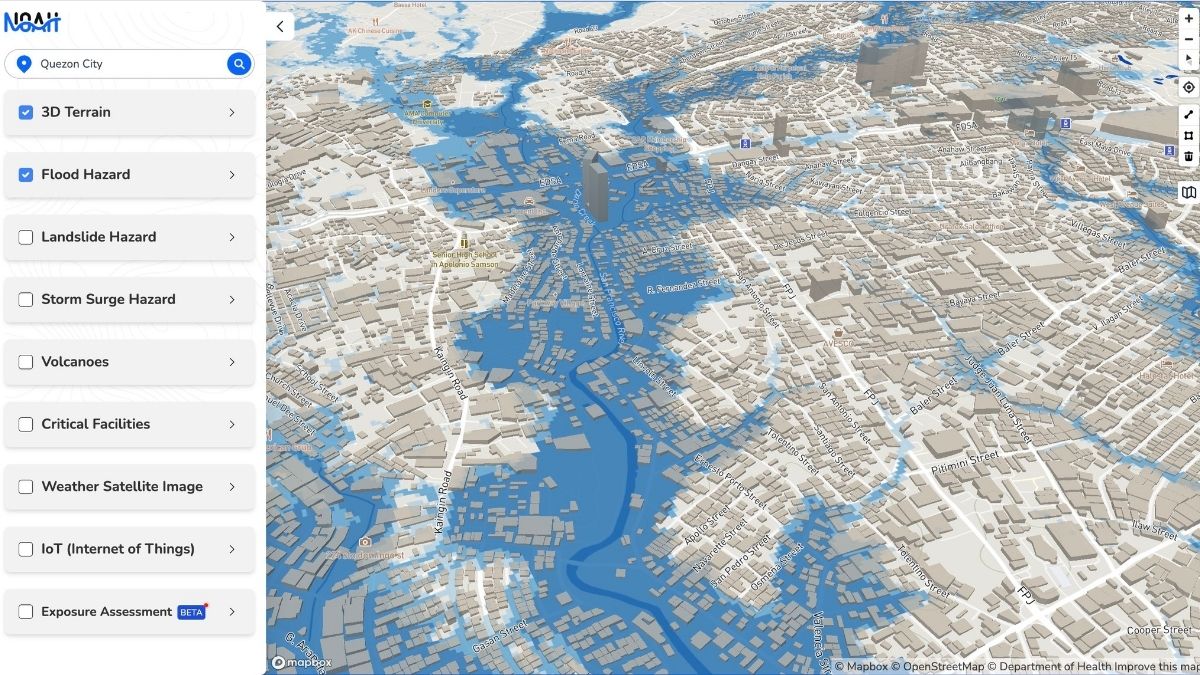
(SPOT.ph) People are rediscovering UP NOAH in the wake of Typhoon Carina—as they should. If you're one of those who aren't familiar, the site has been around since 2012, was defunded by the Duterte administration, but thankfully was able to return home to the University of the Philippines. UP NOAH has stayed constant, and even enhanced its services, through the years, offering improved and evolving features for us to be aware of potential hazards where we live.
Also read: LIST: Fandom Donation Drives for Typhoon Carina Victims
What's UP NOAH?
Better known as UP NOAH, the Nationwide Operational Assessment of Hazards website allows you to check hazard risks in areas nationwide. It was developed in July 2012 as part of the Department of Science and Technology's effort to provide data for disaster preparedness and mitigation and was spearheaded by Dr. Mahar Lagmay. It is now managed by the University of the Philippines.
The site supports disaster risk reduction, climate change adaptation, and mitigation efforts across the Philippines.
How to Use UP NOAH
UP NOAH is free and user-friendly. Once on the website, users can directly type and enter a location, or tap 'Your Current Location'. The site then produces a map of the chosen area and displays boxes indicating the levels of flood, landslide, and storm surge hazards.
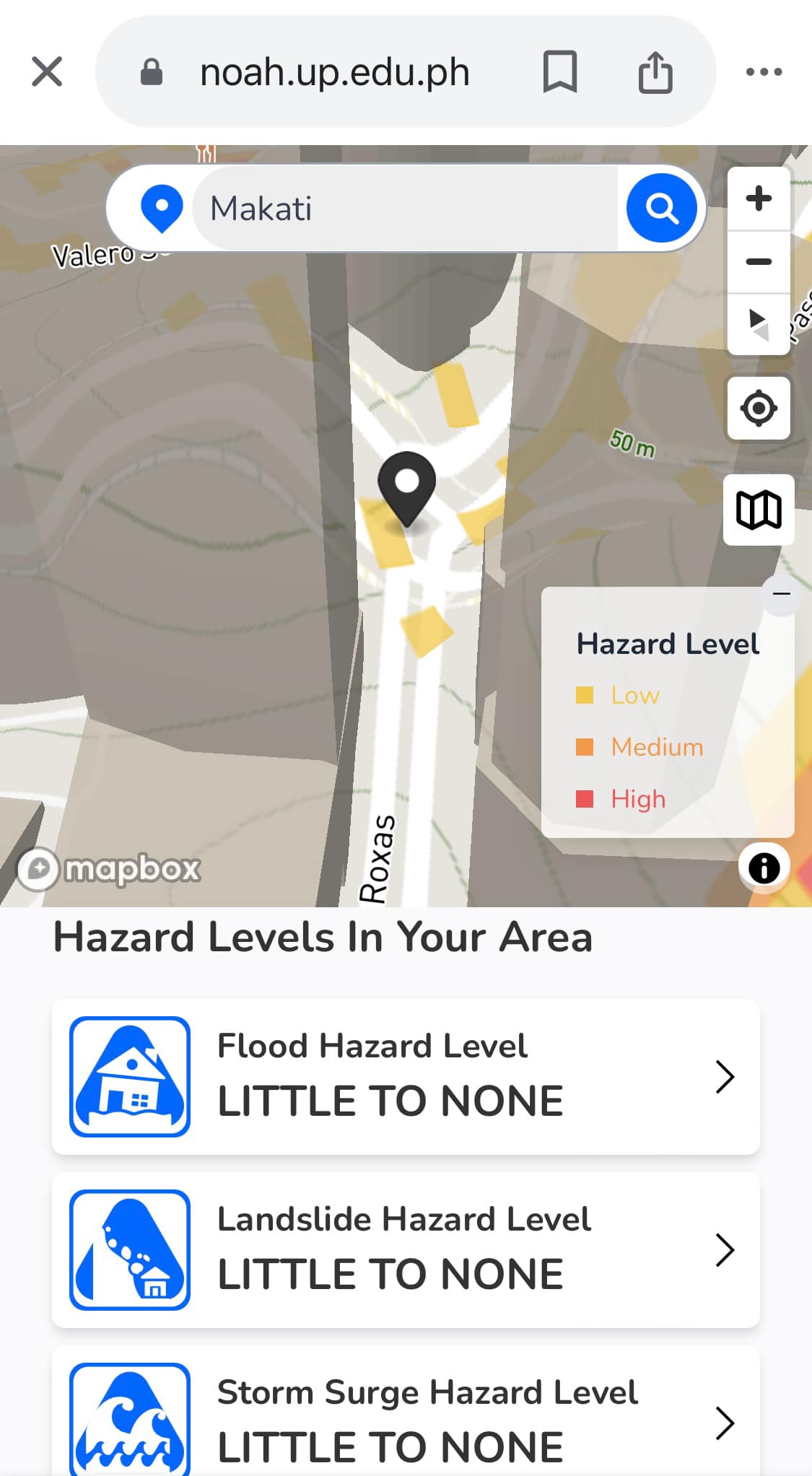
As seen on the website, the map's database includes the following hazards:
- 100-year rain return for floods
- Shallow and structurally controlled landslides
- 5-meters for storm surges
Under hazard levels, you'll find a list of essential nearby facilities, such as hospitals, health stations, and public schools.
The site also gives instructions on how to respond during a flooding event, prepare for landslides and storm surges, and what items to include in survival kits.
How accurate is the site?
Personal testing has shown these results to be fairly accurate. The hazard levels are based on flood simulations, satellite imagery, and historical data, but the platform also incorporates real-time, crowd-sourced information to validate its data. Note that the system is still in beta, so ongoing improvements are expected.