

The Simbang Gabi and How It Became a National Pastime
Roberto Villarcabral on the history of misa de gallo and where all the bibingka, sikwate, et al started.

(SPOT.ph) Christmas—that most wonderful time of the year. Not even the grumbles from shopping-induced motor traffic could dampen the spirit of this special day. Otherwise, why are we still celebrating it?
The Philippines is among the countries—perhaps other than Japan—that value Christmas with a fervourous zeal; more so than Spain, the country that introduced it to us. (They prioritise January 6th—Día de los Reyes—as their "Christmas".) Starting around September, home owners and commercial groups alike already decorate their respective edifices with Yuletide-themed ornaments and blast out that Jose Mari Chan tune on every sound system imaginable. That's how much we seriously take Christmas. We acknowledge the secular but also remember the religious aspects of the holiday. None of that rings as true as in this nationwide tradition that I am about to tell you.
Also read: What the Early Noche Buenas Were Made Of
Why the Simbang Gabi starts at 4 a.m.
Around halfway through December, people flock to their local parish to hear Mass in the most peculiar time of the night. This is what is referred to as "simbang gabi".
To put things in perspective, simbang gabi literally means "church of the night", or more appropriately "night mass". Yet it does not actually occur at night, but at dawn, often at 4 AM, in a series of nine Masses starting from December 16th to December 24th—and devotees keep going in droves just to partake in this annual tradition to welcome the arrival of Christmas.
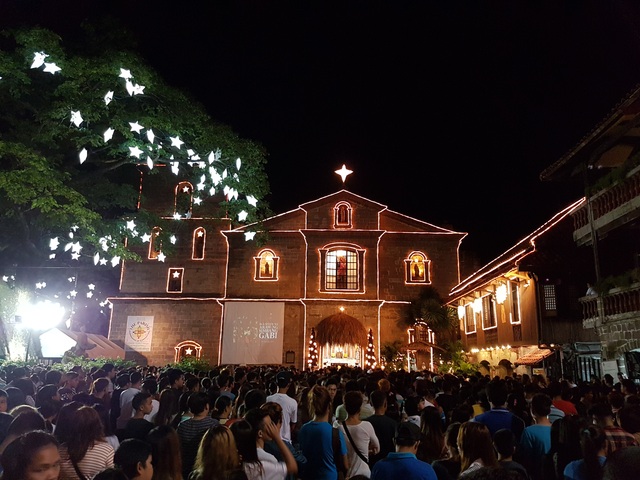
Simbang gabi could be traced to an old practice from Spain known as "la misa del gallo", or "the rooster's Mass"—which takes place on the midnight of December 24th, and is named as such because it occurs at a time when it coincides with the crowing of the roosters. Now, this celebration took its cues from an ancient Roman Catholic rite of holding midnight vigils; which in turn were inspired by a solemn custom of early Christians within Jerusalem.
In 1587, Fray Diego de Soria of the Convento de San Agustin in the colony of Nueva España—most of which currently consists of present-day Mexico—took it up a notch by requesting Pope Sixtus V if he could be permitted to hold not just one misa del gallo but nine of them. This is what is referred to as a "novena", and this type of novena would act as the lead-up to Christmas. The proposal was approved and the first misas de aguinaldos—literally "Masses of the Gifts" in the English language, referring to the presents that the infant Jesus had received—were launched.
This carried over to other Spanish colonies; the Philippines being one of them. Paper lanterns that were shaped like the Star of Bethlehem, known as "parol" (borrowed from the Spanish term for latern, which is "farol"), would lead the native villagers through the dark and towards their community chapel.
However, these villagers were farm people who needed to wake up prior to the break of dawn and finish their work in the fields before noon, when the weather is at its most intense. Nevertheless, they would still make an effort to attend these novenas. Curates of these settlements would notice that, because the farmers and their families started their days way too early, they would get sleepy and lose their focus during prayers. As a compromise, it was decided to have these misas de aguinaldos at four in the morning, so that the locals can already devote their time to the Lord and the Virgin Mother before they could hit the fields.
Also read: Roberto Villarcabral is Teaching Us The History of Filipino Culinary Delights, One Video at a Time
Beyond bibingka: Misa de gallo treats
Nowadays, the nine days of misa de aguinaldo are known among Tagalogs under the catch-all simbang gabi, as a means of re-appropriating it to their own heritage. The final Mass on the 24th is still referred to as misa-de-galyo. (Note how the preposition is no longer "del" but "de", and how the spelling has been localised following the effect from Commonwealth-era ortography.) For Sebuwanos, the term misa de gallo applies to all nine Masses. Some locations in the Philippines still refer to each of the first eight Masses as a misa de aguinaldo.
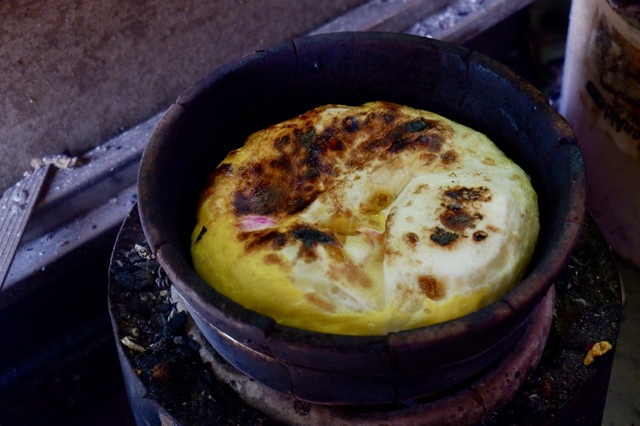
Meanwhile, as Mass is ongoing, vendors set up shop adjacent to the church to contribute another crucial part of the simbang gabi experience. They wake up and arrive earlier than the usual to prepare the much-awaited simbang gabi fare—which varies depending on the target enthno-liguistic group. Tagalogs prepare bibingkang espesyal, púto bumbong, salabat, and nilugawang manok. Sebuwanos prepare púto maya and búdbud to go with a hot cup of sikwate. Upland Kabitenyos prefer an infusion of avocado and pandan leaves over salabat and tsokolate. Kagayanos have a glutinous rice ball with sweetened peanut filling known as pawa. It is a favourite protocol for church-goers, that after the Mass they will flock to the nearby kiosks so that they could gather around for servings of kakanin and then some. This tradition has been sowed in to the Filipino consciousness for generations.
You may ask: "How did this tradition start?"
It started with the first wave of misas de aguinaldos here. The curates needed to compensate for having the settlement wake up extra early to attend service. Those assigned to the chapel would find whatever food and beverage they had in their kitchen so that they can offer these to the attendees. Such sustenance would help warm the stomachs of the farmers and keep them energised for another day of work, much to the delight of curates who own the land.
Eventually, this custom evolved through time, with local entrepreneurs seeking to capitalise on this event by having concession stands outside the church, offering easy-to-prepare food items that would wind up becoming holiday staples. Coincidentally, the primary ingredient for a lot of these refreshments is rice—which reflects the abundance of the cereal in the archipelago and this key crop has been providing nourishment for our ancestors and even to ourselves. It is like a metaphor, somehow, for the preceding Mass itself; how its steady supply of good cheer can energise even the most dour of souls.
This has been the story of simbang gabi; how a modest tribal rite in ancient Judea found its way in to the Philippine islands by way of Hispanic sensibilities, and became a nation-wide pastime celebrated well on to the twenty-first century. One need not be the most religious of citizens to appreciate this annual occasion, as you will be caught up in the parol lights and festive atmosphere that bring a resplendent and comforting warmth of Filipino togetherness; all amidst the seasonally cool air permeating the dark, wee hours of a December morning.
The above is an excerpt from the author's journal on Philippine heritage. Roberto Villarcabral likes to talk, write and create content about history and Filipino culinary traditions in his YouTube channel Histolinarya Collective.