

What the Early Filipino Noche Buenas Were Made Of
On the origins of what the writer likes to call "the ultimate midnight snack."

(SPOT.ph) What makes the quintessential Noche Buena? Is it the glazed ham or lechon? The chicken relleno or galantina? The ensaymada or bibingka with hot tsokolate? Ask any Filipino family, and you’ll likely get a multitude of variations on the theme.
Noche Buena, literally “good night,” is an age-old feast that brings Filipino Christian families together, traditionally right after midnight mass on Christmas Eve, for what I like to term “the ultimate midnight snack”—a late night of eating, carousing, and gift-giving in celebration of the birth of our Savior.
Noche Buena may be a Filipino tradition, yes, but it is one tied to Spanish colonialism and Christian conversion. That’s why it’s celebrated in many Latin American countries, also former Spanish colonies with the same gathering of food and family and exchange of gifts after the midnight mass. However, in our post-colonial, progressively Gen Z era, it might not seem as cool to sing the praises of Spain’s imperialist designs on the native population by way of Catholicism. Is our Noche Buena an essentially Christian Spanish celebration or can we say that we have happily reclaimed its origins and made it our festive own?
Also read:
The Fascinating History of Some of Your Favorite Filipino Christmas Eats
10 ArteFino Finds That Won't Break the Noche Buena Budget
Here's an exploration of the roots of Noche Buena as we know it:
The Spanish Origin Story
To understand the beginnings of Noche Buena in the Philippines, I dug into culinary historian Felice Sta. Maria’s Philippine Food History website to discover that, in 1537, Pope Paul III proclaimed in his bull Altitudo Divini Consilii that “newly converted natives” had to observe certain feasts, including Christmas. They did not have to work on those holidays, had to hear mass, and could enjoy special dishes and sweets to mark the special occasion.1 And enjoy special dishes we certainly did and still do.
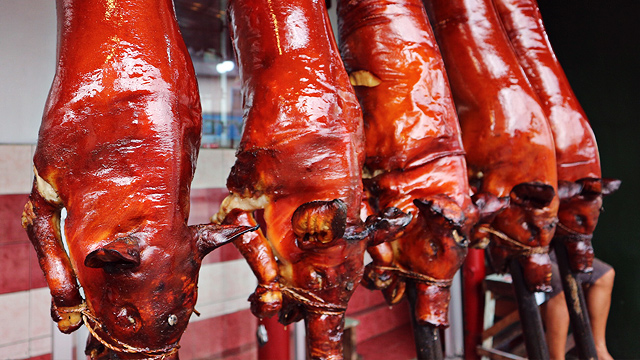
If there’s one food item that is a must on any Noche Buena table, it’s some kind of meat, usually pork, but sometimes poultry. In Spanish times, Sta. Maria documents spit-roasted pig or lechon as the dish of choice for most important feasts, including Christmas. In a Facebook post, she writes, “Spanish residents of Manila in the 1760s celebrated Christmas, Easter, a monarch’s birthday, and all important feasts with a roast suckling pig at the center of their tables, setting the example for native and Chinese Christian converts.” However, Sta. Maria notes that pork was already prevalent as a “Philippine prestige food” in pre-colonial times.2 It seems the natives were already partying with pork long before the Spanish arrived.
It so happens that poultry is also a big part of many Noche Buena meals: chicken relleno, chicken galantina, and yes, roast turkey. In my family, turkey was always part of our Christmas Eve celebrations going back several generations. I have memories of my maternal grandmother laboring for hours over her roast turkey with meat and bread stuffing, served with mashed potatoes, gravy and jiggly canned cranberry jelly. The dish always felt very American, like we had transposed Thanksgiving to our Filipino Noche Buena. While I assumed our roast turkey tradition came with the American occupation, Sta. Maria comments that turkey was already Christmas fare for the Spanish living in Manila in the 1800s, introduced via Mexico and other parts of the Americas.3 And while my grandmother’s canned cranberry jelly was most likely an American import, it seems that turkey was already being consumed by prominent families during Christmas even before the Americans came.
The presence of other celebratory meats on the table can also depend on one’s regional or provincial roots. Chef Pixie Sevilla recalls that her family would always serve asado de carajay, a Bulacan chicken dish, together with the usual ham, lechon, fruit salad and brazo. Chef Jam Melchor’s holiday feasting would include Kapampangan specialties like hearty ligang pascu, a meat-filled soup with pork, beef and chicken, alongside morcon and asadong matua.
Imported Bounty
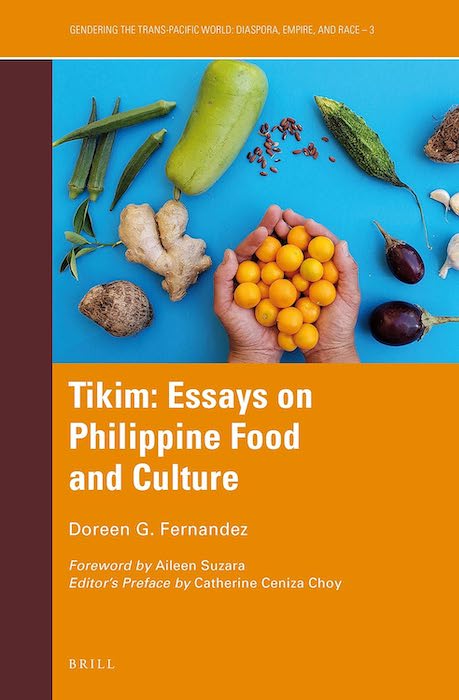
If there’s one thing about our Noche Buena, the food has to be extra indulgent, extra bountiful, and yes, extra expensive. While we may scrimp and save all year round, come December, we break the bank and spend on stuff we wouldn’t any other time of the year. In her landmark 1994 book Tikim, the late Doreen Gamboa Fernandez observes that so vital are “…jamon, relleno, galantina, chocolate, ensaymada, even the apples, oranges, grapes, turrones, and castañas…to the Filipino Christmas that they are sought even in hard times, when anything imported is beyond most budgets. They are symbols of the holiday, and have been entrenched in custom and memory.”4
It seems this predilection for imported goods during Christmas goes back to early Spanish colonial days. Sta. Maria documents Portuguese ships docking in Manila during the Christmas season laden with fresh pears, alongside “European wines, raisins, almonds, tasty preserves, fruits from Portugal, clove, cinnamon, pepper, fabrics and jewels, Negro slaves [sic!] and Caffirs,” as chronicled by Antonio Morga of Sevilla who lived in Manila from 1595 to 1603.5 Sta. Maria also notes Chinese traders would arrive in Manila every Christmas season to bring the Spanish “small oranges, nuts, chestnuts, raisins, plums, flour and more” according to the writings of Fr. Diego Bobadilla S.J. in the early 17th century.6 Fast forward to today, and you’ll see we continue to purchase imported fresh fruits, canned fruit cocktail and queso de bola flown in from overseas, with Filipino elites going for imported steaks, seafood and premium wines.
Rice and Ancient Rituals
While Noche Buena may have come about during the Spanish colonial era, this idea of the feast is, in truth, rooted in older traditions that have prevailed despite the influx of foreign influences. Remove the Spanish dishes and imported foodstuff from Noche Buena and you’ll find something even more meaningful. In Tikim, Doreen Fernandez explains, “Rice figures in our pre-Christian rituals—offerings to the gods, marriage ceremonies, fertility rites. It is so basic to our food life that it is appropriately symbol as well as staff of life. And so it now figures in this most Christian of feasts, and we give thanks, we celebrate, we offer each other rice on the important days of our year’s passage.”7
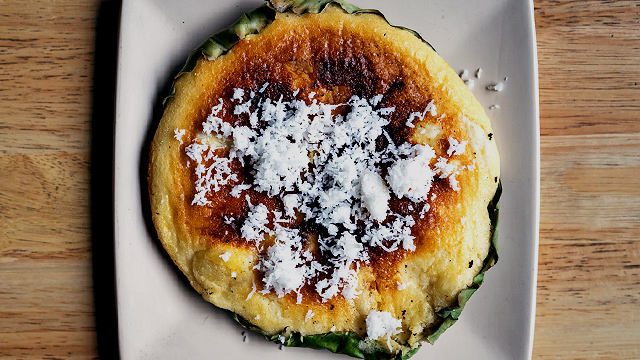
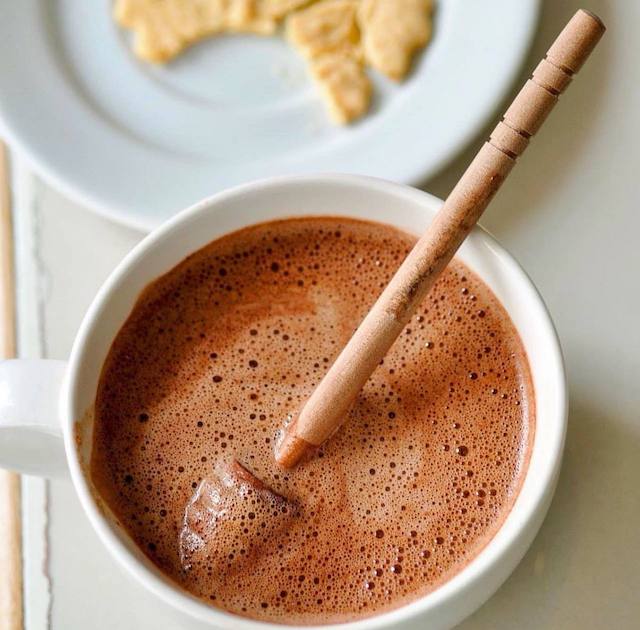
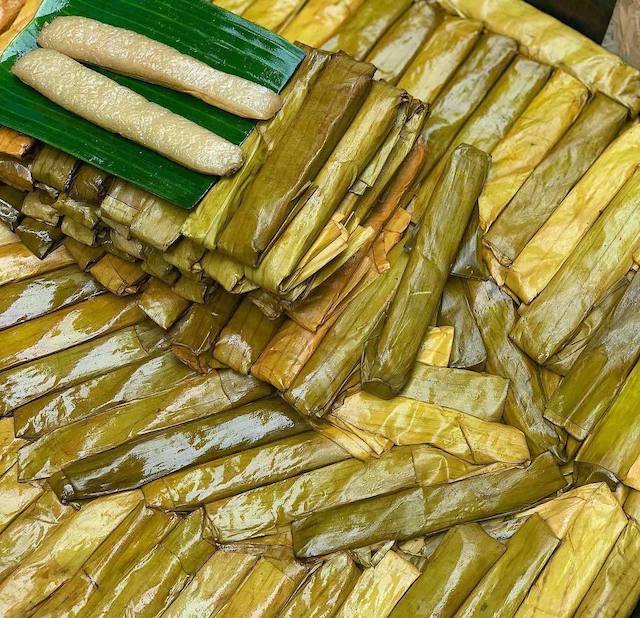
And so, amidst the imported foods and Spanish delicacies, there is puto bumbong, bibingka, suman and even arroz caldo that continue to grace many a Noche Buena. Chef Jam Melchor shares that his family’s Kapampangan Christmas is not complete without suman tili or suman pascu (suman sa lihiya), usually served with the family’s favorite suclating batirul made with cocoa and freshly roasted peanuts. In Marinduque, recipe tester and nutritionist Cecille Esperanza remembers cooking and wrapping suman malagkit in coconut or hagikhik leaves, enjoyed with kalamay hati or sampililok (coco jam). The hagikhik leaves are considered extra special because the plant only grows in the uplands or forest areas. Esperanza remarks, “Sinasabi kasi ng matatanda pag wala daw suman sa mesa, parang hindi Pasko, kulang ang handa.” (The elders say that if there is no suman on the table, it’s like it isn’t Christmas, the spread is incomplete.)
Food for thought, indeed, as we urbanites roam supermarket shelves laden with ham in boxes, stacks of canned fruit cocktail, jumbo packs of spaghetti noodles with spaghetti sauce and processed cheese, and cellophane-wrapped baskets of apples and oranges. As much as we associate these food items with Noche Buena, walk just outside the supermarket or palengke and you may espy a manang selling puto or suman from a bilao, or fanning the charcoal heat underneath purplish puto bumbong steaming in their hollow tubes. That’s Noche Buena too.
So, let’s go back to the initial question: what makes the quintessential Noche Buena? There’s a long list of dishes we could include, but in truth, there are no definitive rules. Think of your own family traditions—my roast turkey, Chef Pixie Sevilla’s asado de carajay, Chef Jam Melchor’s ligang pascu, Cecille Esperanza’s suman malagkit—or if you don’t have any, then start your own.
Noche Buena can be that celebration for believers and non-believers alike, for those with big budgets or small, for those with rambunctious extended families or with only a handful of loved ones to celebrate with. And if you’re a stickler for tradition, then just make sure you have some meat (lechon or jamon, chicken or turkey), a little extra indulgence (a basket of imported pears or grapes, perhaps), and rice, always rice, whether it’s your favorite kakanin, a bandehado of bringhe or paella, or a big bowl of hot arroz caldo.
Perhaps it’s fitting to end my musings on Noche Buena traditions with this wonderful quote from Doreen Fernandez: “Noche Buena, night of goodness, is thus not only hallowed by the birth of Christ, by Christian tradition and family customs, but by life forces earlier than anyone remembers, by stirrings of the Filipino ethos. It is indeed, for rich and poor, a meal meaningful beyond memory.”8
References
1 Sta. Maria, Felice P. “Christmas A Must.” Philippine Food History.
2Sta. Maria, Felice Prudente. “2. PASCAL LECHON.” Facebook, 14 Dec. 2020.
3 Sta. Maria, Felice P. “Islands Of The West.” Philippine Food History.
4 Fernandez, Doreen G. “Noche Buena.” Tikim: Essays on Philippine Food and Culture. Anvil Publishing Inc., 1994, p. 159.
5 Sta. Maria, Felice P. “Pears For Pasko.” Philippine Food History.
6 Sta. Maria, Felice P. “A Nose For Food.” Philippine Food History.
7 Fernandez, Doreen G. Tikim, p. 159.
8 Fernandez, Doreen G. Tikim, p. 159.
Hey, Spotters! Check us out on Viber to join our Community and subscribe to our Chatbot.