

(SPOT.ph) Any Filipino knows that living in the Philippines means celebrating the longest Christmas in the world. We start playing Jose Mari Chan music in September, put up our lights in October, and start gift shopping in November. But our favorite part of a quintessential Pinoy Christmas? The many—and we mean many—Christmas parties and Noche Buena that come with all our favorite holiday foods.
Want a few fun facts about how that classic Christmas dish became a holiday staple? Here’s a brief history of some of the most popular foods you’ll see on a Noche Buena spread.
Also read: 10 Best Places for Topnotch Ham This Christmas
Curious about how some of the most popular Noche Buena dishes came about? Read on:
Filipino Fruit Salad
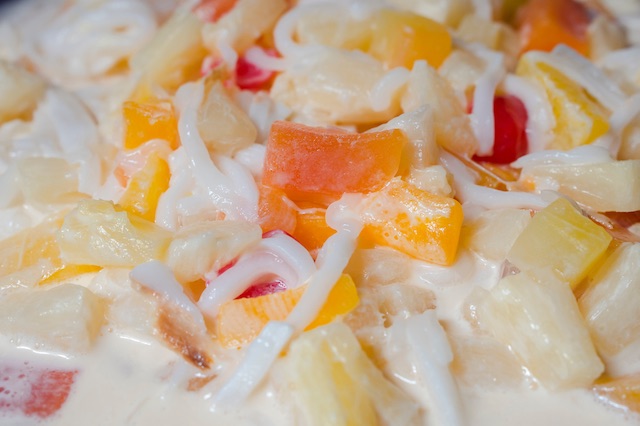
The Philippines has its own distinct style of fruit salad, which bears many similarities to the Southern American classic known as ambrosia salad—sans the nuts and marshmallows, and with the desiccated coconut omitted or replaced with strips of young coconut (in which case it is also dubbed buko salad). Some even add cheese! Every household probably has its own distinct recipe for the dish, but one thing is a staple ingredient: the canned fruit that makes up the bulk of this creamy, sweet dessert. The origins of this dish likely has to do with the American colonial period, where canned food became more and more popular, including canned fruit cocktail. But because this canned product wasn’t the most affordable for the average Filipino back in the day, the fruit salad became reserved for special occasions like Christmas. Today, we have the luxury of enjoying this dessert anytime we want, but we’re probably going to stick to having it as part of our Noche Buena spread.
Lechon
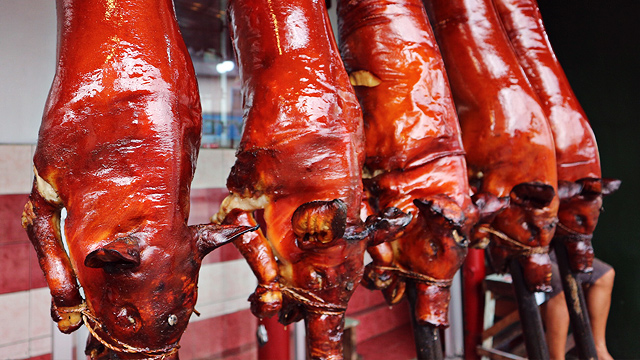
Maybe you’re a part of the many Filipino families feasting on a crunchy lechon centerpiece during Noche Buena—and you’d be in good company because lechon makes for a hearty meal to feed even a big family, often with leftovers for the next morning. But did you know that this Filipino staple can be traced all the way back to the Spanish colonial period? As some historians and anthropologists believe, many pork products including lechon were introduced to our ancestors by way of conversion into Christianity. During the Spanish Inquisition, many Islamic colonies were given the choice to eat pork or face certain death. Thankfully, today, we have a lot more freedom to enjoy this treat without any kind of threat. Another fun fact: lechon is derived from the Spanish word leche, meaning milk, as the pigs that were roasted on the pit back in the day were suckling pigs that were still nursing milk from their mothers.
Also read: Top 10 Lechon in Manila (2017 Edition)
Puto Bumbong
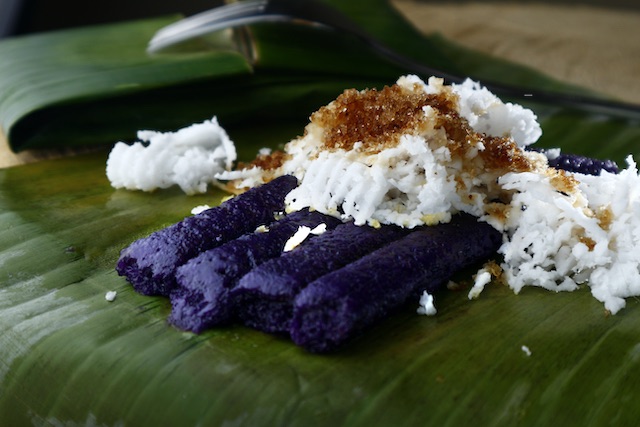
If you’ve ever tried to participate in Simbang Gabi—the devotional nine-day mass that goes back to the days of the Spanish colonial rule in the 1600s—chances are you would have seen the outside of churches lined up with vendors selling the bright and colorful puto bumbong. This special kakanin is famed for its purple hue—traditionally the result of the use of the variety of rice called pirurutong, which is soaked overnight, ground, and cooked inside bamboo tubes a.k.a. bumbong. It has a naturally nutty taste that’s rather subtle on its own, but the rice cake is also often served with accompaniments like fresh shredded coconut, butter or margarine for richness, and muscovado sugar for an earthy, toffee-like sweetness. As per Filipino food historian and The Foods of Rizal author Felice Prudente Sta. Maria, Filipinos have been noshing on this glutinous snack since the 1800s; it was even mentioned in one of Jose Rizal’s letters to his father in 1883.
Queso De Bola
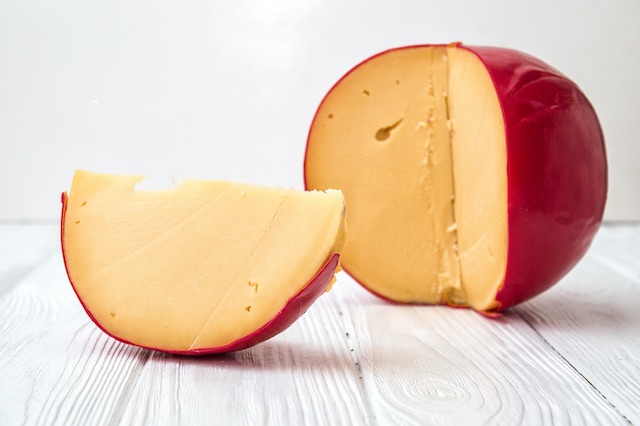
Cheese isn’t a common food in the Philippines, or Asia in general, especially compared to our European counterparts, so whenever you saw a big ball of cheese in bright red paper in your home, you probably knew it was Christmastime. The story of queso de bola can be traced back to the time of the Spaniards, as the big round cheese (which is actually Dutch in nature and is known as Edam in Holland) was first introduced to the country as a food staple for galleon officers. Compared to classic Edam, it tends to be firmer with a more intense saltiness—likely to help with its preservation in the journey to the Philippines. Today, queso de bola is one of our centerpieces for Noche Buena, best enjoyed with jamon or pandesal. There’s also some cultural significance to the Dutch cheese—it was widely believed to be a bringer of good fortune for the new year, as round objects and the color red are popular symbols of wealth and luck, respectively.
Ham
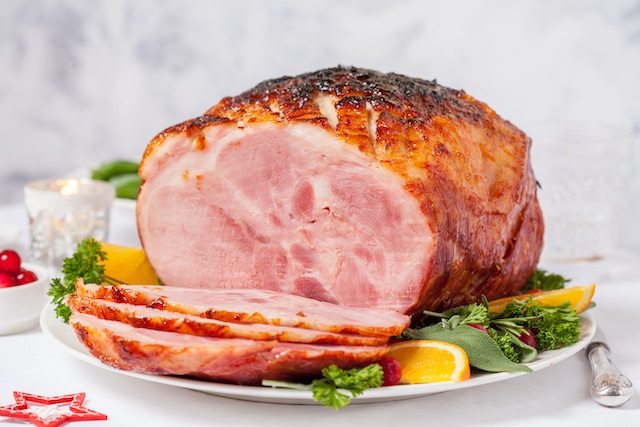
By now, you probably picked up on the fact that many of our beloved Christmas dishes have origins that date back to the 300-something years we were under the Spanish colonial rule. And just like lechon, ham (or jamon, depending on what your family calls it) was one of the many pork products that the wealthy Spanish elites would serve to their own families. The tradition of eating ham on Christmas is said to have roots in the European tradition of eating wild boar during feasts; this spread as Christianity spread throughout the globe, the Philippines included. Plus, as ham could be expensive for an average Filipino family, it’s mostly reserved for special occasions like Christmas. Today, we find no shortage of juicy ham on the market, from smoked to cured to marinated, that end up on our Noche Buena tables.
Castañas, a.k.a. Chestnuts
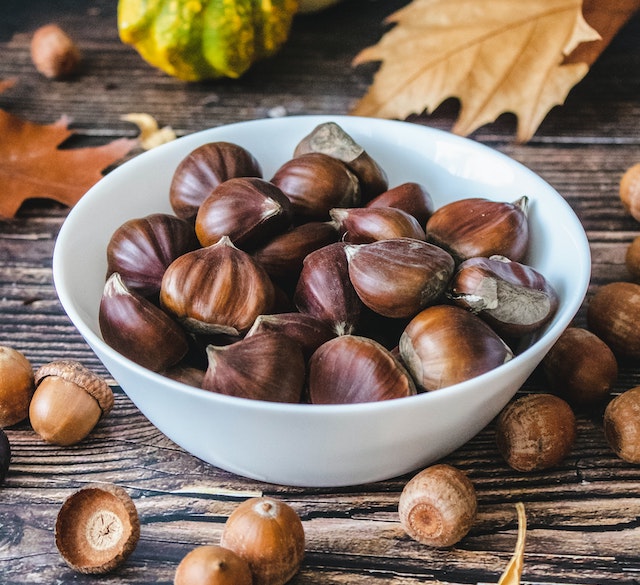
We may not have snow in the Philippines come Christmastime, but we do have the scent of street vendors roasting tubs of mouth-watering castañas to help us get into the Christmas cheer. A fun tidbit about this particular holiday staple: we get these nuts from China, yet it was the Spaniards who taught us to roast them to bring out their aroma and sweetness. We don’t know how these delicious nuts originally managed to make their way to our Christmas dinners and Noche Buena spreads, but today, they make for a great appetizer or snack all on their own.
Chicken Relleno
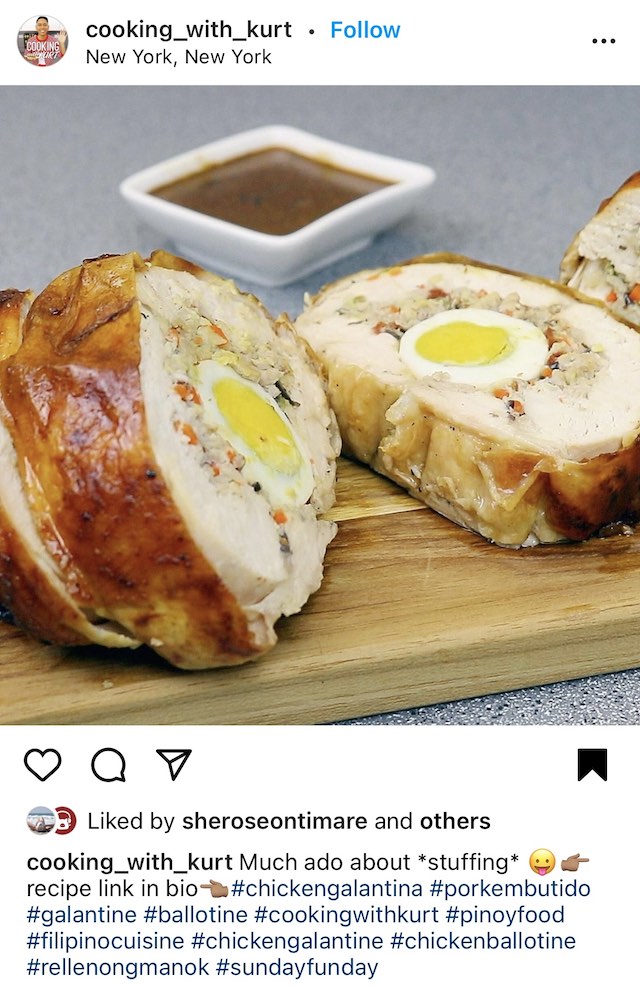
Also called chicken galantina, this dish is a labor-intensive and grand affair involving chicken or capon that’s deboned and stuffed (i.e., relleno) with other fillings, then roasted or deep-fried. It’s got Hispanic origins, being very similar to pollo relleno—a Spanish stuffed-chicken dish that can also be likened to French galantine, but set apart by the addition of dried fruits and nuts as an Arab influence. The Filipino version as we know it today is very much a reflection of our country’s history, especially when you consider the fillings. Initially Filipino families employed mostly ingredients of Spanish origin—chorizo, jamon, olives, and the like—but as time went on they began to incorporate other ingredients. These include canned Vienna sausages and SPAM as the country became a U.S. colony; and/or Chinese or Filipino sausages and calamansi for seasoning. Today, it’s a Filipino dish in its own right that—in true Pinoy fashion—is best served served with steaming hot rice.
Pinoy Spaghetti
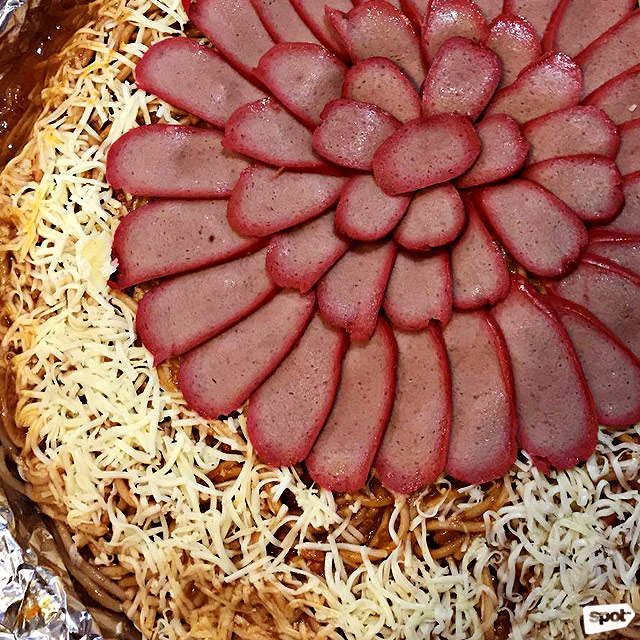
You grew up with it during children's parties, you probably even order it at a certain Filipino fast food chain, but have you ever wondered just where this classic dish got its roots from? Turns out, we might be able to trace back its origins all the way back to the days of World War II. As the story has it, spaghetti was first introduced to the country when it was sent as a popular meal for American soldiers who needed dishes that reminded them of home. Stories say that it was a Filipino staff member under General Douglas MacArthur himself who created a modified version of Neapolitan spaghetti using banana ketchup, which had recently become a substitute to tomato ketchup, after a shortage of tomatoes and tomato-based products hailed the country. Filipino families would snatch up banana ketchup from the shelves and create their own versions of this new sweet-style spaghetti, and fast forward to today, we still enjoy this rebellious pasta dish in all its glory.
Also read: Top 10 Pinoy-Style Spaghetti (2018 Edition)
Hey, Spotters! Check us out on Viber to join our Community and subscribe to our Chatbot.