
Heat Index Reaches Danger Levels in NCR Even Before Summer Begins
Some locations are now hitting 45°C.
(SPOT.ph) Summer isn't here yet but temperatures are already soaring to dangerous levels as the amihan season nears its end, according to the Philippine Atmospheric, Geophysical and Astronomical Services Administration (PAGASA).
Several areas across the country have recorded extreme heat indexes. On February 26, Coron, Palawan hit a 45°C heat index while Echague, Isabela hit 42°C on March 2. The situation is expected to worsen, with Science Garden in Quezon City and Clark Airport in Pampanga forecasted to reach 46°C today, March 3, and tomorrow, March 4.
Nueva Ecija is set to endure even higher temperatures on March 4, with a projected heat index of 49°C. Other locations, including Bataan and Olongapo, are also expected to experience dangerous heat levels this week.
“Usually naman, kapag ganitong panahon ng Marso ay unti-unting na rin talaga natin na nararanasan itong mainit na panahon. Sa ngayon, kumbaga nagkakaroon lang tayo ng mga breaks doon sa amihan natin dahil nga transition period tayo. So, halos normal naman na nagiging mainit ‘yung panahon natin kapag ganitong panahon na ng Marso kung saan papunta na tayo doon sa dry season,” PAGASA Weather Specialist Ana Clauren-Jorda told Unang Balita.
Although Northern Luzon will still see occasional rains due to the lingering effects of the amihan, PAGASA said most of the country will experience more humid conditions.
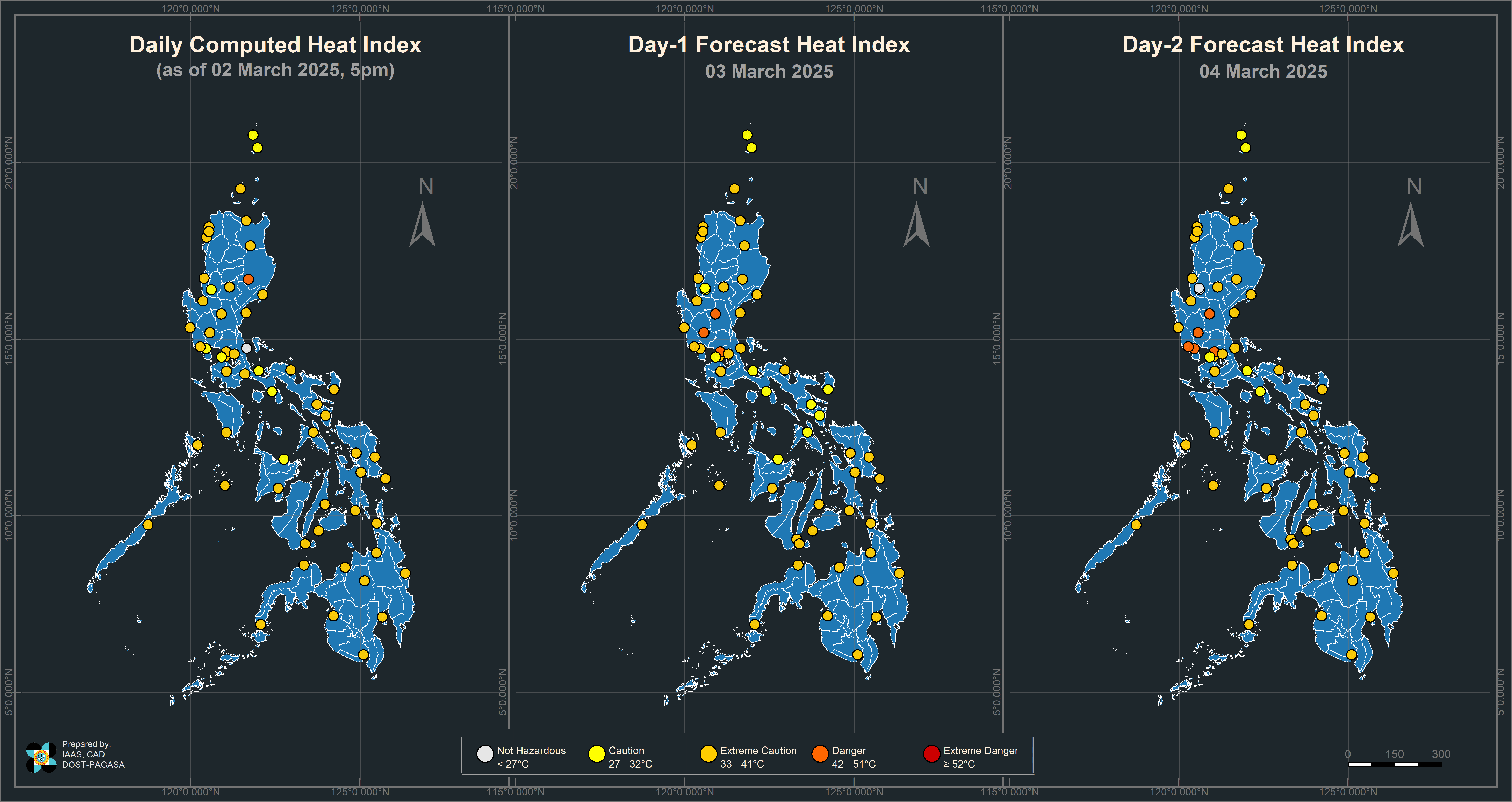
Since March 1, PAGASA has been releasing heat index readings, with cities like Caloocan, Malabon, and Valenzuela suspending face-to-face classes on March 3 as temperatures continue to rise.
Also read: Heat Index Explained: How Your Body Feels Temperature and Humidity
What is the heat index?
Heat index is the "human discomfort index that gives the apparent temperature or what humans perceive or feel as the temperature affecting their body,” according to PAGASA. High air temperature and high humidity result in a high heat index.
A heat index between 42°C and 51°C falls within the “danger” zone, where heat stroke is likely to occur with continued exposure.
Anywhere between 32°C and 41°C can cause heat cramps and heat exhaustion, especially if you're walking under the sun. Prolonged activity in this heat could also result in heat stroke.
In addition, those with pre-existing health conditions like heart disease, obesity, or diabetes may find that their symptoms worsen in heat conditions because their bodies are under additional stress.
How to stay safe during extreme heat
It's important to take precautions in high-heat environments. Drinking plenty of water even if you’re not thirsty helps, as well as taking breaks in the shade or air conditioning, and wearing light, loose clothing.
Avoid strenuous activities during the hottest part of the day, which is typically from 10 a.m. to 4 p.m. If you must be outside, apply a broad-spectrum sunscreen with an SPF of at least 30. Reapply every two hours.
There are also best practices to take note of inside the home. While electric fans can provide comfort, they will not prevent heat-related health dangers. Taking a cool shower or bath is a much better way to cool off, according to the Center for Disease Control and Prevention.
Also read: How to Avoid Heatstroke Now That Dry Season Is Here