

Throwback: Pope Francis in the Philippines
Not even the rain could stop Filipinos from showing up in the millions.
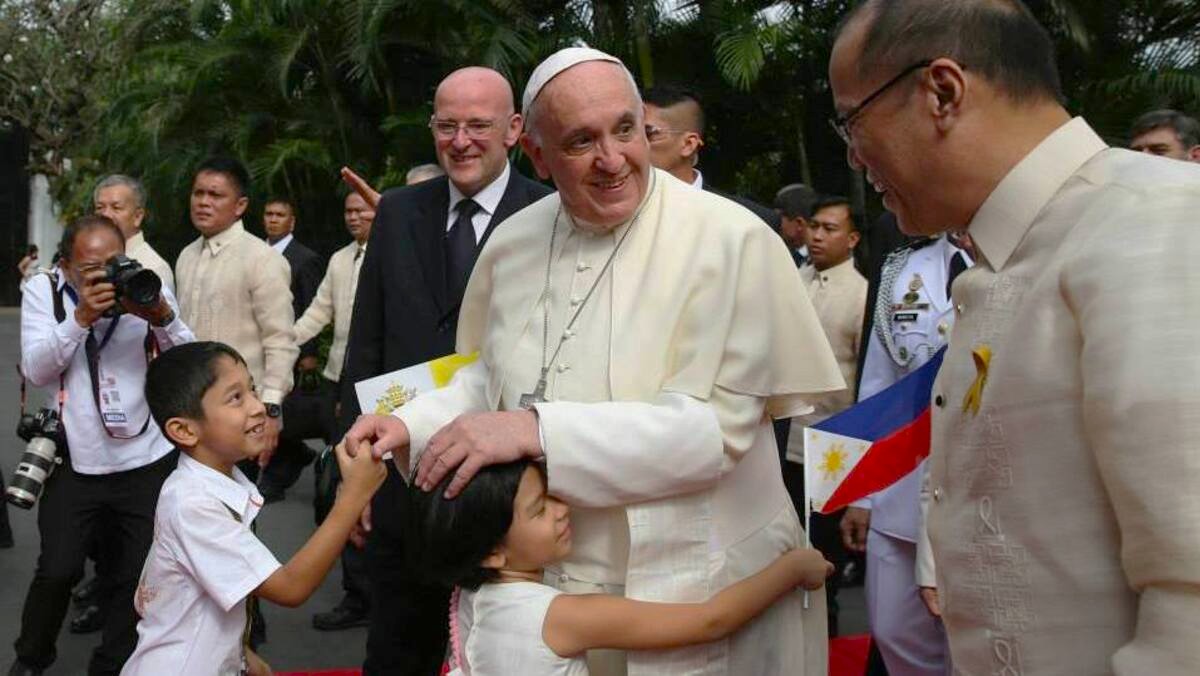
(SPOT.ph) With the recent passing of Pope Francis, Catholics around the world are mourning the loss of what many call “The People’s Pope.” He was thus named for his compassion and for championing equality and social justice. For Filipinos, the grief over his death is accompanied by memories of his first and only visit to the Philippines a decade ago.
Although it rained almost the entire time he was here, not even the weather could dampen the spirit of the millions of adoring fans who followed him everywhere throughout those five days.
Here’s a look back at Pope Francis’ historic visit to the Philippines from January 15 to 19, 2015.
Also read: EXPLAINER: What Happens When the Pope Dies?
Pope Francis in the Philippines
Day 1: A warm welcome
The Pope touched down at Villamor Air Base in Manila late in the afternoon, greeted by then President Benigno Aquino III and other high-ranking officials.
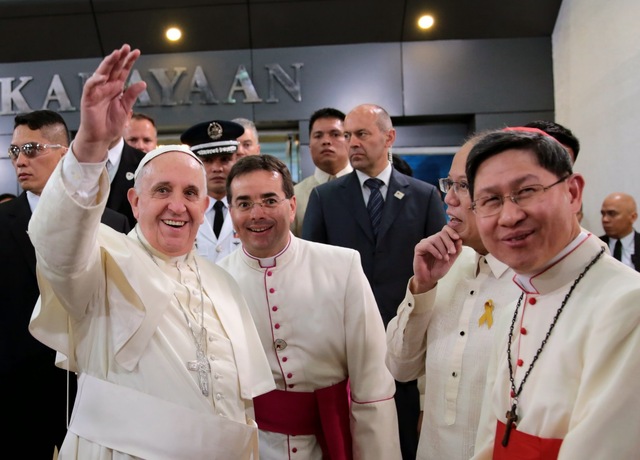
From there, he rode the white popemobile to the Apostolic Nunciature—or the local “embassy” of the Vatican in each country—where he stayed during his time in Manila. Crowds lined the streets to catch a glimpse of him, many cheering and waving flags under the light rain.
Day 2: Official visits
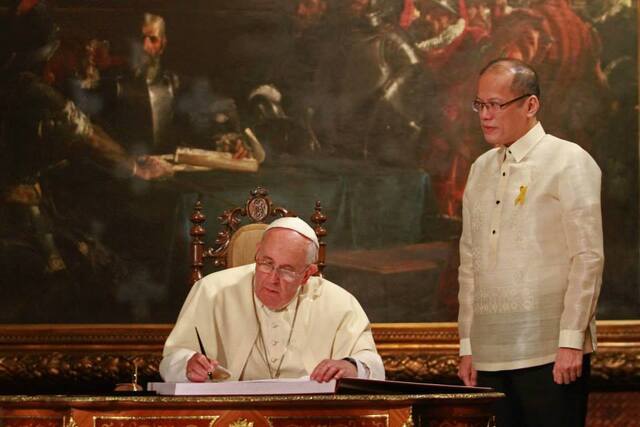
Pope Francis began his first full day with a courtesy call at Malacañang Palace, where he addressed government officials and diplomats. In his speech, he urged leaders to live with integrity and serve the common good, calling out social inequality and corruption.
“I am most grateful for your invitation to visit the Philippines. My visit is above all pastoral. It comes as the Church in this country is preparing to celebrate the fifth centenary of the first proclamation of the Gospel of Jesus Christ on these shores. The Christian message has had an immense influence on Filipino culture. It is my hope that this important anniversary will point to its continuing fruitfulness and its potential to inspire a society worthy of the goodness, dignity and aspirations of the Filipino people,” Pope Francis said.
He then celebrated Mass at the Manila Cathedral, joined by Filipino bishops, priests, and religious leaders. Earlier in the morning, he met privately with street children supported by the Tulay ng Kabataan Foundation—a gesture prompted by letters the children had written to him.
In the evening, the Pope headed to the Mall of Asia Arena for a large gathering with families. There, he spoke about the importance of dreaming big for one’s children and nurturing faith within the home.
“You may be poor yourselves in material ways, but you have an abundance of gifts to offer when you offer Christ and the community of his Church. Do not hide your faith, do not hide Jesus, but carry him into the world and offer the witness of your family life!” Pope Francis said.
Day 3: Tacloban
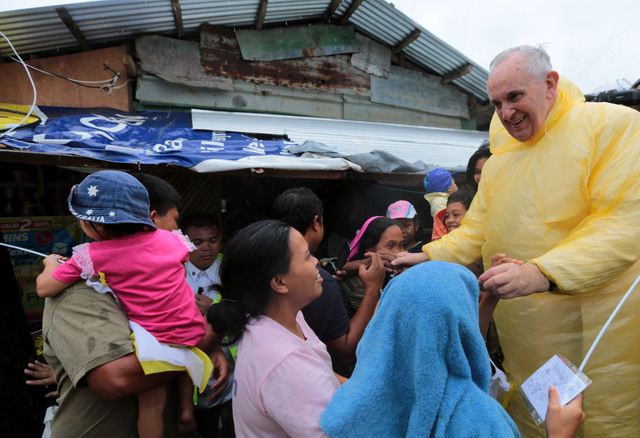
It’s the image many remember most from his visit: Pope Francis in a wet yellow poncho in Tacloban. He flew in to be with those affected by Super Typhoon Yolanda, which struck the city in 2013. Although nearly two years had passed by then, signs of devastation remained everywhere. Despite the rain—and an incoming storm—the Pope insisted on pushing through with the trip.
“Let me tell you something personal—when I witnessed this disaster from Rome, I felt that I had to be here. That is when I decided to come here. I wanted to come to be with you. Maybe you will tell me that I came a little late; that is true, but here I am!” Pope Francis said.
Afterwards, he had lunch with some survivors of the super typhoon.
Later in the afternoon, he visited the Pope Francis Center for the Poor, a facility that provides shelter, medical care, and a home for the elderly and orphans.
From there, he headed to the Palo Cathedral, where he met with local clergy and more families of the typhoon’s victims, offering quiet moments of prayer and comfort before the weather forced an early departure from Tacloban. He was back in Manila by nighttime.
Day 4: Historic Mass
On Sunday morning, Pope Francis met with young Filipinos and religious leaders at the University of Santo Tomas. One of the most emotional moments of his entire visit came when a 12-year-old former street child, Glyzelle Palomar, asked why children suffer. Visibly moved, the Pope set aside his prepared speech and offered an honest, unscripted response—acknowledging that he didn’t have an answer.
“Look out for this fact today: she, Glyzelle, is the only one who has put a question for which there is no answer. She was not able to express it in words but, rather, in tears. Only when we, too, can cry about the things just said are we able to come close to replying to that question. Why do children suffer so much? Why do children suffer? When the heart is able to ask yourself and cry, then we can understand something,” Pope Francis said.
It was an exchange that resonated far beyond the university grounds, reaching all corners of the world.
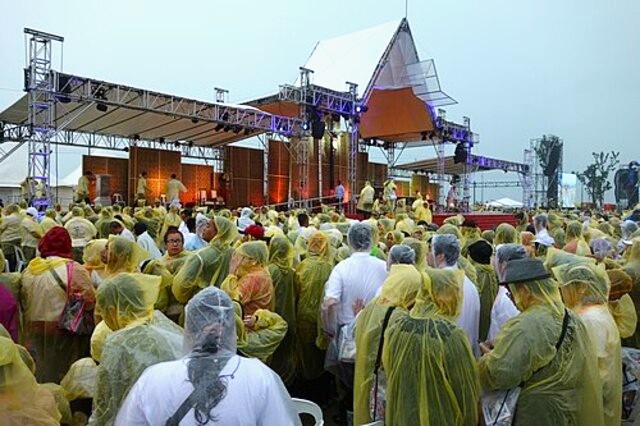
That afternoon, a sea of people gathered at Luneta Park in Manila for the Pope’s final Mass in the country. Even with light showers, an estimated six to seven million people turned up, making it the largest papal event on record. It still holds up today, a decade later.
Day 5: Farewell
Before leaving, Pope Francis attended a short send-off ceremony at Villamor Air Base.
On his way back to Rome, he held an in-flight press conference. When journalist Kara David asked him what he had learned from Filipinos, Pope Francis responded without hesitation. He mentioned their enthusiasm, the gestures, “the capacity to celebrate” even in times of sorrow.
“There’s a word that’s difficult for us to understand because it has been vulgarized too much, too often used poorly, misunderstood, but it’s a word that has substance: resignation. A people that knows how to suffer, and is capable of getting up and continuing.”
Also read: Could Filipino Cardinal Tagle Be the Successor to Pope Francis?