

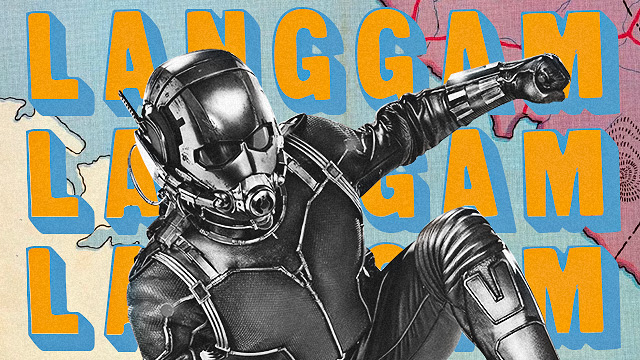
(SPOT.ph) With more than 7,000 islands and more than 100 ethnolinguistic groups in the Philippines, it doesn't come as a surprise that there over 120 languages spoken in the country. Some of the major ones are Aklanon, Bikol, Sebwano, Chavacano, Hiligaynon, Ilocano, Ivatan, and the list just goes on and on. Some words in these languages are similar, but that doesn't always mean that they have the same meaning (or the same pronunciation).
Dagâ in Tagalog, for example, refers to the nasty house pest; but dagá in Ilokano and dagà in Bicol refers to soil. Bágay, in the Tagalog and Bikol languages, refers to things; but bagáy, in the Tausug language, refers to friends.
Also read: 10 Filipino Words That Don't Always Mean What You Think They Mean
Langgam, as a word, also has a multitude of meanings in the different Philippine languages:
Tagalog
Langgám in Tagalog refers to the insect from the family Formicidae, which we know as the ant. The UP Diksiyonaryong Filipino (2001) defines it as "maliit, may sungot at walang pakpak maliban sa ilang tigulang." In English, we know it as the ant, which is easily identified by their antennae and small size. In the Marvel universe, Ant-Man has the power to shrink—thanks to his suit's technology—to the size of an ant.
Bikol
For those in the Bicol Region, the ant is referred to as tánga (stress on the first syllable). Langgám in Bikolano means tánga, and Ant-Man may or may not be called Tánga-Man.
Sebwano
In the Visayas, lánggam (stress on the first syllable) is used to refer to birds (class Aves). The small difference in stress makes a world of difference for these two species. The Cebuanos, instead, refer to ant with the word hulmígas, which comes from the Spanish word hormiga.
Pangasinan
For the Pangasinense, the lánggam is called giláta.
Waray
For people living in Samar, eastern Leyte, and Biliran Islands, they refer to ant with the word haromígas (stress on the third syllable). It has the same origins as the Sebwano hulmígas.
Iloko
In the Iloko language, kutón means ant.
Maranaw
Interestingly, people in the provinces of Lanao del Norte and Lanao del Sur call the ant as pilà. While it has a different stress as píla or line in Tagalog, we can't help but think of its connection to how ants have a penchant for lining up.
Reference: UP Diksiyonaryong Filipino (2001), ed. Virgilio S. Almario