

All Roads Lead to Cubao: Here Are Tips for a Smart Commute in Araneta City
It's now being recognized as the center of the universe.
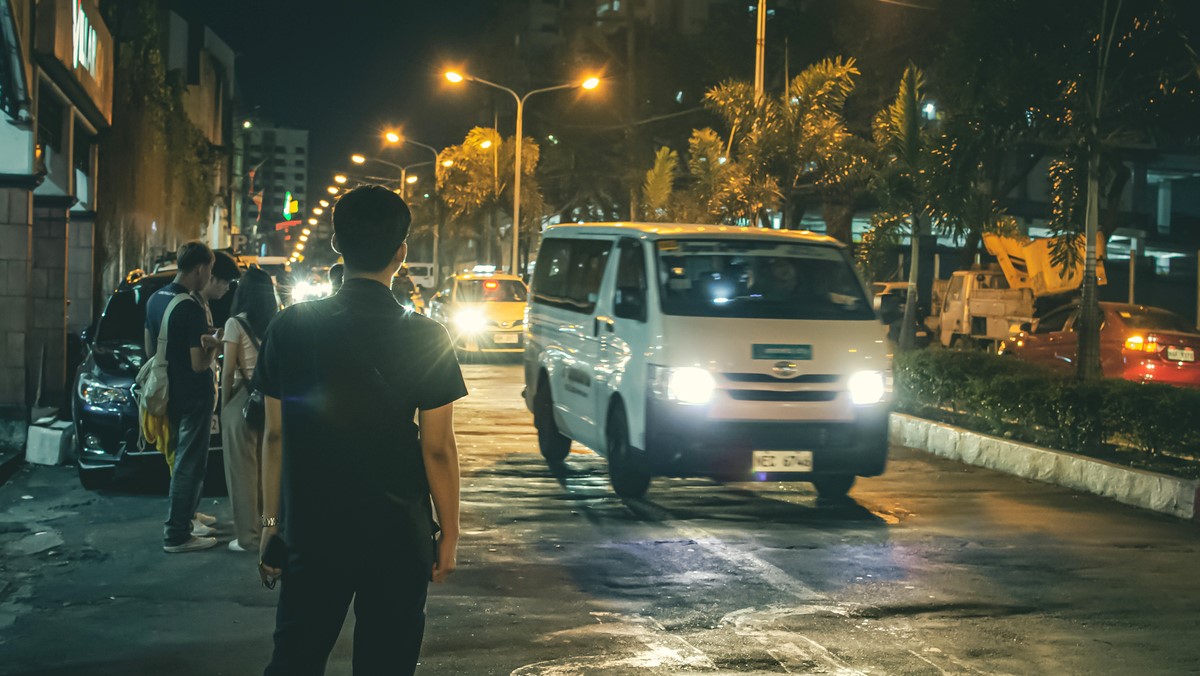
(SPOT.ph) Sometime in 2023, a Reddit user made a joke about how all roads lead to Cubao—and since then, it has people talking about how true the statement is.
Cubao is like the North Star. If you can make it to Cubao, you can make it anywhere. This was especially true even before the advent of the internet, when we didn’t have Google Maps or Waze to help us in our navigation. Lost in the mountains? Just hail a bus to Cubao. From there you will find your way.
So it’s no surprise then why commuters keep coming back to Cubao even with all the chaos that surrounds it. SPOT.ph spoke to five commuters who have mastered the Cubao hustle for some of the best tips and practices on how to navigate the center of the universe.
Also read: Do You Still Remember the Old Cubao?
How to commute in Cubao with the help of five local experts
“Cubao is a mix of old and new elements,” as 37-year-old Samantha Lucas puts it, who has been commuting to Cubao since 2009. Originally part of vast lands and later developed during the American colonial period, Cubao's location has always made it a focal point for urban transportation within Metro Manila.
The evolution of bus terminals in Cubao are also attributed to the area's growing role as a gateway (hence the mall name) for travelers heading to and from various destinations across Luzon and the rest of the Philippines.
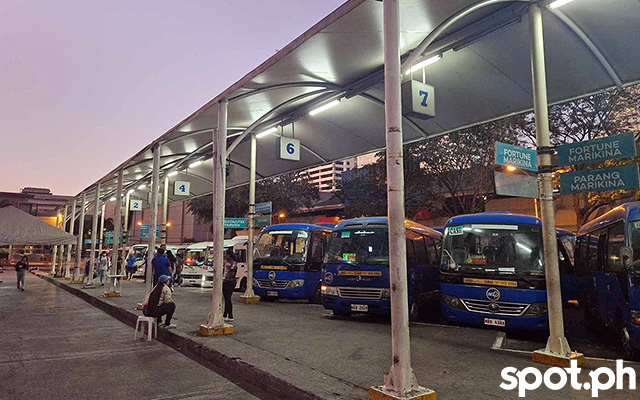
“Here lies the LRT and MRT, provincial buses to the north and south, as well as vans going to the east like Rizal. Even P2P bus to and from the airport is here. First-timers can expect some walking from another terminal to the other,” Ivy says, confident in her 18 years of experience in Cubao.
Come prepared
A smoother journey starts before you even leave your house. With everything going on in Cubao, expect your first, second, or even third time to be chaotic. Don't worry—it's all part of the experience.
“Cubao is very busy. It deservingly earns its moniker as the center of the Philippines,” Samantha says. “I think it is simply being intentional with your trip to Cubao so that you will get things done and reach your destination with purpose.”
That's exactly what senior associate EJ Valentin does to avoid being overwhelmed with choice. His commute entails multiple transfers from Caloocan to Cubao, so he makes sure to sort out his options before stepping out: “Cubao has a lot of options for everything, so I try to plan my choices—the type of transportation I’m taking to and from.”
Know who to trust
Because there’s no integrated hub in Cubao like its PITX counterpart in the south, it can feel like a labyrinth to find specific routes. The challenge is compounded by the lack of clear signages to guide commuters to the appropriate terminals.
Let’s be frank: Online navigation guides like Sakay.ph and Moovit aren’t always updated, especially when operations changed when the pandemic rolled in, so there’s a high chance of taking a wrong or longer route than what is necessary.
So when in doubt, ask.
“My life hack for first-timers is to know that Cubao is not an unfriendly place,” Samantha says. What she means by that is that the people in Cubao are your lifelines—security guards, street vendors, traffic enforcers, and the like.
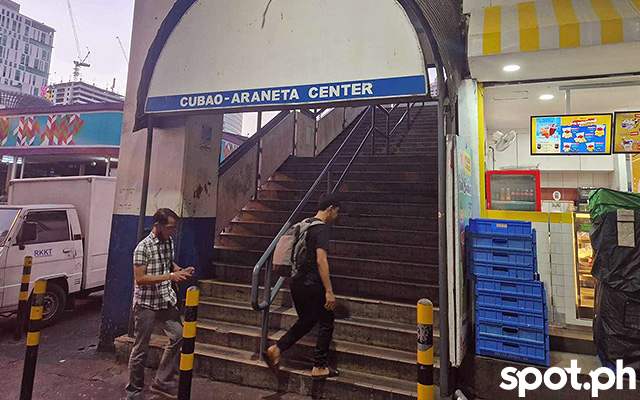
However, 24-year-old Kath Tuscano also points out that not everyone is a reliable source of information no matter how helpful they try to be. Sometimes people get things wrong plain and simple; other times ulterior motives are involved.
“Sa sobrang daming public transportation sa Cubao, it’s confusing on what you should ride. Mga barker minsan kahit magtanong ka, they just say yes kahit hindi dadaan sa destination mo basta may sumakay. Wag ka basta sasakay. Magtanong sa driver if dadaan sa ganito, ganiyan,” Kath says, adding that it is best to ask two or three people to be sure that the information is correct.
“Also expect some random person approaching and offering assistance,” Cromwell Mallen says. He is a 29-year-old liaison officer who has been commuting in Cubao since 2012. “Avoid them at all costs. Trust me, their services are not free. Bus liners [should have] their own staff in uniform—they are the ones you should be talking to.”
Also read: The Reinvention of Cubao Expo in the Face of a Pandemic
Skip the negotiations
Most public transportation in Cubao operate on a fixed fare as prescribed by the Land Transportation Office and Franchising Regulatory Board (LTFRB).
A word of warning from Cromwell: “Do not engage in colorum vans no matter how cheap the fare is or how much you are in a rush.” For the unfamiliar, colorum is the term for private vehicles operating as public utility vehicles (PUV) without proper authorization from the LTFRB. It’s a sentiment echoed by Ivy and EJ, the reason for this being they’re not regulated so they are more prone to abuse the fare matrix to unsuspecting commuters.
“They’re extremely risky. You’re not lacking in options in Cubao anyway, so it’s highly recommended not to entertain them,” EJ says.
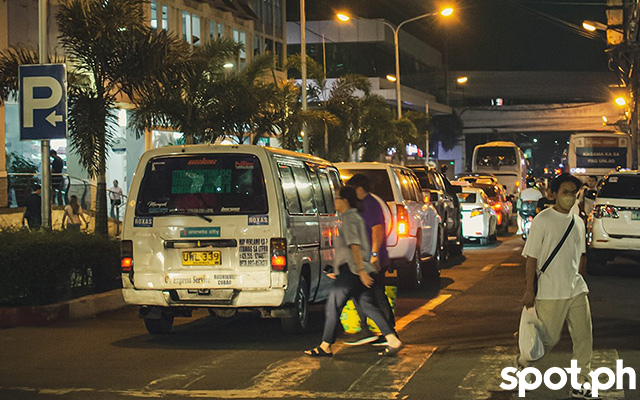
The same goes for motorcycle taxis. We get it—we won't always have the energy for multiple transfers. You might be tempted to accept a habal-habal offer to head straight to your destination, especially since they are plenty sprawled along Farmer’s Market. Try not to give in to this. Kath advises to stick with motorcycle taxis like Angkas, JoyRide, and Move It to avoid the stress of negotiating with a rider whose goal could be to be paid more than what is fair.
Go online when you can
As much as people are helpful, it's unrealistic to expect security guards or street vendors to have all the information on Cubao's public transportation system.
Ivy suggests it’s best to look up Facebook pages of transportation companies to find a list of routes, schedules, and even terminal locations in Cubao.
More established bus liners will also have their own websites with an advanced booking option as per Cromwell. It's surely worth checking out if it means you can skip the line at the ticketing counter. He adds that when picking a bus, go with one where the passenger load is at least half or more than the vehicle capacity. This is because most of the bus operators will not strictly follow the given time departures when passenger count is low.
Be ready to reroute
Plan B should always be in the equation when commuting—that means being open to alternatives that might be out of your comfort routes.
Kath suggests that those considering the EDSA Carousel might find the MRT a better option. This is because the former's closest station is located at Main Avenue, which is pretty far from the focal point that is Araneta Cubao.
“Best mag-MRT ka na lang if Cubao ka bababa, unless may sasadyain ka within Main Avenue,” Kath says.
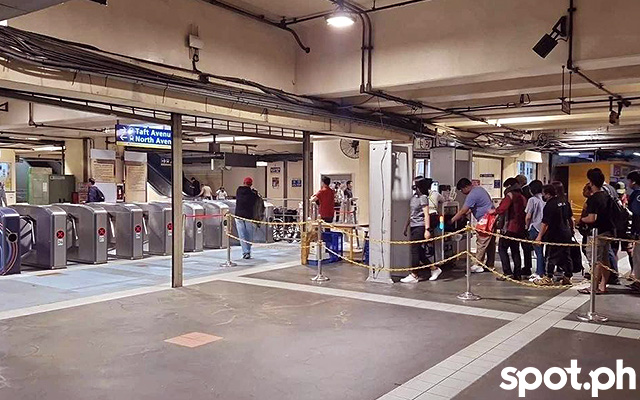
The MRT is easily the most crowded choice of transport in Cubao, with long lines reaching the bottom of the escalator. If you’re feeling up for it, Kath proposes a roundtrip to skirt the long wait: “Sakay ng Cubao southbound tapos lipat sa GMA-Kamuning then sakay MRT na northbound.” That way, you have a higher (and probably even faster) chance at getting inside the train—if you're willing to pay for twice the fare, that is.
Be street smart
It’s a common consensus among our commuters that contrary to widespread opinion, Cubao is actually a pretty safe place to be in, all things considered.
Like anywhere else, just be extra cautious at night. Ivy says it’s best to walk with someone when crossing the EDSA-Aurora Boulevard footbridge. If you don't have anyone to walk with, then walk fast.
Is there a best time to commute? The obvious answer is that it varies from commuter to commuter, from location to location. Rush hour is always a constant variable, but what about the rest of the day?
In the case of our five commuters, all of them agree that finding a ride becomes much more difficult past midnight, with the exception of 24/7 provincial buses. Only Cromwell was able to give a particular schedule that works best for him in Cubao: from 4 a.m. to 6 a.m., from 11 a.m. to 2 p.m., and from 9 p.m. to 11 p.m.
Cromwell also suggests being smart about where to place your finances before leaving for Cubao. Put coins and small bills in your pocket for easy access, while bigger bills can stay in your wallet inside your bag. The rule of thumb is to always bring extra cash with you in case of emergencies. No one wants to be that person begging strangers for cash in exchange for GCash credits.
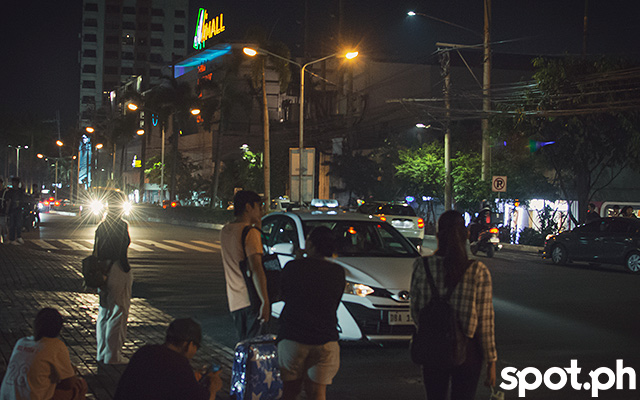
There's a lot of things that can be improved with Cubao, but there's something about it that keeps people coming back to it, whether by choice or necessity. For Samantha who has lived in Quezon City all her life, Cubao stands out because “it has soul.”
“It offers the conveniences of the city and the simple luxuries that I enjoy at affordable prices. I do not need to dress up at Cubao. The rule is to come as you are and this part of the city will welcome you.”
Also read: Neighborhoods: Why Araneta City in Cubao Is the Metro's Christmas Blueprint