

DENR Suspends All Manila Bay Reclamation Projects
Compliance and environmental impact will be in review.
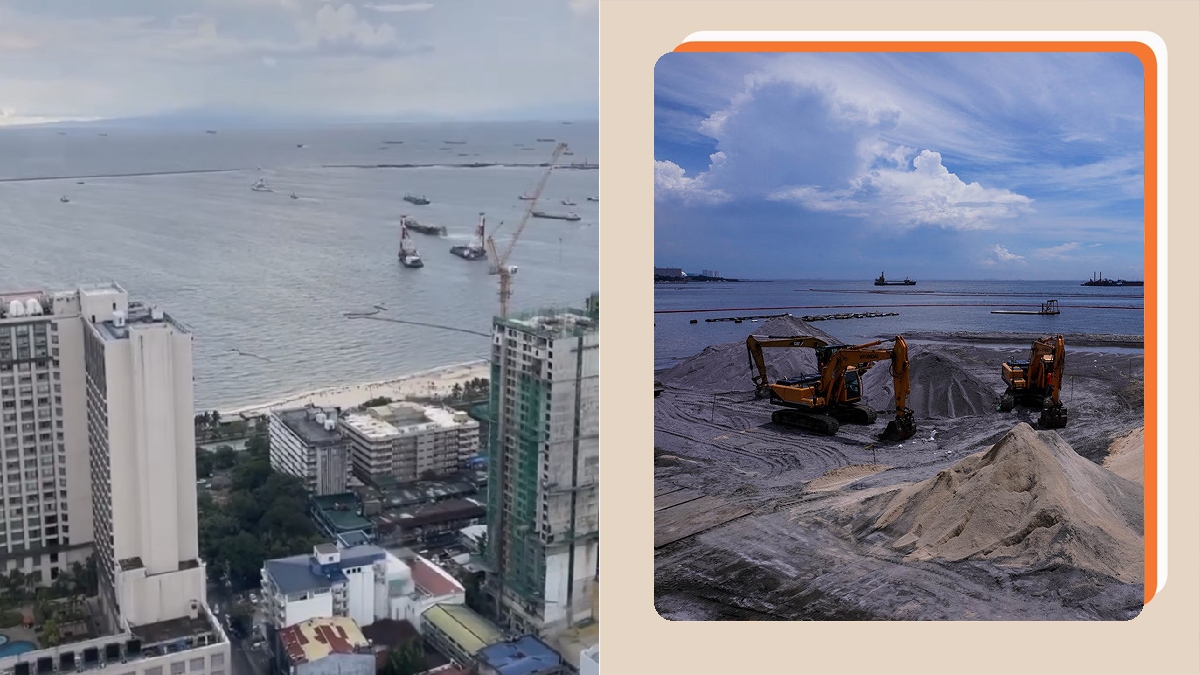
(SPOT.ph) A total of 22 reclamation projects in Manila Bay have officially been suspended today, August 10, Department of Environmental and Natural Resources Secretary Maria Antonia Yulo-Loyzaga said in a press briefing on Thursday afternoon. This comes with a Cumulative Impact Assessment initiated by the department.
Mayor Honey Lacuna also confirmed that Manila City has received information from the Philippine Reclamation Authority that all reclamation activities have been ordered suspended by the Department of Environmental and Natural Resources (DENR).
This comes days after President Ferdinand "Bongbong" Marcos Jr. said that all Manila Bay reclamation projects—except one—have been suspended during a situation briefing on August 7 about the typhoon-affected areas in Bulacan.
"Napasuspinde lahat. Under review ang lahat ng reclamation. Yung isa lang ang natuloy dahil na-review na. Maraming problema. Marami kaming nakita na ‘di masyadong magandang patakbo," Marcos was quoted in reports.
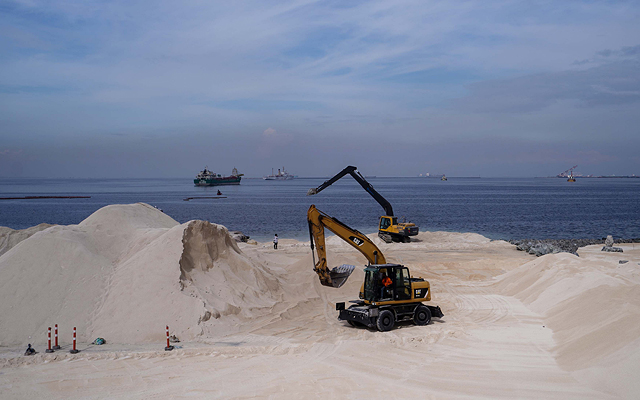
What to know about the suspension of Manila Bay reclamation projects:
Loyzaga pointed out that the DENR needs to "look into the compliances, the conditions under which the ECCs (Environmental Compliance Certificates) and area clearances were issued." The current reclamation projects were approved by the Philippine Reclamation Authority under the Duterte administration, she said. "While they are under review, they are not allowed to proceed."
The department has also yet to announce how long the suspension and review is, since "the scientific team that [they] are actually engaging will be organized by this month." The team, Loyzaga fzurther explained, will come from different disciplines, including scientists, oceanographers, geologists, climate scientists, and social scientists.
"That means disciplines need to intersect, the results need to reflect the intersections between the disciplines. And when you say transdisciplinary work, we learn from communities, we learn from experts in practice, we don't just learn from scientists who are professors," she added.
Statements and petitions against the continuance of Manila Bay reclamation projects:
Pambansang Lakas ng Kilusang Mamamalakaya ng Pilipinas has expressed concerns in a statement released on August 4: "Recent flooding incidents in parts of Bulacan and Pampanga amid the heavy rains should prompt the DENR to temporarily put on hold ongoing reclamation projects in Manila Bay, until the proponents scientifically prove that their projects have not aggravated the flood hazards in these coastal areas."
The U.S. Embassy in Manila on August 7, through Embassy spokesperson Kanishka Gangopadhyay, has also expressed concerns about "the potential negative long-term and irreversible impacts to the environment, the resilience to natural hazards of Manila and nearby areas, and to commerce." He specified that the projects have ties to the China Communications Construction Co., which is part of the U.S. Department of Commerce’s Entity List (a trade restriction list).
International environmental group Oceana, likewise, released a statement on August 9 urging the Palace to permanently stop these projects.
"We urge the President to permanently stop these projects as they put in peril food security, violate our constitutional rights to a healthy, balanced, safe, and resilient environment and the rights of artisanal fisherfolks and coastal communities to access their fishing grounds and livelihoods. We are also alarmed by the exemption of one project that was not divulged in his statement. This project should be revealed to the public so that civil society groups, fisherfolk, science and academe, and other key stakeholders can validate the reported review that merited its exemption," said Atty. Gloria Estenzo Ramos, Oceana’s Vice President.
When asked about the long-term effect of the Manila Bay reclamation projects, Loyzaga said that "any disruption in any natural ecosystem will alter its function." With the ongoing flooding in the city of Manila as well as parts of Bulacan a major concern, she explained that "certain sections of the Manila Bay region are at zero elevation." This means that coastal areas in the bay area "are actually subsiding."
"And when you have the situation where you have extreme weather events, and we're looking at scenarios in the climate looking forward 10, 15, 20 years, when you have extreme weather events, what's important is the ecosystem service of drainage for flood management, for example, needs to be preserved and enhanced, especially because the city of Manila and other cities around the bay have areas which are heavily populated, quite well developed, but almost at zero elevation. So in terms of the long-term prospects, we need to take into consideration climate change impacts on the cities that are involved and the municipalities that are involved," she explained.
Also read:
Manila in a Minute: Here's What Manila Bay Looks Like Now
Environment Chief Quizzed in Hearing: Is Dolomite Harmful to Humans?