
Fog, Smog, or Vog? Here's What's Causing Gloomy Metro Manila Skies, Says Phivolcs
Taal might have nothing to do with it.

(SPOT.ph) Some local government units (LGUs) in Metro Manila cancelled classes citing the volcanic smog (vog) from Taal Volcano, but the foggy skies may not even be related to the Batangas' volcano activities in the first place.
The likes of Mandaluyong and QC public information offices cited the poor air quality brought about by the Taal vog as the reason behind class suspension. They also reminded residents to wear face masks.
According to Phivolcs, the vog over Taal some 90 kilometers south of Metro Manila is drifting west southwestward, meaning not toward Metro Manila. So what’s causing the gloomy skies over the Metro?
Also read: Taal Vog, Mayon Ash Flow: What You Need to Know
PAGASA on Metro Manila’s dark skies during Taal Volcano ashfall
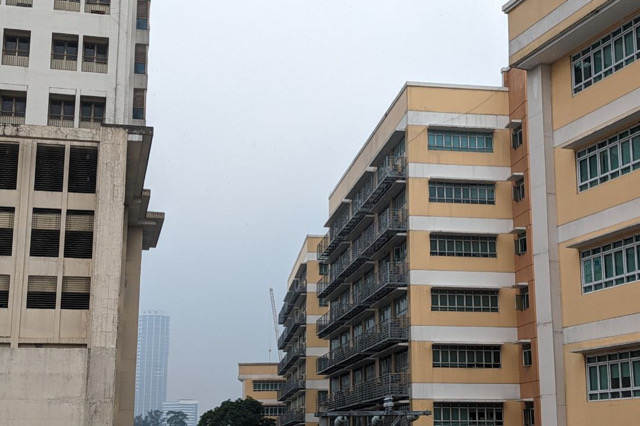
What’s happening over Metro Manila is also being monitored over Calabarzon and parts of Central Luzon, PAGASA said. While the agency did not specify what we in the Metro are experiencing, the conditions caused by floating minute particles possibly from smoke, pollutants or even volcanic aerosols are conducive for the formation of smog or haze.
“This occurs when very small particles get trapped close to the surface due to the presence of a thermal inversion, high humidity, and calm wind conditions,” it said.
What the DENR has to say about the Metro Manila air quality
Heavy vehicular traffic especially during rush hour is the main contributing factor as to why air quality in some parts of Metro Manila is on heightened alert, according to the Department of Natural Resources (DENR).
"Air quality varies in time and places and can change anytime depending on pollution sources and meteorological factors," it said in a statement on September 22.
An initial assessment of the skies in Metro Manila showed that Paranaque recorded an air quality index of 217 (acutely unhealthy) while the stations in Makati and Pateros recorded an Air Quality Index of 128 and 141 (Unhealthy), respectively, DENR said.
Also read: What Fog? Metro Manila's Gray Skies Caused by Haze, PAGASA Says
Fog, Vog, Haze, Smog: What’s the difference?
In case you’re curious, here’s a quick explainer on how to differentiate these terms:
Fog is due to water droplets or moisture in the atmosphere, generally white.
Vog is volcanic smog, or a mix of sulfur dioxide gas and aerosols that causes visible haze. Basically, it’s caused by air pollutants from volcanoes.
Smog is air pollution that happens when smoke and chemical fumes. It is exacerbated by thermal inversion, or when a warm layer of air stops dirty air from dispersing, effectively trapping pollution below.
Haze happens when dust and/or other air pollutants which cannot be seen by the naked eye interacts with sunlight. It reduces visibility and gives the sky a grayish hue.