

MMDA Proposes 7-to-4 Work Schedule for Government Offices in NCR
New traffic plan wants you up and working earlier.
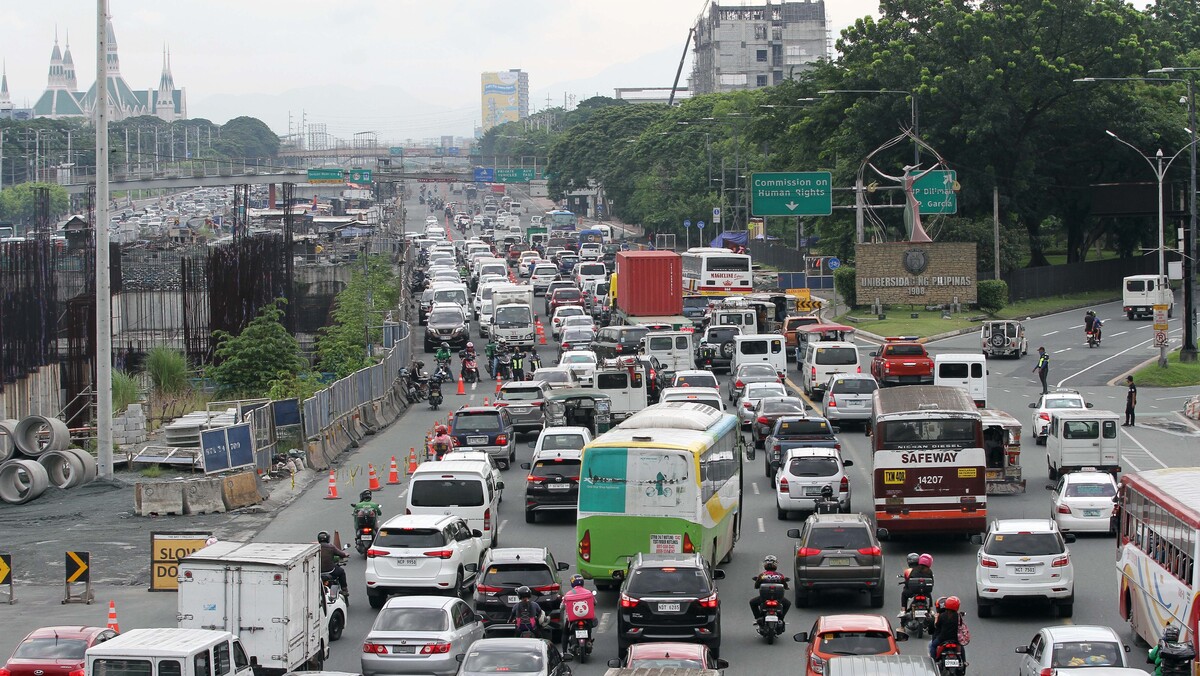
(SPOT.ph) The Metropolitan Manila Development Authority (MMDA) is once again eyeing an adjusted work schedule for national government offices in Metro Manila as a possible solution to the persistent traffic problem. This time, the agency is recommending a shift to 7 a.m. to 4 p.m. to help employees avoid the rush hour gridlock.
During a meeting with the Metro Manila Council (MMC) on January 16, the MMDA said it would forward the proposal to President Ferdinand “Bongbong” Marcos Jr. “as soon as possible” once all Metro Manila mayors reach a consensus. Once this is adopted by national government offices, the MMDA estimates a 37.15% drop in private motorists during peak hours, which is equivalent to 175,918 employees.
The 8 a.m. to 5 p.m. schedule in government offices has been flagged as a major factor in the rush hour traffic in Metro Manila, given its overlap with the standard work hours of private companies.
“Mayroon na tayong traditional rush hour, kung one hour ahead ka parati sa rush hour, you do not hit the peak of the volume of cars. So iwas ka ng isang oras sa pagpasok at pag-uwi,” San Juan City Mayor Francis Zamora said during the meeting. “If you ask me, pabor ako dito.”
Also read: Heavy Traffic? Mobility Is a Sign of "Booming" Economy, Marcos’ Adviser Says
Will adjusted working hours help with traffic in Metro Manila?

This idea isn’t exactly new. You might recall that the MMDA and the MMC already implemented a resolution mandating local government units (LGUs) in Metro Manila to adopt a 7 a.m. to 4 p.m. working schedule starting May 2, 2024.
At that time, the Civil Service Commission (CSC) described the move as “a temporary solution to traffic congestion.” MMDA Chairman Atty. Romando Artes claimed that the resolution improved traffic conditions with a 1.23% reduction in travel time and a 3.69% increase in travel speed on major roads like EDSA.
It doesn't help that more than 467,000 vehicles were added to Philippine roads in 2024, with sales growth expected to continue this year, according to data by the Chamber of Automotive Manufacturers of the Philippines Inc. (CAMPI) and the Truck Manufacturers Association (TMA).
The Marcos administration had also recently revealed its plans to promote "alternative work arrangements" in 2025 to sustain improvements in employment rates, as revealed by the National Economic and Development Authority (NEDA) on January 9. The initiative will explore more flexible options like remote work, staggered schedules, and compressed workweeks to accommodate both worker preferences and operational demands. However, little else has been revealed about this plan.
Also read: Is the Philippines Ready for a Four-Day Workweek?