
Sara Duterte Is Impeached by the House—What Happens Next?
How will the trial work? Who will replace her? and other questions answered.
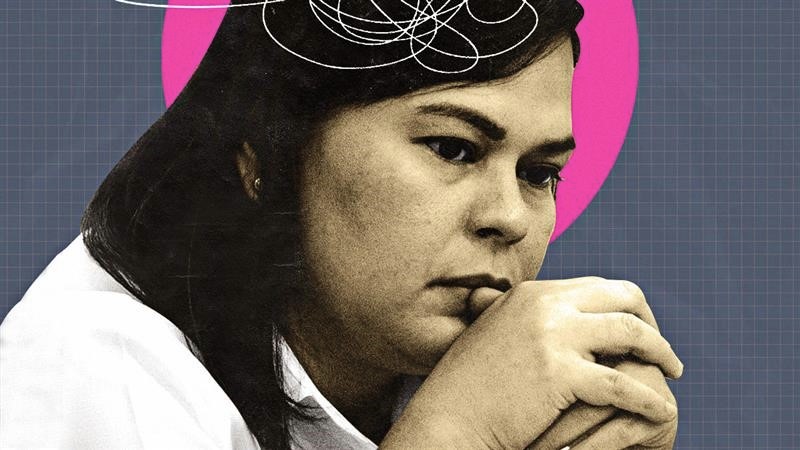
(SPOT.ph) Vice President Sara Duterte has officially been impeached by the House of Representatives. Although this marks a historic moment, it does not mean she has been removed from office.
The impeachment vote in the House took place on February 5, after 215 out of 306 members endorsed the complaint against Duterte.
Will she be convicted and removed or acquitted and allowed to stay in office? It is now in the Senate's hands to determine her fate through an impeachment trial.
Why is Sara Duterte being impeached?
Before we move on any further, it’s important to note that impeachment is not the end result, but rather the entire process of removing a public official from office. In other words: it is a formal accusation. Only members of the House of Representatives have the exclusive power to initiate impeachment proceedings under Section 3, Article XI of the Philippine Constitution.
On the other hand, ousting is the actual removal of a public official, which typically happens when they are convicted in an impeachment trial.
At least two impeachment complaints have been filed against Duterte for allegations of her abuse of power, misuse of confidential funds in the Office of the Vice President and Department of Education, high crimes in relation to her role in extrajudicial killings in her hometown, and threats against President Ferdinand “Bongbong” Marcos Jr., including a highly controversial remark about hiring a hitman in the event of her own assassination.
Interestingly, the Philippine Center for Investigative Journalism (PCIJ) pointed out that 41 out of 60 Mindanao lawmakers signed the impeachment complaint against Duterte, who was notably the mayor of Davao City from 2010 to 2013 and again from 2016 to 2022. It also noted that Ilocos Norte 1st District Representative Sandro Marcos was among the top signatories for the complaint.
Also read: EXPLAINER: What Happens If You Threaten the Philippine President?
What happens next?
Now that the House has voted in favor of impeachment, the case will move to the Senate for a full-blown trial. The House will send over the formal articles of impeachment, which outlines the specific charges against Duterte.
“In consonance with the Constitution on Article 11 on accountability of public officers, which provides as follows: endorsement of the complaint resolution to the Senate. A verified complaint resolution of impeachment filed by at least one-third of all the members of the House shall constitute the articles of impeachment," House Majority Leader Mannix Dalipe said. "And consistent with our rules, I move that the Secretary-General be directed immediately to endorse the same to the Senate.”
To convict and remove Duterte from office, at least two-thirds of the Senate—or 16 out of 24 senators—must vote in favor of conviction as outlined in Article XI. If they fail to reach this number, she will remain in office. If convicted, she will not only be removed from her position as vice president but will also be barred from holding any public office in the future under the Philippine Constitution.
But it’s not that simple: the House impeachment on February 5 took place on the last day of the congressional session. This means the Senate will be in recess until June 2—when the May midterm elections are over—which is four months from now. In this case, a special session may be called by the Senate to fast-track Duterte’s trial.

However, Senate President Chiz Escudero said in a press conference on February 6 that no special session will be created. He said that the complaint resolution was only received by Senate Secretary Renato Bantug at 5:49 p.m. on February 5, but it was not presented to the plenary in time. The session was adjourned before 7 p.m. that day, so the Senate could no longer take in a last-minute agenda, as Escudero puts it.
“Wala,” Escudero said. “The impeachment complaint was not referred to the plenary for there to be a basis for the impeachment court to be convened by the Senate.”
When asked why the complaint resolution was submitted sooner than later, Bantug said: “It was ministerial on my part to receive the verified complaint, the annexes but after that—and I made it clear to the secretary general—that I have to perform staff work insofar as making sure that whatever the House transmitted is what the Senate also received.”
Also read: EXPLAINER: What Happens Now That VP Sara Duterte Has Resigned From the Marcos Cabinet?
Who will replace Sara Duterte if she is ousted?
Given all these, one big question looms: Who will take Duterte's place if she is removed from office? It’s not the Senate president, as one might guess. Again, the answer lies in the Philippine Constitution.
Under Section 9, Article VII, President Ferdinand "Bongbong" Marcos Jr. will have the power to nominate a new vice president. However, this appointment is not automatic—it must first be approved by a majority vote of both the Senate and the House of Representatives, “voting separately.”
This process ensures that Congress has a say in who assumes the second highest post in the country in order to maintain checks and balances in the government.
It is only when both the president and vice president are removed at the same time “in cases of death, permanent disability, removal from office, or resignation” that the Senate president steps in as acting president under Section 8, Article VII.
Also read: Who's the Designated Survivor? The Very Short Presidential Line of Succession, Explained