
EXPLAINER: What a 17% U.S. Tariff Means for the Philippines
And for consumers like you.
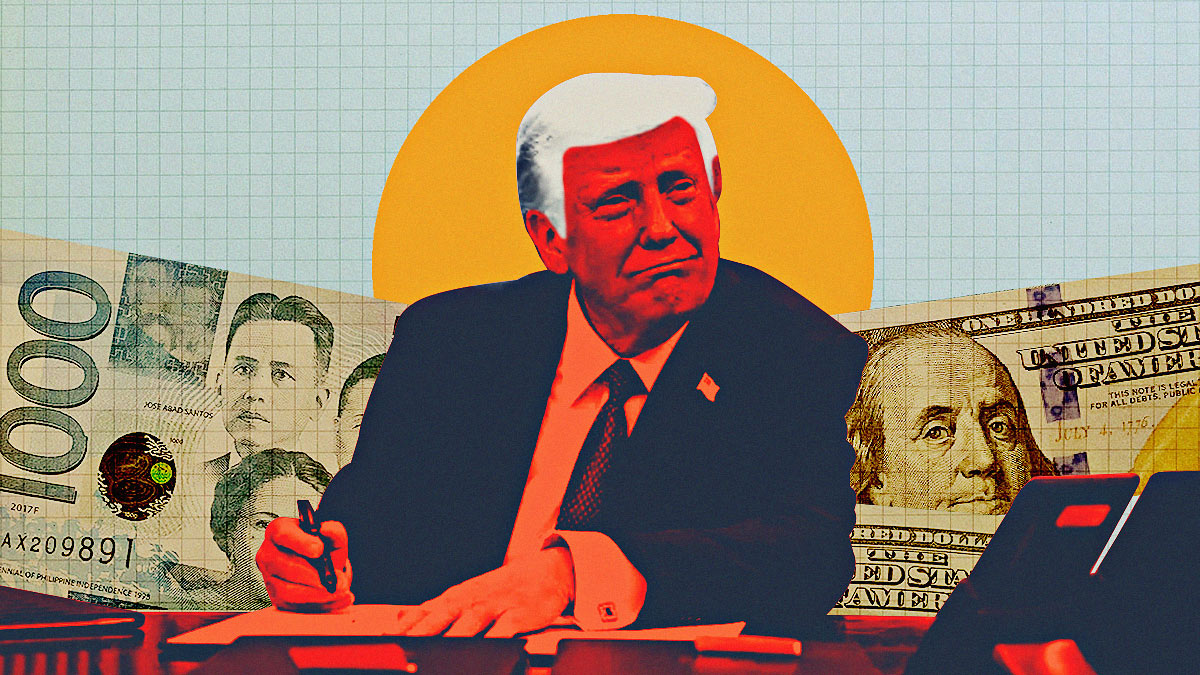
(SPOT.ph) U.S. President Donald Trump may have pressed pause on his new tariffs after pushback from businesses and trade partners, but only for 90 days. Once that’s over, the plan could still move forward, so it’s worth asking: What does his tariff mean for the Philippines—and for the ordinary Filipino? Here are some answers. No complicated terms, we promise.
Basically, what you need to know is that the U.S. slapped a 17% tax on all goods coming in from the Philippines. It’s part of Trump’s “reciprocal tariffs” policy, which raises import taxes on countries he says benefit more from trading with the U.S. than the other way around. The Philippines stands out because we’re one of the few—if not the only—countries actually welcoming the move.
“For just about everyone in Asia, President Trump’s latest round of severe tariffs is a disaster,” says in an article by the New York Times. “The Philippines may be the only government in the world that has called Mr. Trump’s tariffs ‘good news.’”
Why is that?
Also read: A Taxing Lead: The Philippines Has the Highest VAT Rate in Southeast Asia
How will Trump’s tariffs affect the Philippines?
First, we have to understand what a tariff is.
A tariff is basically a tax that one country puts on goods coming in from another country.
Let’s say the U.S. buys mangoes from the Philippines. If the U.S. slaps a tariff on those products, it means Filipino exporters now have to pay extra money to sell them in the U.S. This makes the goods more expensive for American buyers, which could lead them to buy mangoes less or buy from someone else entirely. Governments usually use tariffs to protect their own industries, punish trade partners, or try to fix trade imbalances—and Trump's policy is projected to do all three.
Why some think this could be a good thing
The good news is that the National Economic and Development Authority (NEDA) Secretary Arsenio Balisacan doesn’t think the new tariffs will tank the Philippine economy. They estimate it could even boost our GDP slightly by less than 0.5%, thanks to a possible bump in trade with other Southeast Asian countries who are facing even steeper U.S. tariffs. For example, Vietnam and Cambodia are hit the hardest at 46% and 49%, respectively.
“The economy is not as vulnerable to shocks in the global marketplace as our neighbors... because the Philippine economy’s exposure to trade is fairly small,” Balisacan said in a press conference.
This could make Philippine-made goods more attractive in the U.S. market. Business leaders like George Barcelon and Sergio Ortiz-Luis Jr. believe Philippine exports like coconuts, garments, and electronics could get a stronger position in Trump's America, as reported by Bloomberg. The Philippine Chamber of Commerce and Industry also urged exporters to take advantage of this “window of opportunity.”
And because exports don’t make up a huge part of our economy, the government claimed the overall impact “will be very minimal.” As the Department of Trade and Industry (DTI) noted, Trump’s tariffs are meant to bring manufacturing jobs back to the U.S. by making imported goods more expensive—a strategy that doesn’t hit the Philippines as hard, since our economy is more reliant on services.
In fact, Balisacan said the 17% tariff might even encourage foreign investors to relocate manufacturing operations to the Philippines from countries facing higher U.S. tariffs, but it won’t happen automatically. The Philippines still faces competition—countries like Singapore, Brazil, and more than 120 others were only slapped with a 10% tariff, so we’re far from being the only alternative on the table.
“We need to double, even triple, our efforts to improve the investment environment so investors see the Philippines as a viable destination,” Balisacan said.
What this means to you as a consumer
Despite the possible benefits, Finance Secretary Ralph Recto cautioned that the Philippines is still vulnerable to a broader slowdown in global trade, caused by supply chain disruptions, high interest rates, and inflation.
Tariffs are already pushing up prices on products that many Filipinos love—at least indirectly. After all, many products are part of a global supply chain—if costs go up in one part, prices can rise across the board. We’re already seeing examples of this in other countries. Just recently, Sony hiked the price of its PS5 Digital Edition by a whopping 25% in parts of Europe and other regions, blaming the move on a tough economic environment shaped by inflation, volatile exchange rates, and—you guessed it—Trump’s new tariffs.
Tech giants like Apple might also follow. Since most iPhones are assembled in China—a country now facing a 145% U.S. tariff—investment analysts have warned that the price of the upcoming iPhone 16 Max could more than double from around $1,200 to $2,150.
Even if that level of increase doesn’t reach the Philippines directly, rising costs abroad can still trickle down by pushing up local prices or making some products harder to find on store shelves.
It’s tempting to shrug this off, especially with the 90-day delay. However, if or when these tariffs push through, we’ll all feel it one way or another—maybe in higher prices, maybe in better opportunities. Either way, at least now you're better informed and won't be caught completely off guard when it does happen.
Also read: Foreign Tourists Are Now Exempted From 12% VAT in the Philippines