

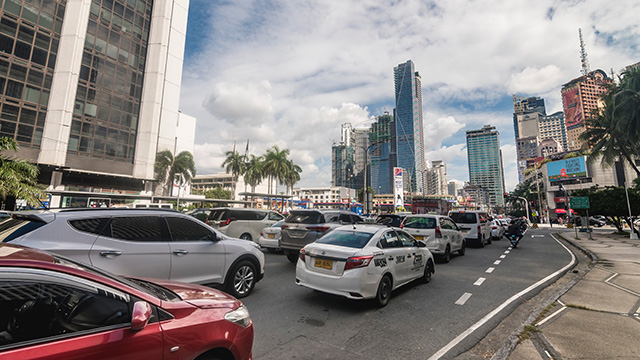
Ah, the Unified Vehicular Volume Reduction Program. Better known as the number-coding scheme, this measure was put in place to help reduce the strain on Metro Manila's traffic system by limiting the number of cars on the road.
Whether the number-coding scheme achieves its goal or does the exact opposite by encouraging more moneyed motorists to buy more cars is irrelevant in this discussion. Regardless of which side of this fence a motorist sits on, the measure doesn't appear to be going away for good any time soon.
With that said, it's best that everyone be as familiar with the number-coding scheme as possible. It is, after all, one of the easiest traffic violations to forget. Below is everything you need to know.
A Complete Guide to the Number-Coding Scheme in Metro Manila
How does the number-coding scheme work?
The number-coding scheme limits the number of cars on the road by banning vehicles with number plates ending in selected numerals, depending on the day of the week. Below is a guide to what days each number is banned.
- Monday: Plates ending in 1 and 2
- Tuesday: Plates ending in 3 and 4
- Wednesday: Plates ending in 5 and 6
- Thursday: Plates ending in 7 and 8
- Friday: Plates ending in 9 and 0
Note that the Metro Manila-wide number-coding scheme is not enforced during holidays and weekends.
Number-coding scheme hours
Currently, the Metro Manila-wide number coding scheme is enforced only from 5 p.m. to 8 p.m. Makati City's separate number-coding scheme is now from 7 a.m. to 7 p.m.
Prior to the COVID-19 pandemic, the Metro Manila-wide number-coding scheme was in effect from 7 a.m. to 8 p.m. While the Metropolitan Manila Development Authority has already brought up the idea of expanding the current hours or returning to the previous schedule, exactly when this shift will take place (and whether or not it will include window hours) remains to be seen.
What areas are covered by the number-coding scheme?

According to the Metropolitan Manila Development Authority (MMDA), all major roads under the agency's jurisdiction are covered by the number-coding scheme. This includes the following thoroughfares:
- EDSA
- C5
- Recto Avenue
- Quirino Avenue
- Araneta Avenue
- C6
- Roxas Boulevard
- Taft Avenue
- South Luzon Expressway
- Shaw Boulevard
- Ortigas Avenue
- Magsaysay Boulevard
- Aurora Boulevard
- Quezon Avenue
- Bonifacio Avenue
- Rizal Avenue
- Del Pan
- Marcos Highway
While most cities within the National Capital Region adhere to the number-coding scheme, a handful either do not enforce it or only do so in certain areas and hours. Makati City, which currently enforces its own number coding scheme from 7 a.m. to 7 p.m., is one of them. Another example is Muntinlupa City, which only implements the measure along Alabang-Zapote Road.
Number-coding scheme exemption
Under Alert Level 1, Transport Network Vehicle Service units and public utility vehicles are exempted from the number-coding scheme. Motorbikes and utility vehicles such as garbage trucks and fuel trucks are exempted, too. The same goes for vehicles carrying essential or perishable goods. In Makati City, senior citizen Blu Card holders are exempted as well.
How do you apply for an exemption?
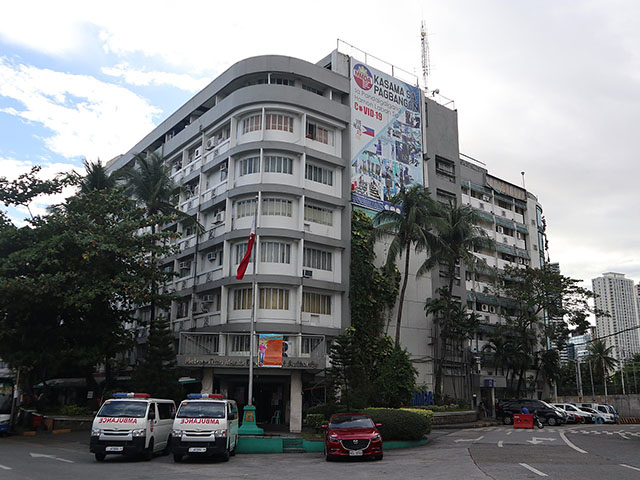
Persons with disability and senior citizens may also be exempted from the number-coding scheme provided they apply for and are successful in getting one from the MMDA. Below are the steps for applying for a number coding exemption:
- Submit a letter of request to the Office of the Chairman - MMDA at the MMDA main building on EDSA corner Orense Street, Guadalupe Nuevo, Makati City.
- Submit a photocopy of your vehicle's official receipt or certificate of registration.
- If the application is approved, the applicant must pay P1,000 for private vehicles and P1,000 for business purposes at the Treasury Department on the sixth floor of the MMDA building.
How much is the number-coding scheme violation fine?
The fine for violating the MMDA's number coding scheme is set at P300.
How do you settle number-coding scheme violations?
You can settle the fine for your number-coding scheme violation with the MMDA via Landbank, SM Bills Payment, or Bayad Center. Bayad Center partners such as GCash, PayMaya, and Grabpay may also be used to settle MMDA fines. Previously, MetroBank was an option as well, but this is no longer the case.
You must settle your MMDA fine within seven days. Otherwise, you will need to drop by the agency's office along EDSA corner Odense Street to settle it. If your number coding violation was not issued by the MMDA, you will have to settle the fine with the LGU that issued it.
Hey, Spotters! Check us out on Viber to join our Community and subscribe to our Chatbot.